Direct Answer: Who Makes the Best Lawn Mower?
John Deere, Honda, Husqvarna, and Toro are widely recognized as the top lawn mower manufacturers. John Deere excels in reliability and product range; Honda is known for durability and fuel efficiency; Husqvarna leads in innovation and performance; and Toro dominates professional-grade equipment. The best choice depends on your specific needs, lawn size, terrain type, budget, and whether you prefer gas, electric, or robotic models.
What Does ‘Best’ Mean for Lawn Mowers?
Determining the ‘best’ lawn mower manufacturer requires understanding that quality is subjective and varies by use case. What works perfectly for a small residential lawn may not suit a large property or commercial setting. Several factors influence this assessment:

Pros
- Powerful 80V brushless motor delivers 32HP gas-equivalent performance with quiet fume-free operation and no engine maintenance.
- Complete kit includes four 6.0Ah batteries and 600W charger for substantial runtime up to 1.5 acres.
- SmartCut technology and 42-inch heavy-duty steel deck ensure consistent cuts without bogging in tough conditions.
- Versatile towing up to 350 lbs and optional cargo hauling plus comfort features like high-back seat and LED lights.
- Strong 4-year limited warranty and full compatibility with the Greenworks 80V tool ecosystem.
Cons
- Rear utility cargo bed for 200 lb hauling is sold separately and not included in the kit.
- Runtime of up to 1.5 acres varies with conditions and may require recharging or battery swaps on larger properties.
- As a fully cordless model continuous operation depends on battery levels unlike gas engines with unlimited runtime.
The Greenworks 80V 42" CrossoverT Cordless Riding Lawn Tractor is a ready-to-mow zero-emission tractor designed for homeowners managing medium to large lawns. It features a reinforced 42-inch stamped steel deck of 12-gauge construction along with premium comfort elements such as a high-back padded seat with foldable armrests. The overall build emphasizes durability and user convenience right out of the box with the included battery and charger set.
Performance centers on the 80V TruBrushless motor that provides 32HP gas-equivalent power with instant torque and quiet fume-free operation. SmartCut technology senses grass conditions and automatically adjusts power to maintain a consistent cut even in tall thick or wet areas. The four 6.0Ah batteries support runtime for up to 1.5 acres depending on conditions while dual LED headlights and a 7-position deck height range from 1.5" to 4.5" add practicality. Front and rear attachments further allow towing up to 350 lbs for added yard utility.
Key considerations include that the rear utility storage bin capable of hauling 200 lbs is sold separately so full cargo functionality requires an extra purchase. Runtime remains condition-dependent and may fall short for properties significantly larger than 1.5 acres without using the 600W charger or swapping batteries. The cordless design prioritizes ease and low maintenance but trades off the continuous runtime of traditional gas models.
This tractor delivers strong value for eco-conscious owners of residential properties who want gas-like power without the emissions noise or upkeep. It suits those who already use or plan to expand into the Greenworks 80V family of tools and who appreciate the 4-year limited warranty. Users with exceptionally large or commercial-scale lawns should evaluate battery logistics carefully before purchase.

Pros
- Delivers strong 21 horsepower equivalent power comparable to gas riding mowers.
- Provides up to 1.5 acres of runtime on a full charge with the six included batteries.
- Features low-maintenance dual brushless motors without belts for greater durability.
- Offers versatile 12-position cutting height adjustment from 1.5 to 4.5 inches.
- Includes digital controls for blade settings, drive speeds, and cruise control.
Cons
- Limited to 1.5 acres of cutting per charge without purchasing additional batteries for bigger lawns.
- Requires recharging time for the six 56V batteries after each use session.
- Relies solely on battery power with no hybrid or gas backup option for extended operation.
The EGO Power+ TR4204 is a cordless electric riding lawn mower built as a modern tractor alternative for residential use. It features a robust 42-inch stamped steel deck and arrives ready to go with six 56V 6.0Ah batteries plus a charger, creating an immediate impression of convenience and solid construction free from gas engine complexity.
Performance shines through its equivalent 21 horsepower output and top speed of 6 MPH, allowing efficient coverage of up to 1.5 acres on a single charge. Dual brushless cutting motors operate without belts for added durability and less upkeep, while the digital display lets users select three blade settings, three drive speeds, and cruise control. The 12 adjustable heights ranging from 1.5 to 4.5 inches combined with anti-scalp wheels deliver precise results across varied terrain.
Drawbacks center on battery dependency, as larger properties beyond 1.5 acres require extra batteries and recharging intervals can interrupt workflow. The fully electric design eliminates fuel storage needs but demands access to power sources between sessions.
This mower suits homeowners with medium to large yards who value quiet, emission-free operation and reduced maintenance. Those seeking expandable battery capacity for bigger areas will find the EGO Power+ TR4204 a strong long-term investment in cordless lawn care.
Pros
- High-efficiency brushless motors maximize power output and durability over traditional motors
- Up to 2 acres runtime with three included 10.0 Ah batteries supports substantial mowing sessions
- Zero-emission operation with gas-equivalent 20 HP power for quieter environmentally friendly use
- Six-port auto-switchover battery system provides flexible extended runtime options
- Durable 42-inch steel deck plus included mulch and towing kits add immediate functionality
Cons
- Runtime is limited to approximately 70 minutes or 2 acres which may require recharging for larger properties
- Fully battery-dependent design means performance relies on charge levels and spare battery availability
- 42-inch deck size may require more passes on expansive lawns compared to wider commercial models
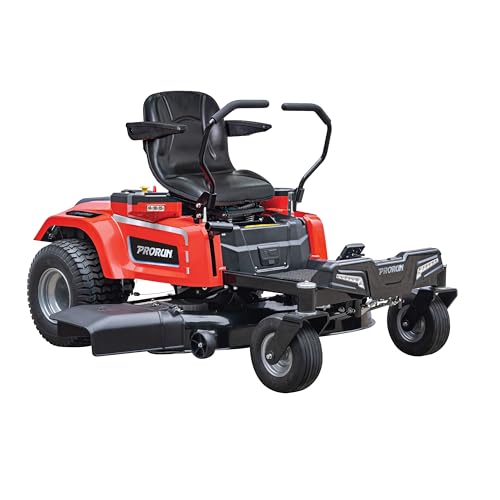
The PRORUN PZT60V42 is a fully electric 60V zero-turn riding lawn mower built for residential and light commercial use. Its primary design centers on a robust 42-inch 14-gauge stamped steel twin blade deck powered by direct-drive brushless motors, giving an immediate impression of solid construction and modern battery-focused engineering. The mower arrives complete with three 10.0 Ah batteries, a charger, mulch kit, and towing kit for ready-to-work versatility.
In performance terms, four high-efficiency brushless motors deliver power equivalent to a 20 HP gas engine while producing zero emissions. The system supports up to 2.0 acres or 70 minutes of runtime, and six battery ports with auto switchover intelligently manage all PRORUN 60V battery sizes for continuous operation. A washout port on the steel deck further simplifies post-mow maintenance during real-world sessions.
Potential drawbacks include the finite 70-minute runtime window which can limit coverage on larger properties without spare batteries or recharge breaks. As a fully electric model, it also depends entirely on battery charge levels rather than continuous fuel refills, and the 42-inch deck width may demand extra passes compared with wider traditional options.
Overall the PRORUN PZT60V42 offers strong value for homeowners and small-property managers who want gas-like cutting power without emissions or noise. Those with medium-sized lawns seeking quiet efficient zero-turn performance and included accessories will benefit most from this electric mower.

Pros
- Strong 24HP FR730 engine power for demanding cutting conditions
- Wide 54-inch FAB deck reduces total mowing time
- Zero turn design delivers excellent maneuverability
- Fabricated deck supports durable everyday operation
Cons
- Sparse details beyond engine and deck leave other features unspecified
- Gas-powered FR730 engine needs regular fuel and maintenance
- Large 54-inch deck size may feel oversized on compact properties
The Husqvarna Z254F is a zero turn mower from the established Husqvarna brand in the riding lawn mowers category. It centers on a solid build that pairs a 24HP 726cc FR730 engine with a 54-inch FAB deck for straightforward residential grass care.
Performance stems directly from the listed specifications. The FR730 engine delivers the horsepower needed for steady operation across typical lawns while the wide FAB deck completes passes efficiently. Zero turn handling improves control in real yard layouts based on the model design.
Considerations arise from the limited data available. Secondary elements such as comfort features fuel capacity or extras receive no mention and the gas engine format involves routine upkeep. The large deck suits open areas better than confined spaces.
The Husqvarna Z254F provides the most value for owners of medium or large properties who want reliable engine power and a broad cutting width. Users with smaller lots or those seeking extensive accessory options should weigh the core specs carefully before purchase.
- Reliability and durability, How long the equipment lasts and performs consistently
- Performance metrics, Engine power, cutting efficiency, and grass quality results
- Fuel efficiency and operating costs, Ongoing expenses beyond initial purchase
- Warranty and customer support, Protection and service availability
- Mower type suitability, Whether the brand excels in gas, electric, robotic, or commercial models
- Budget alignment, Value proposition relative to price point
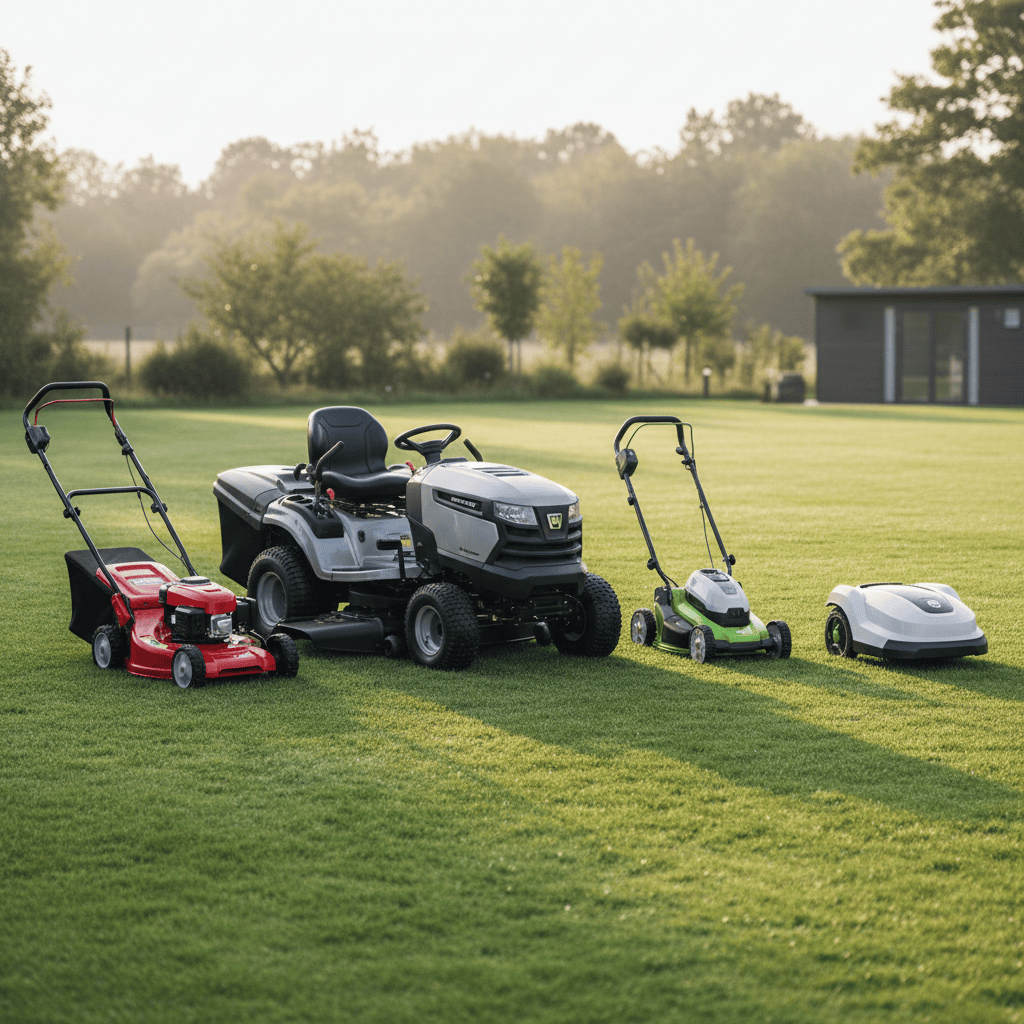
Different mower types also affect which manufacturer is ‘best’ for you. Gas-powered mowers offer power and range; electric mowers provide quiet, low-maintenance operation; robotic mowers enable hands-off lawn care; and commercial-grade equipment prioritizes heavy-duty performance over consumer convenience.
Key Factors to Consider When Evaluating Lawn Mower Brands
Before selecting a manufacturer, evaluate these critical criteria:
Durability and Build Quality
Top manufacturers use reinforced steel decks, high-quality bearings, and corrosion-resistant components. Durability determines whether a mower lasts 3 years or 10+ years. Research the materials used in the cutting deck, frame, and engine housing. Brands with longer track records in the industry typically have refined designs that withstand seasonal use and varying weather conditions.
Engine Performance and Fuel Efficiency
The engine is the mower’s heart. Leading manufacturers source engines from reputable suppliers or develop proprietary designs that balance power output with fuel consumption. Consider whether the engine provides adequate horsepower for your lawn type, dense, thick grass requires more power than thin, well-maintained turf. Fuel efficiency reduces operating costs, especially for larger properties mowed frequently.
Cutting Deck Size and Blade Quality
Deck size ranges from 20 inches for small residential lawns to 60+ inches for commercial use. Larger decks cover more area per pass, reducing mowing time. Blade quality affects cut consistency and grass health. Premium manufacturers use hardened steel blades that hold sharpness longer and resist impact damage from debris. For broader ecosystem context, read through our operational guide on z890 vs x870e motherboard.
Warranty Coverage and Customer Support
Comprehensive warranties indicate manufacturer confidence. Compare coverage periods, what components are included, and whether labor is covered. Equally important is dealer network density, if service centers are scarce in your area, parts and repairs become difficult. Leading brands maintain extensive dealer networks and customer support infrastructure.
Transmission and Control Systems
Modern mowers feature variable-speed transmissions, ergonomic controls, and safety features. Evaluate whether the transmission system allows smooth speed adjustment and whether controls are intuitive. Premium brands invest in user-friendly designs that reduce operator fatigue on longer mowing sessions. For troubleshooting and reliability insights, consult our in-depth marshall stanmore iii vs harman kardon onyx studio 8 report.
Leading Lawn Mower Manufacturers and Their Strengths
John Deere: Reliability and Comprehensive Range
John Deere is synonymous with agricultural and lawn equipment reliability. The brand maintains a vast product lineup spanning residential walk-behind mowers, riding mowers, zero-turn radius models, and commercial equipment. John Deere’s reputation stems from decades of engineering refinement, extensive dealer networks, and strong customer loyalty. The brand is particularly strong in riding mower and tractor categories, where its heritage in farm equipment translates to robust consumer products. Warranty support is generally comprehensive, and parts availability is excellent due to the dealer network’s size.
Honda: Durability and Fuel Efficiency
Honda brings automotive engineering expertise to lawn mowers, resulting in efficient, reliable engines that start easily and run smoothly. Honda mowers are known for exceptional fuel economy and minimal maintenance requirements. The brand excels in walk-behind push mower and small-to-mid-size riding mower categories. Honda’s engines are particularly valued for their longevity and consistent performance across seasons. The brand appeals to homeowners seeking low-maintenance equipment that performs dependably year after year. Honda’s warranty terms are competitive, and the brand has strong dealer support in most regions. Readers comparing setup options can review our technical analysis on dyson v8 cyclone vs bissell featherweight stick.
Husqvarna: Innovation and Performance
Husqvarna differentiates itself through continuous innovation, particularly in robotic mower technology and battery-powered equipment. The brand invests heavily in research and development, resulting in advanced features like smart connectivity, automated scheduling, and efficient cutting algorithms in robotic models. For traditional mowers, Husqvarna emphasizes performance and cutting quality. The brand appeals to early adopters and homeowners seeking cutting-edge technology. Husqvarna’s professional-grade equipment is also highly regarded in landscaping industries.
Toro: Professional-Grade Quality for Consumer Use
Toro is renowned for professional-grade equipment and brings that expertise to consumer products. The brand excels in zero-turn radius mowers, commercial-grade riding equipment, and turf management solutions. Toro mowers are engineered for demanding conditions and heavy use, making them durable choices even for residential properties with challenging terrain. The brand is particularly strong in the commercial and professional landscaping sectors, where equipment reliability directly impacts business operations. Toro’s warranty support and dealer network are extensive, with strong emphasis on customer service. For complementary field maintenance guidelines, examine our breakdown of bissell crosswave hydrosteam vs shark stainforce.
Matching Your Needs to the Right Manufacturer
For Small Residential Lawns (Under 1/2 Acre)
Honda and Husqvarna excel in this category. Honda push mowers offer simplicity, reliability, and low maintenance. Husqvarna provides innovative options including robotic mowers for hands-free operation. Both brands offer electric models that reduce noise and emissions for residential neighborhoods. John Deere also serves this segment with quality walk-behind and compact riding mowers.
For Medium Residential Properties (1/2 to 2 Acres)
Riding mowers become practical at this size. John Deere and Toro offer excellent mid-range riding mowers balancing comfort, performance, and price. Honda provides durable riding mower options with exceptional fuel efficiency. Husqvarna’s robotic mowers are also viable for properties in this range, eliminating the need for manual operation entirely.
For Large Properties (2+ Acres)
Zero-turn radius mowers become essential for time efficiency. Toro and John Deere are particularly strong in this category, offering commercial-grade equipment designed for large-scale mowing. These mowers provide faster cutting speeds, larger decks, and more robust construction to handle extended use on expansive lawns.
For Electric and Battery-Powered Options
Husqvarna leads in battery-powered innovation, offering cordless walk-behind and riding mowers with impressive runtime. John Deere has expanded its electric lineup significantly. Honda offers select electric models. Electric mowers suit homeowners prioritizing quiet operation, low maintenance, and environmental impact reduction.
For Robotic Mowers
Husqvarna dominates the robotic mower market with advanced models featuring smart connectivity and autonomous scheduling. These appeal to homeowners seeking completely hands-off lawn maintenance. Robotic mowers work best on properties with clear boundaries and relatively flat terrain.
For Commercial or Professional Use
Toro and John Deere lead the professional segment. Both manufacturers offer equipment engineered for heavy use, quick maintenance turnarounds, and commercial-grade durability. Husqvarna also serves professional landscapers with premium equipment.
Key Factors in Brand Comparison
| Manufacturer | Primary Strength | Best For | Key Advantage |
|---|---|---|---|
| John Deere | Reliability & Range | All property sizes | Extensive dealer network, proven heritage |
| Honda | Durability & Efficiency | Residential, low-maintenance preference | Exceptional fuel economy, easy starting |
| Husqvarna | Innovation & Technology | Tech-forward homeowners, robotic solutions | Leading robotic mower technology |
| Toro | Professional Quality | Large properties, demanding conditions | Commercial-grade durability for consumers |
How to Research and Compare Lawn Mower Brands
Consult Unbiased Review Resources
Independent review sites, consumer reports, and lawn care publications provide objective assessments. Look for reviews that test equipment in real-world conditions and evaluate multiple aspects including durability, performance, and ease of use. Avoid reviews that focus solely on price or appearance without addressing functionality.
Evaluate Customer Satisfaction Ratings
Owner reviews on retailer websites, manufacturer sites, and independent forums reveal long-term satisfaction. Pay attention to patterns, if multiple owners report similar issues, that’s significant. Conversely, consistent praise across reviews indicates genuine quality. Consider both positive and negative feedback to understand realistic expectations.
Compare Warranty Terms
Review warranty length, coverage scope, and what’s excluded. Premium manufacturers typically offer longer warranties on engines and decks. Check whether labor is covered and whether you can use any dealer for service or only authorized ones. Warranty terms reflect manufacturer confidence in product longevity.
Assess Dealer Network and Parts Availability
Locate dealers near your home. Brands with dense dealer networks offer convenient service, faster repairs, and better parts availability. Call local dealers to assess their service responsiveness and parts inventory. A great mower becomes problematic if service is hours away.
Test Equipment When Possible
Many dealers allow demonstrations or have rental programs. Testing a mower reveals comfort factors, control intuitiveness, and noise levels that reviews cannot convey. Pay attention to vibration, seat comfort, and whether controls feel natural.
Consider Total Cost of Ownership
Calculate not just purchase price but also maintenance costs, fuel consumption, parts replacement, and warranty coverage. A less expensive mower may cost more over its lifetime if fuel efficiency is poor or maintenance is frequent.
Everything You Need to Know: Who Makes The Best Lawn Mower FAQ
Is John Deere always the best choice?
John Deere is an excellent manufacturer with strong reliability and extensive dealer support, but ‘best’ depends on your specific needs. For small residential lawns, Honda or Husqvarna may offer better value. For robotic solutions, Husqvarna leads. For large properties, Toro’s zero-turn mowers may excel. John Deere’s strength is its comprehensive range, you can likely find a suitable model, but other brands may better match specific requirements.
Are electric mowers from these brands as reliable as gas models?
Battery-powered mowers from leading manufacturers are increasingly reliable and require less maintenance than gas models. Husqvarna’s electric lineup is particularly well-regarded. However, battery runtime may limit use on very large properties. Electric mowers suit most residential applications and offer advantages in noise reduction and emissions. Gas mowers still dominate heavy-duty and commercial applications.
How important is the dealer network when choosing a brand?
Dealer networks significantly impact ownership experience. Convenient service access means faster repairs and better parts availability. If you live in a rural area, check dealer density before purchasing. A premium mower becomes frustrating if the nearest service center is 100 miles away. All four major manufacturers have strong networks in most regions, but verify coverage in your area.
What warranty length should I expect from top manufacturers?
Leading manufacturers typically offer 2-3 year warranties on consumer mowers, with some components (like engines) covered longer. Commercial-grade equipment may have different terms. Compare specific coverage, some warranties cover parts only, while others include labor. Extended warranties are often available for additional cost. Review warranty terms carefully, as they vary significantly between models and manufacturers.
Making Your Final Decision
Selecting the best lawn mower manufacturer requires aligning equipment capabilities with your specific situation. Consider lawn size, terrain challenges, budget constraints, and preferred maintenance level. All four leading manufacturers, John Deere, Honda, Husqvarna, and Toro, produce quality equipment; they simply excel in different areas.
Start by defining your primary needs: Do you need a robotic solution? Are you mowing a large property requiring commercial-grade equipment? Do you prioritize fuel efficiency and low maintenance? Once you’ve identified your priorities, research the manufacturer that specializes in that category. Visit local dealers, examine warranty terms, and read owner reviews specific to the models you’re considering. This systematic approach ensures you select not just a quality manufacturer, but the right one for your lawn care needs.
Choosing Mowers With Safety in Mind
Brand reputation tells only part of the story, so features such as blade brakes, guards and clear controls deserve close attention. Whichever brand you pick, American National Standards Institute (ANSI) offers general safety reading that applies across the category.