Direct Answer: How to Test a Lawn Mower Coil
Use a multimeter set to ohms (resistance mode) to measure the primary winding (~0.2–2 ohms) and secondary winding (~2–10 kΩ) against your mower’s specifications. Alternatively, perform a spark test: remove the spark plug, ground it to the engine, pull the starter cord, and observe for a strong blue spark. Either a failed spark test or out-of-range resistance readings indicates a faulty coil.
What Is the Ignition Coil and Why Does It Matter?
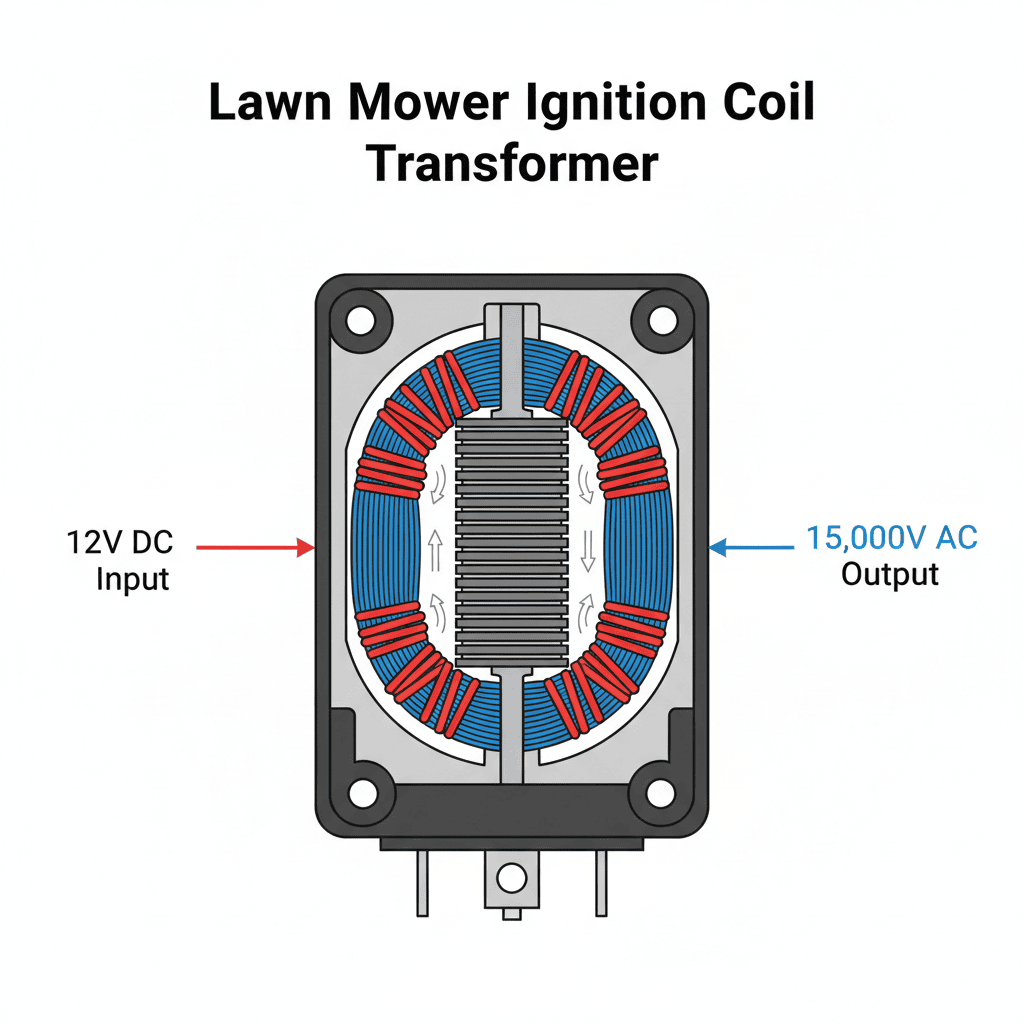
The ignition coil is a transformer that converts low-voltage battery power (typically 12V) into the high-voltage pulse (~15,000V) needed to fire the spark plug. Without a functioning coil, the lawn mower will not start or will run intermittently. Common symptoms of coil failure include:
- No spark at the plug
- Difficulty starting or failure to start
- Engine backfiring or running rough under load
- Loss of power during mowing
- Visible cracks or corrosion on the coil housing
Tools and Safety Preparation
Tools you will need:
- Digital multimeter (with ohms/resistance setting)
- Spark plug socket and ratchet wrench
- Work gloves and safety glasses
- Small flathead or Phillips screwdriver (to access coil mounting)
- Mower manual (to verify resistance specifications)
Safety steps before testing:
- Turn off the engine and allow it to cool for 5–10 minutes
- Disconnect the spark plug wire to prevent accidental ignition
- Ground yourself to avoid static discharge that could damage the multimeter
- Ensure the mower is on a flat, stable surface
- Never test a coil while the engine is running or the flywheel is spinning
Visual Inspection Before Electrical Testing
Before pulling out your multimeter, inspect the coil for obvious faults:
- Cracks or burns: Look for visible damage to the coil housing or insulation
- Corrosion: Check the coil terminals and connector wires for rust or green corrosion buildup
- Loose connections: Gently wiggle the spark plug wire and coil connector to ensure they are firmly seated
- Coil-to-flywheel gap: Measure the air gap between the coil armature and the flywheel (typically 0.008–0.015 inches). Use a feeler gauge or business card as a rough check. An incorrect gap will cause weak ignition
- Damaged wires: Look for cracks, burns, or hardened/brittle insulation on the spark plug wire
How to Perform a Spark Test
A spark test is a quick way to verify the coil’s output without a multimeter:
- Remove the spark plug using a spark plug socket and ratchet. Set it aside safely
- Reinsert the spark plug into its cap or wire (do not fully screw it in—just seat it loosely)
- Ground the spark plug to the engine by touching the metal shell of the plug to an unpainted metal part of the engine block (use a jumper wire or alligator clip if needed)
- Pull the starter cord firmly 3–5 times while watching the spark plug gap
- Observe the spark:
- Strong blue spark: Coil is functioning; the problem lies elsewhere (fuel, compression, or timing)
- Weak yellow or orange spark: Coil is failing and should be replaced
- No spark: Coil is likely dead; check connections first, then replace if needed
- Reinstall the spark plug and reconnect the wire once testing is complete
How to Test the Coil With a Multimeter (Resistance Readings)
For a more precise diagnosis, use a multimeter to measure coil resistance:
Setting Up Your Multimeter
- Turn off the mower and disconnect the spark plug wire
- Set your multimeter dial to the ohms (Ω) setting, typically marked with the omega symbol
- Select the appropriate resistance range (usually 200Ω or 2kΩ for primary, 20kΩ for secondary)
Testing the Primary Winding
- Locate the coil’s primary terminals (usually marked or colored)
- Place one multimeter probe on each primary terminal
- Record the resistance reading
- Compare to spec: Primary winding resistance should typically read 0.2–2 ohms. Consult your mower manual for exact specs
- If the reading is 0 (short circuit) or very high (open circuit), the primary is faulty
Testing the Secondary Winding
- Disconnect the spark plug wire from the coil
- Place one multimeter probe on the secondary terminal (where the spark plug wire connects) and the other on a ground point (engine block or chassis)
- Record the reading
- Compare to spec: Secondary winding resistance should typically read 2–10 kΩ (2,000–10,000 ohms)
- Out-of-range readings indicate secondary winding failure
Interpreting results:
- Within spec: Coil windings are intact; problem may be elsewhere (spark plug, flywheel gap, fuel)
- Below spec (lower than minimum): Internal short; coil should be replaced
- Above spec (higher than maximum): Open winding; coil should be replaced
- Infinite resistance (∞): Complete break in the winding; coil is dead
Troubleshooting Cautions and When to Replace
Common pitfalls:
- Intermittent failure: A coil may pass resistance testing and a cold spark test but fail once the engine heats up under load. If you suspect intermittent failure, test the coil with a thermal imaging tool or monitor for spark loss during mowing
- Flywheel key damage: The key that locks the flywheel to the crankshaft can shear, changing the coil-to-flywheel timing. Inspect the key for cracks or scoring before blaming the coil
- Spark plug issues: A fouled, gapped, or faulty spark plug can mimic a bad coil. Replace the spark plug first if it is old or visibly damaged
- Wiring and connectors: Corroded or loose connections will prevent current flow. Clean terminals with a small wire brush and reseat all connectors firmly
- Capacitor or breaker points (older models): If your mower uses points instead of an electronic ignition, test these components separately
When to replace the coil:
- Resistance readings are consistently out of spec
- Spark test shows no spark or only a weak yellow spark
- Visual inspection reveals cracks, burns, or significant corrosion
- The coil has failed intermittently and cannot be reliably diagnosed
- Coil age exceeds 5–10 years and the mower is difficult to start
Frequently Asked Questions
Q: Can I test a coil without a multimeter?
Yes. A spark test is the most practical field method: remove the spark plug, ground it to the engine, and pull the starter cord to observe for a blue spark. However, a multimeter provides more precise diagnostics and can detect internal resistance issues that a spark test might miss.
Q: What does a weak yellow spark mean?
A weak yellow or orange spark indicates that the coil is producing voltage but not at full strength. This typically means the coil is failing internally and should be replaced soon. Continue to monitor the mower for starting difficulty or power loss.
Q: Why does my coil test fine but the mower still won’t start?
Coil failure can be intermittent, especially under load or heat. Other common causes include a fouled spark plug, bad fuel, insufficient fuel pressure, compression issues, or a timing problem (flywheel key shear or coil-to-flywheel gap error). Check these components before concluding the coil is healthy.
Q: How much does it cost to replace a lawn mower ignition coil?
Replacement coils typically range from $20 to $100 depending on mower brand and type. Labor costs at a repair shop may add another $50–$150. DIY replacement usually takes 15–30 minutes and requires basic tools.