How Do You Safely Drain Gas from a Lawn Mower?
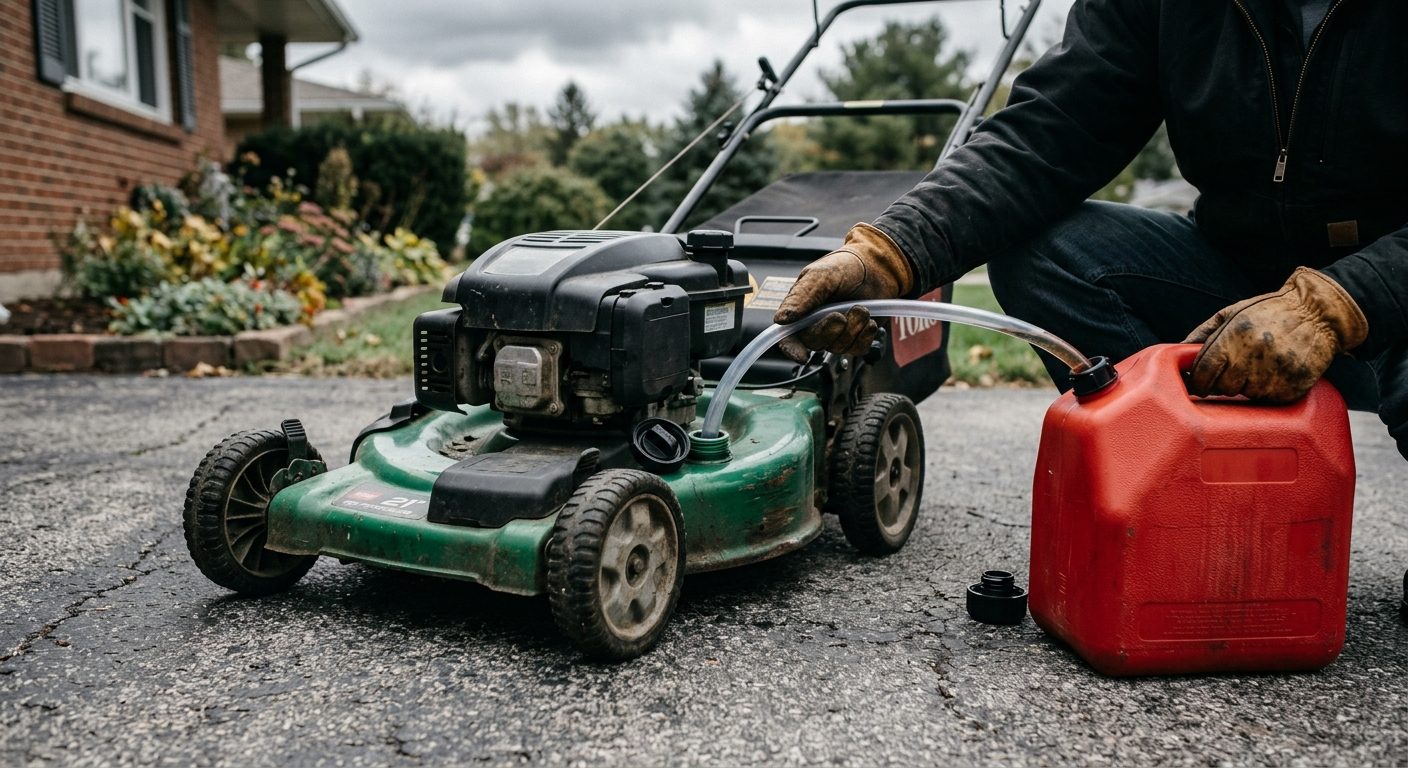
To drain gas from a lawn mower, first ensure the engine is cool and disconnect the spark plug wire to prevent accidental starting. Place the mower on a flat, well-ventilated surface. The most common method is to use a hand siphon pump to transfer the fuel from the tank into an approved gasoline container. Alternatively, you can clamp and disconnect the fuel line or, for some models, tilt the mower carefully to pour the fuel out.
Why and When Should You Drain Gas from a Lawn Mower?
Draining the fuel tank is often necessary before seasonal storage, when performing maintenance on the fuel system or carburetor, or when the gasoline has become old and degraded. Leaving gasoline in the tank for extended periods, especially over winter, can lead to varnish buildup that clogs fuel lines and carburetor jets, making the mower difficult or impossible to start.
When is the best time to drain the fuel tank?
The ideal time to drain the fuel is at the end of the mowing season before winter storage. It’s also advisable to drain old fuel if you notice the mower running poorly, as stale gasoline can cause starting issues and engine performance problems.
Can old gasoline damage the engine or carburetor?
Yes. Gasoline can begin to degrade after about 30 days. Over time, it forms sticky residues that can clog the small passages in the carburetor and fuel lines, potentially requiring cleaning or replacement of these components.
Preparation and Safety Checklist
Before you begin, gather the necessary tools and follow these critical safety steps:
- Tools Needed: A hand siphon pump or fuel transfer pump, an approved fuel container (red gasoline can), a drain pan, and optionally, a pair of pliers or a hose clamp.
- Safety Steps:
- Allow the engine to cool completely to avoid burns.
- Disconnect the spark plug wire and secure it away from the plug to ensure the engine cannot start.
- Work in a well-ventilated area, away from any open flames or ignition sources.
- Do not smoke while handling gasoline.
- Wear safety glasses and nitrile gloves to protect your skin and eyes from fuel.
Key Factors: Push Mowers vs. Riding Mowers
The draining process can vary depending on your mower type.
Does draining a riding mower differ from a push mower?
Riding mowers often have larger fuel tanks and may include a fuel shut-off valve. If your riding mower has this valve, you can simply turn it to the ‘off’ position and then open the carburetor drain screw or disconnect the fuel line below the tank. Push mowers typically have smaller tanks and may be easier to tip for draining, but you must do so carefully.
Is it safe to tip a lawn mower to drain the tank?
Tilting the mower is a common method but must be done correctly to avoid damage. Always tilt the mower with the air filter and carburetor facing upward to prevent oil from flooding the air filter or carburetor. Never tip it past 45 degrees unless the manufacturer specifically states it is safe. For most modern mowers, using a siphon pump is the recommended and safest method.
Three Ways to Drain Gas from a Lawn Mower
Method 1: Using a Siphon Pump (Simplest)
- Place your approved fuel container on the ground next to the mower.
- Insert one end of the siphon pump’s hose into the mower’s fuel tank.
- Place the other end securely into the fuel container.
- Activate the pump (by squeezing the bulb or operating the hand pump) to start the flow of gasoline.
- Continue until the tank is empty.
Method 2: Removing the Fuel Line (More Thorough)
- Locate the fuel line that runs from the bottom of the gas tank to the carburetor.
- Place a drain pan underneath the connection point.
- Use pliers to slide the hose clamp back, then carefully twist and pull the fuel line off the tank’s outlet nipple.
- Allow the fuel to drain completely into the pan.
Method 3: Tilting the Mower (Use with Caution)
- After disconnecting the spark plug, position the mower so the air filter side is facing up.
- Tilt the mower carefully over the drain pan or approved container.
- Remove the fuel cap to allow air in and let the gas pour out.
Should I also drain the carburetor and fuel lines?
For complete storage preparation, yes. After emptying the tank, you can drain the carburetor bowl by loosening the drain screw at its base (if equipped). Alternatively, you can run the engine until it stalls to consume the remaining fuel in the lines and carburetor.
How to Dispose of Old Gasoline Responsibly
Gasoline is a hazardous waste and must be handled properly.
- Never pour gasoline down the drain, into storm sewers, or onto the ground.
- Store the old gasoline in a sealed, approved fuel container, clearly labeled.
- Contact your local waste management authority or hazardous waste collection facility for disposal instructions. Many communities have periodic collection events.
- Do not mix old gasoline with fresh fuel unless you are certain it is still usable and plan to use it soon.
Frequently Asked Questions
Can I put the old gas back in my car?
It is not recommended. Degraded gasoline can cause similar fuel system problems in your vehicle. It is safer to dispose of it properly.
How long can gas sit in a mower before it goes bad?
Gasoline can start to degrade in as little as 30 days. For optimal performance, use fuel stabilizer if you plan to store the mower for more than a month, or drain the tank before storage.
What if my mower doesn’t have a siphon pump?
You can often find an inexpensive hand siphon pump at auto parts stores, hardware stores, or online. Using one is the safest and cleanest method for fuel removal.
Is it okay to leave a little gas in the tank?
For short-term storage (a few weeks), leaving a small amount of fuel with a stabilizer added is acceptable. For long-term storage (over winter), it is best to drain the tank completely to prevent varnish formation.