Direct Answer: What Causes a Lawn Mower to Backfire?
A lawn mower backfires when unburned fuel ignites in the hot exhaust system instead of burning inside the cylinder. The most common causes are a lean fuel mixture (usually from a clogged carburetor or dirty air filter), incorrect ignition timing, a stuck exhaust valve, or shutting the engine off too quickly while it is still hot. The good news is that most backfire problems are easy to diagnose and fix at home with basic tools, a little cleaning, and fresh fuel.
Understanding the Backfire: What’s Actually Happening?
To fix a backfiring lawn mower, it helps to understand the combustion process. A small engine needs three things to run: fuel, air, and spark. The carburetor mixes fuel and air, the piston compresses that mixture, and the spark plug ignites it. The expanding gases push the piston down, and the spent gases leave through the exhaust valve and muffler.
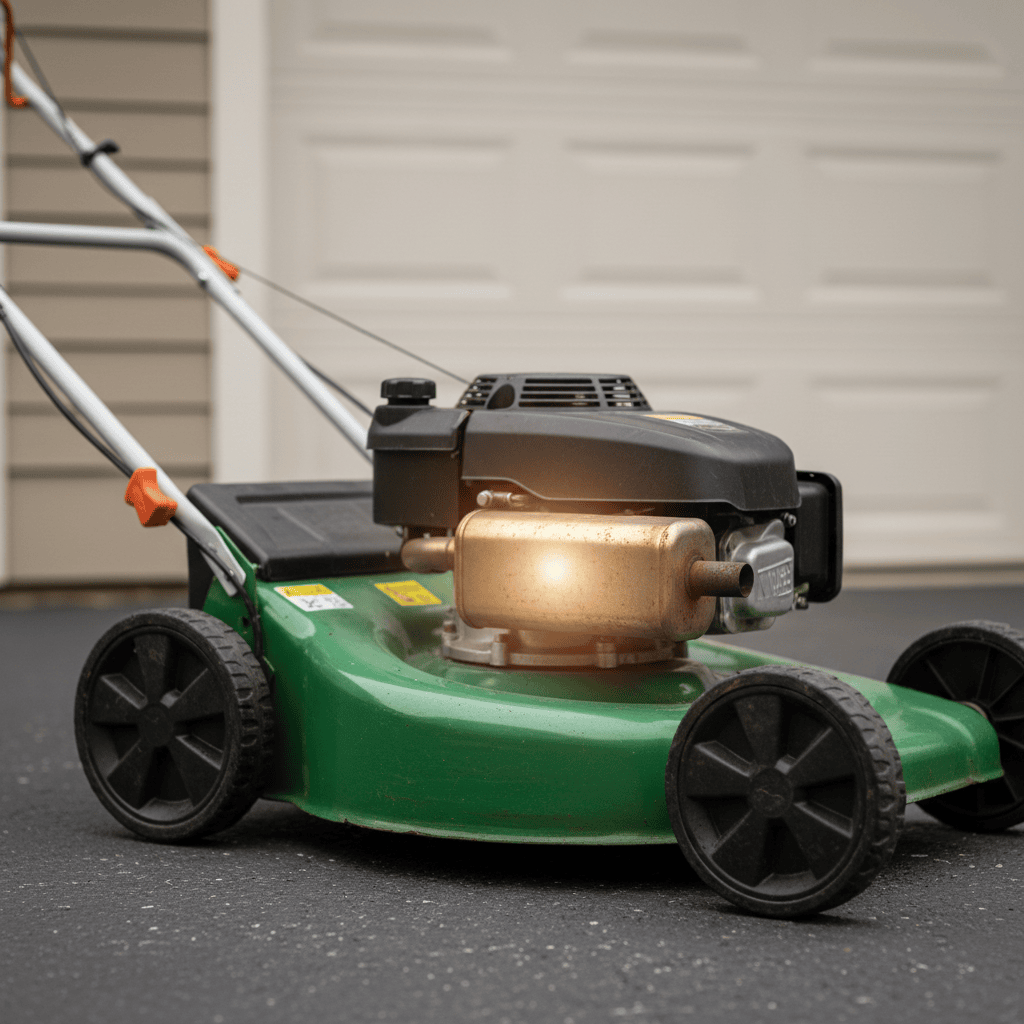
When everything works correctly, nearly all the fuel burns inside the cylinder, and the exhaust is just harmless gases. But when something disrupts that process, some fuel leaves the cylinder unburned. The muffler and exhaust pipe are extremely hot, so that leftover fuel vapor can ignite on contact with the hot metal and produce a loud pop or bang. That explosion is what you hear as backfire.
Backfire vs. Afterfire: What’s the Difference?
People use the word “backfire” for any loud pop, but small-engine technicians often distinguish between two related problems:
- Backfire: A pop or bang that occurs while the engine is running, often under load or during deceleration. This usually points to a fuel, air, or ignition problem happening in real time.
- Afterfire: A pop that occurs after you switch the engine off, usually one to three seconds after the key is released or the blade is disengaged. This is almost always caused by unburned fuel igniting in the hot exhaust as the engine spins down. While it shares the same underlying physics, the fix is often different.
Knowing which type you’re hearing will save you time. A shutdown pop is usually a simple operational or fuel issue. A mid-run bang is more likely a mechanical or ignition issue.
Why Does Unburned Fuel Ignite in the Exhaust?
During normal combustion, the spark plug fires at the right moment and burns the entire fuel charge. But if the mixture is too rich (too much fuel), too lean (too much air), or the spark is weak or mistimed, some fuel remains unburned after the exhaust valve opens. The exhaust port, pipe, and muffler can reach temperatures high enough to ignite that fuel instantly, causing a sharp pop. Carbon deposits inside the muffler can also glow red-hot and act like a pilot light, igniting fuel vapor even after the engine is off. Before finalizing equipment decisions, refer to our comprehensive z890 vs x870e motherboard comparison.
Primary Causes of a Backfiring Lawn Mower
Below are the most common culprits, grouped by category so you can work through them logically.
1. Lean Fuel Mixture (Starving the Engine of Fuel)
A lean mixture means the engine is getting more air than fuel. Lean mixtures burn hotter and slower, which can cause the fuel to still be burning when the exhaust valve opens. This pushes the flame front into the exhaust, where it pops. Lean conditions are almost always caused by fuel delivery problems: For broader ecosystem context, read through our operational guide on marshall stanmore iii vs harman kardon onyx studio 8.
- Clogged carburetor jets: The tiny jets and passages in the carburetor can be blocked by varnish from old gasoline, especially after winter storage. A partially blocked jet restricts fuel flow, creating a lean mixture.
- Dirty fuel lines or fuel filter: A blocked fuel line or clogged in-line filter starves the carburetor of gasoline.
- Old or deteriorated fuel: Gasoline breaks down within a few months, leaving sticky deposits behind and losing its volatile compounds needed for clean combustion.
2. Clogged or Dirty Air Filter
The air filter regulates how much air enters the engine. A severely clogged filter restricts airflow, which throws off the air-to-fuel ratio. While a restricted filter often makes the mixture rich (too much fuel and not enough air), the resulting miscalibrated combustion can still leave unburned fuel in the cylinder. That fuel gets pushed into the hot exhaust and pops. A dirty air filter can also cause the engine to run poorly, misfire, and produce the same popping sound. Cleaning or replacing the air filter is one of the cheapest and easiest fixes you can try.
3. Incorrect Ignition Timing (Sheared Flywheel Key)
Ignition timing is the moment the spark plug fires relative to the piston’s position. If the spark fires too early or too late, combustion is incomplete, and unburned fuel makes its way into the exhaust. The most common cause of wrong timing on a lawn mower is a sheared flywheel key. The flywheel key is a small metal piece that keeps the flywheel aligned with the crankshaft. If the blade strikes a rock, stump, or other hard object, the sudden jolt can shear the key, shifting the flywheel and altering the timing. A mower with a sheared key will usually run poorly, be hard to start, and often backfire. This is a well-known issue in small engines, and replacing the key is inexpensive. For troubleshooting and reliability insights, consult our in-depth dyson v8 cyclone vs bissell featherweight stick report.
4. Worn or Faulty Spark Plug
The spark plug provides the ignition source. Over time, the electrodes wear down, gap settings drift, and carbon deposits build up. A weak spark may fail to ignite the entire fuel charge, leaving unburned fuel behind. If the spark is intermittent, you may hear popping through the exhaust or the intake. Checking the spark plug gap and replacing a worn plug is a simple, low-cost step that solves a surprising number of backfire problems.
5. Stuck or Leaking Exhaust Valve
Most lawn mower engines are small single-cylinder designs with an intake valve and an exhaust valve. Carbon deposits can build up on the valve stems and seats, causing the exhaust valve to stick open or fail to seat completely. When the exhaust valve leaks, hot combustion gases and unburned fuel escape into the exhaust system at the wrong time, producing popping and banging. A leaky or stuck valve also causes a loss of compression, which makes the mower harder to start and noticeably weaker. This is one of the more serious causes and may require removing the cylinder head to clean or replace the valve. Readers comparing setup options can review our technical analysis on bissell crosswave hydrosteam vs shark stainforce.
6. Shutting the Engine Off Too Quickly (Afterfire)
This is the classic pop on shutdown that homeowners hear most often. When you switch off a hot engine, the engine continues to spin down for a moment while the carburetor still holds fuel. The hot muffler and exhaust port can ignite that leftover fuel, causing one or two loud pops after the engine has stopped. This is especially common on engines that have been running at full throttle. Simply allowing the engine to idle for 30 to 60 seconds before shutdown, or running the carburetor dry beforehand, usually eliminates the noise.
7. The Exhaust System Itself
Carbon and soot can build up inside the muffler over many seasons. These deposits can glow red-hot and ignite fuel vapors that pass through, even when the rest of the engine is running normally. A restricted muffler also increases back pressure, which can worsen misfires and popping. Inspecting the muffler for heavy carbon buildup and cleaning or replacing it restores normal flow.
Step-by-Step Troubleshooting Guide for Homeowners
Work through these steps in order. You can resolve most backfire problems without taking the engine apart.
Step 1: Safety First
- Disconnect the spark plug wire before doing any work to prevent accidental starts.
- Work in a well-ventilated area, away from flammable materials.
- Let the engine cool completely before touching the muffler or exhaust.
Step 2: Check and Replace the Air Filter
Remove the air filter cover and inspect the filter. A paper filter that is dark, oily, or clogged should be replaced. A foam filter can be washed in warm soapy water, rinsed, dried, and lightly oiled. This costs a few dollars and takes about two minutes.
Step 3: Drain Old Fuel and Refill With Fresh Gas
If the gasoline in the tank is more than about a month old, drain it and refill with fresh fuel. Add a fuel stabilizer to keep it fresh longer. Old fuel is one of the leading causes of poor combustion and exhaust popping.
Step 4: Clean or Rebuild the Carburetor
If fresh fuel and a clean air filter do not solve the problem, the carburetor is the prime suspect. Remove the carburetor and clean the jets and passages with carburetor cleaner and compressed air. Do not use wire or drill bits to clear jets, because you can damage the precisely sized openings. If the engine sat for months with old fuel, a carburetor rebuild kit is inexpensive and worthwhile.
Step 5: Inspect and Replace the Spark Plug
Remove the spark plug and inspect it. A worn electrode, heavy carbon deposits, or sooty black color indicates trouble. Check the gap with a feeler gauge and adjust it to the specification in your owner’s manual, or simply install a new plug. When reinstalling, tighten it until snug, then a quarter-turn more.
Step 6: Check the Flywheel Key
If the mower recently struck a hard object and then started backfiring or losing power, suspect a sheared flywheel key. To check it, remove the flywheel housing and the flywheel nut, then lift the flywheel and inspect the small key in the slot on the crankshaft. If it is flattened or broken, replace it with the correct part. This job requires some mechanical confidence, but parts are cheap.
Step 7: Inspect the Muffler and Exhaust Valve
Remove the muffler and look inside it for heavy carbon buildup. If it is badly clogged, replace it. While the muffler is off, you can check the exhaust valve by rotating the flywheel and watching the valve move. If the valve sticks, carbon is likely the culprit. A professional can clean or replace the valve, or you can attempt it with the appropriate service manual.
Step 8: Use the Correct Shut-Off Procedure
To prevent afterfire popping on shutdown: let the engine run at low idle for about a minute to cool it down, then move the throttle to the stop position. On many carbureted models, closing the fuel shut-off valve and letting the engine run until it dies from fuel starvation leaves the carburetor dry and prevents that final pop. Check your owner’s manual for the manufacturer-recommended shutdown procedure for your model.
Prevention: How to Keep Your Mower From Backfiring
Once your mower is running smoothly, these habits will keep it that way:
- Use fresh fuel: Add a fuel stabilizer and drain or treat fuel before long-term storage.
- Change the air filter at the start of each season or whenever it looks dirty.
- Replace the spark plug annually for reliable ignition.
- Clean the muffler and check the exhaust path for carbon buildup.
- Cool the engine before shutdown: idle for a minute before switching off.
- Use ethanol-free fuel when possible, because ethanol attracts moisture and accelerates fuel breakdown.
When to Seek Professional Help
Many backfire causes are simple, but some situations warrant a trained small-engine mechanic:
- The mower continues to backfire after fresh fuel, a clean air filter, and a new spark plug.
- You find a sheared flywheel key and are not comfortable removing the flywheel.
- You suspect a stuck or leaking exhaust valve, which requires cylinder-head work.
- The engine loses power, runs rough, stalls, or emits heavy smoke along with backfiring.
- The mower was involved in a significant impact from hitting a rock or stump.
Is it safe to keep using a mower that backfires? In most cases, occasional popping causes no immediate damage, but it is a warning sign. A persistent backfire can lead to a burnt exhaust valve, muffler damage, or overheating. The loud bang can also be startling and can damage hearing over time. It is worth diagnosing the issue promptly rather than ignoring it. Repair costs vary, but in many cases the fix is a fuel system cleaning or a small part like an air filter or spark plug, which is inexpensive compared with the cost of a new engine.
Buyer FAQs: What Causes A Lawn Mower To Backfire Solved
Why does my lawn mower backfire when I turn it off?
That popping sound after shutdown is called afterfire. When you switch the engine off while it is hot, the engine spins down and draws a last gulp of fuel from the carburetor. That unburned fuel ignites in the hot muffler or exhaust port, producing a loud pop. Letting the engine idle for about a minute before shutdown, or running the carburetor dry by closing the fuel valve, usually prevents it.
Can a dirty spark plug cause a lawn mower to backfire?
Yes. A worn, fouled, or incorrectly gapped spark plug can produce a weak or intermittent spark, which fails to burn the entire fuel charge. The leftover fuel exits through the exhaust and ignites there, causing popping. Replacing the spark plug annually is a simple way to prevent this.
Is a backfiring lawn mower dangerous?
Occasional popping is more annoying than dangerous, but it should not be ignored. The hot muffler and exhaust gases can ignite nearby fuel or dry grass, so always mow with the muffler directed away from debris. A persistent backfire can also overheat the exhaust system or damage the exhaust valve. Plus, the loud noise can startle you, so diagnosing and fixing the cause is the smart approach.
Can old gasoline make my mower backfire?
Absolutely. Gasoline degrades within a few weeks to a couple of months, losing the volatile compounds needed for clean combustion and leaving sticky varnish behind. That varnish clogs the carburetor jets and fuel passages, which starves the engine of fuel and produces the lean mixture that leads to backfiring. Drain old fuel, refill with fresh gas, and use a fuel stabilizer to avoid the problem.
Related Maintenance and Operating Guides
To keep your equipment running at peak operating efficiency, explore our related technical walkthroughs and maintenance tutorials:
- Consult our detailed breakdown on residential zero-turn lawn mower guide.
Backfire Causes and Safe Checks
Backfiring can point to fuel or ignition issues, and a sudden bang near the engine can startle anyone nearby. For general safety guidance on small engine problems, consider American National Standards Institute (ANSI).