Quick Answer: Why Does My Lawn Mower Keep Dying?
A lawn mower engine, like any small internal combustion engine, requires three fundamental things to run continuously: fuel, air, and spark. When your mower keeps dying, it means one of these elements is being interrupted. The exact moment the mower stalls provides a critical clue to the root cause.
The three basic requirements are:
- Fuel: Clean, fresh gasoline must be delivered to the carburetor and then to the engine’s combustion chamber.
- Air: A precise mixture of air and fuel must be created. A dirty air filter restricts airflow, causing the engine to run rich (too much fuel) and stall.
- Spark: A strong, well-timed spark from the spark plug must ignite the fuel-air mixture.
The timing of the stall matters:
- Dying immediately after starting: Often points to a spark issue, a safety switch problem, or a completely blocked fuel supply.
- Dying after running for a few minutes: Strongly suggests a fuel delivery problem, like a clogged carburetor or fuel line, as the engine runs out of the fuel in the bowl.
- Dying under load (in tall grass): Typically indicates an air restriction (dirty air filter) or an oil level issue, as the engine works harder and needs more air and proper lubrication.
Key Factors to Consider Before You Start Troubleshooting
Before you pick up a wrench, gather these diagnostic clues to narrow down the problem:
- When does it die? On startup, after 5-10 minutes, or only when cutting thick grass?
- Fuel age: How old is the gas in the tank? Has it been sitting for over 30 days?
- Restart behavior: Does it restart right away, or does it need to sit for a while?
- Recent maintenance: When was the last time you changed the oil, air filter, or spark plug?
Step-by-Step Troubleshooting: Check the Fuel System First
Fuel issues are the most common cause of small-engine problems. Start here.
1. Stale or Contaminated Fuel
Gasoline begins to degrade and absorb moisture after about 30 days, especially if it contains ethanol. This creates a varnish that clogs carburetor jets. For troubleshooting and reliability insights, consult our in-depth z890 vs x870e motherboard report.
- Fix: Drain the old fuel completely. Refill with fresh gasoline (less than 30 days old) and consider adding a fuel stabilizer.
2. Clogged Fuel Filter or Line
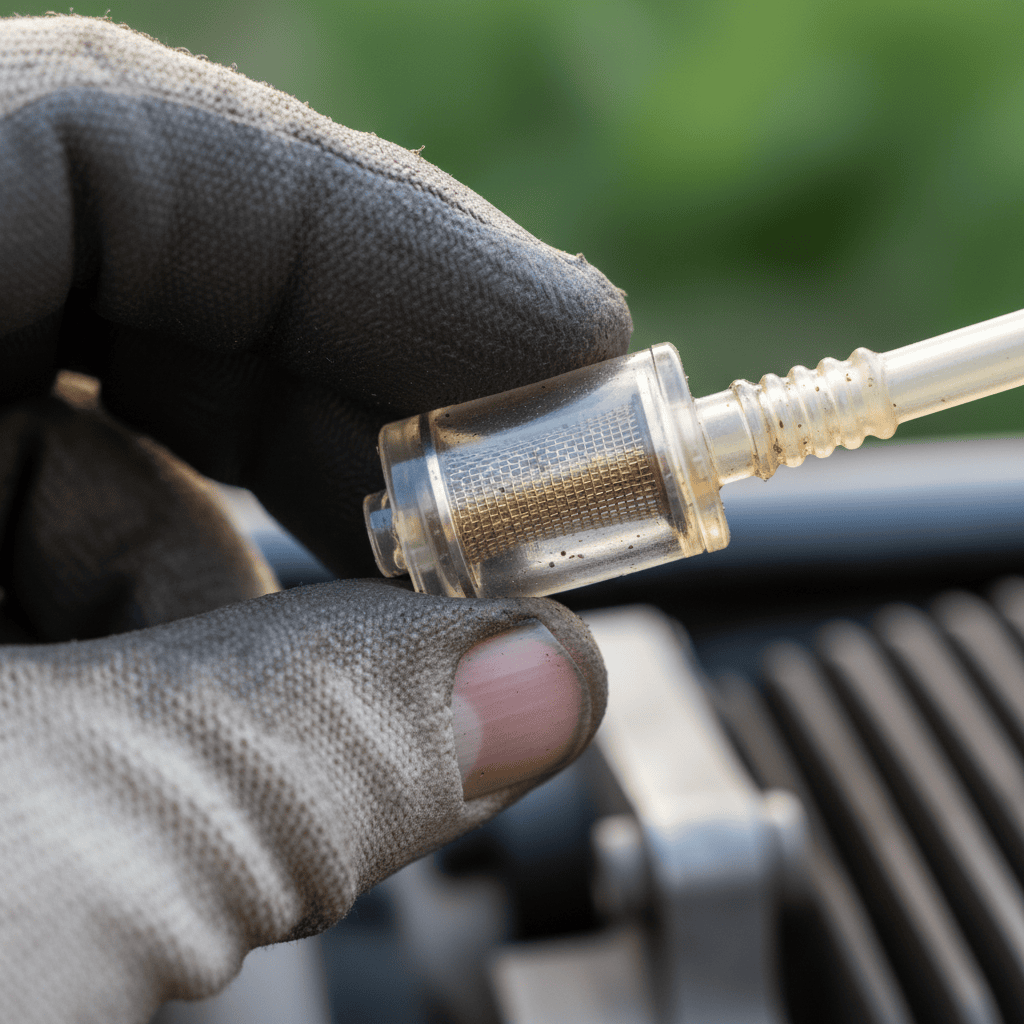
A dirty fuel filter or kinked/clogged fuel line restricts flow to the carburetor.
- Check: Inspect the inline fuel filter (if equipped). Disconnect the fuel line from the carburetor and check for steady flow when the fuel shut-off valve is open.
- Fix: Replace the fuel filter and any cracked or clogged fuel lines.
3. Blocked Fuel Cap Vent
The vent on your gas cap allows air to enter the tank as fuel is used. If it’s clogged, a vacuum forms, starving the engine of fuel. Readers comparing setup options can review our technical analysis on marshall stanmore iii vs harman kardon onyx studio 8.
- Test: Loosen the gas cap and try to run the mower. If it runs fine with the cap loose, the vent is blocked.
- Fix: Clean the vent or replace the gas cap.
4. Dirty Carburetor
This is the most common reason a mower runs for a few minutes then dies. Old fuel leaves deposits that block the tiny jets and passages.
- Fix: Remove the carburetor bowl and clean the main jet with carburetor cleaner and compressed air. For a full clean, the carburetor may need to be removed and soaked in a carburetor cleaning solution.
Step-by-Step Troubleshooting: Air and Spark
5. Dirty Air Filter
A clogged air filter restricts airflow, causing the engine to run rich and stall, especially under load. For complementary field maintenance guidelines, examine our breakdown of dyson v8 cyclone vs bissell featherweight stick.
- Check: Remove the air filter. If it’s dark, clogged with dirt or oil, it needs cleaning or replacement.
- Fix: Paper filters must be replaced. Foam filters can be washed in soapy water, dried, and re-oiled.
6. Faulty Spark Plug
A worn, fouled, or improperly gapped spark plug can cause intermittent stalling or hard starting.
- Check: Remove the spark plug. Look for black carbon buildup, oil fouling, or a worn electrode. Check the gap with a feeler gauge.
- Fix: Clean the plug with a wire brush or replace it. Ensure the gap matches your engine’s specifications (typically 0.030 inches).
Direct Answers: Matching Your Symptom to the Fix
| Symptom | Most Likely Cause & First Fix |
|---|---|
| Mower dies right after starting | Check the spark plug and safety switch (brake bail, seat switch). |
| Mower runs for a few minutes then dies | Check the fuel system: stale fuel, clogged fuel filter, or dirty carburetor. |
| Mower dies only in tall/thick grass | Check the air filter and oil level. The engine is working harder and needs more air and lubrication. |
| Mower dies when blades are engaged | Check the blade brake/clutch safety switch. A faulty switch can kill the engine when the PTO is engaged. |
When to Seek Professional Repair
If you’ve checked fuel, air, and spark and the mower still dies, the issue may be more complex: To evaluate matched hardware tolerances, consult our detailed overview of bissell crosswave hydrosteam vs shark stainforce.
- Governor Issues: The governor regulates engine speed. If it’s out of adjustment or broken, the engine may surge and die.
- Valve Problems: Incorrect valve clearance can cause loss of compression and stalling.
- Internal Engine Wear: Worn piston rings or cylinder scoring can lead to low compression and poor performance.
Consider the mower’s age and value. For older, low-value mowers, frequent repairs may not be cost-effective.
Buyer FAQs: Lawn Mower Keeps Dying Solved
Can old gas really make my mower die?
Yes, absolutely. Gasoline with ethanol begins to degrade within 30 days. It absorbs moisture and forms a sticky varnish that clogs the tiny jets and passages in your carburetor, leading to fuel starvation and stalling.
My mower dies only when I let go of the handle. What’s wrong?
This is a safety feature. The engine is designed to stop when you release the brake bail (the handle you hold down). If it dies when you release it, that’s normal operation. If it dies while you’re holding it down, you have a different problem.
How often should I change the air filter on my lawn mower?
Check the air filter every 25 hours of use or once per mowing season. In very dusty conditions, you may need to check it more frequently. A clean air filter is essential for proper engine performance and preventing stalling.
Is it worth fixing an old lawn mower that keeps dying?
It depends on the mower’s age and the repair cost. As a general rule, if the repair cost exceeds 50% of the price of a new mower, replacement may be more economical. For a simple fuel system cleaning or spark plug change, it’s almost always worth fixing.
Related Maintenance and Operating Guides
To keep your equipment running at peak operating efficiency, explore our related technical walkthroughs and maintenance tutorials:
- Consult our detailed breakdown on residential zero-turn lawn mower guide.
Engine Stalling and Safe Diagnosis
Stalling often traces back to fuel, air or spark issues, and each check should be made with the engine stopped. For general safety reading on engine problems, consult American National Standards Institute (ANSI).