Direct Answer: How to Change Oil in a Lawn Mower
To change the oil in a gas-powered lawn mower, first make sure the engine is cool and the mower is on a flat, level surface. Place an oil pan under the oil drain plug, remove the plug, and let the old oil drain completely. Replace the plug, then use a funnel to add the recommended type and amount of new oil. Finally, check the oil level with the dipstick and dispose of the old oil properly at a local recycling center.
If your mower has no drain plug, you may need to tip the mower to drain oil through the fill tube. Always consult your owner’s manual for exact oil capacity, oil type, and model-specific instructions.
Why and When to Change Your Lawn Mower Oil
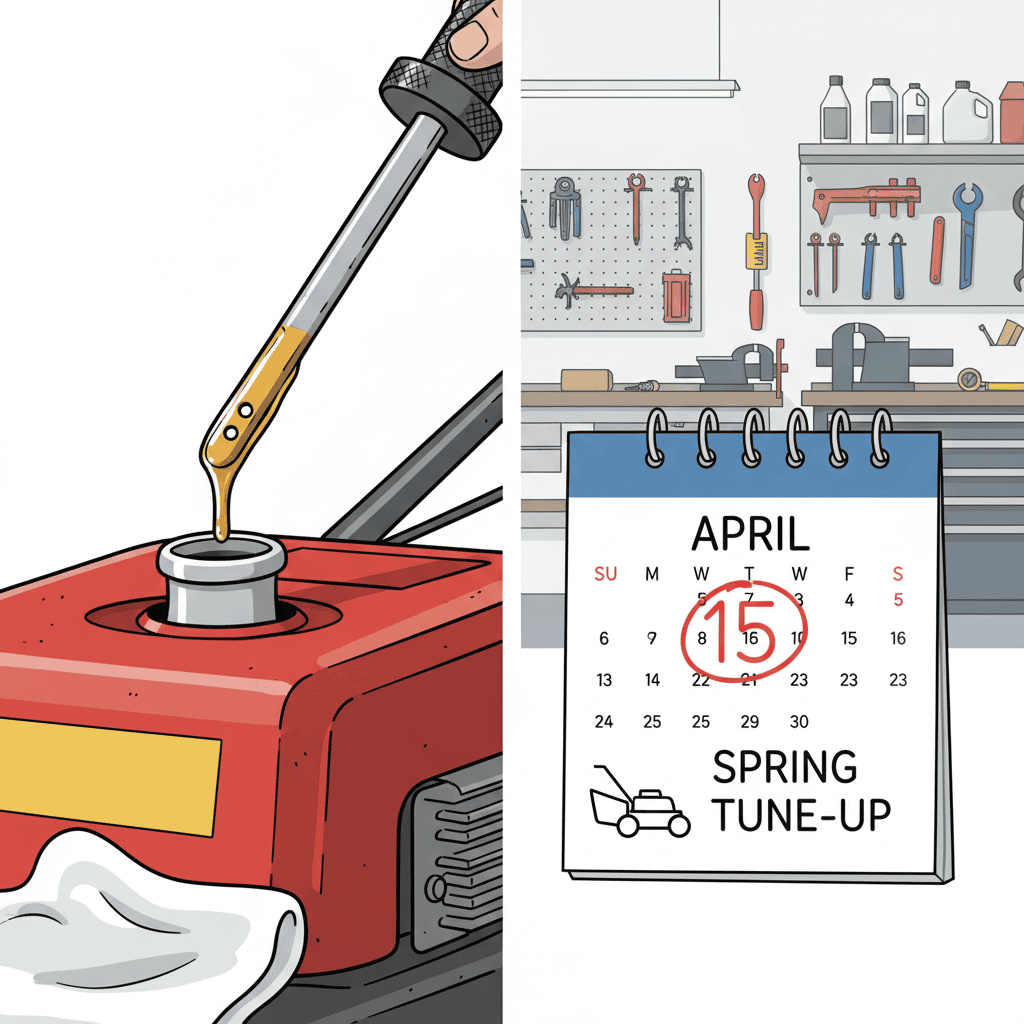
Regular oil changes are one of the most important maintenance tasks for keeping a lawn mower running smoothly. Oil lubricates the engine’s moving parts, reduces friction, carries away heat, and traps dirt and metal particles. Over time, oil breaks down, becomes contaminated, and loses its ability to protect the engine.
Why Is Changing Lawn Mower Oil Important?
- Engine Protection: Fresh oil prevents wear on the piston, cylinder, bearings, and other internal components.
- Cooling: Oil helps dissipate heat generated during combustion, preventing overheating.
- Cleaning: Detergents in oil suspend dirt and combustion byproducts so they don’t form sludge.
- Longer Engine Life: Consistent oil changes can add years of service to the mower.
- Better Performance: A well-lubricated engine starts easily, runs smoothly, and maintains power.
How Often Should You Change the Oil in a Lawn Mower?
As a general rule, change the oil after the first 5 hours of use on a brand-new mower to remove initial break-in metal particles. After that, most manufacturers recommend changing oil every 50 hours of operation or once per season, whichever comes first. If you mow a typical lawn weekly during the growing season, that usually translates to one oil change per year.
- Heavy use: Commercial or frequent mowing (more than 50 hours per season) may require oil changes every 25–30 hours.
- Hot or dusty conditions: Change oil more frequently to compensate for increased contamination.
- Before winter storage: Fresh oil helps protect the engine during long periods of inactivity.
Always check your owner’s manual for the manufacturer’s recommended interval, as requirements vary by engine brand and model.
Tools and Materials You’ll Need for the Oil Change
Gather everything you need before you begin so the job goes smoothly and you avoid spills. Most lawn mower oil changes require only a few basic items.
Tools and Supplies Required
- New engine oil: The type and viscosity recommended for your mower’s engine (see below).
- Oil drain pan or container: A low-profile pan that fits under the mower deck, or a plastic container rated for oil.
- Funnel: A small funnel, ideally with a long or flexible neck, to pour oil without spilling.
- Wrench or socket set: To loosen the oil drain plug, if your mower has one.
- Oil filter wrench: Only needed if your mower is equipped with an oil filter.
- Shop rags or paper towels: For cleaning up spills and the drain plug area.
- Drip tray or cardboard: To protect the ground from oil drips.
- Gloves: Nitrile or latex gloves keep oil off your hands.
- Zip-close bag or sealed container: To transport the used oil for recycling.
What Type of Oil Is Best for a Lawn Mower Engine?
Most modern four-stroke lawn mower engines use SAE 30 high-detergent motor oil in warm weather. However, the best oil depends on the ambient temperature and your engine manufacturer’s recommendation.
| Ambient Temperature | Recommended Viscosity |
|---|---|
| Above 40°F (4°C) | SAE 30 |
| Below 40°F (4°C) | SAE 10W-30 or 5W-30 |
| All temperatures | 10W-30 synthetic |
- SAE 30: The traditional single-grade oil for small engines used in warm weather.
- SAE 10W-30: A multi-grade oil that works across a wider temperature range and is often recommended by manufacturers like Briggs & Stratton.
- Synthetic oil: Provides better high-temperature stability and may extend oil change intervals, but it is more expensive.
- 2-cycle oil: Never use 2-cycle oil in a 4-stroke engine; it is designed for fuel mixing in two-stroke engines.
Do not use automotive additives, and avoid oils labeled only for diesel engines unless the manual allows it. For the exact specification, look for the API service classification listed in your owner’s manual (commonly SJ, SL, SM, or SN).
Step-by-Step Guide: How to Change Oil in a Lawn Mower
Follow these steps carefully to safely drain old oil and add fresh oil. The process takes about 15–30 minutes.
Step 1: Prepare the Mower
- Place the mower on a flat, level surface, preferably on a concrete driveway or garage floor.
- Run the engine for 3–5 minutes to warm the oil, then turn it off. Warm oil flows faster, so it drains more completely. If the engine is already hot, wait until it is warm but not hot to avoid burns.
- Disconnect the spark plug wire and secure it away from the spark plug. This prevents the engine from accidentally starting while you work.
- Allow the mower to cool briefly until the oil is simply warm, not hot.
Step 2: Position the Oil Drain Pan
- Locate the oil drain plug, which is usually on the bottom or side of the engine block, near the base of the mower deck.
- Slide the oil drain pan underneath the plug, making sure it is positioned to catch the full stream of oil.
Step 3: Drain the Old Oil
- Use a wrench or socket to loosen the drain plug counterclockwise. Turn it slowly until oil begins to seep out, then remove it by hand.
- Let the old oil drain completely. This may take several minutes; tilting the mower slightly can help empty the crankcase, but only if the manual allows it.
- If your mower does not have a drain plug, you may need to tip the mower on its side with the air filter and carburetor facing up, and drain the oil out through the oil fill tube into the pan.
Step 4: Replace the Drain Plug
- Wipe the drain plug and the area around the opening with a clean rag.
- Screw the plug back in by hand, then tighten it with a wrench. Do not overtighten, as this can strip the threads or damage the washer.
- If your mower has an oil filter, now is the time to replace it: remove the old filter with an oil filter wrench, apply a light coat of new oil to the new filter’s rubber gasket, screw it on by hand, and tighten it a further half to three-quarter turn.
Step 5: Add New Oil
- Locate the oil fill tube, usually marked with an oil can symbol, and remove the cap or dipstick.
- Insert a funnel into the fill tube.
- Pour in the recommended type and amount of new oil. Most walk-behind mowers hold between 15 and 20 ounces (about 0.45–0.6 liters), but always verify the capacity in your owner’s manual. Add oil slowly and check the level partway through to avoid overfilling.
Step 6: Check the Oil Level
- Wait 1–2 minutes so the oil can settle into the crankcase.
- Remove the dipstick, wipe it clean, reinsert it fully, and pull it out again.
- The oil level should be between the add and full marks, ideally near the full mark.
- Add more oil in small increments if needed; do not overfill, as this can cause smoking and engine damage.
Step 7: Finish and Test
- Wipe up any spilled oil, replace the dipstick or cap, and reconnect the spark plug wire.
- Start the engine and let it run for a minute, watching for leaks around the drain plug and oil filter.
- Turn the engine off and recheck the oil level once more, topping up if necessary.
Special Considerations for Different Mower Types
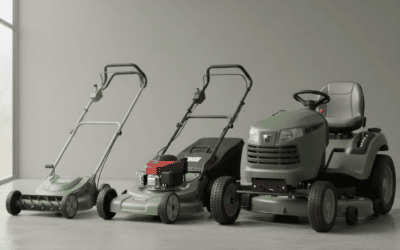
The basic oil change procedure is similar for most gas-powered mowers, but there are important differences between push and riding mowers. Electric mowers, meanwhile, require no oil changes at all.
Push Mowers vs. Riding Mowers
- Push mowers: Usually have a small engine with no oil filter and a capacity of about 15–20 ounces. Because the deck sits low, you may need a shallow pan or to tip the mower to access the plug.
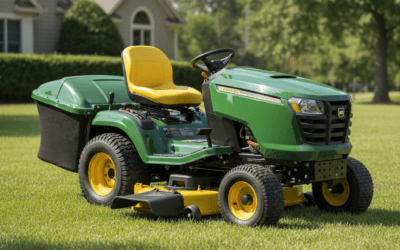
- Riding mowers: Have larger engines that hold 1–2 quarts or more of oil, and many are equipped with an oil filter. The drain plug may be located underneath the deck or on the side of the engine; some machines have a drain hose that makes the job easier.
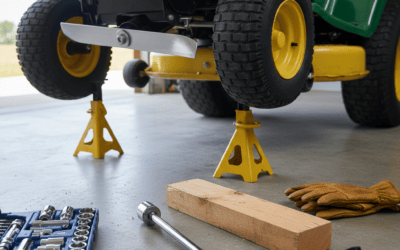
For riding mowers, you may also need to raise the machine with jack stands to reach the drain plug. Never rely on a jack alone, and always chock the wheels before working underneath.
Do Electric Lawn Mowers Need Oil Changes?
No. Battery-powered and corded electric lawn mowers have no internal combustion engine, so they do not use engine oil and require no oil changes. Their maintenance focuses on the battery, blades, and cleaning. Only gas-powered mowers need regular oil changes.
Proper Disposal of Used Lawn Mower Oil
Used engine oil is a hazardous waste and should never be poured down a drain, into the ground, or into the trash. Improper disposal contaminates soil and water and is illegal in many areas.
How to Dispose of or Recycle Used Oil
- Store it safely: Pour the used oil into a clean, sealable container, such as the original oil bottle or a dedicated oil disposal container.
- Take it to a recycling center: Many auto parts stores, service stations, and municipal recycling centers accept used motor oil free of charge.
- Check local rules: Some facilities also accept used oil filters and oily rags; call ahead to confirm what they take.
- Never mix it: Do not mix used oil with solvents, antifreeze, or other chemicals, as this can make it unrecyclable.
By recycling used oil, you help ensure it can be re-refined into new lubricants or processed for energy recovery, keeping harmful contaminants out of the environment.
Frequently Asked Questions
How often should I change the oil in my lawn mower?
Most manufacturers recommend changing the oil after the first 5 hours of use on a new mower, then every 50 hours of operation or once per season (annually), whichever comes first. If you mow frequently or in dusty conditions, check the owner’s manual because a shorter interval may be recommended.
Can I use car oil in my lawn mower?
Yes, in many cases. Automotive oil with the viscosity recommended by your mower manufacturer (commonly SAE 30 or 10W-30) is generally acceptable for four-stroke small engines. Avoid oils with fuel-saving additives that can cause clutch slippage in some mowers, and always check that the oil meets the API service classification listed in your owner’s manual.
What happens if I put too much oil in my lawn mower?
Overfilling can cause excessive pressure in the crankcase, leading to oil leaks, blue smoke from the exhaust, fouled spark plugs, and even engine damage. If you overfill, drain the excess oil until the dipstick reads within the proper range before running the mower.
Do I need to change the oil filter every time I change the oil?
If your mower has an oil filter, the general rule is to replace it with every oil change. A fresh filter ensures that the new oil stays clean and provides full protection for the engine. A filter wrench and the correct replacement filter from your engine manufacturer make the job quick and easy.