

Direct answer: To clean a lawn mower safely and effectively, start by ensuring the engine is off and cool, then disconnect the spark plug wire (or remove the battery on electric models) so the mower cannot accidentally start. Remove loose grass clippings and debris from the body, wheels, and air intake, then scrape built-up grass from the underside of the deck with a plastic scraper or putty knife. Wash with a hose or mild detergent, dry every surface thoroughly to prevent rust, and apply a light lubricant or silicone spray to the deck underside before storing.

Pros
- Large-size design named in product title
- Sharpening and balancing functions listed
- Listed as a new upgraded version

Pros
- Adjustable 15-to-45-degree range in title
- Sharpening and balancing functions listed

Pros
- Sharpener and balancer functions in title
- 15-to-45-degree adjustable setting listed
- Built for lawn mower blade maintenance
Pros
- Includes replacement gaskets and a 98079-55846 spark plug
- Matches Honda HRR216 and HRS216 lawn mower models
- Designed around the 16100-Z8B-901 carburetor specification
Cons
- Restricted to select Honda GCV160 mower applications
- Installation requires basic mechanical tools and skills
Why Cleaning Your Lawn Mower Matters
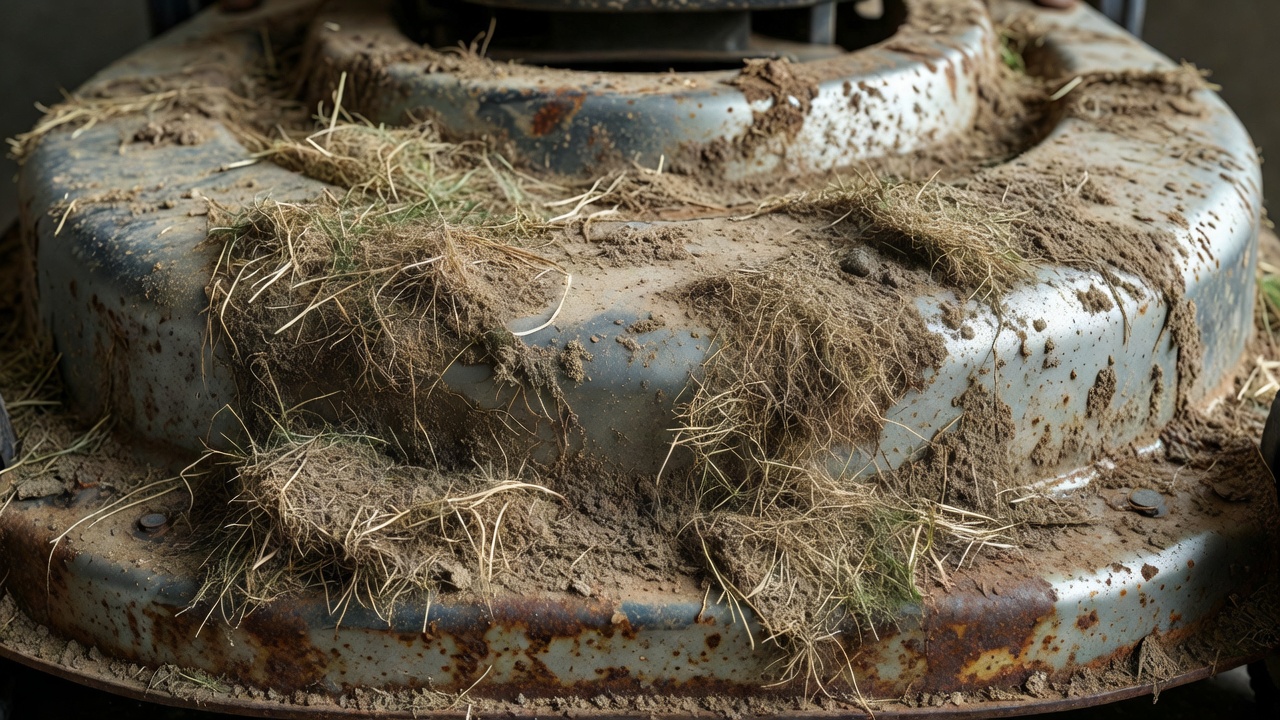
Most people think of a lawn mower as a rugged outdoor tool that only needs fuel and an occasional blade sharpening. In reality, the underside of the mower deck works like a vacuum chamber: every time you cut grass, clippings, sap, dirt, and moisture get thrown up against the metal. Over the course of a season, that material hardens into a dense layer that can be nearly as tough as concrete.
That buildup is not just ugly. It reduces cutting performance because the deck no longer creates the airflow needed to stand the grass up for a clean cut, and it invites rust and corrosion that shorten the mower’s lifespan. A caked-on deck also makes the mower heavier, strains the engine, and can eventually cause clumps of wet grass to roll out onto your lawn. Regular cleaning, on the other hand, keeps the blades sharp, the airflow strong, and the metal protected.
Before you start, it is worth clarifying what “clean the mower” means for most homeowners. A light exterior wipe-down removes cosmetic dust, but the job that actually matters is cleaning the underside of the deck, where grass accumulates. This guide covers both: a full-body clean, with special attention to the deck, so you come away with a mower that starts easily, cuts cleanly, and resists rust all season long.
Before You Start: Safety Prep and the Tools You’ll Need
Safety comes first. A lawn mower blade spins fast enough to cause serious injury, and a hot engine or sharp metal edge can burn or cut you even when the mower is off. Taking a few minutes to prepare prevents accidents and makes the whole job faster. Users looking for related component recommendations can explore our jbl partybox club 120 vs sony srs xv500 breakdown.
Gas versus Electric: Know Your Safety Steps
The critical safety step is the same for every mower: make sure it cannot start while you are working on it. For a gas mower, disconnect the spark plug wire and tuck it away from the plug so it cannot accidentally reconnect. For an electric mower, remove the battery (or unplug the power cord on corded models). Even if you are only cleaning and not servicing the blade, this step is non-negotiable because many accidents happen when a mower fires up unexpectedly. Users looking for related component recommendations can explore our jbl partybox club 120 vs sony srs xv500 breakdown.
Also let the engine cool completely before you begin. Hot metal and hot oil can burn you, and water hitting a hot engine can cause cracking or damage to engine components. A good rule of thumb is to wait at least 30 to 60 minutes after the last mow, or simply clean the mower the day after mowing. Before finalizing equipment decisions, refer to our comprehensive z890 vs x870e motherboard comparison.
If you need to tilt the mower to reach the deck, do it only after the engine is cool and the fuel system is stable. Never tilt a gas mower with the carburetor side down, because oil or fuel can leak into the air filter or carburetor. Always check the owner’s manual for the correct tilting direction, and drain the fuel first if the manual recommends it for storage or service.
Tools and Supplies Checklist
You do not need a garage full of specialized equipment. Most of these items are already in the house or shed: Before finalizing equipment decisions, refer to our comprehensive z890 vs x870e motherboard comparison.
| Category | Tools and Supplies |
|---|---|
| Protection | Heavy-duty work gloves, safety glasses, closed-toe shoes |
| Loose debris removal | Stiff brush, shop vacuum, leaf blower, or compressed air |
| Scraping | Plastic scraper, putty knife, wooden paint stick, or a dedicated deck-cleaning tool |
| Washing | Garden hose with a spray nozzle, bucket, mild detergent or degreaser, soft cloth or sponge |
| Drying | Clean towels or rags; warm sun for air-drying |
| Lubrication | Silicone spray or light lubricant, general-purpose oil, grease for wheels and cables |
| Maintenance extras | Spark plug wrench (if removing the plug), socket set, blade sharpening tools if doing a full service |
Metal scrapers work, but plastic or wooden tools are safer because they will not scratch the deck’s protective coating or gouge the metal. If you do use a putty knife, keep the edge flat against the surface.
How to Clean a Lawn Mower: Step-by-Step Instructions
Follow these steps in order for a thorough, safe clean. The whole job takes roughly 30 to 45 minutes, plus drying time. For broader ecosystem context, read through our operational guide on marshall stanmore iii vs harman kardon onyx studio 8.
Step 1: Let the Engine Cool and Disconnect the Spark Plug
Park the mower on a flat, level surface that can get wet and dirty, such as a driveway or patio. Shut off the engine and wait for it to cool. Then disconnect the spark plug wire from the spark plug on a gas mower, or remove the battery on an electric mower. Tug the wire boot, not the cable itself, and secure it away from the plug. On some mowers, you will also need to remove the blade or belt for a deep clean; if so, do it now and keep the hardware in a safe place.
Step 2: Remove Loose Clippings and Debris
Before adding any water, clear away the dry material. Use a stiff brush, shop vacuum, leaf blower, or gloved hands to remove grass clippings, leaves, and dirt from the top of the deck, the wheels, the discharge chute, the air intake, and around the engine. Pay attention to vents and cooling fins on the engine block, because clogged air flow can cause overheating. This dry pass makes the wet cleaning faster and prevents you from pushing sludge into the parts you want to protect. For troubleshooting and reliability insights, consult our in-depth dyson v8 cyclone vs bissell featherweight stick report.
Step 3: Tilt the Mower Safely to Access the Deck
To reach the underside, tilt the mower onto its side. Check the owner’s manual first: most gas mowers should be tilted with the air filter and carburetor facing up so fuel and oil do not leak into them. If the mower has a full tank, you may want to siphon out the gas or run it nearly empty before tilting. For electric mowers, tipping is generally less risky, but still remove the battery and protect the underside components. Place a piece of cardboard or an old tarp under the deck to catch loose debris.
Step 4: Scrape Buildup from the Underside of the Deck
Start scraping while the buildup is dry, because wet grass residue turns slippery and harder to manage. Work the scraper or putty knife across the underside, loosening caked-on grass in sections. Angle the mower so loosened material falls out rather than back into the deck. Follow up with a stiff brush to sweep away the remaining crumbs. If the buildup is very thick and hard, a dedicated deck-cleaning tool with a curved blade that matches the deck shape makes the job much easier. Try not to damage the deck’s paint or coating, since that coating is your first line of defense against rust. Readers comparing setup options can review our technical analysis on bissell crosswave hydrosteam vs shark stainforce.
Step 5: Rinse and Wash the Deck and Body
Now you can introduce water. Use a garden hose to rinse the underside of the deck, directing the spray from the center outward so debris washes clear of the cutting chamber. Then wash the top of the deck, the body, the wheels, and the handle with a bucket of water and a mild detergent or degreaser. A soft cloth or sponge works well; avoid abrasive pads that scratch painted surfaces.
Keep water away from sensitive areas: the engine, carburetor, air filter, muffler, and all electrical components. On electric mowers, protect the motor housing and battery contacts. Do not aim a concentrated stream directly at seals, bearings, or the blade bolt. Many modern mowers have a deck wash port, a fitting on top of the deck that you attach a hose to; when the mower is running (with the blade engaged), water is sprayed into the spinning cutting chamber, which flushes out grass from the inside. Check the manual to see if your model has one and how to use it safely.
Step 6: Dry Thoroughly
Drying is the step most people skip, and it is the difference between a clean mower and a rusty one. Trapped moisture is what causes rust and corrosion on the deck, blades, and fasteners. Wipe down every surface with a clean towel, paying special attention to the underside of the deck, the blade, and any crevices where water collects. Then leave the mower in the sun with the deck tilted open so the remainder evaporates. On humid days, give it several hours or overnight indoors in a dry, ventilated space.
Step 7: Lubricate Moving Parts
Once everything is dry, apply a light coat of silicone spray or a non-stick lubricant to the underside of the deck. This coating repels grass, making future cleaning faster and preventing clippings from sticking. Lubricate the wheels, height-adjustment levers, and control cables according to the owner’s manual. Do not over-lubricate the blade area, and never oil the drive belt or pulleys unless the manual instructs you to, since excess oil attracts dirt and can cause slipping.
Getting Under the Deck: Removing Caked-On Grass and Debris
The underside of the deck is where grass accumulates most aggressively, especially in spring when the lawn is wet and growing fast. This is also the area most likely to rust if neglected, so give it the most attention.
Scrapers, Putty Knives, and Deck-Cleaning Tools
A stiff plastic scraper or a putty knife is the classic tool for caked-on grass. For really stubborn layers, a dedicated deck scraper with an angled handle gives you better leverage, and some models feature a curved edge that matches the deck contour so you can clean the entire chamber in one pass. Spray the underside lightly with water first only if the grass is soft; otherwise, keep it dry and scrape, then rinse away the residue. For a fast touch-up between deep cleans, many people keep an old paint stick in the garage and give the deck a quick scrape every time they mow.
Should You Use a Pressure Washer?
A pressure washer is effective at blasting off grass and grime, but it comes with real risks. High-pressure water can force moisture into blade bearings, axle seals, and electrical connections, which leads to premature failure and rust. If you use one, keep the nozzle on a wide, low-pressure setting, stay at least a foot away from the deck, and never aim directly at the engine, carburetor, air filter, or wiring. A garden hose with a nozzle is the safer choice for most people, and it is more than sufficient if you scrape first.
Using a Deck Wash Port
Many walk-behind mowers and even some riding mowers now include a deck wash port, sometimes called a washout port. It is a small threaded fitting on top of the deck where you connect a standard garden hose. To use it, move the mower to a spot where water can drain, attach the hose, start the mower on a flat surface, and engage the blade so the deck spins. Turn on the water and let it run for a couple of minutes; the spinning blade flings water around the cutting chamber and dislodges soft grass. Then stop the mower, disconnect the hose, and finish with a dry pass. Note that a wash port is a maintenance aid, not a substitute for scraping: caked-on, dried grass usually needs manual scraping first.
Drying, Lubrication, and Post-Cleaning Care
Why Thorough Drying Prevents Rust
Steel mower decks, blades, and bolts rust quickly when moisture is left in contact with bare metal. Even minor scratches in the paint become rust spots once water sits in them. Drying every surface immediately after washing, and then allowing the mower to air-dry fully in the sun, keeps the metal dry and dramatically slows corrosion. If you live in a humid area, store the mower in a dry shed or garage rather than leaving it outside, and consider propping the deck open so air circulates around it.
Lubricating the Deck and Moving Parts
Applying a light coat of silicone or a non-stick spray to the underside of the deck after it is dry serves two purposes: it protects the metal from moisture and makes grass less likely to stick on the next mow. The same spray can be used on the height-adjustment levers, wheel axles, and control cables, but keep it off the brake pads, drive belt, and pulleys. Grease fittings on axles and spindles should be treated according to the owner’s manual, usually with a small amount of general-purpose grease.
Final Checks Before the Next Mow
Before you store the mower, double-check that the spark plug wire is reconnected (or the battery reinstalled), the blade is secure, and no tools are left under the deck. Confirm that the air filter is dry and clean, and that the fuel tank cap is on tight. A quick visual check of the blade for nicks or dullness is also worth doing while you are underneath. If you tipped the mower, check the oil level and the air filter for any signs of fuel or oil leakage, and clean or replace the filter if needed.
How Often Should You Clean Your Lawn Mower?
Cleaning frequency depends on how often you mow, how wet and tall the grass is, and whether the deck has a wash port. A practical routine looks like this:
After Every Few Uses: Light Cleanup
After each mow, knock loose clippings off the deck and body with a brush or leaf blower. If your mower has a wash port, a quick rinse at the end of a mowing session takes two minutes and prevents grass from ever baking on. During the peak growing season, do this every two to three mows.
Mid-Season: Full Deck Cleaning
Once a month or so, perform the full step-by-step clean described above, including scraping the underside, washing, drying, and lubricating. This is especially important if you notice the mower leaving clumps of grass, cutting unevenly, or straining more than usual, since those are signs of heavy deck buildup.
End of Season: Deep Clean and Service
At the end of the mowing season, do a deep clean before storing the mower for winter. Scrape and wash the deck, dry it completely, and spray the underside with lubricant to protect the metal during months of storage. This is also the ideal time to sharpen or replace the blade, change the oil, replace the air filter, and drain or stabilize the fuel. A mower that goes into storage clean will start far more easily next spring, and a clean, protected deck will not rust away while it sits.
Buyer FAQs: How Do You Clean A Lawn Mower Solved
Can I use a pressure washer to clean my lawn mower?
Yes, but with caution. Use a wide, low-pressure setting and keep the nozzle at least a foot away from the surfaces you are cleaning. Never direct high-pressure water at the engine, carburetor, air filter, wiring, or bearings, since forcing moisture into those areas can cause damage and rust. For most people, a garden hose after manual scraping is safer and just as effective.
How do I clean under the mower deck without turning the mower over?
If you do not want to tilt the mower, use the deck wash port if your model has one: attach a hose, start the mower with the blade engaged, and run water through it. For mowers without a wash port, you can also reach the underside with a curved scraper and a flashlight, though the job is easier and more thorough if the mower is tilted on its side following the manufacturer’s guidance for gas models.
Should I lubricate the underside of the mower deck?
Yes, after the deck is completely dry, apply a light coat of silicone spray or a non-stick lubricant. This helps prevent grass from sticking, reduces rust, and makes future cleaning quicker. Avoid spraying the blade’s cutting edge and any areas where oil would contact the drive belt or brake surfaces.
Can I clean a riding mower the same way?
Yes, the same principles apply: disconnect the spark plug or battery, scrape and rinse the underside of the deck, dry thoroughly, and lubricate. The key difference is access, since you cannot easily tip a riding mower. Use ramps, a floor jack, or the deck wash port to reach the underside safely, and always follow the owner’s manual for the correct way to raise or remove the mower deck.
For more hands-on benchmarks and buying recommendations, consult our guides on heavy-duty chainsaw buyer guide.
Mechanical safety standards, operational tolerances, and protective gear guidelines align with benchmark specifications established by the American National Standards Institute (ANSI).









