Understanding the Short Answer: Calories Burned by Mower Type

Mowing the lawn is a common yard task that doubles as physical exercise. The number of calories you burn depends heavily on the type of mower you use and your personal characteristics. For a clear baseline:
- Push (Manual) Mower: Approximately 200–350 calories per hour.
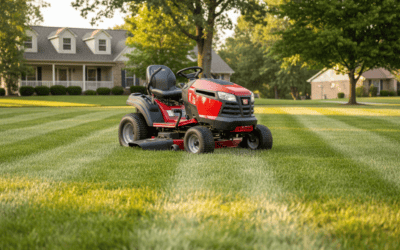
- Riding Mower: Approximately 100–150 calories per hour.
A standard reference point is a 155-pound person. Using a manual push mower, this person burns roughly 223 calories per hour (about 3.7 calories per minute). This activity has a MET (Metabolic Equivalent of Task) value of approximately 4.5. Switching to a riding mower reduces the effort significantly, burning about 149 calories per hour (MET ~3.0) for the same person.
The large difference exists because push mowing requires constant physical exertion to move the mower and engage the cutting blades, while riding mowers eliminate the need to walk and push, turning the task into a seated activity.
Key Factors That Change Your Calorie Burn
The estimates above are averages. Your actual calorie burn can vary widely based on several key factors:
- Body Weight: Heavier individuals burn more calories performing the same task because it requires more energy to move their body mass. A 200-pound person will burn more than a 155-pound person mowing at the same pace.
- Terrain and Incline: Mowing on flat ground is less demanding than mowing on a slope or uneven terrain. Hills require more muscular effort to push the mower uphill, increasing calorie expenditure.
- Walking Speed and Technique: A brisk, steady pace burns more calories than a slow, leisurely one. Your pushing technique and posture also affect the intensity.
- Mower Type Nuances: A self-propelled mower requires less pushing effort than a fully manual push mower, placing its calorie burn somewhere between a manual push and a riding mower. Electric mowers are often lighter, which can slightly reduce the effort.
- Additional Tasks: Activities like bagging clippings, raking, or using a string trimmer before or after mowing add to the total calorie burn of your yard work session.
Step-by-Step: How to Estimate Your Own Calorie Burn
You can create a personalized estimate using a simple formula based on MET values. The general formula for calories burned per hour is:
Calories per hour = (MET × Body Weight in kg) × 3.5 / 200 × 60
For a simpler, pound-based estimate:
- Convert your weight to kilograms (divide pounds by 2.2).
- Use the MET value for your mower type (e.g., 4.5 for push mowing, 3.0 for riding).
- Plug the numbers into the formula above.
Example: A 180-pound (81.8 kg) person using a push mower (MET 4.5):
Calories per hour = (4.5 × 81.8) × 3.5 / 200 × 60 ≈ 258 calories per hour.
To find your total burn, multiply the calories per hour by the number of hours you mow. Mowing for 30 minutes would be half the hourly rate, and 60 minutes is the full hourly estimate.
Direct Answers to Common Follow-Up Questions
- Is mowing the lawn good cardio or strength exercise? Push mowing is primarily a moderate-intensity cardiovascular exercise. It also provides some lower-body and core strength benefits from pushing and maneuvering the mower.
- How does mowing compare to walking or jogging? Push mowing (MET ~4.5) is comparable to brisk walking at about 3.5–4 mph. It is less intense than jogging (MET ~7.0–8.0) but more intense than leisurely walking (MET ~2.0).
- Does mowing count toward daily exercise goals? Yes. The CDC and WHO recognize activities with a MET of 3.0 or higher as moderate-intensity exercise. Both push and riding mowing meet this threshold, contributing to your recommended 150 minutes of weekly moderate activity.
Safety and Practical Tips for Turning Mowing Into a Workout
To maximize calorie burn safely:
- Warm-Up: Start with a few minutes of light stretching or walking to prepare your muscles.
- Posture: Maintain an upright posture, engage your core, and push with your legs, not just your arms, to reduce back strain.
- Hydration: Drink water before, during, and after mowing, especially on hot days.
- Timing: Mowing in the cooler parts of the day (morning or evening) can make the workout more comfortable and safer.
- Listen to Your Body: Choose a riding mower if you have joint issues, are new to exercise, or have a very large lawn to avoid overexertion.
Frequently Asked Questions
How many calories do you burn mowing for 30 minutes?
For a 155-pound person, mowing with a push mower for 30 minutes burns approximately 110–115 calories. Using a riding mower for the same duration burns about 75 calories. These numbers scale with your body weight and mowing intensity.
Does a self-propelled mower burn fewer calories than a push mower?
Yes. A self-propelled mower reduces the physical effort needed to move the mower forward, which lowers the MET value and total calorie burn compared to a fully manual push mower. The exact reduction depends on how much assistance the mower provides and the terrain.
Can mowing help with weight loss?
Regular mowing contributes to a calorie deficit, which is necessary for weight loss. While it shouldn’t be your sole exercise, it is an effective way to increase your daily energy expenditure, especially if you have a large lawn or use a push mower consistently.