Quick Answer: How to Use a Trimmer as an Edger
Rotate your string trimmer so the shaft stands vertically instead of horizontally, positioning the spinning head parallel to the ground at lawn level. Walk slowly along lawn borders with steady, controlled pressure, letting the string cut rather than forcing it into the turf. This technique works well for routine residential edging and eliminates the need for a separate tool, though dedicated edgers offer better control on heavily overgrown borders.
Understanding Trimmer-to-Edger Conversion
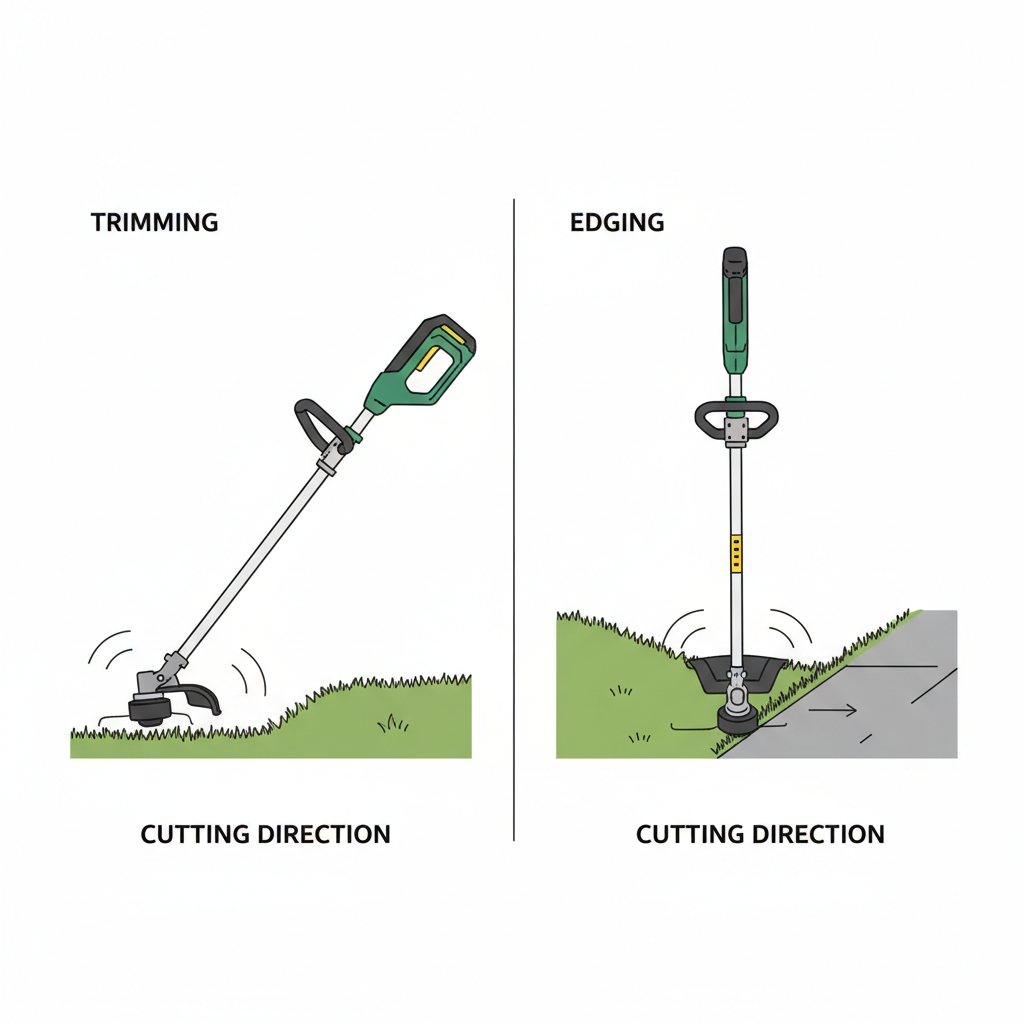
A string trimmer functions as an edger because both tools use the same basic mechanism: a spinning nylon string that cuts grass through contact and speed. The key difference lies in cutting orientation—trimmers cut horizontally (flat to the ground), while edgers cut vertically (perpendicular to the ground). By simply changing how you hold and position your trimmer, you can redirect that cutting force to create clean lawn edges without purchasing additional equipment.
Why this conversion works: The spinning string generates sufficient force in any orientation, and your trimmer’s power output doesn’t change when repositioned. Cordless, corded, and gas-powered trimmers all edge effectively once you master the technique.
When to use trimmer-as-edger method: This approach works best for light-to-moderate weekly or bi-weekly edging on established lawns. It’s ideal for homeowners who:
- Maintain already-defined lawn borders
- Want to avoid buying a second tool
- Have smaller residential properties (under half an acre)
- Don’t face severe overgrowth or thick perennial weeds at edges
When a dedicated edger is preferable: Invest in a dedicated edger if your lawn features heavily overgrown borders, thick sod buildup, or extensive trenching needs. Dedicated edgers provide superior cutting depth, cleaner blade geometry, and reduced operator fatigue during extended use. They’re also better for commercial or high-volume applications.
Key Positioning and Angle Adjustments
Shaft Angle and Orientation
The critical adjustment is rotating your trimmer’s shaft from horizontal to vertical. Here’s the proper setup:
- Shaft position: Hold the trimmer so the long shaft runs straight up and down, perpendicular to the ground
- Head orientation: The trimmer head (where the string emerges) should be parallel to the ground and level with the top of your lawn grass
- Body angle: Stand at a slight angle to the lawn edge (roughly 45 degrees), not directly perpendicular
- Arm positioning: Keep your arms relaxed but engaged; one hand near the engine/motor, the other steadying the shaft
Why 90-degree angle matters: This positioning ensures the spinning string attacks grass and soil at the correct cutting angle, creating a clean vertical edge. A shaft that’s too angled or horizontal won’t cut edges effectively and increases operator strain.
Accounting for Trimmer Weight
Holding a trimmer vertically places more weight through your arms and shoulders than horizontal cutting. Adjust your grip and stance:
- Use both hands firmly to control the weight
- Distribute the load through your core and legs, not just shoulders
- Cordless trimmers (generally lighter) are easier to manage in vertical position than heavier gas models
- Take breaks every 20-30 minutes to prevent fatigue
Step-by-Step Edging Technique
Positioning Yourself and the Equipment
- Stand alongside the lawn edge, not in front of it. Position your body so the edge runs along your side, perpendicular to your forward direction
- Locate the blade guard on your trimmer and orient it so it faces away from you and toward the lawn edge
- Steady the shaft with both hands, keeping it vertical and the head parallel to ground level
- Align the trimmer head so the string lines up with where you want the edge to be—typically where lawn grass meets hardscape (driveway, sidewalk) or a garden bed
Walking Speed and Pressure
Slow, steady movement is essential for clean edges:
- Walking pace: Move at 1-2 mph, roughly half your normal walking speed
- Cutting pressure: Let the string do the work; avoid forcing the head into soil or sod
- Contact method: Tap the trimmer head gently along the edge rather than pressing hard in one spot
- Consistency: Maintain even speed and pressure throughout to avoid scalped areas or missed sections
Optimal technique: Think of the trimmer as a guide that follows the edge, not a tool that carves into it. The spinning string cuts grass that contacts it; excessive pressure damages turf and dulls the string faster.
Handling Corners and Curved Edges
For 90-degree corners:
- Stop the trimmer completely when you reach the corner
- Pivot your body and reposition the trimmer shaft to align with the next edge direction
- Resume cutting at the same slow pace
- Pause between edges to ensure clean corner definition
For curved or rounded borders:
- Use shorter, deliberate cutting passes (2-3 feet at a time)
- Pause between passes to reposition and sight the next cut line
- Slightly increase cutting pressure on curves to maintain edge definition
- Walk along the curve rather than trying to cut straight across it
Protecting the blade guard: During edging, the guard faces the lawn edge. Keep it at least 1-2 inches away from hardscape surfaces (concrete, asphalt) to prevent contact and guard damage.
Safety Considerations When Edging
Protective Equipment
Vertical trimmer operation changes how debris travels, requiring specific protection:
- Safety glasses or face shield: Debris spray angle shifts when edging; wear protection rated for projectile impact
- Long pants: Grass clippings and small stones travel horizontally when edging, not downward as in traditional trimming
- Closed-toe shoes with grip: Maintain stable footing on potentially uneven lawn borders
- Hearing protection: Gas-powered and corded trimmers generate noise above 85 dB; wear ear protection for sessions longer than 20 minutes
- Gloves: Optional but useful for grip stability and minor cut prevention
Debris Spray Direction
When you edge vertically, the spinning string throws debris horizontally outward rather than downward. This means:
- Position yourself so debris sprays away from your body and face
- Keep bystanders at least 10 feet away from the edging area
- Never edge toward parked vehicles, windows, or pet areas
- Adjust your stance if debris begins spraying toward you
Foot Placement and Visibility
Edging creates unique tripping and visibility risks:
- Feet placement: Stand clear of the trimmer head at all times; a moment of imbalance could bring your leg into the spinning string
- Visibility: Focus downward on the edge line and ground ahead of you, not on the trimmer head
- Uneven terrain: Proceed carefully if edging on slopes or uneven lawn borders; adjust your grip and stance for stability
- Stopping distance: Keep one hand ready to quickly shut off the trimmer if you lose balance
Trimmer Types and Edging Performance
Cordless Electric Trimmers
Edging capability: Excellent
Cordless models are ideal for trimmer-to-edger conversion because they’re lightweight, quiet, and easy to maneuver vertically. Battery-powered trimmers provide consistent power without cord entanglement. Typical runtime (30-60 minutes per charge) suits most residential edging projects.
Considerations: Battery charge depletes faster during vertical edging due to increased cutting resistance. A spare battery extends your working time.
Corded Electric Trimmers
Edging capability: Good
Reliable constant power makes corded trimmers suitable for edging, though the cord adds management complexity when operating vertically. Ensure the cord is positioned safely behind or to the side of your body to prevent tangling.
Considerations: Cord length limits reach; plan your edging path to avoid wrapping or tripping. Use a cord designed for outdoor equipment and keep it away from water sources.
Gas-Powered Trimmers
Edging capability: Good
Gas models deliver maximum power and work well for edging, particularly on tougher, established borders. However, their weight and vibration require more physical effort when held vertically for extended periods.
Considerations: Gas engines require more maintenance (spark plug checks, fuel mix ratios, annual servicing). The added weight and noise make them less ideal for smaller properties or frequent short edging sessions.
String Type and Thickness
String gauge directly affects edging performance:
- Thicker string (0.095–0.130 inches): Better for clean edge cutting; resists wearing as quickly during vertical use
- Thinner string (0.065–0.080 inches): Designed for light horizontal trimming; degrades faster when edging
- Recommendation: Use the thickest string your trimmer head accommodates to reduce replacement frequency during edging
Maintenance and Wear When Using Trimmer as Edger
String Degradation During Vertical Use
Edging accelerates string wear compared to horizontal trimming because:
- The string maintains contact with soil, sod, and hard edges (concrete, stone) rather than just grass tips
- Vertical cutting creates different friction angles that degrade string faster
- Result: Expect to replace string 20-30% more frequently when regularly edging versus traditional trimming
Extend string life by: Using thicker string, reducing cutting pressure, and limiting edging sessions to 2-3 times per week.
Guard and Housing Inspection
Vertical operation places different stress on the trimmer guard and housing:
- Check weekly: Inspect the guard for cracks, bends, or contact marks where it’s touched hardscape
- Housing damage: Look for dents or scrapes on the motor housing and shaft where they may have contacted ground or surfaces
- String escape risk: A damaged or misaligned guard can allow string to contact your leg or body; replace guards if compromised
- Trimmer head security: Ensure the head remains tight; vibration from vertical edging can loosen it over time
Operational Differences That Extend Equipment Life
Maintain your trimmer’s longevity when using it as an edger:
- Avoid forcing the head into soil; this strains the motor and degrades the transmission
- Let the string slow and cool between edging passes rather than running continuously for 30+ minutes
- Keep the air filter clean; vertical operation may draw dust differently; check and clean filters monthly during regular use
- Store properly: After edging, clean grass and soil debris from the head and guard to prevent corrosion or buildup
- Use fuel stabilizer (gas models): Store gas trimmers with stabilized fuel to prevent carburetor gum-up between use
Frequently Asked Questions
Can any string trimmer function as an edger?
Yes, all string trimmers can function as edgers if repositioned vertically. However, lightweight cordless models are easiest to control in this orientation. Heavier gas trimmers work well but require more physical effort. The key is adjusting your grip and stance to hold the shaft vertically and let the technique adapt to your trimmer’s weight and power level.
Is edging with a trimmer as effective as using a dedicated edger?
Trimmer edging is effective for routine maintenance on established lawn borders, producing clean, defined edges for most residential applications. However, dedicated edgers offer superior cutting depth, better control on overgrown or neglected borders, and less operator fatigue during extended use. If you edge frequently or manage large lawn areas, a dedicated edger delivers better long-term results.
What’s the best trimmer type for edging?
Cordless electric trimmers are the best choice for edging because they’re lightweight, quiet, easy to maneuver vertically, and require minimal maintenance. Corded electric models are reliable but require cord management. Gas-powered trimmers deliver maximum power but weigh more and create higher vibration and noise—reserve them for tougher edging tasks or commercial use.
How often should I edge my lawn using a trimmer?
Edge your lawn 2-3 times per growing season (spring through early fall) to maintain clean borders. Frequent edging prevents grass from creeping into garden beds and hardscape surfaces, reducing the physical effort needed on each pass. Weekly or bi-weekly edging maintains the best appearance but isn’t necessary for most residential lawns.
Does using a trimmer as an edger damage the equipment?
Vertical edging operation increases string wear and places different stress on the motor and guard compared to horizontal trimming. To minimize damage: use thicker replacement string, avoid forcing the head into soil, take regular breaks, and inspect the guard and housing monthly. Proper technique and maintenance preserve your trimmer’s lifespan while edging.