

Quick Answer: To change a lawn mower belt, disconnect the spark plug wires for safety, locate the belt (under the deck on push mowers or on the frame on riding mowers), note its routing, remove the old belt by loosening pulleys or guards, install the new belt following the same path, adjust tension to deflect about ½ inch under moderate pressure, and reconnect the spark plugs. Most replacements take 30 minutes to an hour.

Pros
- Powerful 80V brushless motor delivers 32HP gas-equivalent performance with quiet fume-free operation and no engine maintenance.
- Complete kit includes four 6.0Ah batteries and 600W charger for substantial runtime up to 1.5 acres.
- SmartCut technology and 42-inch heavy-duty steel deck ensure consistent cuts without bogging in tough conditions.
- Versatile towing up to 350 lbs and optional cargo hauling plus comfort features like high-back seat and LED lights.
- Strong 4-year limited warranty and full compatibility with the Greenworks 80V tool ecosystem.
Cons
- Rear utility cargo bed for 200 lb hauling is sold separately and not included in the kit.
- Runtime of up to 1.5 acres varies with conditions and may require recharging or battery swaps on larger properties.
- As a fully cordless model continuous operation depends on battery levels unlike gas engines with unlimited runtime.
The Greenworks 80V 42" CrossoverT Cordless Riding Lawn Tractor is a ready-to-mow zero-emission tractor designed for homeowners managing medium to large lawns. It features a reinforced 42-inch stamped steel deck of 12-gauge construction along with premium comfort elements such as a high-back padded seat with foldable armrests. The overall build emphasizes durability and user convenience right out of the box with the included battery and charger set.
Performance centers on the 80V TruBrushless motor that provides 32HP gas-equivalent power with instant torque and quiet fume-free operation. SmartCut technology senses grass conditions and automatically adjusts power to maintain a consistent cut even in tall thick or wet areas. The four 6.0Ah batteries support runtime for up to 1.5 acres depending on conditions while dual LED headlights and a 7-position deck height range from 1.5" to 4.5" add practicality. Front and rear attachments further allow towing up to 350 lbs for added yard utility.
Key considerations include that the rear utility storage bin capable of hauling 200 lbs is sold separately so full cargo functionality requires an extra purchase. Runtime remains condition-dependent and may fall short for properties significantly larger than 1.5 acres without using the 600W charger or swapping batteries. The cordless design prioritizes ease and low maintenance but trades off the continuous runtime of traditional gas models.
This tractor delivers strong value for eco-conscious owners of residential properties who want gas-like power without the emissions noise or upkeep. It suits those who already use or plan to expand into the Greenworks 80V family of tools and who appreciate the 4-year limited warranty. Users with exceptionally large or commercial-scale lawns should evaluate battery logistics carefully before purchase.

Pros
- Delivers strong 21 horsepower equivalent power comparable to gas riding mowers.
- Provides up to 1.5 acres of runtime on a full charge with the six included batteries.
- Features low-maintenance dual brushless motors without belts for greater durability.
- Offers versatile 12-position cutting height adjustment from 1.5 to 4.5 inches.
- Includes digital controls for blade settings, drive speeds, and cruise control.
Cons
- Limited to 1.5 acres of cutting per charge without purchasing additional batteries for bigger lawns.
- Requires recharging time for the six 56V batteries after each use session.
- Relies solely on battery power with no hybrid or gas backup option for extended operation.
The EGO Power+ TR4204 is a cordless electric riding lawn mower built as a modern tractor alternative for residential use. It features a robust 42-inch stamped steel deck and arrives ready to go with six 56V 6.0Ah batteries plus a charger, creating an immediate impression of convenience and solid construction free from gas engine complexity.
Performance shines through its equivalent 21 horsepower output and top speed of 6 MPH, allowing efficient coverage of up to 1.5 acres on a single charge. Dual brushless cutting motors operate without belts for added durability and less upkeep, while the digital display lets users select three blade settings, three drive speeds, and cruise control. The 12 adjustable heights ranging from 1.5 to 4.5 inches combined with anti-scalp wheels deliver precise results across varied terrain.
Drawbacks center on battery dependency, as larger properties beyond 1.5 acres require extra batteries and recharging intervals can interrupt workflow. The fully electric design eliminates fuel storage needs but demands access to power sources between sessions.
This mower suits homeowners with medium to large yards who value quiet, emission-free operation and reduced maintenance. Those seeking expandable battery capacity for bigger areas will find the EGO Power+ TR4204 a strong long-term investment in cordless lawn care.

Pros
- High-efficiency brushless motors maximize power output and durability over traditional motors
- Up to 2 acres runtime with three included 10.0 Ah batteries supports substantial mowing sessions
- Zero-emission operation with gas-equivalent 20 HP power for quieter environmentally friendly use
- Six-port auto-switchover battery system provides flexible extended runtime options
- Durable 42-inch steel deck plus included mulch and towing kits add immediate functionality
Cons
- Runtime is limited to approximately 70 minutes or 2 acres which may require recharging for larger properties
- Fully battery-dependent design means performance relies on charge levels and spare battery availability
- 42-inch deck size may require more passes on expansive lawns compared to wider commercial models
The PRORUN PZT60V42 is a fully electric 60V zero-turn riding lawn mower built for residential and light commercial use. Its primary design centers on a robust 42-inch 14-gauge stamped steel twin blade deck powered by direct-drive brushless motors, giving an immediate impression of solid construction and modern battery-focused engineering. The mower arrives complete with three 10.0 Ah batteries, a charger, mulch kit, and towing kit for ready-to-work versatility.
In performance terms, four high-efficiency brushless motors deliver power equivalent to a 20 HP gas engine while producing zero emissions. The system supports up to 2.0 acres or 70 minutes of runtime, and six battery ports with auto switchover intelligently manage all PRORUN 60V battery sizes for continuous operation. A washout port on the steel deck further simplifies post-mow maintenance during real-world sessions.
Potential drawbacks include the finite 70-minute runtime window which can limit coverage on larger properties without spare batteries or recharge breaks. As a fully electric model, it also depends entirely on battery charge levels rather than continuous fuel refills, and the 42-inch deck width may demand extra passes compared with wider traditional options.
Overall the PRORUN PZT60V42 offers strong value for homeowners and small-property managers who want gas-like cutting power without emissions or noise. Those with medium-sized lawns seeking quiet efficient zero-turn performance and included accessories will benefit most from this electric mower.

Pros
- Strong 24HP FR730 engine power for demanding cutting conditions
- Wide 54-inch FAB deck reduces total mowing time
- Zero turn design delivers excellent maneuverability
- Fabricated deck supports durable everyday operation
Cons
- Sparse details beyond engine and deck leave other features unspecified
- Gas-powered FR730 engine needs regular fuel and maintenance
- Large 54-inch deck size may feel oversized on compact properties
The Husqvarna Z254F is a zero turn mower from the established Husqvarna brand in the riding lawn mowers category. It centers on a solid build that pairs a 24HP 726cc FR730 engine with a 54-inch FAB deck for straightforward residential grass care.
Performance stems directly from the listed specifications. The FR730 engine delivers the horsepower needed for steady operation across typical lawns while the wide FAB deck completes passes efficiently. Zero turn handling improves control in real yard layouts based on the model design.
Considerations arise from the limited data available. Secondary elements such as comfort features fuel capacity or extras receive no mention and the gas engine format involves routine upkeep. The large deck suits open areas better than confined spaces.
The Husqvarna Z254F provides the most value for owners of medium or large properties who want reliable engine power and a broad cutting width. Users with smaller lots or those seeking extensive accessory options should weigh the core specs carefully before purchase.
Safety Precautions Before Starting
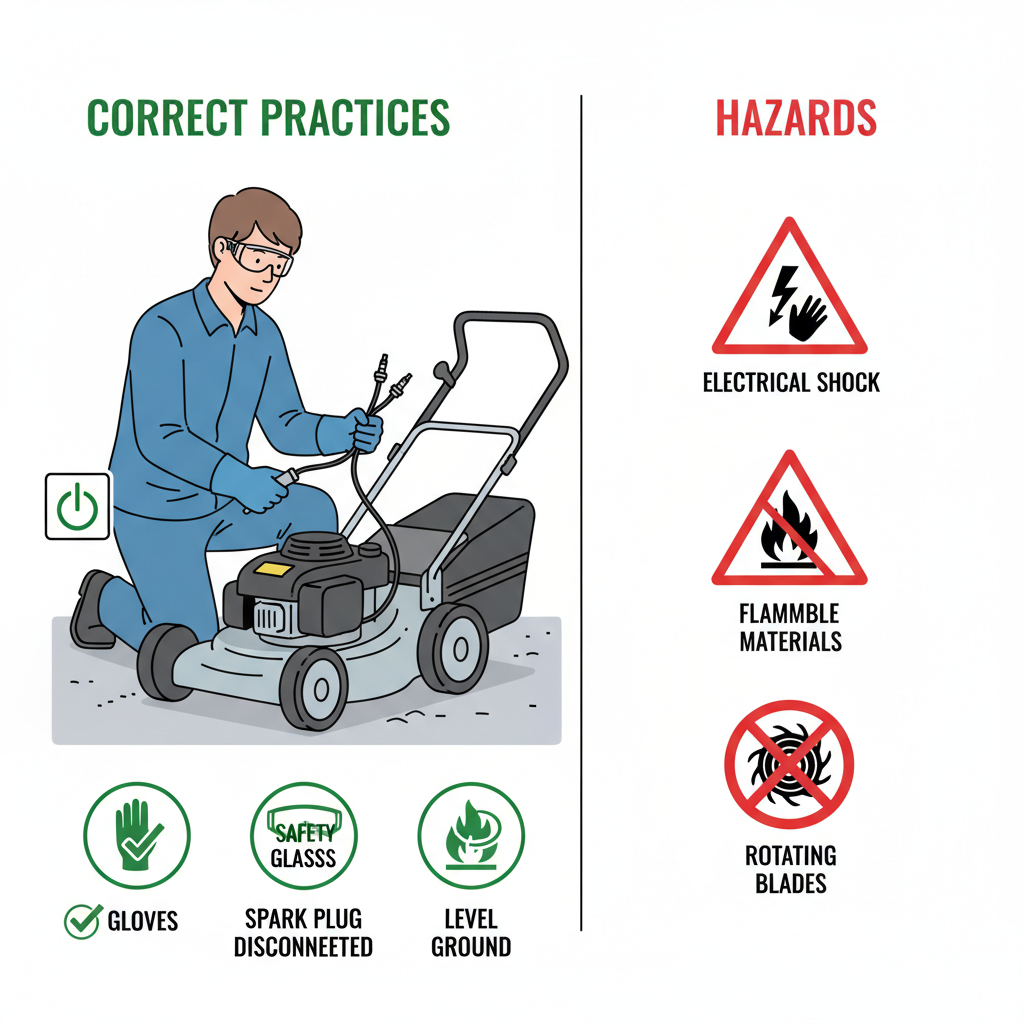
Working on lawn mower belts requires fundamental safety steps to prevent injury. The most critical step is disconnecting the spark plug wires before beginning any work. This prevents accidental engine starting while your hands are near moving parts or the blade.
- Disconnect spark plug wires: Pull the wires off the spark plugs (not just the wires themselves). If your mower has a battery (common on riding mowers), consider disconnecting it as well.
- Allow the engine to cool: Work on a cool mower whenever possible. Hot engines can burn your hands, and hot metal can ignite spilled fuel or lubricants.
- Wear appropriate PPE: Use work gloves to protect hands from sharp edges and pinch points. Safety glasses protect against debris.
- Work on level ground: Place your mower on flat, stable ground. If working on a riding mower, engage the parking brake.
- Keep the area clear: Remove obstacles and ensure adequate lighting so you can work safely without rushing.
Tools and Materials You’ll Need
Gathering supplies before you start prevents delays and ensures you have the right replacement belt. Most belt replacements require only basic hand tools.
Basic Tools
- Socket set or adjustable wrenches (typically ½-inch, ⅝-inch sizes)
- Screwdrivers (flathead and Phillips)
- Needle-nose pliers
- Work gloves
- Belt routing diagram (see below)
Finding Your Replacement Belt
The correct belt is essential—using the wrong size will cause slipping or premature failure. Your mower’s model number is typically found on a sticker or metal plate located near the engine or under the seat on riding mowers. Write down this number before shopping.
Use the model number to:
- Check your mower’s manual or manufacturer’s website for the correct belt part number and specifications
- Visit an equipment dealer or online retailer and provide the model number
- Note the belt’s length and width (typically printed on the old belt, e.g., “3L380” means 3/8-inch wide, 38-inch circumference)
Replacement belts typically cost $20–$60 depending on mower type and quality. Opt for OEM (original equipment manufacturer) belts when possible for better durability.
Identifying Your Mower Type and Belt Location
Lawn mowers have two primary belt systems: deck belts and drive belts. Understanding which system your mower uses determines the replacement procedure.
Deck Belt vs. Drive Belt
| Belt Type | Location | Purpose | Common On |
|---|---|---|---|
| Deck Belt | Under the mowing deck (the cutting area) | Spins the blade(s) | Push mowers and riding mowers |
| Drive Belt | Between the engine and wheels (on frame) | Powers the wheels | Riding mowers and lawn tractors |
Most push mowers only have a deck belt. Riding mowers and lawn tractors have both. A mower can have multiple deck belts if it has twin blades.
Finding Your Belt Routing Diagram
Before removing anything, locate your belt routing diagram. This shows exactly how the belt wraps around pulleys.
- Check inside the deck cover or on the underside of the mower hood
- Review your owner’s manual
- Take a detailed photo of the belt’s current path for reference
- Search your mower’s model number online for belt diagrams
Incorrect belt routing will cause the mower to malfunction or the belt to fail immediately.
How to Replace a Deck Belt (Push and Riding Mowers)
The deck belt is the most commonly replaced belt. This procedure applies to most push mowers and the deck belt system on riding mowers.
Step 1: Access the Deck
For push mowers:
- Tip the mower onto its side (air filter side up to prevent oil from leaking into it)
- Remove any guards or covers blocking access to the belt
- Open the hood or remove the side panels
- Locate the belt cover and remove bolts holding it in place
- Set the cover aside safely
Step 2: Document the Current Belt Routing
Take a clear photo showing how the belt wraps around all pulleys. This reference is invaluable if the routing diagram is unclear or missing.
Step 3: Release Belt Tension
Most mowers have an idler pulley that applies tension to keep the belt tight. You must release this tension before removing the old belt.
- Locate the idler pulley (a spring-loaded wheel that touches the belt)
- Look for a bolt or lever that holds it in place
- Loosen the bolt slightly to move the idler away from the belt, or pull/push the lever to release tension
- Some mowers require removing a bolt entirely; others have a quick-release mechanism
Step 4: Remove the Old Belt
With tension released, slip the belt off the pulleys. Take note of exactly how it was routed. If the belt is stuck, gently work it off by hand or use pliers to carefully pry it free without damaging the pulleys.
Step 5: Clean the Pulley Area
Before installing the new belt, wipe pulley surfaces clean with a cloth. Remove any grass clippings, dirt, or oil buildup that could cause the new belt to slip.
Step 6: Install the New Belt
Route the new belt exactly as the old one was positioned. Start by placing one section over a fixed pulley, then work the belt onto the other pulleys. Finally, slip it onto the idler pulley.
Common routing tip: On many decks, the blade pulley is the largest; route the belt around it first, then work to smaller pulleys.
Step 7: Adjust Belt Tension
Proper tension prevents slipping and premature wear. The standard is ½-inch deflection when moderate downward pressure is applied to the belt midway between two pulleys.
- Press down on the belt with your thumb
- It should move about ½ inch
- Adjust the idler pulley bolt or lever until this deflection is achieved
- Tighten the idler pulley bolt securely once correct tension is set
Under-tensioned belts slip and wear quickly. Over-tensioned belts strain the pulleys and can break prematurely.
Step 8: Reinstall Covers and Guards
Replace the deck cover, belt guards, and any other components you removed. Ensure all bolts are tight.
How to Replace a Drive Belt (Riding Mowers and Lawn Tractors)
Drive belts power the wheels on riding mowers. This procedure differs slightly from deck belt replacement.
Step 1: Locate the Drive Belt
The drive belt typically runs along the side of the frame between the engine pulley and wheel pulleys. Consult your manual if unsure.
Step 2: Access the Belt
- Remove side panels or covers blocking access
- Some mowers require removing the seat or rear panels
- Take photos of the belt’s complete routing around all pulleys and the transmission
Step 3: Release Tension via the Idler Pulley
On riding mowers, the idler pulley is typically spring-loaded. You may need to:
- Unbolt the spring holding the idler in the tensioned position
- Move the idler away to create slack
- Some models have a lever for quick release
Step 4: Remove the Old Belt
Slip the old belt off all pulleys. Check the transmission pulley carefully—some mowers require moving a lever or bolt to access it.
Step 5: Install the New Belt
Route the new belt exactly as the old one. Start with the engine pulley, then move to the transmission or wheel pulleys. Ensure the belt sits fully in each pulley’s groove.
Step 6: Adjust Tension
Once routed, reattach the idler pulley spring or lever and adjust for proper tension (½-inch deflection rule applies here as well).
Step 7: Test the Belt
Reconnect spark plugs and start the mower briefly in a safe location. The drive wheels should move smoothly without the belt slipping or chattering.
Testing and Troubleshooting After Replacement
Initial Testing
- Reconnect spark plug wires securely
- Start the engine and listen for unusual noises
- For push mowers, briefly engage the blade and listen for proper operation
- For riding mowers, test both the deck belt (if applicable) and drive belt in a safe area
- The mower should operate smoothly without squealing or slipping
Common Issues and Solutions
Belt is slipping or chattering:
- Tension is too loose—adjust the idler pulley to increase deflection resistance
- Pulleys are dirty or worn—clean pulley surfaces or replace severely worn pulleys
- New belt is wrong size—verify the part number matches your mower model
Belt keeps breaking:
- Tension is too tight—reduce tension slightly
- Pulleys are misaligned or worn—inspect and replace if necessary
- Belt is routed incorrectly—verify routing against the diagram
Mower vibrates or sounds rough:
- Belt is not seated properly in pulley grooves—remove and reinstall
- Old belt debris is inside the deck—clean thoroughly
- Pulleys are damaged—replace if cracks or flat spots are visible
When to Call a Professional
Consider professional service if:
- Multiple pulleys are cracked, worn, or misaligned
- The transmission pulley on a riding mower requires access you cannot safely achieve
- The mower still malfunctions after belt replacement
- You discover internal damage during the process
Maintenance Tips to Extend Belt Life
- Check belt tension monthly: Loose belts slip and wear quickly; tight belts strain pulleys.
- Keep the deck clean: Grass buildup traps moisture and accelerates belt deterioration.
- Inspect pulleys annually: Replace pulleys showing cracks, flat spots, or excessive wear.
- Store properly: Over winter, disconnect spark plugs and store the mower in a dry location. Belts degrade in cold, damp conditions.
- Replace guards: Missing or damaged belt guards expose the belt to debris and water.
Common Questions on How To Change A Belt On A Lawn Mower Answered
How often should lawn mower belts be replaced?
Most lawn mower belts last 3–5 years with normal use, though this varies based on mowing frequency, belt quality, and tension. If your belt squeals, slips, or shows visible cracking, replace it immediately regardless of age. Proper tension and regular maintenance significantly extend belt life.
Can I replace just one belt if my mower has multiple belts?
Yes, you can replace individual belts. However, if one belt has failed, the others are likely wearing similarly. Consider replacing all belts at once if they are similar in age and condition to avoid another repair soon.
What if I don’t know my mower’s exact model number?
Check these locations: under the seat on riding mowers, on the engine block, on a sticker behind the handle on push mowers, or on the frame side. If you cannot find it, bring the old belt and your mower to a dealer—they can identify the correct replacement by visually inspecting your mower.
Is belt replacement covered under lawn mower warranty?
Belts are typically considered wear items and are not covered by manufacturer warranties. However, if a belt fails due to a defect (early cracking or premature fraying), contact the manufacturer. Some extended warranties or service plans may cover belt replacement; check your documentation.









