Quick Answer: How to Make Your Riding Lawn Mower Faster
The fastest way to improve your mower’s speed is through maintenance first: sharpen blades, clean the grass deck, check tire pressure, and change the oil and air filter. These steps remove friction and restore engine efficiency without modifications. For additional speed, you can adjust or remove the governor limiter (a mechanical device that caps RPM), perform engine tuning, or optimize belt tension. However, governor removal may void your warranty and affect safety, so always consult your mower’s manual before making changes.
Why Your Lawn Mower Isn’t Reaching Its Maximum Speed

Most riders feel slow not because of weak engines, but because of maintenance neglect and design limitations. Manufacturers install governors intentionally—to protect the engine, improve fuel efficiency, and reduce operator risk. Understanding these factors helps you identify realistic speed improvements.
The Role of Friction and Deck Buildup
Grass clippings, dirt, and moisture accumulate under your mower deck over time. This buildup increases drag on the blades and forces the engine to work harder, effectively slowing the mower. A clogged air filter, dirty fuel filter, or old oil compounds the problem by reducing engine output. Blade dullness also forces the engine to labor more, as it takes extra power to cut dull edges through grass.
Transmission and Drivetrain Limitations
Riding mowers use either belt-driven or hydrostatic transmissions. Belt-driven systems rely on belt tension and pulley size, while hydrostatic systems use fluid pressure to control speed. Both have built-in speed limits; exceeding them risks mechanical failure. The governor on hydrostatic mowers controls maximum fluid pressure, directly capping your top speed.
Essential Maintenance to Unlock Your Mower’s Current Speed
Before pursuing modifications, complete these maintenance tasks. They’re the easiest, safest, and most cost-effective way to restore lost speed and performance.
Sharpen Your Blades
Dull blades require more engine power to cut grass and increase vibration. Sharp blades slice cleanly, reducing blade friction and allowing the engine to maintain consistent RPM. Most mowers benefit from blade sharpening every 20–25 mowing hours or 2–3 times per season.
- Disconnect the spark plug wires before working on blades to prevent accidental starting
- Mark the blade bottom so you reinstall it correctly
- Use a metal file or blade sharpener to maintain original blade angle (typically 30–45 degrees)
- Keep blade weight balanced to prevent vibration
Clean the Grass Deck Thoroughly
Buildup under the deck increases drag and reduces cutting efficiency. A clean deck allows blades to move freely and the mower to operate at full power.
- Disconnect spark plug wires and tip the mower on its side (away from the carburetor to prevent oil leaks)
- Scrape grass and dirt from the underside using a putty knife or deck scraper
- Rinse with a hose if needed, then let dry completely
- Repeat every 5–10 mowing hours, or after mowing wet grass
Check and Adjust Tire Pressure
Under-inflated tires increase rolling resistance and reduce effective speed. Proper tire pressure also improves handling and reduces engine strain.
- Consult your mower’s manual or the tire sidewall for recommended pressure (typically 10–20 PSI for rear tires)
- Check pressure when tires are cold for accuracy
- Use a tire pressure gauge and inflate or deflate as needed
Change Oil and Filters
Old oil thickens and increases internal engine friction, reducing power output. Clogged air and fuel filters restrict airflow and fuel delivery, limiting engine performance.
- Change engine oil every 50 hours of operation or as recommended in your manual
- Replace the air filter annually or every 100 hours
- Replace the fuel filter every 2 years or if the mower stalls during operation
- Use the oil grade specified in your manual (typically SAE 10W-30 or 5W-20)
Understanding the Governor and Speed Limitations
The governor is a mechanical or electronic device that automatically limits engine RPM to a preset speed. Manufacturers install governors to protect engine longevity, reduce fuel consumption, and prevent operator injury from uncontrolled acceleration.
What the Governor Does
On carbureted mowers, a mechanical governor uses centrifugal weights and a spring to modulate the throttle, preventing over-revving. On fuel-injected or newer mowers, an electronic governor monitors RPM and adjusts fuel delivery. In hydrostatic transmissions, the governor limits pump pressure, which directly caps hydraulic speed.
Governor Removal and Adjustment Risks
Removing or disabling the governor allows the engine to rev to maximum RPM, potentially increasing ground speed. However:
- Warranty voiding: Most manufacturers explicitly void warranties for governor removal
- Engine damage: Over-revving can damage engine bearings, valves, and gaskets, leading to costly repairs
- Safety hazards: Sudden acceleration, reduced braking effectiveness, and increased roll-over risk on slopes
- Transmission strain: Hydrostatic systems can fail prematurely if pushed beyond design limits
- Liability: If an injury occurs on a modified mower, you may be held liable rather than the manufacturer
Some mower models allow safe governor adjustment through a throttle cable or control lever without full removal. Always check your owner’s manual to determine if adjustment is permitted for your specific model.
Performance Tuning Modifications (For Experienced Users)
If maintenance and governor adjustment don’t provide sufficient speed gains, consider these engine and drivetrain optimizations. These steps carry higher risk and should only be attempted if you understand small-engine mechanics.
Engine Tuning
- Upgrade spark plugs: Use a spark plug one heat range colder (e.g., switch from a 7 to a 6) to improve ignition efficiency. Consult your manual first.
- Improve air intake: Replace the air filter with a higher-flow aftermarket option, or remove the air filter restriction entirely (not recommended for longevity)
- Optimize fuel: Use premium-grade gasoline (89+ octane) instead of regular (87 octane) to improve combustion and engine output
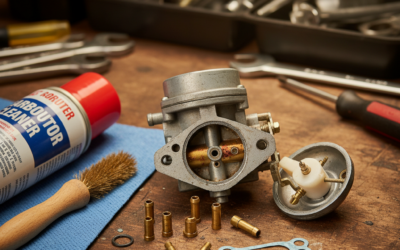
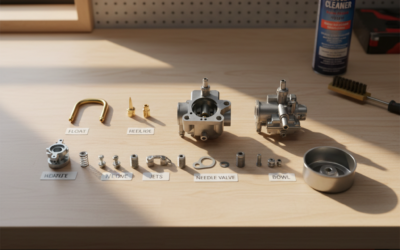
- Carburetor jetting: On carbureted engines, adjusting the main jet can increase fuel delivery, but this requires carb knowledge and can cause rough running if done incorrectly
Belt Tension and Pulley Adjustment
On belt-driven mowers, proper belt tension ensures efficient power transfer. A loose belt slips and reduces speed; an overly tight belt strains the engine and transmission.
- Check belt tension by pressing the belt midway between pulleys; it should deflect ½ inch under moderate hand pressure
- Loosen the engine or transmission mounting bolts slightly and adjust position to tighten or loosen the belt
- Retighten mounting bolts securely and recheck tension
Hydrostatic Transmission Pressure Adjustment
Some hydrostatic mowers allow controlled pressure relief valve adjustment to increase maximum speed. This is a delicate modification:
- Locate the pressure relief valve on the hydraulic pump (consult your manual)
- Make small adjustments (typically ¼ turn) and test for changes
- Excessive pressure can burst hoses or damage the transmission
- Stop immediately if you notice leaks, overheating, or unusual noises
When NOT to Increase Mower Speed
Speed improvements have practical and safety limits. Do not attempt speed modifications if:
- Your mower is used on steep slopes (speed increases roll-over risk)
- You lack mechanical experience or proper tools
- The mower shows signs of wear, leaks, or mechanical problems
- You cannot afford to replace the mower if a modification causes failure
- Your mower is commercial equipment or used in rental operations (liability and warranty concerns are severe)
Frequently Asked Questions
What’s the maximum safe speed increase for a riding lawn mower?
Most riders can safely achieve 10–20% speed increases through maintenance and controlled governor adjustment. Attempting to double your mower’s speed risks catastrophic mechanical failure and operator injury. Realistic gains depend on your mower’s age, condition, and design.
Will removing the governor void my warranty?
Yes. Nearly all manufacturers explicitly state that governor removal or modification voids the warranty. Any damage resulting from over-revving becomes your responsibility to repair. Even if the failure seems unrelated, a technician may refuse warranty service if they detect governor tampering.
Does blade sharpening really improve speed?
Yes. Sharp blades reduce the engine load by 15–25% compared to dull blades. This allows the engine to maintain consistent RPM and reduces the overall strain on the drivetrain, resulting in noticeably faster ground speed and more efficient mowing.
Can I make a belt-driven mower faster than a hydrostatic mower?
Not typically. Hydrostatic mowers are inherently faster because they use fluid coupling to translate engine power directly into ground speed across a wider range. Belt-driven mowers rely on fixed pulley ratios and are limited by belt friction. Hydrostatic systems are also more efficient at converting engine power to usable mowing speed.
Is premium gasoline worth using in a lawn mower?
For stock mowers, regular gasoline is sufficient. Premium fuel may provide a marginal improvement (2–5% increase in engine output) only if your mower’s engine is tuned for higher octane. The extra cost rarely justifies the minimal gain. However, if you’ve made other modifications, premium fuel can help prevent detonation and engine knock.