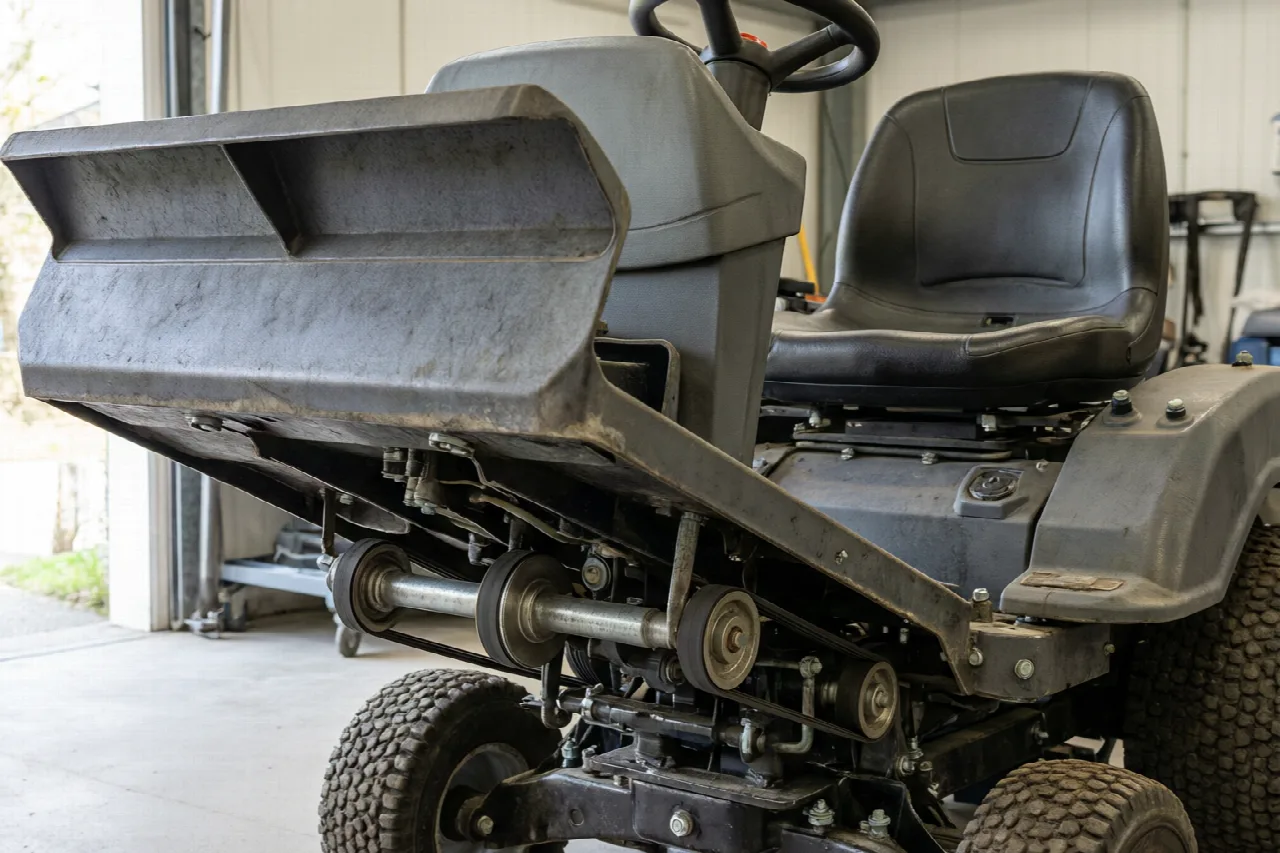
No manufacturer is universally the best maker of commercial zero-turn mowers. “Best” depends on the job: weekly hours, terrain and slope, cutting width and finish, crew skill, local parts and service, warranty terms, and total cost of ownership. Use those criteria—and dealer-verified specifications—to choose a commercial-grade maker and machine type. An unsourced brand ranking cannot tell you which zero-turn radius mower will stay productive on your routes.
There is no single best commercial zero-turn maker
The question “who makes the best commercial zero-turn mower” sounds like it should have one name at the end. It does not. A landscape crew cutting dozens of small, obstacle-heavy lots needs a different mix of maneuverability, trailer fit, and parts speed than a municipal crew mowing open parks or a contractor finishing large, relatively clean turf. Those jobs punish different weak points: tight turning and trim time on one site, heat and hours on another, wet soil and trailer ramps on a third.
In this category, “best” usually means the commercial mower manufacturer whose machines stay on the job with the cut quality you sell, at an ownership cost you can live with, supported by people who can actually service the unit nearby. That is a job-specific judgment, not a national trophy. Rankings that skip use case, region, and the dealer and service network are not useful decision tools. Market chatter about which name is “most popular” is anecdotal unless you have a defined sample and the same job conditions.
Settle the ambiguities before you compare makers at all:
- Use case: landscape routes, large private properties, municipal or institutional grounds, or mixed terrain.
- Purchase type: one machine versus a fleet, and new versus used.
- Power type you can fuel, store, and service locally.
- Region: parts lead times, technician coverage, and typical grass conditions.
- Budget, required cutting width, and how the machine will be trailered and stored.
Until those are written down, you are not comparing manufacturers. You are comparing advertisements.
What makes a zero-turn mower commercial-grade
A commercial zero-turn mower is a riding (or stand-on) machine built for longer duty, heavier abuse, and faster field service than a typical homeowner zero-turn. The label “commercial” on a brochure is still a manufacturer claim. It is not a legal grade you can take on faith. Verify construction, service access, and intended use against the current specification sheet and the operator’s manual.
Category differences that generally hold, without inventing hours-per-week ratings or steel gauges, look like this:
- Duty cycle. Commercial machines are intended for longer days and more days per season. Residential machines are built around occasional homeowner use.
- Frame, deck, and wear points. Commercial decks and frames are generally heavier-duty, with spindles, belts, and mounts designed to be serviced repeatedly rather than replaced as a sealed consumer assembly.
- Serviceability. Flip-up or easily accessed cutting decks, reachable filters, and service points that a technician can reach in a parking lot matter more than styling.
- Operator station. Commercial sit-down units usually assume long hours: more substantial seating, clearer controls, and layouts meant for repeated mounting and dismounting. That does not make every commercial seat comfortable for every operator; demo time still matters.
How a zero-turn actually steers
A zero-turn radius mower steers by independently driving the left and right wheels, usually through a hydrostatic drive on each side. Slow one wheel and speed the other, and the machine pivots in a very small space. That is why these mowers shine on relatively open, maintained turf with beds, trees, and tight corners. It is also why they are a poor match for some slopes and loose or slick ground: the same independent drive that turns in place can let a wheel lose traction or the machine rotate unexpectedly.
The cutting deck is the tool that actually earns the invoice. Deck width, shell stiffness, spindle quality, belt routing, and discharge style (side discharge, mulch, or bag) decide finish and how often you go back for leftover strips. The hydrostatic drive decides whether the machine still tracks and holds speed after a season of heat, dust, and trailer miles. Neither is “set and forget.”
Sit-down, stand-on, or not a zero-turn at all
Sit-down versus stand-on zero-turn is an operations choice, not a prestige ranking. Sit-down machines often suit longer, more open runs and operators who prefer a seated station. Stand-on machines can be easier to hop on and off for frequent trimming, bagging, or trailer loading, and they may fit some crews’ route style better. A commercial walk-behind, a wide-area mower that is not a zero-turn, or a different machine class can be the better fit when slopes, very tight spaces, or finish standards make a sit-down zero-turn the wrong tool. Match the machine type to the property before you fall in love with a brand name.
Job factors that change which manufacturer fits
Every commercial lawn is not the same job. Operating conditions change what you should demand from a maker long before you argue about paint color.
Turf, soil, and how the machine travels
Open, even turf rewards a wider deck and a machine that tracks straight at a productive ground speed without waving the cut. Mixed obstacles—beds, fences, playground equipment, parked cars—reward a tighter turning package, good visibility, and a deck width you can actually place. Wet or sandy soil raises traction, tire choice, and “will this rut the lawn” questions. Frequent trailer loading rewards a machine that fits the trailer you already own, with a ramp angle and weight distribution your crew can handle safely every morning.
Steeper or uneven ground raises stability and traction priorities. That does not mean you should shop for the “most aggressive” zero-turn. Many of these machines are intended for relatively flat, maintained turf. If the site has real slopes, the first question is whether a zero-turn belongs there at all, not which logo looks toughest in a photo.
Crew, fleet, and skill
A single owner-operator who wrenches at night can live with a less common parts book if the machine is simple and well supported locally. A multi-crew fleet usually needs parts commonality, predictable service procedures, and a dealer who can keep more than one unit moving. High-hour fleets should weight dealer coverage and parts commonality as heavily as cut quality. Operator experience matters too: a sensitive hydrostatic control package and a wide deck can look productive on a demo lot and expensive in the hands of a new hire who scalps corners.
Fuel, storage, and power type
Gasoline, diesel, and other power types each have local realities: what you can buy nearby, what you are allowed to store, what your technicians already know, and how the machine will sit between jobs. Do not start a brand comparison until the power type is a constraint, not a wish. No fuel type is always cheaper or more reliable for every commercial crew. That claim depends on hours, fuel price in your area, maintenance discipline, and the specific engine and drive package—details you verify with current specs and a dealer, not a generic article.
Performance and productivity criteria
Productivity is not the widest deck on a spec sheet. It is finished acres you can sell, at the quality the customer will accept, without extra trim passes, scalping callbacks, or a machine that cannot get through the gate.
Deck width, discharge, and leftover strips
Deck width and cut quality travel together, and they trade off. A wider cutting deck can reduce the number of passes on open ground. It can also reduce access beside fences, increase trailer and storage needs, and make the cut more sensitive on uneven turf because the shell spans more rise and fall. Overlap between the deck and the drive tires, plus how the discharge or mulch system handles clippings, affects whether you leave a strip, windrow, or smear in damp grass.
Discharge style is a job choice. Side discharge is common for open turf when you can throw clippings safely. Mulch and bag options matter on finish-sensitive sites, HOA properties, or anywhere clippings are a complaint. Those options change horsepower demand, belt layout, and how often you stop. None of them is universally superior.
Speed versus a clean cut
Ground speed only helps if the blades are still producing a clean cut. Tall grass, wet grass, debris, and an operator chasing the clock can erase a theoretical width advantage. Published acres-per-hour, travel-speed, blade-tip-speed, and fuel-use figures are manufacturer claims. They are comparable only when test conditions, deck setup, grass type, and cut height match. Treat them as conversation starters, then demo on turf like yours.
Maneuvering around beds often decides the day more than raw width. A slightly narrower deck that stays in cut, tracks well, and needs less cleanup can beat a wider machine that forces extra passes and trailer gymnastics. Cut quality also depends on blade condition, deck level, ground speed, turf conditions, and operator technique—not brand name alone.
Durability, drivetrain, and deck construction
Commercial machines generally use heavier decks, more serviceable spindles, and hydrostatic drives designed for longer duty than residential units. That is a category statement, not a promise that any particular frame will last a set number of years. Heat, contamination, impact, and poor maintenance shorten hydro life on every brand. Send yourself to current spec sheets and a physical inspection rather than memorizing internet “build quality” folklore.
What to inspect on the machine
When you look at a unit—new on a dealer lot or used in a yard—work through the wear path, not the decals:
- Frame and mounts. Look for cracks, bent rails, stretched holes, and repairs around axle, engine, and deck hangers.
- Deck shell. Check for rust-through, bent baffles, cracked welds, and whether the deck still sits level. Dents at the leading edge and discharge opening tell you how the machine has been used.
- Spindles and wear parts. Spindles should turn smoothly without growl or play if you can safely check them. Ask how they are serviced and what a replacement costs and how long it takes to get. Blades, belts, pulleys, and idlers are consumables; availability matters as much as brand.
- Belts and routing. Simple, guarded, replaceable belt paths reduce downtime. Hidden, poorly documented routing is a future Saturday you will not get back.
- Tires, rims, and casters. Curb rash, bent forks, and flat-spotted tires are cheap to ignore and expensive in cut quality.
Hydrostatic drive quality is not the engine sticker
Buyers often shop the engine badge and ignore the drive. On a commercial zero-turn, hydrostatic drive condition, cooling, and filtration strongly affect uptime. Pumps and wheel motors live on heat and clean oil. Ask how the system is cooled, where the filters and reservoirs sit, how you check fluid, and whether a technician can reach the components without a major teardown. Service access here is as important as whose name is on the valve cover.
Do not treat steel thickness, pump brands, bearing types, or “this lasts X seasons” as category facts unless you have them on a current, model-specific sheet. Those details change by model year and trim. If a seller will not put construction and service claims in writing next to a serial-number-specific spec, discount the claim.
Dealer network, warranty, and total cost of ownership
Sticker price is only part of ownership cost. Downtime, wear parts, maintenance, trailering, and operator training also matter. A slightly less famous maker with a strong local dealer can outperform a prestige name with weak nearby support, because a commercial mower that sits waiting for a spindle or a hydro hose is not a commercial mower. It is yard art.
Dealer quality is location-specific. National reputation does not tow a service truck to your shop. Before you shortlist a commercial mower manufacturer, ask neighboring crews—not social media comment sections—who actually stocks wear parts and who answers the phone in season.
Costs that never appear on the window sticker
- Maintenance intervals and who performs them (your shop versus the dealer).
- Blades, belts, spindles, tires, filters, and hydro service parts—and how long they take to arrive.
- Downtime during the growing season, including whether a loaner or mobile service exists.
- Trailer, ramp, and storage changes a wider or heavier machine forces.
- Time to train operators so they do not destroy decks and turf in the first month.
- Residual value, which you should treat as uncertain unless you have local sold-comp data. Do not budget a made-up resale number.
Warranty questions to get in writing
Warranty length, coverage, exclusions, and transfer rules are time-sensitive manufacturer terms. They are not universal, and summarizing them as if they were is how buyers get surprised. Ask, in writing:
- What is covered on the frame, deck, spindles, engine, and hydrostatic drive—and for how long, in commercial use.
- Whether coverage changes if the machine is rented, used on slopes beyond the manual, or maintained outside the dealer.
- What records you must keep.
- Whether the warranty transfers if you sell the unit.
- Whether the dealer offers loaner equipment or mobile service, and on what timeline.
Total cost of ownership is the right frame. Invented prices, interval hours, and residual values are not. Build your own spreadsheet from quotes and your real hours.
How to match a maker and machine type to your operation
Turn the criteria into a shortlist you can finish with local dealers. Do not start with a ranked brand list. Start with the job.
Collect the job file first
Before you visit a lot, write down:
- Typical acreage per stop and per week, plus how many hours the machine will run in peak season (your hours, not a brochure).
- Obstacles, gate widths, curb cuts, and whether you mow around a lot of hard edges.
- Slope and surface: flat turf, rolling ground, wet pockets, sand, or something a zero-turn should not be on.
- Trailer size, ramp setup, and shop-door or trailer-height limits.
- Must-have deck width range and power type.
- Who will operate and who will maintain the machine.
Compare two makers without turning it into a fan argument
Pick makers that have real parts support within a distance your season can tolerate. Put the same job file in front of two or three dealers. Ask each for a written spec on the exact configuration: deck width, discharge or mulch setup, tire type, operator-station type, and any ROPS or lighting you need. Then demo both on turf that resembles the real work—not a billiard-table display lawn unless that is what you cut.
Score what you can observe: cut in the conditions you actually have, tracking, visibility, service access, trailer fit, operator fatigue after a meaningful demo, and the dealer’s answers on parts and warranty. Leave “which brand is best” off the scorecard. A demonstration on turf similar to the real job is more informative than an unsourced online ranking.
When a used commercial zero-turn makes sense
A used or fleet-surplus commercial zero-turn can be viable if the price reflects remaining life and you can inspect the expensive parts. Hidden wear is a real risk. At minimum, inspect frame and deck structure, spindle condition, hydrostatic behavior when hot, belt and pulley wear, tire and caster condition, and maintenance history. A machine with receipts and consistent hydro service is a different product from a machine with a pressure-washed deck and a story. If you cannot verify history, budget for unknown hydro and spindle work or walk away. This is inspection guidance, not a valuation or a model-year shopping list.
Safety, slopes, and claims you must verify
Zero-turn mowers can roll over or slide on slopes, wet grass, or uneven ground. Operators must follow the specific machine’s limits. Rollovers and loss of control are real hazards, not rare horror stories reserved for careless people. Many zero-turns are intended for relatively flat, maintained turf. Steep banks, drop-offs, wet hills, and loose soil are common ways crews get into trouble.
Do not treat a sales brochure as the slope rulebook. Manufacturer statements about slope ratings, ROPS, machine weight, tire type, and speed belong in the operator’s manual and on the machine plate for that serial number. Those numbers change by model and setup. This article will not invent a “safe” percentage or imply that any maker is the safest. No responsible buyer should either.
Before anyone mows a hill with a commercial zero-turn:
- Read the current operator’s manual for that machine, including ROPS and seat-belt guidance.
- Confirm whether the site is even a zero-turn job. If the manual’s terrain limits or your judgment say no, use a different method or a qualified crew with appropriate equipment.
- Inspect ROPS condition and use the seat belt when the ROPS is up, unless the manual describes a specific exception you actually meet.
- Walk the site for holes, drop-offs, wet streaks, and hidden obstacles.
- Follow applicable workplace rules for your company and jurisdiction. This is not legal advice; it is a reminder that brand choice does not replace training and site assessment.
Training and site assessment matter as much as manufacturer choice. A well-built machine operated outside its limits is still the wrong machine that day.
Buying checklist and common mistakes
Close the process with actions you can verify. Operator skill and maintenance often affect results as much as the manufacturer name. A familiar logo does not fix a bad dealer, a deck that will not fit the trailer, or a hydro that has been overheated for two seasons.
Demo day and pre-purchase inspection
- Cut grass comparable to your routes, including a pass in thicker or damper turf if that is your reality.
- Check tracking, steering effort, visibility to the deck edge, and how the machine loads the trailer you will actually use.
- Open the service points: deck lift or flip, filters, hydro components, blade access, and grease points.
- Confirm parts lead times for blades, belts, spindles, and common hydro pieces—in season, not in January.
- Read warranty exclusions and get slope, maintenance, and commercial-use terms in writing.
- On used units, add a hot hydro test, spindle play, frame inspection, and maintenance-record review. Have a qualified technician inspect if you are not equipped to judge those systems.
Brochure language that is easy to misread
- Horsepower. Engine output is only one input. Deck load, drive efficiency, and conditions decide whether the machine holds cut. Compare complete configurations, not a single horsepower number treated as a category fact.
- “Commercial.” A marketing word. Verify duty, construction, and warranty treatment for commercial use.
- Acres per hour. A claim tied to test conditions you probably do not have. Use it only if the dealer can explain the assumptions.
- Lifetime or long-life spindles. Still a manufacturer promise with conditions. Ask what voids it and what a replacement costs when it fails anyway.
When to walk away
Walk away when the local dealer cannot support the machine, when the unit does not fit how you trailer and store equipment, when the seller will not document warranty and slope limits, or when a used machine has unexplained hydro behavior, a twisted deck, or a silent maintenance history. Walk away when the only argument for the purchase is that someone on the internet crowned that brand the winner. No single manufacturer is best for every commercial mowing job, and forcing a famous name onto the wrong terrain or the wrong shop is how “best” becomes the most expensive mistake on the trailer.