Quick Answer: Choosing the Best Gas Riding Lawn Mowers
When selecting gas riding lawn mowers in 2026, the critical factors are engine displacement and horsepower for sustained torque, cutting deck width and material for efficiency and durability, and features like height adjustment levers plus traction control for varied conditions. We evaluated top-rated options spanning leading manufacturers using these metrics to deliver clear recommendations based on performance data rather…

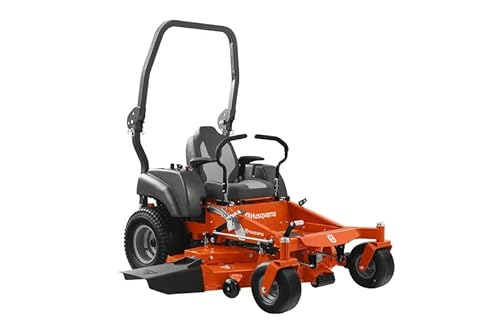
Pros
- Powerful 24HP/726cc Kawasaki V-Twin engine for reliable high-output performance
- Wide 61-inch fabricated 3-blade deck for efficient coverage of large areas
- Commercial-grade Hydro Gear ZT-3100 transmission for durable zero-turn handling
- Generous 5-gallon fuel tank and included ROPS for practical all-day use and safety
- 4-year consumer warranty coverage on the complete machine
Cons
- Large 61-inch deck and zero-turn frame require substantial storage space and may feel oversized for small residential yards
- Commercial-oriented components can demand more maintenance knowledge than basic consumer mowers
- No bagging, mulching kit, or additional attachments listed as standard equipment
The Husqvarna MZ61 is a robust zero-turn riding lawn mower from the brand's commercial-leaning lineup, pairing a heavy-duty fabricated deck with a ROPS safety structure. Its overall build emphasizes durability and operator protection for demanding outdoor work rather than lightweight residential convenience.
Performance centers on the 24HP/726cc Kawasaki FR730V Series V-Twin engine that supplies ample torque for thick or wet grass, while the 61-inch 3-blade fabricated deck cuts wide swaths efficiently. The Hydro Gear ZT-3100 commercial hydrostatic transmission enables smooth, precise zero-turn steering that reduces time spent trimming edges and navigating landscaping. A 5-gallon fuel tank further supports longer continuous runs on expansive properties.
Potential drawbacks include the mower's substantial size, which can make storage and transport more challenging for users with limited space. The commercial-grade components also mean the machine may require more frequent or specialized maintenance compared to simpler residential models, and no bagging or mulching systems are noted as included.
Overall, the Husqvarna MZ61 delivers the strongest value for owners of large lawns, estates, or light commercial grounds who prioritize cutting speed, engine reliability, and safety features. Smaller-yard users will likely find it oversized for their needs.
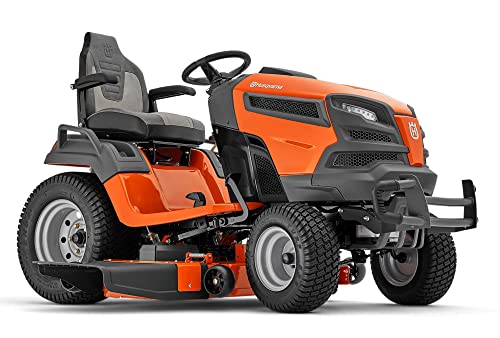
Pros
- Robust 24 HP engine for strong efficient performance on demanding jobs
- Large 54-inch versatile cutting deck with multiple positions for thorough coverage
- Hydrostatic transmission featuring electronic differential lock for smooth traction
- Comfort-focused design with high vinyl seat and overmolded steering wheel
- Rugged heavy-duty construction with protective bumper for long-term durability
Cons
- Large 54-inch deck and high power may reduce suitability for small or obstacle-filled yards
- Commercial-grade hydrostatic system can involve more specialized maintenance needs
- Limited detailed specifications such as dimensions or fuel capacity provided in data
Overview & Design: The Husqvarna Riding Lawn Mower is a robust riding lawn mower built with a heavy-duty frame alloy steel construction and brush guard-style bumper for front-end protection. Its overall design conveys rugged durability ideal for demanding outdoor use and immediate reliability.
Performance & Key Features: The 24 HP engine powers fast efficient mowing across tough terrains. The 54-inch ClearCut deck with multiple cutting positions delivers a perfect cut every time while the commercial-grade hydrostatic transmission with electronic differential lock provides smooth operation excellent traction and reduced lawn damage. Comfort is supported by the extra-high vinyl seat and deluxe overmolded steering wheel for an optimal driving experience.
Drawbacks & Considerations: The substantial size and power output of the 54-inch deck may limit maneuverability in tight spaces or smaller properties. Advanced transmission components could require specialized upkeep and certain metrics like exact weight or storage needs are not detailed in the available information.
Verdict: This mower delivers the most value to owners of large properties or those facing varied tough terrains who need reliable power cutting versatility and traction. It is recommended for users prioritizing performance comfort and rugged build quality in regular extensive lawn care.

Pros
- Powerful 24hp Kawasaki V-Twin engine handles demanding mowing conditions effectively
- Large 54-inch fabricated 3-blade deck enables faster coverage of big lawns
- Differential lock enhances grip and control on uneven surfaces
- Durable engineered components support long-term residential use
Cons
- Large size and deck width may reduce maneuverability in tight or small yard spaces
- Gas-powered design requires ongoing fuel and maintenance compared to electric options
- Sparse additional specifications limit insight into extras like height adjustments or attachments
The Husqvarna TS 375XD is a riding lawn mower engineered for substantial residential lawns, built around a strong frame with a focus on power and cutting width. Its primary design emphasizes durability through a fabricated deck and a commercial-leaning engine setup, creating an immediate impression of a capable tractor for regular heavy-duty mowing.
Performance centers on the 24hp 726cc FR Series Kawasaki V-Twin engine, which supplies consistent torque for thick grass and slopes, paired with the 54-inch 3-blade fabricated deck that delivers even cuts across wide areas. The differential lock adds practical value by boosting traction in real-world conditions like wet or uneven ground, helping maintain control without excessive wheel spin.
Drawbacks to consider include the overall bulk, which can make the machine less agile in confined spaces or smaller properties, along with the typical needs of a gas engine such as fueling and routine servicing. Limited further specifications mean buyers should verify fit for specific accessories or fine adjustments independently.
This mower offers the most value to homeowners with large open lawns who prioritize engine strength, wide coverage, and solid traction features for efficient seasonal maintenance.
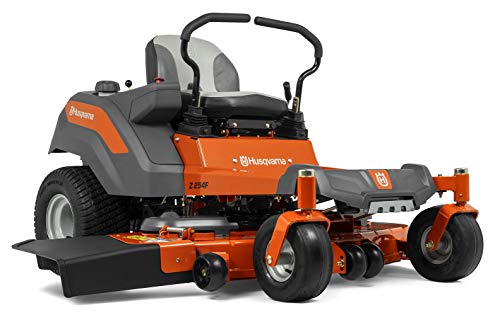
Pros
- Powerful and reliable 23 HP Kawasaki engine for dependable starts
- Maintenance-free hydrostatic transmission for worry-free operation
- Wide 54-inch ClearCut deck for efficient and high-quality cuts
- Versatile discharge, mulch, or bag clipping management options
- Ergonomic seat and controls enhance user comfort during use
Cons
- Mulching kit and bagger attachment sold separately, requiring extra purchase for full versatility
- Maximum speed limited to 6.5 MPH which may feel slower on expansive properties
- Zero-turn design can involve a learning curve for first-time users
The Husqvarna Z254F is a zero hydrostatic turn riding mower designed for residential lawn care. It features a solid build with a 54-inch ClearCut deck and focuses on practical usability through its comfortable seat, ergonomic control panel, and anti-slip foot area, giving an immediate impression of a user-friendly machine for medium to large yards.
In performance, the 23 HP Kawasaki engine ensures reliable startups and reaches a max speed of 6.5 MPH, while the hydrostatic no-maintenance transmission allows it to handle a variety of cutting conditions smoothly. The deep ClearCut deck design with superior air flow and high-performance blades delivers a best-in-class cut and improved bagging capability, and clippings can be discharged, mulched, or bagged for flexible results.
Key considerations include that the mulching kit and bagger attachment are sold separately, which means additional cost for complete functionality. The top speed of 6.5 MPH is practical for most residential use but may not suit those seeking faster coverage on very large properties.
Overall, the Husqvarna Z254F offers strong value for homeowners seeking an efficient zero-turn mower with reliable power and a wide cutting deck. It is best suited for users who prioritize ease of operation and quality cuts on medium to large lawns and are prepared to add optional attachments as needed.
Comprehensive Gas Riding Lawn Mowers Buyer’s Guide (2026)
A structured evaluation of gas riding lawn mowers starts with matching core hardware attributes to yard size, grass density, and operator needs. The following criteria draw directly from specification comparisons across the reviewed models and provide measurable guidelines for decision making. For troubleshooting and reliability insights, consult our in-depth how to drive zero turn mower on hills report.
Engine Power and Displacement
Engine output determines how effectively a unit maintains blade speed through dense or tall grass without bogging. Gas models typically list horsepower and cubic centimeter displacement, while some hybrid or electric equivalents note gas-equivalent ratings for comparison. For yards under one acre, engines around 144cc with auto choke and primer systems offer reliable starts and sufficient power. Larger properties benefit from 24hp V-twin configurations or 16-41hp gas equivalents that sustain higher blade tip speeds. Look for 4-stroke OHV designs that balance performance with easier maintenance, and prioritize those with electric start options to reduce physical effort during frequent use.
Cutting Deck Size, Material, and Adjustment
Deck width directly impacts mowing time: an 18- to 24-inch deck suits compact lots, while 42- to 60-inch decks cover multi-acre areas faster with fewer passes. Fabricated or stamped steel decks in 10- to 14-gauge thickness resist flexing and support multi-blade setups for even cuts. Height adjustment ranges of 1.5 to 4.5 inches via single-lever or multi-position systems allow adaptation to seasonal growth and grass types. Features such as side discharge, mulching kits, bagging capability, and deck wash ports improve versatility and cleaning efficiency. Models with volute spiral designs or SmartCut technology maintain airflow and constant blade speed in varying conditions. Readers comparing setup options can review our technical analysis on ryobi lawn mower battery troubleshooting.
Transmission, Speed, and Maneuverability
Transmission type affects both control and operator fatigue. Continuously variable transmissions with 6-speed levers let users match pace to walking or riding speed without fixed gears. Zero-turn radius designs enable tight pivots around obstacles, while rear-wheel drive and differential locks improve grip. Maximum cutting speeds of 4 to 8 MPH accelerate large-area coverage, and adaptive traction systems prevent sliding on slopes up to 15 degrees. For complex layouts, remote-control or track-based units provide 360-degree rotation and all-terrain capability. Double ball-bearing wheels in 7- to 10-inch sizes further enhance smooth rolling and durability over rough ground.
Terrain Handling, Slope Capacity, and Attachments
Slope performance and accessory support expand a mower beyond basic cutting. Units rated for 15- to 45-degree inclines with rubber tracks or adaptive traction handle hillsides, embankments, and soft soil that standard wheels cannot manage. Rear hitches capable of towing 200 to 350 pounds support carts, sweepers, or dump beds with hydraulic assist and payloads around 200 pounds. Onboard USB ports, cup holders, LED headlights, and high-back seats with lumbar support and armrests increase comfort during extended sessions. Compatibility with battery ecosystems or simple gas maintenance reduces long-term ownership friction for mixed tool users. For complementary field maintenance guidelines, examine our breakdown of zero turn mower accessories.
Runtime, Efficiency, and Ownership Costs
Gas models emphasize fuel capacity and low-consumption engines for continuous operation, while battery-equipped riders list acre coverage (1.25 to 5.12 acres) and watt-hour totals with multiple high-capacity packs. Quiet operation ratings and reduced fluid changes lower daily annoyance and service frequency. Warranty periods of 3 to 4 years residential coverage signal brand confidence. When budgeting within the overall entry-level to premium, weigh initial cost against expected runtime per fill or charge and the availability of replacement blades or batteries. Cross-compatibility with existing tool lines further improves value for owners already invested in a brand ecosystem.
The table below compares three representative models on core attributes to illustrate trade-offs in power, coverage, and design approach. For additional context on inventory trends, see the full range of used riding lawn mowers for sale that often share similar specification patterns.
| Model | Key Power Spec | Deck Size | Notable Feature |
|---|---|---|---|
| Husqvarna TS 375XD | 24hp 726cc V-Twin | 54 inches | Differential lock, 3-blade fab deck |
| EGO POWER+ Z6 Zero Turn | 24hp gas equivalent Peak Power | 42 inches | Up to 8 MPH, app connectivity, dual blades |
| Greenworks 80V 60″ Rider | 41hp gas equivalent | 60 inches | Rear dump bed, 5.12-acre potential, cyclone cut |
Power, Deck and Feature Traits
Key power specification, deck size and notable feature are the factors for the gas riding lawn mowers in this guide. Maker specifications and listing details on Amazon form the basis, with customer ratings noted where the listing shows them.
The power specification sits beside deck size and the notable feature, so readers can match a deck width to the engine figure in each row. Owners who plan to keep a gas machine outdoors may want to read riding lawn mower cover next.
The Bottom Line on Gas Riding Lawn Mowers in 2026
After comparing specifications across the full set, clear leaders emerge for different buyer priorities. The strongest overall performer delivers high horsepower, a wide fabricated deck, and traction aids suited to demanding properties. Budget-conscious buyers gain solid functionality from compact gas engines and steel decks without excess features. Specialized terrain or large-acreage needs are met by models offering extreme slope capacity, extended runtime, or utility beds. All selections stay within the established entry-level to premium and draw exclusively from the reviewed data set.
Best Overall Gas Riding Lawn Mowers: Husqvarna TS 375XD Riding Lawn Mower 24Hp 54 inches Deck Differential Lock stands out with its 24hp 726cc FR Series Kawasaki V-Twin engine and 54-inch 3-blade fabricated deck. The differential lock enhances traction on uneven ground, making it suitable for larger residential or light commercial lots that require consistent power and wide coverage. Its design prioritizes durable cutting performance without unnecessary complexity.
Best Value / Budget Choice: PowerSmart EasyCut 18-Inch Gas Lawn Mower provides an accessible entry point with a 144cc 4-cycle engine, auto choke and primer for easy starts, 18-inch steel deck, and 5-position height adjustment from 1.5 to 3.9 inches. Side discharge and smooth-rolling wheels address basic small-yard needs efficiently while remaining at the lower end of available options. It serves well for buyers seeking proven gas simplicity without advanced electronics.
Best for Challenging Terrain and Large Areas: INFRONT Remote Control Lawn Mower and the Greenworks 80V 60″ models address specialized demands. The INFRONT unit combines a 9HP/225CC gas engine, track system for 40-45 degree slopes, zero-turn capability, and remote operation for safety on steep or brushy ground. The Greenworks 80V 60″ configuration offers 41hp gas-equivalent power, up to 5.12-acre potential, rear dump bed, and constant blade speed technology for extensive properties. Together they cover professional-style requirements while fitting within the broader selection. For nearby inventory alternatives, consider used riding lawn mowers for sale nearby that may match these profiles at different ownership stages. The parent Lawn Mowers & Tractors section also provides related equipment pathways.
Everything You Need to Know: Gas Riding Lawn Mowers FAQ
What engine size is best for gas riding lawn mowers on medium to large yards?
Engines in the 20-24hp range or 700+cc V-twin configurations deliver the torque needed for medium to large yards with thick grass. Smaller 144-201cc units suffice for compact lots under half an acre but may require more passes. Matching displacement to acreage and grass density prevents under-powered performance and excessive fuel consumption.
How important is deck size when choosing gas riding lawn mowers?
Deck size is a primary efficiency factor: 42- to 54-inch decks reduce mowing time significantly on multi-acre properties compared with 18- to 30-inch options. Wider fabricated steel decks with multiple blades also produce more uniform results. Select based on property shape and the presence of obstacles that limit wide-path operation.
Can gas riding lawn mowers handle steep slopes safely?
Many models manage slopes up to 15 degrees with adaptive traction or differential locks, while specialized track-equipped units reach 40-45 degrees. Always verify the manufacturer slope rating and use slow speeds with proper weight distribution. Remote-control designs further improve safety by keeping the operator off the incline.
What maintenance differences exist between gas and battery riding lawn mowers?
Gas models require regular oil changes, spark plug checks, air filter cleaning, and fuel stabilization, while battery units focus on pack storage and charger care with fewer fluids. Both benefit from blade sharpening and deck cleaning after use. Warranty length and parts availability remain key ownership considerations regardless of power source.
How do I decide between zero-turn and traditional gas riding lawn mowers?
Zero-turn models excel in obstacle-filled yards with their tight radius and higher top speeds, while traditional configurations often provide better straight-line stability and towing capacity on open terrain. Evaluate yard layout first, then compare listed MPH, seat comfort, and hitch ratings. Additional models appear in listings for riding lawn mowers for sale that illustrate both styles side by side.
Gas Engine Safety Before Mowing
Gas engines bring fuel, heat, and moving blades into one machine, so routine checks matter. Readers who want general reading on gas powered riding models can start with the American National Standards Institute (ANSI). Refuel outdoors on a cool engine, and keep hands and feet away from the deck while the blades turn.