

Pros
- Powerful 80V brushless motor delivers 32HP gas-equivalent performance with quiet fume-free operation and no engine maintenance.
- Complete kit includes four 6.0Ah batteries and 600W charger for substantial runtime up to 1.5 acres.
- SmartCut technology and 42-inch heavy-duty steel deck ensure consistent cuts without bogging in tough conditions.
- Versatile towing up to 350 lbs and optional cargo hauling plus comfort features like high-back seat and LED lights.
- Strong 4-year limited warranty and full compatibility with the Greenworks 80V tool ecosystem.
Cons
- Rear utility cargo bed for 200 lb hauling is sold separately and not included in the kit.
- Runtime of up to 1.5 acres varies with conditions and may require recharging or battery swaps on larger properties.
- As a fully cordless model continuous operation depends on battery levels unlike gas engines with unlimited runtime.
The Greenworks 80V 42" CrossoverT Cordless Riding Lawn Tractor is a ready-to-mow zero-emission tractor designed for homeowners managing medium to large lawns. It features a reinforced 42-inch stamped steel deck of 12-gauge construction along with premium comfort elements such as a high-back padded seat with foldable armrests. The overall build emphasizes durability and user convenience right out of the box with the included battery and charger set.
Performance centers on the 80V TruBrushless motor that provides 32HP gas-equivalent power with instant torque and quiet fume-free operation. SmartCut technology senses grass conditions and automatically adjusts power to maintain a consistent cut even in tall thick or wet areas. The four 6.0Ah batteries support runtime for up to 1.5 acres depending on conditions while dual LED headlights and a 7-position deck height range from 1.5" to 4.5" add practicality. Front and rear attachments further allow towing up to 350 lbs for added yard utility.
Key considerations include that the rear utility storage bin capable of hauling 200 lbs is sold separately so full cargo functionality requires an extra purchase. Runtime remains condition-dependent and may fall short for properties significantly larger than 1.5 acres without using the 600W charger or swapping batteries. The cordless design prioritizes ease and low maintenance but trades off the continuous runtime of traditional gas models.
This tractor delivers strong value for eco-conscious owners of residential properties who want gas-like power without the emissions noise or upkeep. It suits those who already use or plan to expand into the Greenworks 80V family of tools and who appreciate the 4-year limited warranty. Users with exceptionally large or commercial-scale lawns should evaluate battery logistics carefully before purchase.

Pros
- Delivers strong 21 horsepower equivalent power comparable to gas riding mowers.
- Provides up to 1.5 acres of runtime on a full charge with the six included batteries.
- Features low-maintenance dual brushless motors without belts for greater durability.
- Offers versatile 12-position cutting height adjustment from 1.5 to 4.5 inches.
- Includes digital controls for blade settings, drive speeds, and cruise control.
Cons
- Limited to 1.5 acres of cutting per charge without purchasing additional batteries for bigger lawns.
- Requires recharging time for the six 56V batteries after each use session.
- Relies solely on battery power with no hybrid or gas backup option for extended operation.
The EGO Power+ TR4204 is a cordless electric riding lawn mower built as a modern tractor alternative for residential use. It features a robust 42-inch stamped steel deck and arrives ready to go with six 56V 6.0Ah batteries plus a charger, creating an immediate impression of convenience and solid construction free from gas engine complexity.
Performance shines through its equivalent 21 horsepower output and top speed of 6 MPH, allowing efficient coverage of up to 1.5 acres on a single charge. Dual brushless cutting motors operate without belts for added durability and less upkeep, while the digital display lets users select three blade settings, three drive speeds, and cruise control. The 12 adjustable heights ranging from 1.5 to 4.5 inches combined with anti-scalp wheels deliver precise results across varied terrain.
Drawbacks center on battery dependency, as larger properties beyond 1.5 acres require extra batteries and recharging intervals can interrupt workflow. The fully electric design eliminates fuel storage needs but demands access to power sources between sessions.
This mower suits homeowners with medium to large yards who value quiet, emission-free operation and reduced maintenance. Those seeking expandable battery capacity for bigger areas will find the EGO Power+ TR4204 a strong long-term investment in cordless lawn care.
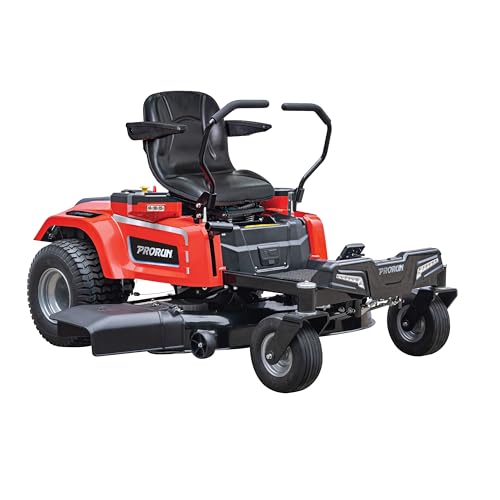
Pros
- High-efficiency brushless motors maximize power output and durability over traditional motors
- Up to 2 acres runtime with three included 10.0 Ah batteries supports substantial mowing sessions
- Zero-emission operation with gas-equivalent 20 HP power for quieter environmentally friendly use
- Six-port auto-switchover battery system provides flexible extended runtime options
- Durable 42-inch steel deck plus included mulch and towing kits add immediate functionality
Cons
- Runtime is limited to approximately 70 minutes or 2 acres which may require recharging for larger properties
- Fully battery-dependent design means performance relies on charge levels and spare battery availability
- 42-inch deck size may require more passes on expansive lawns compared to wider commercial models
The PRORUN PZT60V42 is a fully electric 60V zero-turn riding lawn mower built for residential and light commercial use. Its primary design centers on a robust 42-inch 14-gauge stamped steel twin blade deck powered by direct-drive brushless motors, giving an immediate impression of solid construction and modern battery-focused engineering. The mower arrives complete with three 10.0 Ah batteries, a charger, mulch kit, and towing kit for ready-to-work versatility.
In performance terms, four high-efficiency brushless motors deliver power equivalent to a 20 HP gas engine while producing zero emissions. The system supports up to 2.0 acres or 70 minutes of runtime, and six battery ports with auto switchover intelligently manage all PRORUN 60V battery sizes for continuous operation. A washout port on the steel deck further simplifies post-mow maintenance during real-world sessions.
Potential drawbacks include the finite 70-minute runtime window which can limit coverage on larger properties without spare batteries or recharge breaks. As a fully electric model, it also depends entirely on battery charge levels rather than continuous fuel refills, and the 42-inch deck width may demand extra passes compared with wider traditional options.
Overall the PRORUN PZT60V42 offers strong value for homeowners and small-property managers who want gas-like cutting power without emissions or noise. Those with medium-sized lawns seeking quiet efficient zero-turn performance and included accessories will benefit most from this electric mower.

Pros
- Strong 24HP FR730 engine power for demanding cutting conditions
- Wide 54-inch FAB deck reduces total mowing time
- Zero turn design delivers excellent maneuverability
- Fabricated deck supports durable everyday operation
Cons
- Sparse details beyond engine and deck leave other features unspecified
- Gas-powered FR730 engine needs regular fuel and maintenance
- Large 54-inch deck size may feel oversized on compact properties
The Husqvarna Z254F is a zero turn mower from the established Husqvarna brand in the riding lawn mowers category. It centers on a solid build that pairs a 24HP 726cc FR730 engine with a 54-inch FAB deck for straightforward residential grass care.
Performance stems directly from the listed specifications. The FR730 engine delivers the horsepower needed for steady operation across typical lawns while the wide FAB deck completes passes efficiently. Zero turn handling improves control in real yard layouts based on the model design.
Considerations arise from the limited data available. Secondary elements such as comfort features fuel capacity or extras receive no mention and the gas engine format involves routine upkeep. The large deck suits open areas better than confined spaces.
The Husqvarna Z254F provides the most value for owners of medium or large properties who want reliable engine power and a broad cutting width. Users with smaller lots or those seeking extensive accessory options should weigh the core specs carefully before purchase.
The Invention of the First Lawn Mower (1830)
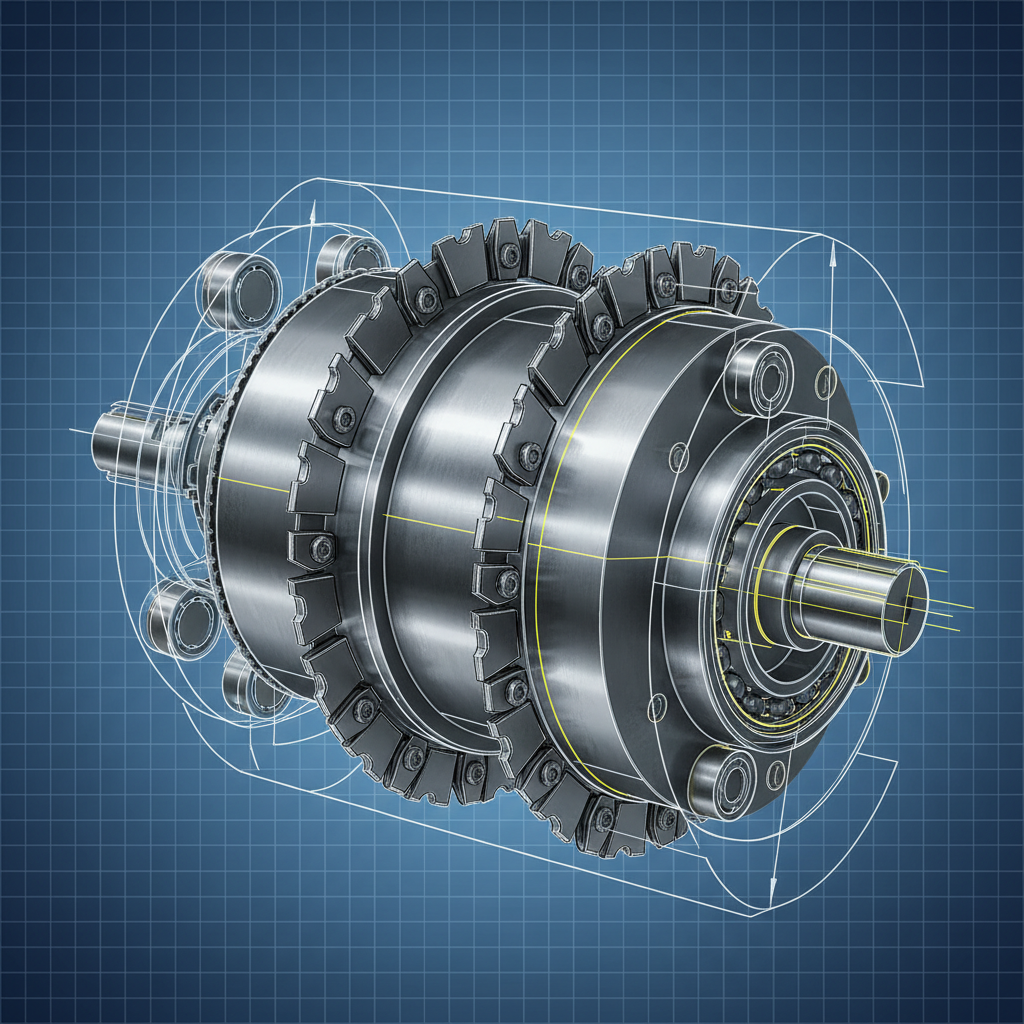
Edwin Budding’s invention of the mechanical lawn mower in 1830 marked a turning point in landscape maintenance. Budding, an engineer from Stroud, Gloucestershire, England, designed and patented a machine that used a rotating cylindrical blade to cut grass evenly and efficiently. His innovation was inspired by the industrial machinery used in textile mills, which featured similar cutting mechanisms.
Budding’s original design consisted of a series of blades arranged in a cylinder that rotated against a stationary blade, creating a scissor-like cutting action. The machine was pushed by hand and could be operated by a single person, making it far more practical than the scythes and hand tools previously used for lawn maintenance. This design principle remains the core mechanism in rotary lawn mowers today.
The timing of Budding’s invention was significant. During the early 19th century, maintaining manicured lawns became increasingly important for the British upper and middle classes. Sports fields, gardens, and estates required regular grass cutting, and Budding’s mechanical solution addressed a genuine need in society.
How the First Lawn Mower Changed Lawn Care
Before the invention of the mechanical lawn mower, cutting grass was an extremely labor-intensive process. Groundskeepers and laborers used hand scythes, which required significant skill, physical strength, and time to maintain large grass areas. This made well-maintained lawns a luxury available only to the wealthy who could afford dedicated staff. For troubleshooting and reliability insights, consult our in-depth jbl partybox club 120 vs sony srs xv500 report.
Budding’s cylinder mower solved several critical problems: For troubleshooting and reliability insights, consult our in-depth jbl partybox club 120 vs sony srs xv500 report.
- Efficiency: One person could now maintain a large lawn in a fraction of the time it took with manual scythes.
- Consistency: The machine produced uniform grass cutting height, creating more aesthetically pleasing results.
- Accessibility: Lawn maintenance became feasible for middle-class homeowners, not just wealthy estates.
- Safety: The machine was safer than hand scythes, reducing injury risk.
The cylinder blade design was revolutionary because it mimicked the natural cutting action of scissors rather than the sweeping motion of a scythe. This created cleaner cuts that were less damaging to grass, promoting healthier lawns and reducing brown leaf edges. Readers comparing setup options can review our technical analysis on z890 vs x870e motherboard.
How Did People Cut Grass Before 1830?
Prior to the mechanical lawn mower, grass cutting methods were primitive and time-consuming. The primary tools included:
- Hand Scythes: The most common tool, requiring skilled labor and significant physical effort.
- Sickles: Smaller curved blades used for more detailed work.
- Grazing Animals: Sheep and other livestock were often used to keep grass manageable on large estates.
- Hired Workers: Wealthy landowners employed full-time groundskeepers who spent entire seasons maintaining lawns.
The labor costs associated with these methods meant that ornamental lawns were status symbols—only the wealthy could afford to maintain them. Budding’s invention democratized lawn care by dramatically reducing the time and skill required. Readers comparing setup options can review our technical analysis on z890 vs x870e motherboard.
Evolution of Lawn Mower Technology
While Budding’s 1830 cylinder mower was the first, lawn mower technology has evolved significantly over nearly two centuries.
Early Mechanical Improvements (1830s-1870s)
Following Budding’s patent, numerous engineers refined the cylinder mower design. Improvements included better blade materials, adjustable cutting heights, and smoother mechanical operations. These early models remained manual push mowers but became increasingly efficient and user-friendly. For complementary field maintenance guidelines, examine our breakdown of marshall stanmore iii vs harman kardon onyx studio 8.
Steam-Powered and Motorized Lawn Mowers (1870s-1920s)
As industrial technology advanced, engineers developed motorized lawn mowers. Steam-powered models appeared in the late 1800s, followed by gasoline-powered machines in the early 1900s. These machines could cover large areas quickly and reduced the physical demands on operators.
Rotary Blade Design (Mid-20th Century)
The rotary blade design, which uses a single horizontal blade spinning at high speed, was introduced in the mid-1900s. This design competed with the traditional cylinder mower and proved popular for residential use because it handled uneven terrain and tougher grass more effectively. To evaluate matched hardware tolerances, consult our detailed overview of dyson v8 cyclone vs bissell featherweight stick.
Riding Lawn Mowers (1950s Onward)
As suburban lawns became larger and lawn care became culturally important in post-war America, riding mowers emerged. These vehicles combined motorized power with seated operation, making lawn maintenance even more accessible and reducing operator fatigue.
Modern Innovations (1990s-Present)
Contemporary lawn mowers feature electric motors, cordless battery technology, mulching capabilities, and increasingly, robotic automation. Electric mowers offer quieter, cleaner operation, while robotic mowers can maintain lawns autonomously. Smart technology now allows app-based control and scheduling. When planning workspace deployment, consider the engineering criteria outlined in our bissell crosswave hydrosteam vs shark stainforce guide.
Understanding the Definition of ‘First’
The concept of the ‘first’ lawn mower requires some clarification, as competing interpretations exist based on how we define the technology.
Are There Competing Claims?
While Edwin Budding is universally credited as the inventor of the first practical mechanical lawn mower, some sources reference earlier concepts or patents. However, Budding’s 1830 patent represents the first documented, commercially viable, and widely adopted lawn mower design. Earlier experimental designs existed but were not practical or patented as lawn-specific machines.
Manual vs. Motorized Definition
If we define ‘first lawn mower’ strictly as mechanical and hand-operated, Budding’s 1830 invention holds that distinction. If we expand the definition to include motorized versions, the timeline shifts to the late 1800s and early 1900s. Most historians, however, recognize Budding’s cylinder mower as the foundational invention, with later designs as evolutionary improvements.
How Historians Determine ‘First’
Historians typically evaluate inventions based on:
- Practical viability: Did the design actually work and solve the stated problem?
- Documentation: Are there patents, records, and evidence of the invention?
- Commercial adoption: Was the technology actually used by consumers?
- Influence: Did the invention influence subsequent designs?
By these criteria, Budding’s cylinder mower unquestionably qualifies as the first lawn mower.
The Legacy of Budding’s Invention
Edwin Budding’s 1830 lawn mower patent fundamentally transformed lawn care and, by extension, landscape design and suburban culture. His cylinder blade mechanism remains the standard in professional and commercial lawn mowers today. The invention enabled the development of the manicured lawn aesthetic that became central to Western landscape design, particularly in the United States during the 20th century.
The lawn mower also sparked an entire industry. By the early 1900s, numerous manufacturers produced variations of Budding’s design. Companies like Ransomes, Atco, and John Deere built their reputations partly on lawn mower innovations, creating a market that continues to generate billions in annual revenue worldwide.
Frequently Asked Questions About When Was The First Lawn Mower Invented
Q: Who exactly invented the first lawn mower?
A: Edwin Budding, an English engineer from Stroud, Gloucestershire, invented the first practical mechanical lawn mower and patented it in 1830. Budding’s cylinder mower design became the blueprint for modern lawn mowers.
Q: What year was the lawn mower invented?
A: The lawn mower was invented in 1830. Edwin Budding received his patent for the mechanical cylinder mower that year, making it the first documented, commercially viable lawn mower.
Q: How did the first lawn mower work?
A: Budding’s first lawn mower used a rotating cylindrical blade that worked against a stationary blade, creating a scissor-like cutting action. The machine was hand-pushed, and the operator controlled the cutting height by adjusting the cylinder position relative to the ground blade.
Q: When were motorized lawn mowers introduced?
A: Motorized lawn mowers began appearing in the late 1800s with steam-powered models. Gasoline-powered lawn mowers became more common in the early 1900s, with widespread adoption occurring mid-century. Electric mowers emerged in recent decades as battery technology improved.
For more hands-on benchmarks and buying recommendations, consult our guides on heavy-duty chainsaw buyer guide, as well as high-CFM commercial leaf blower guide.
Mechanical safety standards, operational tolerances, and protective gear guidelines align with benchmark specifications established by the American National Standards Institute (ANSI).