


Pros
- Powerful 80V brushless motor delivers 32HP gas-equivalent performance with quiet fume-free operation and no engine maintenance.
- Complete kit includes four 6.0Ah batteries and 600W charger for substantial runtime up to 1.5 acres.
- SmartCut technology and 42-inch heavy-duty steel deck ensure consistent cuts without bogging in tough conditions.
- Versatile towing up to 350 lbs and optional cargo hauling plus comfort features like high-back seat and LED lights.
- Strong 4-year limited warranty and full compatibility with the Greenworks 80V tool ecosystem.
Cons
- Rear utility cargo bed for 200 lb hauling is sold separately and not included in the kit.
- Runtime of up to 1.5 acres varies with conditions and may require recharging or battery swaps on larger properties.
- As a fully cordless model continuous operation depends on battery levels unlike gas engines with unlimited runtime.
The Greenworks 80V 42" CrossoverT Cordless Riding Lawn Tractor is a ready-to-mow zero-emission tractor designed for homeowners managing medium to large lawns. It features a reinforced 42-inch stamped steel deck of 12-gauge construction along with premium comfort elements such as a high-back padded seat with foldable armrests. The overall build emphasizes durability and user convenience right out of the box with the included battery and charger set.
Performance centers on the 80V TruBrushless motor that provides 32HP gas-equivalent power with instant torque and quiet fume-free operation. SmartCut technology senses grass conditions and automatically adjusts power to maintain a consistent cut even in tall thick or wet areas. The four 6.0Ah batteries support runtime for up to 1.5 acres depending on conditions while dual LED headlights and a 7-position deck height range from 1.5" to 4.5" add practicality. Front and rear attachments further allow towing up to 350 lbs for added yard utility.
Key considerations include that the rear utility storage bin capable of hauling 200 lbs is sold separately so full cargo functionality requires an extra purchase. Runtime remains condition-dependent and may fall short for properties significantly larger than 1.5 acres without using the 600W charger or swapping batteries. The cordless design prioritizes ease and low maintenance but trades off the continuous runtime of traditional gas models.
This tractor delivers strong value for eco-conscious owners of residential properties who want gas-like power without the emissions noise or upkeep. It suits those who already use or plan to expand into the Greenworks 80V family of tools and who appreciate the 4-year limited warranty. Users with exceptionally large or commercial-scale lawns should evaluate battery logistics carefully before purchase.

Pros
- Delivers strong 21 horsepower equivalent power comparable to gas riding mowers.
- Provides up to 1.5 acres of runtime on a full charge with the six included batteries.
- Features low-maintenance dual brushless motors without belts for greater durability.
- Offers versatile 12-position cutting height adjustment from 1.5 to 4.5 inches.
- Includes digital controls for blade settings, drive speeds, and cruise control.
Cons
- Limited to 1.5 acres of cutting per charge without purchasing additional batteries for bigger lawns.
- Requires recharging time for the six 56V batteries after each use session.
- Relies solely on battery power with no hybrid or gas backup option for extended operation.
The EGO Power+ TR4204 is a cordless electric riding lawn mower built as a modern tractor alternative for residential use. It features a robust 42-inch stamped steel deck and arrives ready to go with six 56V 6.0Ah batteries plus a charger, creating an immediate impression of convenience and solid construction free from gas engine complexity.
Performance shines through its equivalent 21 horsepower output and top speed of 6 MPH, allowing efficient coverage of up to 1.5 acres on a single charge. Dual brushless cutting motors operate without belts for added durability and less upkeep, while the digital display lets users select three blade settings, three drive speeds, and cruise control. The 12 adjustable heights ranging from 1.5 to 4.5 inches combined with anti-scalp wheels deliver precise results across varied terrain.
Drawbacks center on battery dependency, as larger properties beyond 1.5 acres require extra batteries and recharging intervals can interrupt workflow. The fully electric design eliminates fuel storage needs but demands access to power sources between sessions.
This mower suits homeowners with medium to large yards who value quiet, emission-free operation and reduced maintenance. Those seeking expandable battery capacity for bigger areas will find the EGO Power+ TR4204 a strong long-term investment in cordless lawn care.
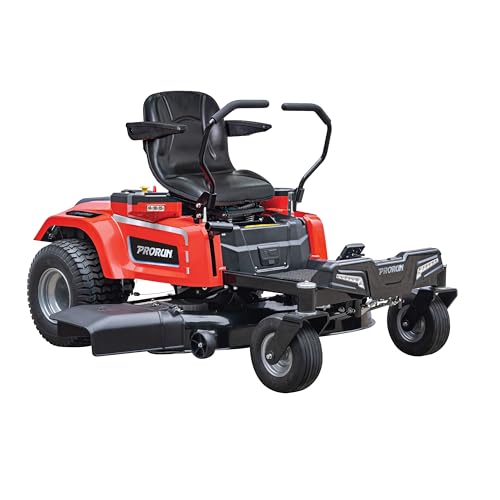
Pros
- High-efficiency brushless motors maximize power output and durability over traditional motors
- Up to 2 acres runtime with three included 10.0 Ah batteries supports substantial mowing sessions
- Zero-emission operation with gas-equivalent 20 HP power for quieter environmentally friendly use
- Six-port auto-switchover battery system provides flexible extended runtime options
- Durable 42-inch steel deck plus included mulch and towing kits add immediate functionality
Cons
- Runtime is limited to approximately 70 minutes or 2 acres which may require recharging for larger properties
- Fully battery-dependent design means performance relies on charge levels and spare battery availability
- 42-inch deck size may require more passes on expansive lawns compared to wider commercial models
The PRORUN PZT60V42 is a fully electric 60V zero-turn riding lawn mower built for residential and light commercial use. Its primary design centers on a robust 42-inch 14-gauge stamped steel twin blade deck powered by direct-drive brushless motors, giving an immediate impression of solid construction and modern battery-focused engineering. The mower arrives complete with three 10.0 Ah batteries, a charger, mulch kit, and towing kit for ready-to-work versatility.
In performance terms, four high-efficiency brushless motors deliver power equivalent to a 20 HP gas engine while producing zero emissions. The system supports up to 2.0 acres or 70 minutes of runtime, and six battery ports with auto switchover intelligently manage all PRORUN 60V battery sizes for continuous operation. A washout port on the steel deck further simplifies post-mow maintenance during real-world sessions.
Potential drawbacks include the finite 70-minute runtime window which can limit coverage on larger properties without spare batteries or recharge breaks. As a fully electric model, it also depends entirely on battery charge levels rather than continuous fuel refills, and the 42-inch deck width may demand extra passes compared with wider traditional options.
Overall the PRORUN PZT60V42 offers strong value for homeowners and small-property managers who want gas-like cutting power without emissions or noise. Those with medium-sized lawns seeking quiet efficient zero-turn performance and included accessories will benefit most from this electric mower.

Pros
- Strong 24HP FR730 engine power for demanding cutting conditions
- Wide 54-inch FAB deck reduces total mowing time
- Zero turn design delivers excellent maneuverability
- Fabricated deck supports durable everyday operation
Cons
- Sparse details beyond engine and deck leave other features unspecified
- Gas-powered FR730 engine needs regular fuel and maintenance
- Large 54-inch deck size may feel oversized on compact properties
The Husqvarna Z254F is a zero turn mower from the established Husqvarna brand in the riding lawn mowers category. It centers on a solid build that pairs a 24HP 726cc FR730 engine with a 54-inch FAB deck for straightforward residential grass care.
Performance stems directly from the listed specifications. The FR730 engine delivers the horsepower needed for steady operation across typical lawns while the wide FAB deck completes passes efficiently. Zero turn handling improves control in real yard layouts based on the model design.
Considerations arise from the limited data available. Secondary elements such as comfort features fuel capacity or extras receive no mention and the gas engine format involves routine upkeep. The large deck suits open areas better than confined spaces.
The Husqvarna Z254F provides the most value for owners of medium or large properties who want reliable engine power and a broad cutting width. Users with smaller lots or those seeking extensive accessory options should weigh the core specs carefully before purchase.
What Type of Bag Attachment Does Your Mower Use?
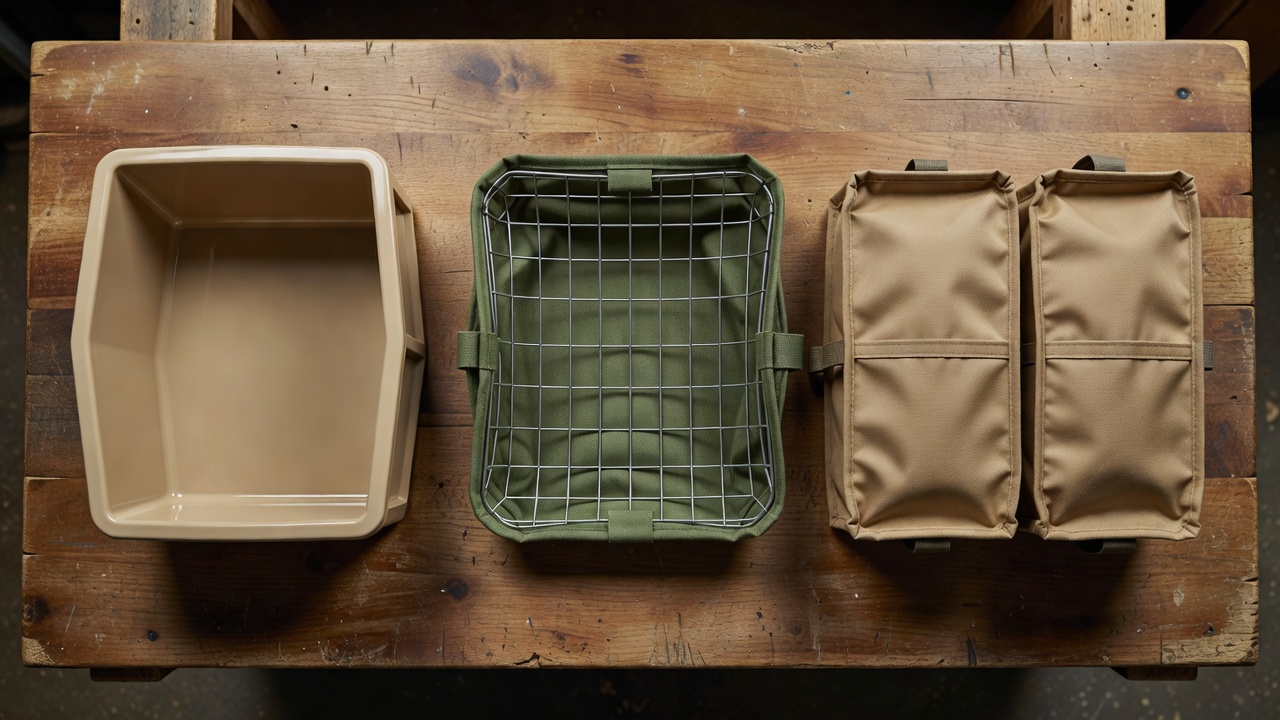
Before following any step-by-step sequence, identify your mower type and bag style. Attaching the wrong configuration or skipping this check is the leading reason bags fall off mid-mow or fail to collect clippings.
Mower Types
- Push (walk-behind) mower: Uses a single-bin rear bag mounted directly to the rear of the mower deck. The bag attaches via wire frame hooks that drop into receiver slots on a metal bracket at the deck’s rear opening.
- Riding lawn mower: Typically uses a two-bin rear bagger system. A chute tube runs from the deck’s discharge port to the bagger inlet, and the collection bins hang from a frame mounted to the rear of the tractor.
- Zero-turn mower: Uses a rear-mounted two- or three-bin bagger on a dedicated support frame that connects to the mower’s rear hitch plate or integrated bagger deck ports. These systems are almost always brand-specific.
Bag Styles
- Hard-frame grass catcher: A rigid plastic or metal frame holds the bag open permanently. Common on push mowers. Hooks drop into fixed receiver slots and the bag stays expanded even when partially full.
- Soft-frame grass catcher: A wire frame supports a fabric bag. Found on both push and some riding mowers. The bag can collapse when empty, which can occasionally cause airflow restriction before clippings build up.
- OEM bagger vs. universal aftermarket bagger: OEM (original equipment manufacturer) baggers are designed for a specific mower model and mount precisely. Universal aftermarket baggers fit push mowers reasonably well but rarely align correctly with riding mowers or zero-turn mowers due to deck geometry and chute angle differences.
Locate your mower’s model number (usually on a sticker beneath the deck or on the engine shroud) before purchasing a replacement or aftermarket bagger. Hook placement, chute diameter, and locking mechanisms vary by manufacturer.
How to Put a Bag on a Push (Walk-Behind) Lawn Mower
Push mowers represent the most common bag-attachment scenario. The process takes under two minutes once you know where the hooks seat. For broader ecosystem context, read through our operational guide on jbl partybox club 120 vs sony srs xv500.
- Power off and secure the mower. Turn the engine off completely. Disconnect the spark plug wire from the spark plug — this prevents accidental engine start while your hands are near the deck opening. Set the mower on flat ground.
- Locate the rear discharge chute opening. Lift the rear flap or door on the back of the mower deck. This rectangular or arched opening is where clippings travel from the blade chamber into the bag. On some models (common on Toro and Craftsman walk-behinds) a rubber flap covers this opening and must be lifted manually.
- Position the bag frame over the opening. Hold the grass catcher bag so the open end (bag frame side) faces the deck. The wire hanger hooks on the top of the frame need to align directly above the receiver slots or mounting bracket on the rear deck edge.
- Drop the hooks into the receiver slots. Lower the bag frame until both wire hooks seat fully into their slots. On Honda push mowers, the hooks curve inward and require a slight forward tilt before dropping down. On Toro and Craftsman models, the hooks are straight and drop vertically. The bag should sit flush against the rear of the deck with no gap at the top.
- Confirm the bag is locked in. Give the bag a firm downward tug and a side-to-side shake. It should not lift free or wobble significantly. If it pulls out easily, the hooks are not fully seated — re-lift and re-drop until both hooks are fully engaged.
- Verify the chute flap swings freely. With the bag mounted, press the rear discharge flap from inside the chute opening (use a stick, not your hand). It should swing open freely into the bag interior. A stuck or bent flap blocks clipping flow and causes the bag to appear not to fill.
- Reconnect the spark plug wire and mow. Attach the spark plug wire before starting the engine. Never start the engine first and then attempt to mount the bag.
Brand note — hook shape differences: Honda rear bags use a narrower hook gap than Toro bags. If you are fitting an aftermarket bag to a Honda mower, confirm the hook width matches the OEM bracket spacing before purchasing. For broader ecosystem context, read through our operational guide on jbl partybox club 120 vs sony srs xv500.
How to Put a Bag on a Riding Lawn Mower
Riding mower bagger systems involve more components than push mower bags: a frame, collection bins, and a chute tube that bridges the deck discharge port to the bagger inlet. Allow 10–15 minutes for initial installation. For troubleshooting and reliability insights, consult our in-depth z890 vs x870e motherboard report.
- Park on a flat surface, disengage the blade, and shut off the engine. Apply the parking brake. Do not attach the bagger with the engine running or the blade engaged.
- Remove the mulch plug if present. Many riding mowers ship with a mulch plug inserted in the deck’s discharge port. The plug blocks clippings inside the deck for mulching mode. Before attaching a bagger, reach under the deck (engine off, blade stationary) and pull the mulch plug free. Store it — you will need it when switching back to mulch mode. Skipping this step is the most common reason grass fails to enter the bag on a riding mower.
- Attach the chute tube to the deck discharge port. The chute tube (also called the discharge elbow or baffle duct) connects the opening on the side or rear of the mower deck to the bagger inlet. Slide the tube’s collar over the deck port and secure the retaining clip or clamp per your model’s instructions. On John Deere riding mowers, the chute tube clicks into a bayonet-style collar. On Husqvarna and Cub Cadet models, a spring clip or thumb screw secures the joint.
- Mount the bagger frame to the rear hitch receiver or lift arm brackets. Slide the bagger support frame’s mounting pins or hooks into the rear hitch receiver slots on the tractor body. On some Cub Cadet and Husqvarna models, the frame attaches to the lift arm brackets above the rear axle. Hand-tighten any retaining pins or bolts.
- Hang the collection bins onto the bagger frame. Most two-bin systems use a pair of fabric bins with a rigid top rail. Hook the top rail over the frame’s horizontal support bar and ensure both bins hang level. The bin openings must face forward and align with the chute tube outlet.
- Connect the chute tube outlet to the bagger inlet. Extend or angle the chute tube so its outlet aligns with the inlet opening on the bagger bins. On John Deere E-series tractors, a flexible rubber elbow bridges this connection and presses onto both fittings. Confirm there is no gap between the chute outlet and the bin inlet — gaps allow clippings to blow out the side instead of into the bins.
- Attach any straps or retaining pins. Some systems include a strap that runs from the bagger frame to a hook on the tractor body to prevent the frame from bouncing on rough terrain. Install these before mowing.
- Verify the chute tube is unobstructed and start the engine. Run your hand along the inside of the chute tube to confirm no debris blocks it. Start the engine and engage the blade briefly in a stationary position to confirm clippings flow into the bins before beginning to mow.
Brand callout: Husqvarna TS and YTH series riding mowers use a tool-free quick-connect chute that snaps into the deck port. John Deere 100-series tractors use a two-piece chute that must be assembled before mounting. Cub Cadet XT1 and XT2 series use a single-piece rear chute with a lever-lock clip. Always verify your model’s chute connection type before starting assembly.
How to Put a Bag on a Zero-Turn Mower
Zero-turn mower bagger systems are the most complex to install and the least interchangeable across brands. Plan 20–30 minutes for initial setup. These systems are engineered to each brand’s specific deck geometry and rear frame configuration. For troubleshooting and reliability insights, consult our in-depth z890 vs x870e motherboard report.
- Engage the parking brake and shut off the engine. Zero-turn mowers do not have a traditional parking brake lever — engage the lap bar locks per your model’s operator manual to prevent the mower from rolling during installation.
- Mount the bagger support frame to the rear hitch plate. The bagger support frame attaches to the rear hitch plate or integrated mounting brackets on the rear of the mower frame. Slide the frame’s mounting arms into the hitch plate receivers and insert the quick-connect pins through the alignment holes. On Husqvarna zero-turn models, two pins secure the frame on each side. On Ariens and Gravely models, the frame uses a bolt-on plate that requires a socket wrench for initial installation.
- Attach the collection bins to the bagger frame. Hang two- or three-bin collection bags onto the frame’s support rails using the bin’s integrated hanger brackets. Confirm each bin is fully seated and level before proceeding.
- Connect the discharge chute or baffle duct from the deck to the bagger inlet tube. This is the most brand-specific step. On Husqvarna zero-turns, a rigid plastic baffle duct runs from the deck’s rear discharge port and clips into the bagger inlet tube with a thumb-press latch. On Bad Boy zero-turns, a flexible rubber duct connects the two points and is secured with hose clamps. On Ariens and Gravely models, the duct is a hinged chute that pivots into position and locks with a cotter pin.
- Confirm all locking pins are fully seated. Walk around the mower and press each quick-connect pin inward to confirm the retaining clip has sprung outward on the back side. A pin that appears inserted but lacks the clip engagement will work free under mowing vibration.
- Lower the bagger to operating height. Some zero-turn bagger frames include a height adjustment so the bins clear the ground on uneven terrain. Set the frame height per the OEM instructions — bins dragging the ground will tear the mounting frame over time.
- Test before full mowing session. Start the engine, engage the blade, and run over a small patch of grass. Check that clippings enter the bins and that the chute duct does not separate under airflow pressure.
Brand compatibility warning: Zero-turn mower baggers are engineered to specific models and are not interchangeable across brands. A Husqvarna zero-turn bagger will not mount correctly on an Ariens, Gravely, or Bad Boy zero-turn due to hitch plate geometry and deck discharge port placement differences. Always purchase the bagger kit listed for your exact model number.
Common Problems When Attaching a Lawn Mower Bag (and How to Fix Them)
| Problem | Cause | Fix |
|---|---|---|
| Bag falls off while mowing | Worn or bent wire hanger hooks; receiver bracket deformed | Inspect hooks for straightness; bend back with pliers or replace hooks. Check receiver bracket for inward deformation and straighten or replace the bracket. |
| Grass blows back out of the bag | Discharge chute flap not fully open; bag overfilled; dull mower blade reducing airflow lift | Confirm chute flap swings freely — clean debris from hinge. Empty bag before it exceeds two-thirds full. Sharpen or replace blade: blade lift generates the vacuum that pulls clippings into the bag, and a dull blade disrupts that airflow. |
| Bag deflates and clogs | Bag fabric clogged with fine dust and clipping residue blocking airflow | Remove bag, turn inside out, and rinse with a garden hose. Allow to dry completely before reattaching. Replace bag if fabric is worn thin or has holes. |
| Grass not entering bag on riding mower | Mulch plug still installed in deck discharge port | Power off, remove mulch plug from deck port, then reattach bagger chute tube. |
| Chute tube separates during mowing | Retaining clip not fully engaged; chute collar not seated over port | Re-seat the chute tube collar fully over the deck port before engaging the clip. On flexible duct systems, verify hose clamps are tightened. |
| Bag appears full but mower keeps running | Bag packed with wet clippings that compress — volume is deceptive | Empty bag every 10–15 minutes when mowing wet or long grass. Overfilled bags restrict airflow, reducing collection efficiency and straining the engine. |
Safety Checks Before You Start Mowing with a Bag Attached
- Attach the bag before starting the engine. Never attempt to mount or adjust a grass catcher bag with the engine running. The discharge chute is an active ejection zone while the blade is spinning.
- Confirm full seating before engaging the blade. Tug the bag firmly after mounting. A bag that separates once the blade engages can become a projectile hazard.
- Inspect bag fabric before each use. A torn or thinned grass catcher bag can eject debris — including stones and sticks picked up with clippings — at high speed. Replace any bag with visible holes, thinning fabric, or damaged seams.
- Never reach into the discharge area with the engine running. If the chute becomes blocked, shut off the engine, disconnect the spark plug wire (push mowers), and clear the blockage with a stick or gloved hand.
- Do not overfill the bag. An overfilled grass catcher bag restricts the airflow path through the mower deck, causing clippings to back up, increasing engine load, and reducing cut quality. Empty when two-thirds full.
- Wear eye protection. Even with a bag attached, small debris can exit through gaps at the deck perimeter. Safety glasses are recommended for every mowing session.
Buyer FAQs: How To Put A Bag On A Lawn Mower Solved
Can I use a universal aftermarket bag on my riding mower or zero-turn?
Universal aftermarket grass catcher bags fit most push mowers reasonably well because wire hook dimensions are broadly standardized across brands. Riding mowers and zero-turn mowers are a different situation — chute tube diameter, deck discharge port angle, and rear frame geometry vary enough between manufacturers that universal bags rarely align or seal correctly. For riding and zero-turn mowers, use the OEM bagger listed for your model number to ensure proper chute connection and clipping flow. Readers comparing setup options can review our technical analysis on marshall stanmore iii vs harman kardon onyx studio 8.
Why is my lawn mower bag not picking up grass even though it’s attached correctly?
The four most common causes: (1) the mulch plug is still installed in the deck discharge port — remove it before bagging; (2) the discharge chute flap is stuck closed — clear debris from the flap hinge; (3) the bag fabric is clogged with fine dust and restricting airflow — rinse and dry the bag; (4) the mower blade is dull, which reduces the aerodynamic lift inside the deck that draws clippings upward into the chute. Sharpen or replace the blade and test collection again.
How do I know when my grass catcher bag is full?
On push mowers with solid-frame bags, the bag visibly bulges and clippings begin to blow back from the discharge area rather than entering the bag. On riding and zero-turn mowers with fabric bins, the bins become visibly rounded and firm. A practical rule: empty the bag or bins every 10–15 minutes when mowing dense, long, or wet grass. Waiting until the bag is completely packed causes airflow restriction and reduces collection efficiency for the remainder of the mowing session. For complementary field maintenance guidelines, examine our breakdown of dyson v8 cyclone vs bissell featherweight stick.
Do I need to remove the spark plug wire every time I attach a push mower bag?
Removing the spark plug wire is the safest practice when your hands are near the mower deck opening, because it eliminates any possibility of accidental engine start. Many experienced operators skip this step for routine bag attachment since the engine is off and the operator is not reaching beneath the deck. However, if you are clearing a clog from the discharge chute opening or adjusting the bag mounting bracket with your fingers near the blade chamber, disconnecting the spark plug wire is the correct safety procedure. Check your mower’s operator manual — some manufacturers explicitly require it for any deck access.
For more hands-on benchmarks and buying recommendations, consult our guides on high-CFM commercial leaf blower guide, as well as durable ride-on lawn tractor guide.
Mechanical safety standards, operational tolerances, and protective gear guidelines align with benchmark specifications established by the American National Standards Institute (ANSI).









