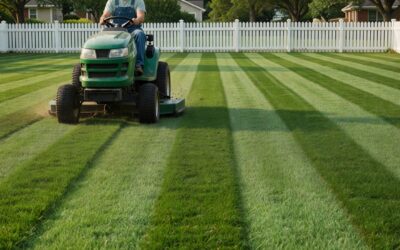
What Is a Lawn Mower?
A lawn mower is a machine that uses one or more rotating blades to cut grass or turf to a consistent, even height across a lawn or field. It is the primary tool used in residential and commercial lawn care to keep grass at a level that is both visually uniform and healthy for the turf. Lawn mowers range from simple manual push devices to GPS-guided robotic units, but all share the same core purpose: controlled, repeatable grass cutting.
How Does a Lawn Mower Work?
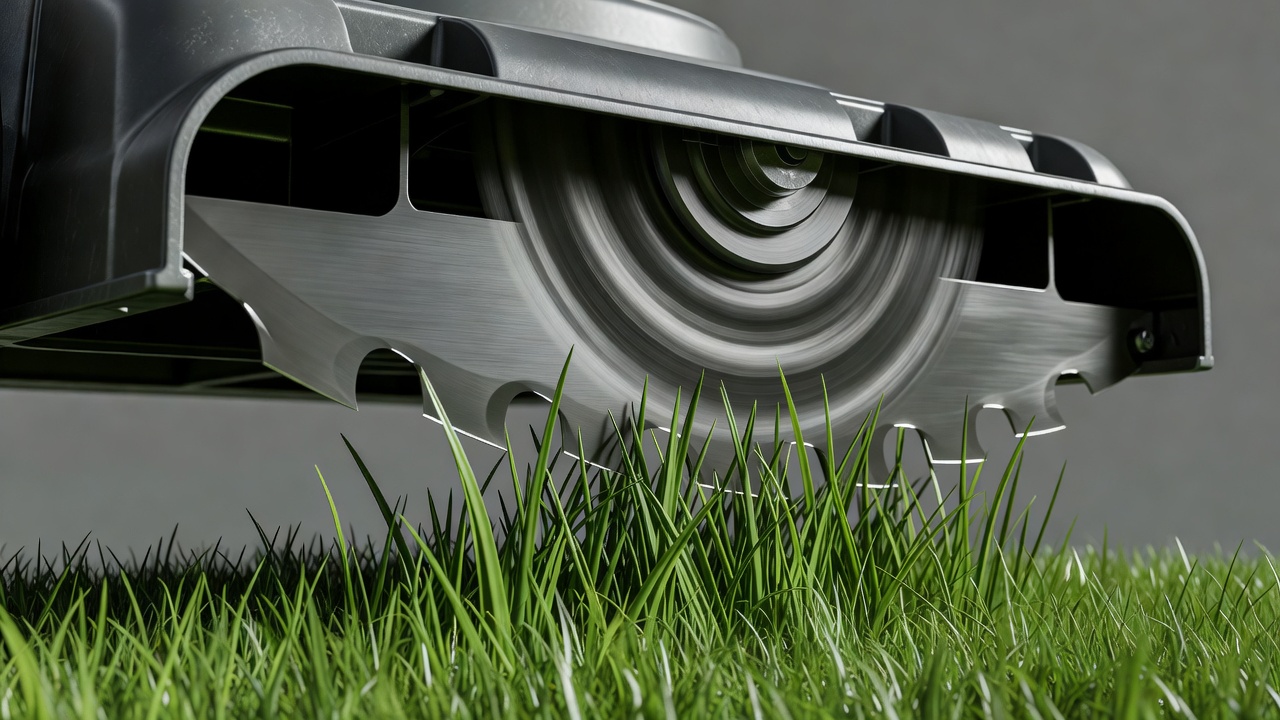
The fundamental mechanism of a lawn mower is straightforward. A rotary blade — or in reel mowers, a cylinder of helical blades — spins at high speed beneath a protective cutting deck. As the mower moves across the lawn, the blade shears grass stems cleanly at a height set by the operator using a blade height adjustment lever or dial.
The Cutting Deck
The cutting deck is the housing that encloses the blade(s). It serves three functions: it shields the operator from debris ejected by the spinning blade, it channels airflow to lift grass upright before cutting for a cleaner shear, and it directs grass clippings toward a discharge chute, a collection bag, or back onto the lawn in the case of mulching. Deck width — the cutting width — determines how much grass is cut in a single pass and is a primary factor in how long it takes to mow a given area.
Blade Mechanics
On a rotary blade mower, the blade rotates horizontally at speeds typically between 2,700 and 3,200 RPM. The blade tip speed, not the RPM alone, determines cutting effectiveness. Reel mowers use a different principle: a rotating cylinder of blades passes against a fixed bottom blade, creating a scissor-like cut that many turf scientists consider gentler on individual grass blades.
Height Adjustment
Most mowers allow the operator to set the cutting height — commonly between 1 inch and 4 inches — by repositioning the deck relative to the wheels. This is done via a single lever on many walk-behind models or individual wheel adjusters on older designs. Cutting height matters agronomically: turf management research, including guidance from university extension programs, recommends never removing more than one-third of the grass blade height in a single mowing session. Removing more stresses the plant and weakens root development.
Main Types of Lawn Mowers Explained
The term lawn mower covers five distinct machine categories. Each is suited to different lawn sizes, terrain types, and operator requirements.
Push Reel Mower
A reel mower is a manual, unpowered machine. The operator pushes it forward; that motion drives a gear system that spins the cylindrical reel blade. No engine or motor is involved. Reel mowers produce zero emissions, require minimal maintenance, and deliver a precise scissor cut suited to fine turf grasses. They are practical only on small, flat, obstacle-free lawns — typically under 2,500 square feet.
Push Rotary Mower
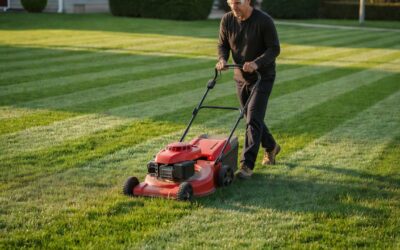
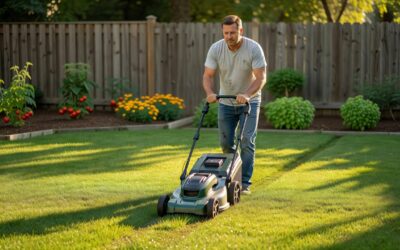
A push mower with a rotary blade is the most common type for residential use. The engine or motor powers the blade; the operator supplies all forward motion. These mowers handle most grass types and terrain well, cost less than self-propelled or riding models, and are appropriate for lawns up to roughly a quarter acre.
Self-Propelled Mower
A self-propelled mower adds a drive system — typically front-wheel, rear-wheel, or all-wheel drive — that propels the mower forward without the operator needing to push. The operator steers and controls speed. Self-propelled models reduce operator fatigue significantly on large or sloped lawns and are well suited to areas between one-quarter and one-half acre.
Riding Mower and Lawn Tractor
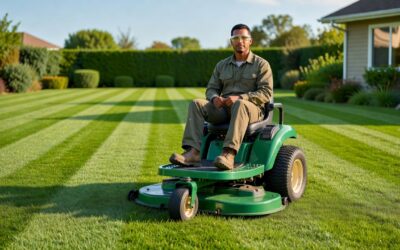
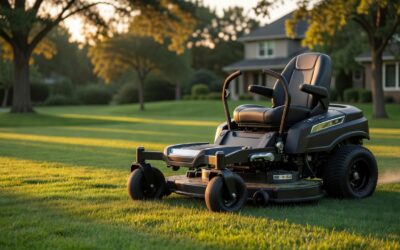
A riding mower carries the operator on a seat. The operator steers using a steering wheel or lap bars (on zero-turn models) while the engine drives both the wheels and the cutting deck. Lawn tractors are a subcategory of riding mower that typically feature a front-mounted engine, a mid-mounted deck, and attachment points for accessories such as baggers or aerators. Riding mowers become practical for lawns exceeding half an acre, where walk-behind mowing would be excessively time-consuming. Zero-turn riding mowers maneuver around obstacles efficiently and are widely used in commercial groundskeeping.
Robotic Mower
A robotic mower operates autonomously. Current models navigate using one of two primary methods: a boundary wire buried at the lawn perimeter that the mower’s sensors detect and stay within, or GPS-based positioning that maps the lawn digitally. Robotic mowers typically cut a small amount of grass daily rather than cutting the full height weekly, which keeps clippings fine enough to decompose on the lawn surface without collection. They are suited to lawns with clearly defined boundaries and limited obstacles.
Gas-Powered vs. Electric Lawn Mowers
Power source is one of the most consequential decisions when selecting a mower. The two categories — gas-powered mower and electric mower — differ meaningfully in operation, maintenance, emissions, and suitable use case.
| Factor | Gas-Powered | Electric (Battery or Corded) |
|---|---|---|
| Power output | Higher torque; handles thick, wet, or tall grass more consistently | Sufficient for most residential lawns; performance gap has narrowed on high-voltage battery platforms |
| Runtime | Unlimited with refueling; ideal for large areas or extended commercial use | Battery models typically run 45–60 minutes per charge; corded models have unlimited runtime but are tethered |
| Emissions | Produces exhaust emissions including hydrocarbons, carbon monoxide, and NOx; the U.S. EPA regulates small engine emissions under its Small Spark-Ignition Engine standards | Zero direct emissions at the point of use; lifecycle emissions depend on the electricity source |
| Maintenance | Requires oil changes, spark plug replacement, air filter service, and fuel stabilizer for storage | Minimal: blade sharpening and occasional cleaning; no oil or fuel system |
| Noise | Significantly louder; typically 85–95 dB | Quieter; typically 75–85 dB for battery models |
| Suitable lawn size | Any size; particularly advantageous above half an acre | Most battery platforms are rated for up to half an acre per charge; corded models suit small yards only |
For small to medium residential lawns — generally under half an acre — a battery-electric mower handles the workload without the maintenance burden of a gas engine. For larger properties or commercial applications where runtime and raw cutting power are non-negotiable, gas-powered models remain the dominant choice.
Key Parts of a Lawn Mower
Understanding a lawn mower’s components helps with both operation and maintenance decisions.
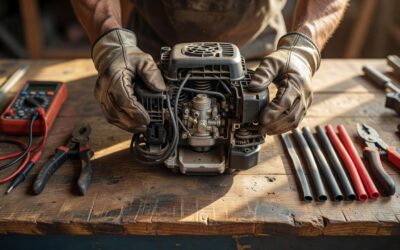
- Engine or Motor: The power source. Gas mowers use a single-cylinder four-stroke engine (on most modern models). Electric mowers use a brushless or brushed electric motor powered by a battery pack or direct AC current.
- Cutting Deck: The metal or composite housing that encloses the blade and channels airflow. Deck width directly determines cutting width and thus mowing efficiency.
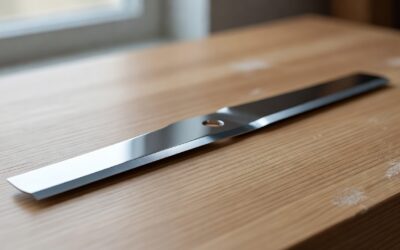
- Blade: The hardened steel cutting element. Rotary blades are replaced or sharpened periodically; a dull blade tears grass rather than cutting it cleanly, which stresses the turf and creates a brown-tipped appearance.
- Blade Height Adjustment Lever: A mechanical linkage that raises or lowers the deck — and therefore the cutting height — relative to the ground. Most walk-behind mowers offer settings between 1 and 4 inches.
- Drive System: On self-propelled and riding mowers, the drive system transfers power from the engine or motor to the wheels. Front-wheel drive performs well on flat terrain; rear-wheel drive provides better traction on slopes; all-wheel drive handles varied terrain most effectively.
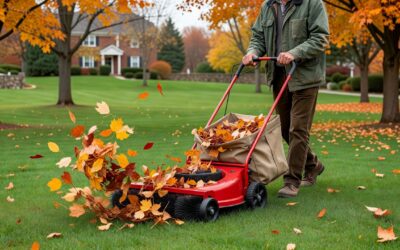
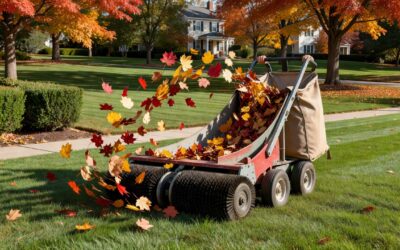
- Grass Collection Bag: A fabric or plastic bag that attaches to the rear or side discharge chute to collect grass clippings. Collected clippings can be composted. When mulching mode is used, the bag is removed and clippings are recirculated under the deck and chopped finely before being deposited back onto the lawn.
- Handlebar and Controls: On walk-behind models, the handlebar provides operator control and houses the blade engagement bail, drive control, and speed settings. Riding mowers use a steering wheel or lap bars.
What Is a Lawn Mower Used For?
The primary use of a lawn mower is grass cutting for maintenance of residential and commercial lawns. Regular mowing keeps grass at a height that is both visually tidy and physiologically beneficial for turf density and weed suppression. Beyond standard residential lawn care, lawn mowers serve several additional contexts:
- Sports turf management: Football fields, golf fairways, baseball outfields, and soccer pitches require precise, consistent cutting heights maintained on a frequent schedule. Specialized reel mowers are commonly used on golf greens to achieve cutting heights as low as 0.1 inches.
- Commercial groundskeeping: Parks, school campuses, road medians, and corporate properties use commercial-grade riding mowers and zero-turn mowers for efficiency across large areas.
- Agricultural and orchard maintenance: Flail mowers and brush mowers — heavy-duty variants — cut tall grass, weeds, and light brush in agricultural settings, orchard rows, and along fence lines.
- Uneven ground: Standard rotary mowers can handle moderate slope and terrain variation. Steeper slopes — generally above 15 degrees — require mowers specifically rated for hillside use or alternative equipment. Operating a standard riding mower on a steep slope creates a tip-over hazard.
A general guideline used in turf management: lawns over half an acre become labor-intensive to maintain with a walk-behind mower, making a riding mower or lawn tractor a practical threshold consideration at that size.
Frequently Asked Questions About Lawn Mowers
Who invented the lawn mower?
The first mechanical lawn mower was invented by Edwin Budding, an English engineer, in 1830. Budding adapted the reel-cutting mechanism used in textile mills to cut carpet pile and applied it to grass cutting. His design — a cylinder of helical blades rotating against a fixed bottom blade — is the direct ancestor of the modern reel mower.
How often should you mow your lawn?
Mowing frequency depends on grass growth rate, which varies by species, season, temperature, and fertilization. During peak growing season, most cool-season grasses (such as Kentucky bluegrass or tall fescue) and warm-season grasses (such as Bermuda or Zoysia) require mowing every 5 to 7 days to stay within the one-third rule. Growth slows in hot summer drought conditions and in autumn, reducing the required frequency.
What is the one-third rule in lawn mowing?
The one-third rule is a turf management principle that states no more than one-third of the grass blade’s current height should be removed in a single mowing session. Removing more than one-third at once stresses the plant, depletes carbohydrate reserves stored in the blade, and can expose the soil to sunlight in a way that promotes weed germination. This principle is referenced across university cooperative extension programs and turf science curricula as a foundational mowing guideline.
What is mulching on a lawn mower?
Mulching is a cutting mode in which grass clippings are not collected or discharged sideways but are instead recirculated under the deck, chopped into very fine particles, and deposited back onto the lawn surface. Fine clippings decompose quickly and return nitrogen and organic matter to the soil. Mulching mowers feature a specially shaped deck and blade — sometimes called a mulching blade or 3-in-1 blade — designed to maximize recirculation and particle reduction. Mulching is most effective when mowing at the correct frequency so clippings are short enough to filter down through the grass canopy.
What is the difference between a lawn mower and a lawn tractor?
A lawn tractor is a type of riding mower distinguished by its tractor-style configuration: a front-mounted engine, a mid-mounted cutting deck, and a rear attachment hitch that accepts accessories such as baggers, spreaders, aerators, and snow blades. A standard riding mower typically lacks the attachment versatility and heavier-duty frame of a lawn tractor. In common usage the terms overlap, but in manufacturer and retail classification, lawn tractors sit above entry-level riding mowers in capability and price.