The Short Answer: What Is the Best Lawn Trimmer?
For most homeowners with small-to-medium yards, a cordless battery-powered string trimmer at 40V or higher is the best lawn trimmer available. It delivers enough cutting power for typical residential edging and trimming without the fuel mixing, carburetor maintenance, or pull-start frustration of a gas model — and without the movement restrictions of a corded unit. If you manage a large lot, steep terrain, or heavy overgrowth professionally, a gas-powered trimmer remains the most capable option. For very small, flat yards on a strict budget, a corded electric trimmer is a reliable and low-cost choice.

Pros
- Highly versatile multi-head system with support for a wide range of EGO attachments.
- Brushless motor and carbon fiber shaft are built for durability and reduced vibration.
- Edger attachment offers adjustable depth control for more precise curb and driveway edging.
- Works with EGO 56V ARC Lithium batteries, which is convenient for current EGO users.
Cons
- Battery and charger are not listed in the kit details, so they may need to be purchased separately.
- As a multi-head system, it may not be the simplest choice if you only need a basic standalone edger.
- The product data does not provide weight or runtime, making it harder to compare with other cordless edging options.
EGO Power+ ME0820 is a cordless multi-head edging kit that pairs the PH1420 power head with the EA0820 8-inch edger attachment. It is designed for homeowners who want one power unit that can support multiple yard-care tasks over time.
The standout feature is flexibility. The power head works with EGO's Multi-Head System attachments, while the edger itself offers up to 3 inches of depth adjustment for crisp lawn borders. A brushless motor, digital two-speed control, and IPX4 weather-resistant construction add practical value for regular outdoor use.
There are a few limitations to consider. The kit details do not include a battery or charger, so some buyers may need to add those separately. It is also best suited to users already invested in the EGO 56V platform, since the system's value is strongest when paired with other compatible attachments.
Overall, this is a strong option for EGO owners who want a durable, expandable edging system rather than a single-purpose tool. It should appeal most to users who value modularity, cleaner edging control, and compatibility with a larger cordless yard-care lineup.

Pros
- Includes both battery and charger for immediate setup.
- Compatible with RYOBI 18V ONE+ batteries for broader system flexibility.
- Lightweight design improves portability and reduces fatigue during regular yard work.
- Supports both .065 and .080 trimmer line for added line compatibility.
Cons
- 13-inch maximum cutting width is more suited to small and medium yards than large properties.
- No runtime, noise level, or weight spec is provided in the source data.
- The product details do not specify advanced features such as brushless motor technology or telescoping shaft adjustment.
Overview: The RYOBI ONE+ 18V 13 in. Cordless Battery String Trimmer/Edger is a lightweight, battery-powered lawn tool designed for basic trimming and edging tasks. Its 2-in-1 setup makes it a practical option for homeowners who want one tool for routine yard cleanup.
Performance: A pivoting head helps the tool transition into edging mode, while the variable-speed trigger gives the user more control over light trimming and tougher spots. The adjustable 11 in. to 13 in. cutting width adds flexibility, and compatibility with .065 and .080 line makes replacement easier.
Drawbacks: This model is best matched to smaller or medium-size yards because its 13-inch cutting width is modest. The provided data does not list runtime, total weight, or advanced motor details, so buyers should avoid assuming high-end performance beyond the stated features.
Verdict: For homeowners already using the RYOBI ONE+ platform, this trimmer/edger offers convenient cordless operation and broad battery compatibility. It is a sensible pick for straightforward lawn maintenance, especially when included battery and charger value matters.

Pros
- True 2-in-1 design that converts quickly between trimmer and edger modes
- Command feed spool with free spools for life program for ongoing convenience
- Two 20V batteries and charger included for extended use out of the box
- Tilting head plus rubberized wheels improve control on varied terrain
- Full Power Share compatibility with other WORX 20V and 40V tools
Cons
- 12-inch cutting diameter may require extra passes on larger lawns
- 0.065-inch line diameter best suited to light and medium grass rather than heavy brush
- Battery-powered design means runtime depends on charge levels without specified duration
The WORX WG163 is a cordless 20V string trimmer and lawn edger built for residential use. Weighing just 5.5 lbs with a compact design, it features rubberized wheels and an adjustable spacer guard that create a solid first impression of a user-friendly outdoor power tool focused on precision and ease.
In performance the 7600 rpm motor and 12 inch cutting diameter handle standard grass trimming effectively. The innovative command feed allows instant line deployment with a push button while the head tilts up to 90 degrees for slopes and tight spaces. Conversion from trimmer to edger takes only seconds and the two included Power Share batteries support the broader WORX ecosystem for ongoing convenience.
Potential drawbacks include the 12 inch path that can slow progress on expansive lawns and the 0.065 inch line suited mainly to lighter tasks. Battery runtime is not detailed in specs so users may need to plan around recharges for prolonged sessions.
Overall the WORX WG163 delivers strong value for homeowners managing small to medium yards who want a convertible cordless tool with ecosystem compatibility and straightforward operation.
What Is a Lawn Trimmer and What Does It Actually Do?
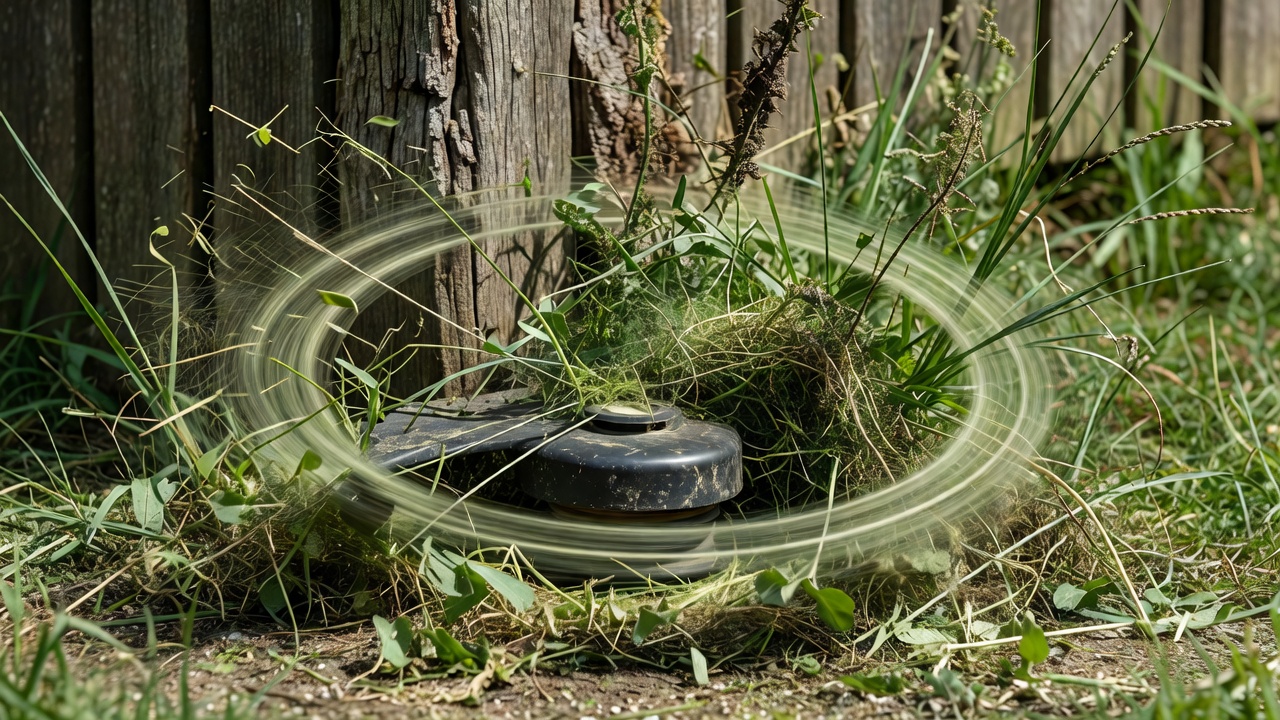
A lawn trimmer — also called a string trimmer, weed eater, or weed whacker — is a power tool that uses a rapidly spinning length of nylon line (not a blade) to cut grass and weeds in areas a mower cannot reach: along fences, around trees, under railings, and at the edges of driveways and walkways.
This guide covers string trimmers only. A hedge trimmer is a separate tool with reciprocating blades designed for shaping shrubs and bushes — it is not a lawn trimmer in the sense used here.
- String trimmer = weed eater = weed whacker: all refer to the same tool category.
- The spinning nylon line cuts soft vegetation; it is not rated for woody stems thicker than roughly ½ inch.
- Most models include an edging function — rotating the head 90° to create a clean vertical cut along hard surfaces.
- A trimmer complements a mower; it does not replace one.
The 3 Types of Lawn Trimmers: Cordless, Gas, and Corded Explained
Choosing a power source is the single most consequential decision when selecting a lawn trimmer. Each type suits a different profile of user, yard, and workload. For complementary field maintenance guidelines, examine our breakdown of jbl partybox club 120 vs sony srs xv500.
Cordless Battery-Powered Trimmers
Cordless trimmers run on lithium-ion battery packs, typically 20V, 40V, 56V, or 80V depending on the platform. Voltage is a rough proxy for power delivery, but amp-hour (Ah) rating on the battery determines runtime. For complementary field maintenance guidelines, examine our breakdown of jbl partybox club 120 vs sony srs xv500.
- Best for: Small-to-medium yards, homeowners who prioritize convenience, users who already own cordless power tools in a compatible battery ecosystem.
- Runtime: Typically 30–60 minutes on a full charge with a 2.0–4.0 Ah battery at moderate load — figures vary by brand and cutting conditions. Always verify against manufacturer spec sheets for the specific battery and model.
- 40V vs. 20V: A 40V platform generally sustains higher torque through thicker grass; 20V models suit light, regular trimming. 56V and 80V platforms approach gas-tier performance for dense vegetation.
- Battery ecosystem compatibility is critical: if you already own RYOBI 18V ONE+ tools, DEWALT 20V MAX tools, or Makita LXT tools, a trimmer on the same platform shares batteries across your entire collection — a meaningful cost and convenience advantage.
Gas-Powered Trimmers
Gas trimmers use 2-stroke (most common) or 4-stroke engines and run on gasoline or a premixed fuel-oil blend. They produce the highest sustained torque and are the professional landscaper’s default choice.
- Best for: Large lots over half an acre, hilly or uneven terrain, thick weeds and overgrown areas, extended continuous use, professional or commercial landscaping.
- Drawbacks: Heavier, louder, require seasonal carburetor maintenance, ethanol-related fuel degradation if stored improperly, harder cold starts, produce exhaust emissions.
- Sustained power advantage: Gas engines maintain torque output regardless of charge state — unlike battery models whose output can taper as the pack depletes. Independent performance testing consistently documents this gap in heavy-load scenarios, though the margin narrows with high-voltage cordless platforms.
Corded Electric Trimmers
Corded models plug into a standard 120V outlet and draw power continuously, so there is no battery to charge or fuel to buy. To evaluate matched hardware tolerances, consult our detailed overview of z890 vs x870e motherboard.
- Best for: Very small, flat yards with easy outlet access; budget-constrained buyers; users who trim infrequently.
- Drawbacks: Extension cord limits range (typically 100 ft maximum practical working distance); cord management adds fatigue; not suitable for large properties or areas far from power.
- Lowest total cost of ownership in the category — no battery replacement cycle, no fuel cost.
Key Factors to Consider Before Choosing a Lawn Trimmer
Once you have selected a power source, these technical and ergonomic variables determine whether a specific trimmer fits your actual needs.
Cutting Width
Cutting width is the diameter of the arc the spinning line covers in a single pass. Wider is faster but heavier and harder to maneuver in tight spaces. When planning workspace deployment, consider the engineering criteria outlined in our marshall stanmore iii vs harman kardon onyx studio 8 guide.
- 12–14 inches: Suits small residential yards and detailed edging around landscaping beds.
- 15–17 inches: The most common homeowner range — balances speed with maneuverability.
- 18 inches and above: Professional and heavy-duty residential use; typically found on gas or high-voltage cordless models.
Line Diameter
Trimmer line (the nylon string on the spool) is rated by diameter. Heavier line handles tougher vegetation but draws more power from a battery.
- 0.065 inch: Light grass in well-maintained yards.
- 0.080 inch: General homeowner use, mixed grass types.
- 0.095 inch: Thicker weeds and moderate overgrowth.
- 0.105 inch and above: Heavy-duty residential and professional use.
Note: Line diameter suitability thresholds reflect widely published tool-industry guidance. Confirm compatibility with your specific trimmer head before purchasing replacement line. For additional operational safety benchmarks, see our published testing notes on dyson v8 cyclone vs bissell featherweight stick.
Shaft Type: Straight vs. Curved
The shaft is the pole connecting the motor to the cutting head. This choice affects reach, comfort, and attachment compatibility.
- Straight shaft: Longer reach under decks and into tight corners; compatible with most professional-grade attachments (edger, cultivator, etc.); preferred by taller users and professionals.
- Curved shaft: Lighter and easier to control for average-height users; better ergonomic angle for casual residential trimming; generally not attachment-compatible.
Feed Mechanism
- Bump-feed: Tapping the head on the ground releases more line. Most common; gives the user manual control.
- Auto-feed: Sensors advance line automatically. Convenient but can waste line faster.
- Fixed-line: Pre-cut lengths inserted into the head. No spool to tangle; replacement is fast but more expensive per use.
Weight and Ergonomics
Trimmer weight directly affects fatigue, especially during sessions longer than 20 minutes. Corded and lightweight cordless models typically run 5–8 lbs; gas models commonly reach 10–14 lbs or more. To compare alternative configurations, check our hands-on review of bissell crosswave hydrosteam vs shark stainforce.
- Users with limited upper-body strength, arthritis, or mobility constraints should prioritize models under 7 lbs with an anti-vibration handle.
- A shoulder harness (included with most commercial gas trimmers, optional on some cordless models) redistributes weight and reduces arm fatigue on longer jobs.
Note: Any ergonomic performance claims for specific products should be verified against manufacturer ergonomics documentation or peer-reviewed occupational health studies before publication.
Battery Ecosystem / Battery Compatibility
For cordless buyers, battery platform compatibility is often worth more than the trimmer’s sticker price difference. Owning multiple tools on the same voltage system — sharing batteries across a drill, circular saw, leaf blower, and trimmer — significantly reduces the total investment in battery packs over time. Evaluate the full platform, not just the trimmer in isolation.
How to Match a Lawn Trimmer to Your Yard Type and Use Case
Small, Flat Residential Yard (Under ¼ Acre)
A lightweight cordless trimmer (20V–40V) or a corded electric model handles this workload comfortably. Prioritize low weight, ease of line loading, and a cutting width in the 12–15 inch range. Runtime of 20–30 minutes is sufficient for most sessions of this scale.
Medium Residential Yard (¼ to ½ Acre)
A 40V cordless trimmer with a 2.5 Ah or larger battery pack is the best match. Look for a 15–16 inch cutting width, bump-feed or auto-feed mechanism, and a straight or curved shaft depending on user height preference. Battery runtime becomes a relevant spec — verify against the manufacturer’s rated figures for the battery size you intend to purchase.
Large Lot or Heavy-Duty Use (Over ½ Acre)
Gas or high-voltage cordless (56V–80V) are the practical choices. Gas delivers uninterrupted runtime and maximum torque for sustained heavy trimming. A high-voltage cordless option is viable if you carry a spare battery pack. Look for a straight shaft, 17+ inch cutting width, and 0.095 inch or heavier line capacity.
Hilly or Uneven Terrain
Weight distribution and center of gravity matter significantly on slopes. A straight-shaft gas trimmer with a harness is the most ergonomically stable option. Among cordless models, a balanced design with the battery pack integrated into the body (rather than a rear-mounted pack) is preferable for slope work.
Overgrown Areas and Thick Weeds
Line diameter and motor torque are the deciding specs. Use 0.095 inch line minimum; a gas trimmer or 56V+ cordless model with a commercial-grade head sustains the power needed to cut through dense growth without constant bogging.
Professional and Landscaper Use
Professionals require sustained runtime, durability over daily use, and fast line replacement. Gas trimmers from commercial-grade lines and 56V–82V professional cordless platforms (with multi-battery backpack systems) are the industry standard. Curved-shaft consumer models are not built for this workload.
What to Know About Lawn Trimmer Brands and Battery Ecosystems
The following brands are the most widely recognized in the North American market. No specific model is ranked here — the intent is to help you evaluate platform fit and tier positioning.
Brand Tiers and Platform Notes
| Brand | Platform / Voltage | Market Tier | Notable Characteristic |
|---|---|---|---|
| RYOBI | 18V ONE+, 40V HP | Consumer / Value | Largest battery ecosystem by SKU count; broadest tool compatibility in the 18V line |
| BLACK+DECKER | 20V MAX, 40V MAX | Consumer / Entry | Lightweight models; strong corded lineup; well-suited to light-duty residential use |
| DEWALT | 20V MAX, FLEXVOLT 60V | Prosumer / Professional | FLEXVOLT batteries run both 20V and 60V tools; widely used by tradespeople |
| EGO Power+ | 56V ARC Lithium | Premium Consumer | High-voltage OPE-only platform; performance benchmarks frequently cited alongside gas in independent testing |
| Greenworks | 24V, 40V, 60V, 80V | Consumer / Mid-Range | OPE-focused brand; 80V platform targets large-lot residential users |
| Husqvarna | Gas (2-stroke), POWER FOR ALL 36V | Professional / Premium | Commercial gas benchmark; battery platform shared with Gardena |
| Makita | 18V LXT, 36V (Dual 18V), 40V XGT | Professional | Deep cordless tool ecosystem; 40V XGT is the current professional-tier platform |
Key buying principle: If you already own two or more tools from one brand’s battery platform, evaluate that brand’s trimmer first. The savings from shared battery packs often offset a higher trimmer MSRP compared to a competing brand requiring new battery purchases.
Warranty norms: Warranty terms vary by brand and product tier. Consumer-grade tools typically carry 2–3 year limited warranties; professional-grade tools vary. Verify current warranty terms directly with the manufacturer before purchase — published warranties are subject to change.
Common Lawn Trimmer Mistakes and How to Avoid Them
Loading Line Incorrectly
Incorrect spool loading is the most common cause of line jams and breakage. Follow the directional arrows molded into the spool housing. Wind line evenly in a single layer without overlapping; overlapping causes the line to bind and snap prematurely. Consult the operator manual for your specific head type — bump-feed and auto-feed spools load differently.
Using the Wrong Line Diameter
Running line that is too heavy for your motor draws excess power, shortens battery runtime, and can stall a lower-torque motor. Running line that is too light for your vegetation breaks constantly. Match line diameter to the vegetation type and your trimmer’s rated capacity (listed in the operator manual).
Trimming at the Wrong Angle
Holding the cutting head parallel to the ground and using only the tip of the line (not the full arc) produces the cleanest cut and reduces line breakage. Scalping — tilting the head into the grass at too steep an angle — damages turf and wears line rapidly.
Skipping Safety Equipment
String trimmers eject debris — stones, wire fragments, and line pieces — at high velocity. Safety-rated eye protection is mandatory every time the tool is in operation. Closed-toe shoes (ideally steel-toe), long pants, and hearing protection (particularly for gas models) are strongly recommended. Clear the work area of loose debris before starting.
Neglecting Battery Trimmer Maintenance
Battery trimmers require minimal mechanical maintenance but are frequently stored with depleted packs. Lithium-ion cells degrade fastest at 0% and 100% charge. Store batteries at 30–60% charge in a cool, dry location. Clean the battery contacts and ventilation slots seasonally.
Failing to Winterize a Gas Trimmer
Ethanol-blended fuel left in a gas trimmer over winter degrades and gums the carburetor. Before seasonal storage: run the tank dry or add a fuel stabilizer rated for small 2-stroke engines, fog the cylinder with 2-stroke oil, and clean the air filter. Skipping this step is the primary cause of hard starts and carburetor repairs in spring.
Frequently Asked Questions About Best Lawn Trimmer
What is the best lawn trimmer for the money?
For most buyers, a 40V cordless string trimmer from an established platform (RYOBI 40V HP, Greenworks 40V, or EGO 56V) represents the best value intersection of power, runtime, and long-term battery reuse. Corded electric models cost less upfront but limit mobility. Budget your total cost to include at least one spare battery pack if you have a yard larger than ¼ acre.
Is a 40V trimmer better than a 20V trimmer?
Generally, yes — for anything beyond light, infrequent trimming. A 40V platform sustains higher torque through thicker grass and maintains output longer under load than a 20V model. However, voltage alone is not the full picture: a 20V tool paired with a high-capacity 5.0 Ah battery can outrun a 40V model with a 1.5 Ah battery in real runtime. Evaluate both voltage and battery amp-hour rating together.
Can a lawn trimmer replace a lawn edger?
A string trimmer with a rotating head (edging mode) can perform basic lawn edging along driveways and sidewalks. It does not produce the same blade-clean vertical cut as a dedicated wheeled edger for formal or high-maintenance landscaping. For casual residential use, a dual-function trimmer-edger is sufficient. For crisp, consistent edges on high-visibility lawn borders, a dedicated edger is the better tool.
How long does a cordless trimmer battery last on a single charge?
Runtime depends on battery voltage, amp-hour capacity, trimmer motor load, line diameter, and vegetation density. Under normal residential conditions, a 40V / 2.5 Ah battery typically delivers 30–45 minutes of mixed use. A 56V / 4.0 Ah pack can extend that to 45–60 minutes in moderate growth. These figures reflect manufacturer-published estimates and published third-party benchmarks — actual runtime in dense or wet vegetation will be lower. Always verify the runtime spec for the exact battery SKU you intend to purchase.
What is the best lawn trimmer for thick grass and heavy weeds?
A gas-powered trimmer or a high-voltage cordless model (56V–80V) with 0.095 inch or heavier line is the appropriate tool for thick grass and overgrown weeds. A straight shaft gives better reach and leverage. For occasional heavy-duty residential use, a high-voltage cordless option is viable; for regular or professional heavy use, gas remains the most reliable sustained-power solution.
For more hands-on benchmarks and buying recommendations, consult our guides on residential zero-turn lawn mower guide, as well as heavy-duty chainsaw buyer guide, as well as automated robotic lawn mower guide.
Mechanical safety standards, operational tolerances, and protective gear guidelines align with benchmark specifications established by the American National Standards Institute (ANSI).