

Quick Answer: How to Start a Cub Cadet Lawn Mower
To start a Cub Cadet lawn mower: (1) Engage the parking brake. (2) Set the blade engagement (PTO) to OFF. (3) Move the throttle to the Choke or Fast position. (4) Turn the key to START or pull the recoil cord firmly. (5) After 30–60 seconds of warm-up, move the choke lever to the Run position. The exact sequence depends on your model type — push/walk-behind, riding tractor, or zero-turn — because each has different safety interlocks that must be satisfied before the engine will fire.

Pros
- Large-size design named in product title
- Sharpening and balancing functions listed
- Listed as a new upgraded version

Pros
- Adjustable 15-to-45-degree range in title
- Sharpening and balancing functions listed

Pros
- Sharpener and balancer functions in title
- 15-to-45-degree adjustable setting listed
- Built for lawn mower blade maintenance
Pros
- Includes replacement gaskets and a 98079-55846 spark plug
- Matches Honda HRR216 and HRS216 lawn mower models
- Designed around the 16100-Z8B-901 carburetor specification
Cons
- Restricted to select Honda GCV160 mower applications
- Installation requires basic mechanical tools and skills
Universal Cub Cadet Pre-Start Checklist (All Models)
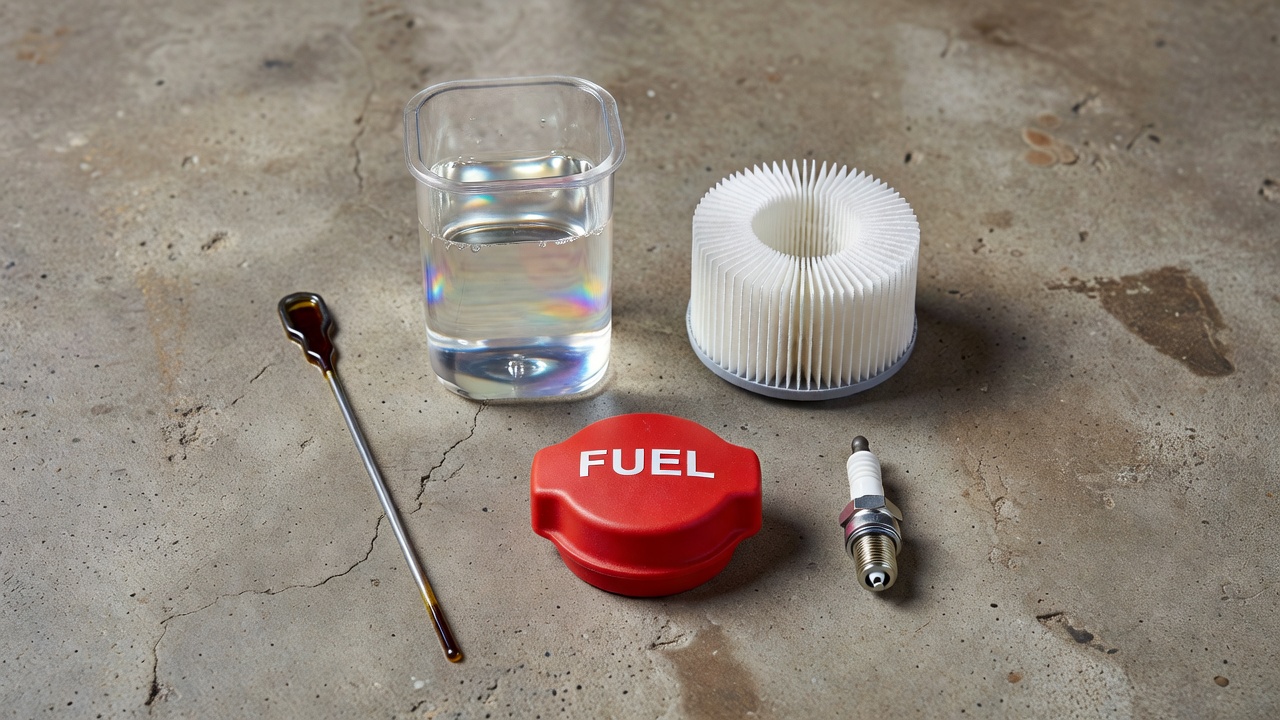
Before cranking any Cub Cadet mower, run through these checks. Skipping any one of them is the leading reason a Cub Cadet engine cranks but refuses to start.
- Fuel level: Use fresh, clean gasoline. Cub Cadet specifies a maximum of E10 (10% ethanol blend) unleaded fuel across its product line. Higher ethanol blends damage fuel system components and void warranty coverage.
- Oil level: Pull the dipstick, wipe it clean, reinsert fully, then withdraw and read. Oil must sit between the MIN and MAX marks. Running low on oil triggers low-oil shutoff on many Cub Cadet engines (Briggs & Stratton and Kohler both use this protection).
- Fuel valve: On models equipped with a manual fuel valve (common on walk-behind and older riding tractors), confirm the valve is in the ON or OPEN position. A valve left in OFF after storage is a frequent no-start cause.
- PTO / blade engagement switch: Must be in the OFF / Disengaged position. The PTO interlock prevents starting when blades are engaged — a deliberate safety design.
- Parking brake: Must be set (riding and zero-turn) or confirmed engaged before the seat or operator-presence switch allows the ignition circuit to close.
- Air filter: A severely clogged air filter starves the engine of air and causes hard starting. Inspect it visually; replace a paper element that is grey or packed with debris.
How to Start a Cub Cadet Push Mower (Walk-Behind Models)
Most Cub Cadet walk-behind mowers use a recoil pull-start with a Briggs & Stratton or Honda engine. A small number of SC series models offer an electric start option with a key or push-button ignition. Before finalizing equipment decisions, refer to our comprehensive jbl partybox club 120 vs sony srs xv500 comparison.
Pull-Start Walk-Behind: Step-by-Step
- Set the throttle / choke lever. For a cold engine, move the lever to the Choke position (often marked with a filled circle or the word CHOKE). For a warm engine, move directly to Fast.
- Press the primer bulb. Push the rubber primer bulb 3 times, pressing firmly each time until you feel resistance. This primes the carburetor bowl. (Briggs & Stratton and Kohler engine specs referenced in Cub Cadet operator manuals specify 3 primes for a cold start; do not over-prime, or you risk flooding.)
- Squeeze the bail lever (OPC). The operator presence control bail lever on the handle must be held firmly against the handle bar. Releasing it at any point kills the engine — this is federal safety-mandated design, not a malfunction.
- Pull the recoil cord. Pull the starter cord briskly and fully in one smooth motion. Do not let it snap back — guide it back slowly. Repeat up to 3–5 times if needed.
- Release the choke after warm-up. Once the engine runs smoothly (typically 30–60 seconds), slide the lever from Choke toward Fast/Run. Leaving the choke engaged too long causes rough running and excessive fuel consumption.
Electric-Start Walk-Behind: Step-by-Step
- Complete steps 1–3 above (throttle to Choke, prime 3 times, squeeze bail lever).
- Insert the key and turn to START, or press the electric start button. Hold for no more than 5 seconds per attempt. Wait 30 seconds between attempts to protect the starter motor.
- Release the key to the RUN position once the engine fires.
- Move choke to Run after 30–60 seconds of warm-up.
How to Start a Cub Cadet Riding Mower (Lawn Tractor Models)
Cub Cadet’s XT1 and XT2 series are the brand’s primary riding tractor lines. Both use a key-turn electric start. The XT1 (entry/mid-range) uses carbureted engines; some XT2 models with larger Kohler engines also use carburetors. Confirm your model before assuming EFI. Before finalizing equipment decisions, refer to our comprehensive jbl partybox club 120 vs sony srs xv500 comparison.
Cold Start — Carbureted XT1 / XT2 Riding Tractor
- Sit fully on the seat. The seat safety switch detects operator weight. Without a seated operator, the ignition circuit stays open and the engine will not crank. This is not a fault — it is an active interlock.
- Engage the parking brake. Press the brake pedal and lock it. The brake interlock must be confirmed before the starter will engage.
- Disengage the PTO. Confirm the blade engagement lever or switch is in the OFF position.
- Set the throttle to Choke or Fast. For a cold engine, move the throttle lever (located on the left fender panel on most XT1/XT2 models) to the Choke position. Some models label this position with a full circle icon.
- Turn the key to START. Hold for up to 5 seconds. Do not crank continuously for more than 5 seconds per attempt; allow 30 seconds of rest between attempts.
- Release choke gradually. Once the engine fires and settles, move the throttle lever toward the Fast then Run position over 30–60 seconds as the engine warms. Releasing choke too abruptly on a cold engine stalls the motor.
Warm Start — Carbureted Riding Tractor
Skip the Choke position entirely. Set throttle to Fast, confirm all safety interlocks (seat, brake, PTO), and turn the key to START. A warm carburetor does not need enrichment; using choke on a warm engine floods the combustion chamber. For broader ecosystem context, read through our operational guide on z890 vs x870e motherboard.
EFI Riding Tractors (No Choke Lever)
Cub Cadet XT2 models equipped with Kohler EFI (Electronic Fuel Injection) engines have no choke lever — the engine management system handles fuel enrichment automatically. The start procedure simplifies to: seat → brake → PTO off → throttle to Fast → key to START. The engine starts the same way cold or warm. Check your model’s operator manual or look for the absence of a choke position on the throttle lever to confirm EFI.
How to Start a Cub Cadet Zero-Turn Mower
Cub Cadet’s Ultima ZT and RZT series zero-turn mowers have a starting sequence that differs significantly from riding tractors. There is no traditional steering wheel, no foot-operated parking brake in the conventional sense, and no choke lever on EFI-equipped units. For broader ecosystem context, read through our operational guide on z890 vs x870e motherboard.
Zero-Turn Start Procedure (Ultima ZT / RZT Series)
- Move both lap bars to the fully outward (disengaged) position. This is the critical zero-turn interlock. The lap bars must be pushed outward and locked in the neutral/park position before the ignition circuit allows the starter to engage. If the lap bars are forward or in the drive position, the engine will not crank — this is by design, not a fault.
- Engage the parking brake. On most Ultima ZT models, pushing both lap bars outward simultaneously also sets the parking function. Confirm the parking brake indicator (if equipped) is active.
- Sit on the seat. The operator presence switch must detect weight. Rising from the seat while the blades are engaged will kill the engine.
- Set the PTO / blade engagement switch to OFF. Located on the dash panel.
- Set the throttle to Fast (or Choke for cold carbureted engines). Carbureted RZT models have a choke position; EFI-equipped Ultima ZT models do not.
- Turn the key to START. Hold up to 5 seconds. Release to the RUN position once the engine fires.
- Warm up for 30–60 seconds before releasing choke (carbureted) or engaging the blades.
Cold Start vs. Warm Start: Choke Settings Explained
The choke restricts airflow into the carburetor, creating a richer fuel-air mixture that a cold engine needs to combust reliably. A warm engine has residual fuel vapor and heat — adding choke floods the cylinder with excess fuel, fouling the spark plug and preventing ignition.
| Condition | Throttle / Choke Setting | Primer Bulb | Choke Release Timing |
|---|---|---|---|
| Cold engine (first start, below 50°F / 10°C) | Full Choke | 3 presses (walk-behind only) | 30–60 seconds after start |
| Cold engine (above 50°F / 10°C) | Half Choke or Fast | 3 presses (walk-behind only) | 15–30 seconds after start |
| Warm engine (recently used) | Fast / Run — NO choke | None | N/A |
| EFI engine (any temperature) | Fast | None | No choke to release |
Flooded Engine Recovery
If the engine was cranked repeatedly with full choke or over-primed, excess fuel saturates the combustion chamber. To clear a flooded Cub Cadet engine: move the throttle to Fast/Run with NO choke, hold the bail lever (walk-behind) or confirm safety interlocks (riding/zero-turn), and crank for 5 seconds. Wait 30 seconds and repeat. The excess fuel will clear through the cylinder after 2–3 attempts. For troubleshooting and reliability insights, consult our in-depth marshall stanmore iii vs harman kardon onyx studio 8 report.
Cub Cadet Won’t Start: Common Causes and Fixes
1. Dead or Weak Battery
A click with no crank, or slow cranking, indicates low battery voltage. Cub Cadet riding mowers and zero-turns require a fully charged 12V battery (12.6V at rest; minimum ~12.0V under load) for reliable electric start. Charge the battery with a trickle charger rated for lawn tractor batteries before attempting to jump-start. To jump-start: connect red clamp to positive terminal, black clamp to a metal ground on the frame (not the negative battery terminal), then start the donor vehicle before cranking the Cub Cadet.
2. Faulty or Fouled Spark Plug
Remove the spark plug and inspect the electrode. A black, sooty deposit indicates a rich mixture or flooding. A white or blistered electrode indicates overheating. Gap the replacement plug to the engine manufacturer’s spec (typically 0.030 in. for Briggs & Stratton; 0.020 in. for Kohler Command engines — confirm against your operator manual). Replace annually or every 100 hours. Readers comparing setup options can review our technical analysis on dyson v8 cyclone vs bissell featherweight stick.
3. Stale Fuel or Clogged Carburetor
Gasoline degrades within 30 days without a fuel stabilizer, leaving varnish deposits that block carburetor jets. Symptoms: engine cranks, may briefly fire, then dies. Fix: drain the fuel tank fully, add fresh E10-max fuel, and attempt to start. If it still fails, the carburetor jets require cleaning with carburetor cleaner spray or professional rebuilding.
4. Tripped Safety Interlock
Cub Cadet mowers have multiple operator presence and safety switches. A faulty or improperly engaged interlock is the most commonly misdiagnosed no-start cause. Check each in sequence: For complementary field maintenance guidelines, examine our breakdown of bissell crosswave hydrosteam vs shark stainforce.
- Seat switch: Rider must be seated with full weight. Worn seat cushions can prevent contact.
- Brake interlock: Parking brake must be fully engaged.
- PTO switch: Must be confirmed OFF.
- Lap bars (zero-turn): Both must be in the fully outward position.
- Bail lever (walk-behind): Must be held firmly against the handle.
Do not attempt to bypass safety interlocks. Bypassing them disables life-safety systems and voids the warranty.
5. Fuel Valve Left in OFF Position
Models with a manual fuel shutoff valve (common on walk-behind mowers and older riding tractors) will crank indefinitely without starting if the valve is in the OFF position. Locate the valve on the fuel line between the tank and carburetor and turn it to ON before starting.
6. Clogged Air Filter
A blocked air filter starves the engine and typically causes hard starting followed by rough running. Remove the filter cover (usually a single wing nut or snap latch), inspect the element, and replace if visibly clogged. Paper elements cannot be washed — replace them.
Seasonal Starting Tips: First Start of the Season and After Storage
Spring start-up is when most Cub Cadet starting problems occur, because improper winterization leaves the fuel system compromised.
Post-Storage Start Checklist
- Fuel: If the tank was stored with old fuel (and no stabilizer was added), drain it completely. Add fresh E10-max gasoline. Ethanol-blended fuel older than 30 days without stabilizer attracts moisture and separates, leaving gummy deposits in the carburetor.
- Battery: Reconnect the battery if it was removed for winter storage. Charge it to full (12.6V) before attempting to start. A battery left discharged over winter sulfates and may no longer hold a full charge — test it with a load tester if unsure.
- Oil: Change the oil if it was not changed at the end of last season. Old, contaminated oil is thicker in cold temperatures and harder on the engine during first start.
- Spark plug: Inspect or replace the spark plug. Annual replacement is recommended for high-use mowers. Install a new plug at the correct gap before the season begins.
- Air filter: Replace the paper air filter element at the start of each season or every 25 hours of operation.
- Fuel valve: Turn to the ON position if it was closed for storage.
- First start: Follow the cold-start procedure for your model type. Allow the engine to warm fully at idle or low throttle for 2–3 minutes before engaging the blades or mowing.
Priming a Dry Carburetor After Storage
If the fuel system was completely drained for storage, the carburetor bowl will be empty. On walk-behind models, pressing the primer bulb 3 times fills the bowl. On riding and zero-turn models without a primer bulb, crank the engine for 3–5 seconds, wait 30 seconds, and crank again — fuel pump pressure fills the bowl after 2–3 crank cycles. Do not hold the key for extended periods, as this overheats the starter motor.
Frequently Asked Questions About How Do You Start A Cub Cadet Lawn Mower
Why does my Cub Cadet click but not start?
A single click or rapid clicking when the key is turned to START indicates a battery or electrical connection problem, not an engine fault. Charge or replace the battery and clean the terminal connections before diagnosing further. A single loud click can also indicate a seized starter solenoid — test by having a technician check solenoid continuity.
What position do the lap bars need to be in to start a Cub Cadet zero-turn?
Both lap bars must be pushed fully outward to the disengaged/park position. This satisfies the zero-turn safety interlock. The engine will not crank if either lap bar is in the forward (drive) position, regardless of all other conditions being met.
How do I know if my Cub Cadet has EFI or a carbureted engine?
Check the throttle control panel on your mower. Carbureted models have a Choke position labeled on the throttle lever or a separate choke lever. EFI models have no choke position — the throttle moves only between Slow and Fast. You can also check your model number against Cub Cadet’s operator manual, which specifies the engine type in the engine specifications table.
Can old gas prevent a Cub Cadet from starting?
Yes. Gasoline without a fuel stabilizer degrades within 30 days and leaves varnish deposits that block carburetor jets and fuel passages. If the mower sat with untreated fuel for more than 30 days, drain the tank, add fresh E10-max fuel, and attempt to start. If it still cranks without firing, the carburetor likely requires cleaning or rebuilding.
For more hands-on benchmarks and buying recommendations, consult our guides on residential zero-turn lawn mower guide, as well as heavy-duty chainsaw buyer guide, as well as high-CFM commercial leaf blower guide, as well as durable ride-on lawn tractor guide.
Mechanical safety standards, operational tolerances, and protective gear guidelines align with benchmark specifications established by the American National Standards Institute (ANSI).









