

Quick Answer: How Many Amps Is a Lawn Mower Battery?
Most riding lawn mower batteries are 12-volt units rated at 28–35 amp-hours (Ah) and 150–300 cold cranking amps (CCA). Push mowers with electric start use smaller 12V batteries in the 5–18 Ah range. Cordless and robotic mowers run on lithium-ion packs typically rated 2–10 Ah — with no CCA rating at all. The word “amps” on a mower battery can refer to three distinct specs: amp-hours (Ah), cold cranking amps (CCA), or charging current — and each one means something different.

Pros
- Powerful 80V brushless motor delivers 32HP gas-equivalent performance with quiet fume-free operation and no engine maintenance.
- Complete kit includes four 6.0Ah batteries and 600W charger for substantial runtime up to 1.5 acres.
- SmartCut technology and 42-inch heavy-duty steel deck ensure consistent cuts without bogging in tough conditions.
- Versatile towing up to 350 lbs and optional cargo hauling plus comfort features like high-back seat and LED lights.
- Strong 4-year limited warranty and full compatibility with the Greenworks 80V tool ecosystem.
Cons
- Rear utility cargo bed for 200 lb hauling is sold separately and not included in the kit.
- Runtime of up to 1.5 acres varies with conditions and may require recharging or battery swaps on larger properties.
- As a fully cordless model continuous operation depends on battery levels unlike gas engines with unlimited runtime.
The Greenworks 80V 42" CrossoverT Cordless Riding Lawn Tractor is a ready-to-mow zero-emission tractor designed for homeowners managing medium to large lawns. It features a reinforced 42-inch stamped steel deck of 12-gauge construction along with premium comfort elements such as a high-back padded seat with foldable armrests. The overall build emphasizes durability and user convenience right out of the box with the included battery and charger set.
Performance centers on the 80V TruBrushless motor that provides 32HP gas-equivalent power with instant torque and quiet fume-free operation. SmartCut technology senses grass conditions and automatically adjusts power to maintain a consistent cut even in tall thick or wet areas. The four 6.0Ah batteries support runtime for up to 1.5 acres depending on conditions while dual LED headlights and a 7-position deck height range from 1.5" to 4.5" add practicality. Front and rear attachments further allow towing up to 350 lbs for added yard utility.
Key considerations include that the rear utility storage bin capable of hauling 200 lbs is sold separately so full cargo functionality requires an extra purchase. Runtime remains condition-dependent and may fall short for properties significantly larger than 1.5 acres without using the 600W charger or swapping batteries. The cordless design prioritizes ease and low maintenance but trades off the continuous runtime of traditional gas models.
This tractor delivers strong value for eco-conscious owners of residential properties who want gas-like power without the emissions noise or upkeep. It suits those who already use or plan to expand into the Greenworks 80V family of tools and who appreciate the 4-year limited warranty. Users with exceptionally large or commercial-scale lawns should evaluate battery logistics carefully before purchase.

Pros
- Delivers strong 21 horsepower equivalent power comparable to gas riding mowers.
- Provides up to 1.5 acres of runtime on a full charge with the six included batteries.
- Features low-maintenance dual brushless motors without belts for greater durability.
- Offers versatile 12-position cutting height adjustment from 1.5 to 4.5 inches.
- Includes digital controls for blade settings, drive speeds, and cruise control.
Cons
- Limited to 1.5 acres of cutting per charge without purchasing additional batteries for bigger lawns.
- Requires recharging time for the six 56V batteries after each use session.
- Relies solely on battery power with no hybrid or gas backup option for extended operation.
The EGO Power+ TR4204 is a cordless electric riding lawn mower built as a modern tractor alternative for residential use. It features a robust 42-inch stamped steel deck and arrives ready to go with six 56V 6.0Ah batteries plus a charger, creating an immediate impression of convenience and solid construction free from gas engine complexity.
Performance shines through its equivalent 21 horsepower output and top speed of 6 MPH, allowing efficient coverage of up to 1.5 acres on a single charge. Dual brushless cutting motors operate without belts for added durability and less upkeep, while the digital display lets users select three blade settings, three drive speeds, and cruise control. The 12 adjustable heights ranging from 1.5 to 4.5 inches combined with anti-scalp wheels deliver precise results across varied terrain.
Drawbacks center on battery dependency, as larger properties beyond 1.5 acres require extra batteries and recharging intervals can interrupt workflow. The fully electric design eliminates fuel storage needs but demands access to power sources between sessions.
This mower suits homeowners with medium to large yards who value quiet, emission-free operation and reduced maintenance. Those seeking expandable battery capacity for bigger areas will find the EGO Power+ TR4204 a strong long-term investment in cordless lawn care.
Pros
- High-efficiency brushless motors maximize power output and durability over traditional motors
- Up to 2 acres runtime with three included 10.0 Ah batteries supports substantial mowing sessions
- Zero-emission operation with gas-equivalent 20 HP power for quieter environmentally friendly use
- Six-port auto-switchover battery system provides flexible extended runtime options
- Durable 42-inch steel deck plus included mulch and towing kits add immediate functionality
Cons
- Runtime is limited to approximately 70 minutes or 2 acres which may require recharging for larger properties
- Fully battery-dependent design means performance relies on charge levels and spare battery availability
- 42-inch deck size may require more passes on expansive lawns compared to wider commercial models
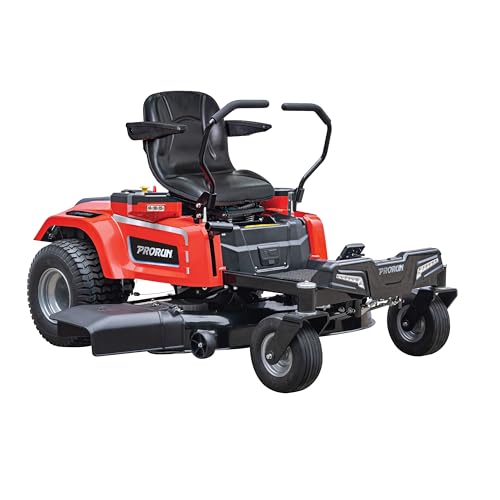
The PRORUN PZT60V42 is a fully electric 60V zero-turn riding lawn mower built for residential and light commercial use. Its primary design centers on a robust 42-inch 14-gauge stamped steel twin blade deck powered by direct-drive brushless motors, giving an immediate impression of solid construction and modern battery-focused engineering. The mower arrives complete with three 10.0 Ah batteries, a charger, mulch kit, and towing kit for ready-to-work versatility.
In performance terms, four high-efficiency brushless motors deliver power equivalent to a 20 HP gas engine while producing zero emissions. The system supports up to 2.0 acres or 70 minutes of runtime, and six battery ports with auto switchover intelligently manage all PRORUN 60V battery sizes for continuous operation. A washout port on the steel deck further simplifies post-mow maintenance during real-world sessions.
Potential drawbacks include the finite 70-minute runtime window which can limit coverage on larger properties without spare batteries or recharge breaks. As a fully electric model, it also depends entirely on battery charge levels rather than continuous fuel refills, and the 42-inch deck width may demand extra passes compared with wider traditional options.
Overall the PRORUN PZT60V42 offers strong value for homeowners and small-property managers who want gas-like cutting power without emissions or noise. Those with medium-sized lawns seeking quiet efficient zero-turn performance and included accessories will benefit most from this electric mower.

Pros
- Strong 24HP FR730 engine power for demanding cutting conditions
- Wide 54-inch FAB deck reduces total mowing time
- Zero turn design delivers excellent maneuverability
- Fabricated deck supports durable everyday operation
Cons
- Sparse details beyond engine and deck leave other features unspecified
- Gas-powered FR730 engine needs regular fuel and maintenance
- Large 54-inch deck size may feel oversized on compact properties
The Husqvarna Z254F is a zero turn mower from the established Husqvarna brand in the riding lawn mowers category. It centers on a solid build that pairs a 24HP 726cc FR730 engine with a 54-inch FAB deck for straightforward residential grass care.
Performance stems directly from the listed specifications. The FR730 engine delivers the horsepower needed for steady operation across typical lawns while the wide FAB deck completes passes efficiently. Zero turn handling improves control in real yard layouts based on the model design.
Considerations arise from the limited data available. Secondary elements such as comfort features fuel capacity or extras receive no mention and the gas engine format involves routine upkeep. The large deck suits open areas better than confined spaces.
The Husqvarna Z254F provides the most value for owners of medium or large properties who want reliable engine power and a broad cutting width. Users with smaller lots or those seeking extensive accessory options should weigh the core specs carefully before purchase.
What Does “Amps” Actually Mean on a Lawn Mower Battery?
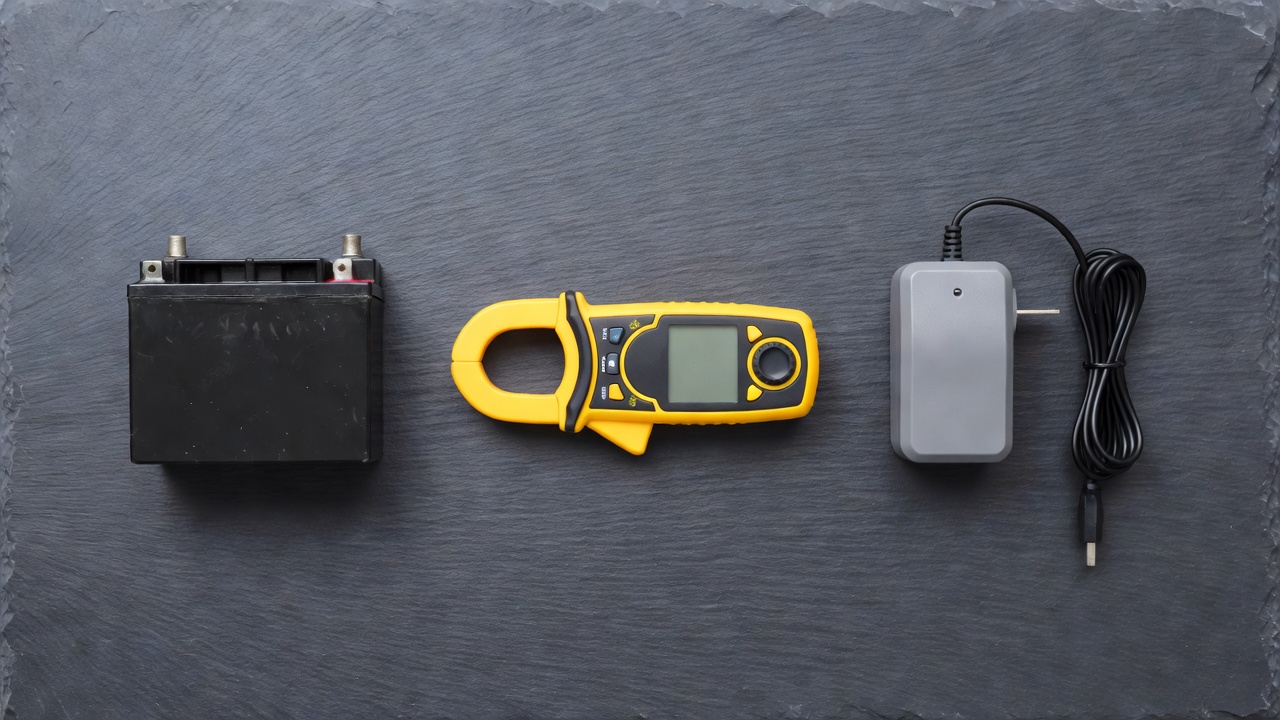
Before looking at numbers, confirm which amp measurement applies to your situation. A lawn mower battery label can show up to four amp-related figures, and confusing them leads to wrong purchases or improper charging.
- Amp-hours (Ah): A measure of stored energy capacity — how much current the battery can deliver over time. A 35 Ah battery can theoretically supply 1 amp for 35 hours, or 35 amps for 1 hour. This spec governs battery life and accessory endurance.
- Cold cranking amps (CCA): The number of amps a fully charged 12V battery can deliver for 30 seconds at 0°F (−18°C) while maintaining at least 7.2 volts. This spec governs cold-weather starting reliability — it has nothing to do with how long the battery lasts.
- Marine cranking amps (MCA): The same test as CCA but measured at 32°F (0°C) instead of 0°F. MCA figures are always numerically higher than CCA for the same battery. Mower batteries sometimes list MCA rather than CCA — do not treat them as equal.
- Charging current (A): The rate at which a charger pushes current into the battery. This is a charger spec, not a battery label spec, but it directly determines how fast and safely a battery recharges.
Knowing which spec you need eliminates guesswork when replacing or charging a battery. Readers comparing setup options can review our technical analysis on jbl partybox club 120 vs sony srs xv500.
Lawn Mower Battery Amps by Mower Type: Quick-Reference Chart
Specifications vary by mower category. The table below covers the most common configurations based on manufacturer data and BCI Group size standards. Readers comparing setup options can review our technical analysis on jbl partybox club 120 vs sony srs xv500.
| Mower Type | Voltage | Typical Ah Range | Typical CCA Range | Common Battery Group |
|---|---|---|---|---|
| Riding lawn mower | 12V | 28–35 Ah | 150–300 CCA | U1 (U1R) |
| Zero-turn mower | 12V | 30–35 Ah | 200–320 CCA | U1 (U1R) |
| Push mower (electric start, gas engine) | 12V | 5–18 Ah | 100–190 CCA | Varies by OEM |
| Cordless push mower (battery-powered) | 20V–82V | 2–10 Ah | N/A (lithium-ion) | OEM-specific pack |
| Robotic mower | 18V–36V | 1.5–6 Ah | N/A (lithium-ion) | OEM-specific pack |
Key takeaway: The U1 battery group size is the industry standard for most riding and zero-turn mowers. The BCI (Battery Council International) U1 group specifies a case footprint of approximately 7.75 × 5.19 × 6.31 inches — but Ah and CCA vary between manufacturers within that group, so always verify both figures against your OEM specification. For complementary field maintenance guidelines, examine our breakdown of z890 vs x870e motherboard.
Amp-Hours (Ah): What They Mean for Runtime and Battery Capacity
Ah capacity determines how much total energy is stored in the battery — directly affecting how long the battery can sustain electrical loads between charges.
For a riding mower, this matters in two situations: For complementary field maintenance guidelines, examine our breakdown of z890 vs x870e motherboard.
- Engine cranking endurance: A higher Ah rating means the battery can attempt more starts before draining — useful on engines that are hard to start or in storage situations where the battery has partially self-discharged.
- Accessory power: Mowers with headlights, electric PTO clutches, or powered attachments draw continuous current from the battery even while the alternator charges it. Low Ah capacity strains the system on longer mowing sessions.
Can you install a higher Ah battery than OEM spec? Yes, in most cases — provided the physical dimensions fit the battery tray and the terminals match. A higher Ah battery stores more energy, which cannot harm the engine or electrical system. The alternator/charging system simply charges it to full as normal, just over a slightly longer run time. Going lower than OEM Ah spec, however, risks premature battery failure under the same load.
Cold Cranking Amps (CCA): What They Mean for Starting Reliability
CCA is a starting-power spec, not a capacity spec. It measures the battery’s ability to deliver a surge of current — the kind needed to spin a starter motor — under cold conditions when battery chemistry naturally slows down. To evaluate matched hardware tolerances, consult our detailed overview of marshall stanmore iii vs harman kardon onyx studio 8.
Why CCA matters for mowers:
- In climates where spring mowing begins at temperatures near or below freezing, a battery with insufficient CCA may fail to crank the engine even if it is fully charged.
- Most riding mowers require a minimum of 150–200 CCA to start reliably in normal temperatures. Cold climates warrant the upper end of the 200–300 CCA range.
- If CCA is too low, the starter motor draws more current than the battery can supply at voltage, causing slow cranking, clicking, or a no-start condition.
How many CCA does a U1 battery have? U1-group batteries from major manufacturers (including Mighty Max, Weize, and Husqvarna OEM replacements) commonly ship at 200–230 CCA. Some premium AGM U1 units reach 300 CCA. Always match or exceed — never go below — the CCA figure in your mower’s owner’s manual or on the original battery label.
MCA vs. CCA reminder: If a battery lists only MCA, estimate CCA as roughly 15–20% lower than the MCA figure. Do not substitute MCA directly for CCA when comparing to an OEM CCA requirement. When planning workspace deployment, consider the engineering criteria outlined in our dyson v8 cyclone vs bissell featherweight stick guide.
How to Read the Amp Specs on Your Existing Lawn Mower Battery
The label on a lead-acid mower battery is the most reliable source of its specs. Here is where to find each figure:
- Ah (amp-hours): Printed directly as “28 Ah” or “35 Ah” — sometimes shown as “28 AH” in uppercase. On some older flooded batteries it may be omitted; check the manufacturer’s product page using the model number stamped on the case.
- CCA: Listed as “CCA” or “Cold Cranking Amps” followed by a number. Confirm it is CCA and not MCA before comparing to OEM spec.
- MCA: Listed separately as “MCA” or “Marine Cranking Amps” — numerically larger than CCA. Some mower batteries marketed for marine and lawn use list both.
- RC (Reserve Capacity): Expressed in minutes — the time the battery can sustain a 25-amp draw at 80°F before dropping below 10.5 volts. A typical 35 Ah U1 battery has an RC of approximately 60–75 minutes. RC is a secondary spec useful for estimating accessory run time.
- Group size: Stamped or printed as “U1” or “U1R” (R = reversed terminal position). Terminal orientation matters physically — confirm before ordering.
If the label is unreadable, the BCI group number and model number on the case can be used to pull the full specification sheet from the battery manufacturer’s website. For additional operational safety benchmarks, see our published testing notes on bissell crosswave hydrosteam vs shark stainforce.
Charging Amps: How Many Amps Does It Take to Charge a Lawn Mower Battery?
Charging current is a separate consideration from Ah and CCA — it determines how fast and how safely the battery accepts a charge.
Recommended charging rates for a standard 12V lead-acid mower battery:
- Slow (trickle) charge: 1–3A. Safest for long-term storage or deeply discharged batteries. A 2A charger on a 35 Ah battery takes approximately 15–18 hours for a full charge from near-empty.
- Standard charge: 4–10A. Appropriate for normal recharging. A 10A charger on a 35 Ah battery reaches full charge in roughly 3–5 hours depending on discharge depth and charger efficiency.
- Boost/fast charge: 15–40A. Used for emergency starting, not routine charging. Repeated fast charging degrades lead-acid plates over time.
The 10% rule: Battery charger manufacturers and BCI guidelines recommend a slow charge rate of approximately 10% of the battery’s Ah rating. For a 35 Ah battery, that equates to a 3.5A charge rate — widely cited as the rate that minimizes heat buildup and sulfation while ensuring full charge acceptance.
Can a 10-amp charger damage a mower battery? A quality 10A automatic (smart) charger that tapers current as voltage rises is safe for most 28–35 Ah mower batteries. A manual 10A charger left unattended on a small battery risks overcharging — use a smart charger with automatic shutoff.
Lithium-ion cordless mower batteries: These require a dedicated lithium charger matched to the OEM voltage and cell chemistry. Do not use a standard lead-acid charger on a lithium pack. Charge current and cutoff are managed by the battery’s built-in BMS (battery management system).
Lead-Acid vs. Lithium-Ion Lawn Mower Batteries: How Amps Differ by Chemistry
Battery chemistry fundamentally changes how amp specifications behave.
Lead-Acid (Flooded and AGM) — Standard for Riding Mowers
- Flooded lead-acid (FLA): The traditional, low-cost option. Requires periodic water top-up. Common in OEM riding mower applications.
- AGM (absorbed glass mat): Sealed, spill-proof, vibration-resistant, and capable of higher CCA from the same Ah footprint. Increasingly common as OEM and aftermarket replacements for riding and zero-turn mowers.
- Both types carry a valid CCA rating. AGM batteries typically deliver 10–20% more CCA than an equivalent-Ah flooded battery due to lower internal resistance.
- Usable capacity: Only 50% of rated Ah should be regularly discharged from a lead-acid battery (the “50% depth of discharge” rule) to maintain service life.
Lithium-Ion — Standard for Cordless and Robotic Mowers
- Lithium-ion batteries carry no CCA rating. CCA is a lead-acid performance standard defined at 0°F using electrochemical behavior specific to lead-acid cells. Lithium cells operate on a fundamentally different chemistry and the test does not apply.
- Usable capacity: Lithium-ion batteries support 80–100% depth of discharge, meaning a 5 Ah lithium pack delivers more usable energy than a 5 Ah lead-acid battery in practice.
- Lithium packs are lighter (often 40–60% lighter than equivalent lead-acid units) and maintain more stable voltage under load.
- Cold-weather performance: Lithium-ion capacity drops noticeably below 32°F — a real-world limitation for early spring use in cold climates, even though no formal CCA figure exists.
- Can you replace a lead-acid riding mower battery with lithium? Aftermarket lithium drop-in replacements for U1-group riding mower batteries exist (e.g., Antigravity and similar brands). They match the U1 footprint and 12V nominal voltage but require verifying that the mower’s charging system voltage output is compatible — most standard mower alternators are.
Buying Guidance: Matching Amp Specs When Replacing a Lawn Mower Battery
When buying a replacement battery, follow this matching priority:
- Match voltage first: Nearly all gas-engine riding and push mowers use 12V. Cordless and robotic mowers use OEM-specific voltages — always match exactly.
- Match or exceed CCA: Find the OEM CCA spec in your owner’s manual or on the original battery. Install a replacement that meets or exceeds that figure. Going below OEM CCA is the most common cause of slow-crank or no-start failures in replacement batteries.
- Match or exceed Ah: A higher Ah replacement is acceptable and beneficial. A lower Ah replacement shortens service life and may leave accessories underpowered.
- Match the group size and terminal orientation: U1 vs. U1R determines which terminal (positive or negative) is on which side of the case. The wrong orientation means cables may not reach or may short against the tray.
- Choose AGM over flooded if budget allows: AGM batteries tolerate vibration better (relevant on mowers running over rough terrain), are spill-proof, and typically deliver higher CCA from the same physical size.
Where to find OEM specs: Check the owner’s manual battery specification section, the battery label on the existing unit, or the mower manufacturer’s parts lookup tool using your model and serial number. Do not rely solely on the battery tray size — Ah and CCA must be verified from the manual or original label, not estimated by eye.
Buyer FAQs: How Many Amps In A Lawn Mower Battery Solved
What is the difference between Ah and CCA on a lawn mower battery?
Ah (amp-hours) measures stored energy capacity — how long the battery can sustain a load. CCA (cold cranking amps) measures starting power — how much current the battery can surge at 0°F for 30 seconds to spin a starter motor. Ah governs battery life and accessory endurance; CCA governs cold-start reliability. A battery must meet both specs for correct mower operation.
How many amps does a riding lawn mower battery have?
Most riding mower batteries (BCI Group U1) are rated 28–35 Ah and 150–300 CCA at 12 volts. The exact figures depend on the manufacturer and whether the battery is flooded lead-acid or AGM — AGM units tend to deliver more CCA from the same Ah rating. Check the owner’s manual for the OEM minimum CCA requirement.
Can I use a higher Ah battery in my riding mower than the OEM spec?
Yes. Installing a battery with a higher Ah rating than OEM spec causes no harm to the mower’s electrical system. The charging circuit simply charges it to full over a normal operating period. The benefit is additional cranking endurance and longer accessory power. Ensure the replacement fits the battery tray and that terminal orientation (U1 vs. U1R) matches.
How many amps should I use to charge a lawn mower battery?
For a standard 28–35 Ah 12V lead-acid mower battery, a 2–10A smart charger is appropriate. The BCI-recommended slow-charge rate is approximately 10% of the Ah rating — roughly 3A for a 35 Ah battery — which minimizes heat and sulfation. A 10A automatic charger is safe provided it tapers current as the battery approaches full charge. Never use a lead-acid charger on a lithium-ion mower battery pack.
For more hands-on benchmarks and buying recommendations, consult our guides on high-CFM commercial leaf blower guide.
Mechanical safety standards, operational tolerances, and protective gear guidelines align with benchmark specifications established by the American National Standards Institute (ANSI).









