

Direct Answer: How to Change Oil on a Husqvarna Lawn Mower
Warm the engine for 2 minutes, disconnect the spark plug wire, then drain old oil through the drain plug or EZ-change valve into a catch pan. Replace the oil filter if your model has one, then refill to the FULL mark on the dipstick using the correct viscosity: SAE 30 for temperatures consistently above 40°F, or 10W-30 for variable conditions. Capacity is approximately 0.6 qt for walk-behind engines and 1.5–2 qt for riding and zero-turn engines. Change every 50 operating hours or once per season, whichever comes first.
Quick-Reference: Husqvarna Oil Specs by Mower Type
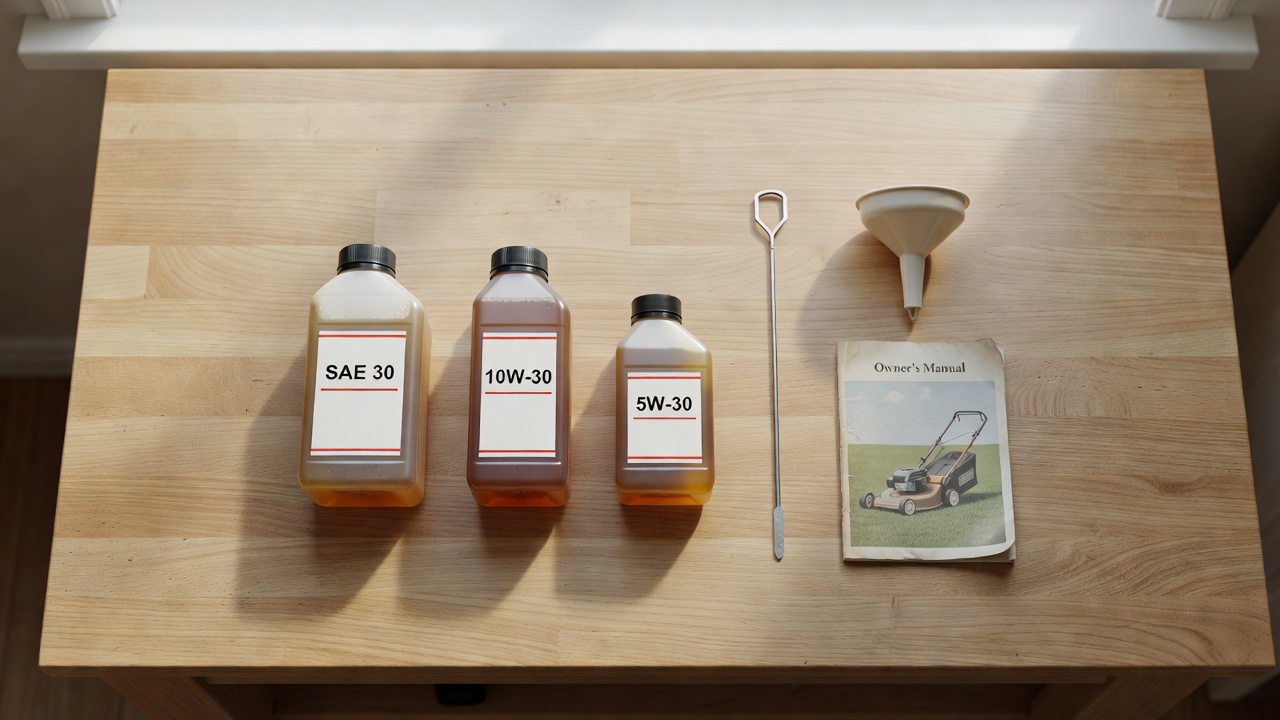
Confirm your spec before touching the mower. Husqvarna mowers ship with engines from Briggs & Stratton, Kawasaki, or Honda — each with different oil capacities and filter requirements.
| Mower Type | Common Engine Brand | Oil Type | Oil Capacity | Oil Filter Required | Change Interval |
|---|---|---|---|---|---|
| Walk-Behind Push Mower | Briggs & Stratton, Honda | SAE 30 / 10W-30 | ~0.6 qt (20 oz) | No (most models) | 50 hrs or 1x/season |
| Riding Lawn Tractor | Briggs & Stratton, Kawasaki | 10W-30 / SAE 30 | 1.5–2 qt | Yes | 50 hrs or 1x/season |
| Zero-Turn Rider | Kawasaki, Briggs & Stratton Twin | 10W-30 / SAE 30 | 1.8–2 qt | Yes (canister-style) | 50 hrs or 1x/season |
Note: Always verify capacity and oil spec in your specific model’s owner’s manual. Values above reference common Husqvarna models including the LC221A (walk-behind), YTH18542 (riding tractor), and Z242F (zero-turn). Readers comparing setup options can review our technical analysis on jbl partybox club 120 vs sony srs xv500.
Tools and Materials You Need Before Starting
Gather everything before beginning — a mid-job supply run risks leaving the engine unprotected. Readers comparing setup options can review our technical analysis on jbl partybox club 120 vs sony srs xv500.
- Correct engine oil (SAE 30 or 10W-30 — see viscosity section below)
- Oil catch pan or drain pan (at least 2 qt capacity)
- Oil filter (riding and zero-turn models only — match to your engine brand and model)
- Socket wrench or adjustable wrench (for drain plug)
- Oil filter wrench (for riding/zero-turn filter removal)
- Funnel
- Clean rags or shop towels
- Torque wrench (recommended for reinstalling drain plug to spec)
- Nitrile gloves
- Sealable container for used oil disposal
⚙️ Husqvarna EZ-Change Oil Drain System: Select Husqvarna riding mower models are equipped with the EZ-change oil drain system — a built-in valve and hose assembly that lets you drain oil without a wrench. If your model has this system, you do not need a socket wrench for drain plug removal. Check your owner’s manual or look for a capped drain hose routed to the side of the engine block. This system significantly speeds up the drain step and reduces mess. For complementary field maintenance guidelines, examine our breakdown of z890 vs x870e motherboard.
How to Change Oil on a Husqvarna Walk-Behind Push Mower
Most Husqvarna walk-behind mowers use a single-cylinder Briggs & Stratton or Honda engine with no oil filter. Draining is done via a drain plug or the tilt method.
- Warm the engine. Run the mower for 2 minutes to warm the oil — warm oil drains faster and carries more contaminants out with it. Shut the engine off.
- Disconnect the spark plug wire. Pull the rubber boot off the spark plug to prevent accidental starts. This is a non-negotiable safety step.
- Position your catch pan. Place the oil catch pan under the drain plug or alongside the mower if using the tilt method.
- Drain the oil — drain plug method: Locate the drain plug on the underside of the engine (consult your owner’s manual for exact location). Remove it with a socket wrench and allow oil to drain fully into the catch pan.
- Drain the oil — tilt method (if no drain plug): Tilt the mower onto its side with the air filter and carburetor facing up. This prevents fuel and oil from contaminating the air filter. Allow oil to drain from the oil fill tube into the catch pan.
- Reinstall the drain plug. Once fully drained, reinstall and torque the drain plug to the specification in your engine service manual. Briggs & Stratton single-cylinder engines typically require 140–200 in-lb (approximately 16–23 Nm) — verify against your specific engine model.
- Refill with fresh oil. Stand the mower upright. Use a funnel to add approximately 0.6 qt (20 oz) of the correct oil through the oil fill tube.
- Check the dipstick. Wipe the dipstick clean, reinsert fully, remove, and read the level. Add oil in small increments until the level sits at the FULL mark. Do not overfill.
- Reconnect the spark plug wire. Reattach the boot firmly to the spark plug.
- Run the engine briefly. Start and run for 1 minute, then recheck the dipstick and inspect around the drain plug for leaks.
⚠️ Tilt Direction Warning: Always tilt a Husqvarna walk-behind mower with the air filter side facing up. Tilting with the air filter down allows oil to flow into the air filter and carburetor, which can foul the filter, cause a hydrolock condition, and require additional repairs. For complementary field maintenance guidelines, examine our breakdown of z890 vs x870e motherboard.
How to Change Oil on a Husqvarna Riding Lawn Mower
Riding mowers use larger single- or twin-cylinder engines, carry more oil, and most models include a replaceable oil filter. Access the drain plug from underneath the engine or use the EZ-change valve if equipped.
- Park on a level surface. Engage the parking brake. Level ground ensures an accurate dipstick reading and complete draining.
- Warm the engine for 2 minutes. Shut it off after warming.
- Disconnect the spark plug wire(s). Riding mowers with twin-cylinder engines have two spark plugs — disconnect both wires.
- Position the catch pan. Place it under the engine drain plug or EZ-change drain hose outlet.
- Drain via drain plug: Locate the drain plug beneath the engine. Remove with a socket wrench and allow full drainage. On many Husqvarna YTH and TS series tractors, the plug is accessed from the front underside of the engine.
⚙️ EZ-Change Drain System (Select Models): On Husqvarna riding mowers equipped with EZ-change, locate the pre-routed drain hose on the side of the engine. Remove the cap, direct the hose into your catch pan, and open the valve. Oil drains without tools. Close the valve, replace the cap, and proceed to refill. No drain plug torquing required. Check Husqvarna’s product documentation or your owner’s manual to confirm if your model includes this system. To evaluate matched hardware tolerances, consult our detailed overview of marshall stanmore iii vs harman kardon onyx studio 8.
- Remove and replace the oil filter. Turn the canister-style filter counterclockwise by hand or with an oil filter wrench. Lightly coat the rubber gasket on the new filter with fresh oil before installing. Hand-tighten until the gasket seats, then turn an additional ¾ turn — do not over-torque.
- Reinstall the drain plug. Torque to spec per your engine service manual. Kawasaki single-cylinder engines typically specify approximately 21 Nm (186 in-lb); Briggs & Stratton V-Twin engines vary — consult the specific engine service manual.
- Refill with fresh oil. Add oil through the dipstick tube using a funnel. Start with 1.5 qt, check the dipstick, and add incrementally up to 2 qt as needed to reach the FULL mark.
- Check dipstick and inspect for leaks. Reconnect spark plug wire(s), run the engine for 2 minutes, shut off, wait 30 seconds, then recheck the dipstick. Inspect around the drain plug and oil filter for seepage.
How to Change Oil on a Husqvarna Zero-Turn Mower
Husqvarna zero-turn mowers (Z200, Z400 series) typically use commercial-grade Kawasaki or Briggs & Stratton twin-cylinder engines with higher oil capacity and a canister-style oil filter. The drain plug location and filter thread size differ from standard riding tractors.
- Park on a level surface, engage parking brake, warm the engine for 2 minutes. Shut off and let the engine cool for 5 minutes — just enough to prevent burns while keeping oil fluid.
- Disconnect both spark plug wires. Twin-cylinder engines have two.
- Locate the drain plug. On most Husqvarna zero-turn models, the drain plug is on the underside of the engine block, accessible from the front or side of the mower frame. Consult your Z-series owner’s manual for the exact location — the layout differs from riding tractor platforms.
- Position catch pan and remove drain plug. Allow full drainage. Zero-turn engines hold up to 2 qt — use an appropriately sized catch pan.
- Remove and replace the canister oil filter. Zero-turn models use a full-size canister filter. Apply fresh oil to the new filter’s gasket, hand-tighten, then turn ¾ turn past gasket contact. Confirm the replacement filter part number against your Kawasaki or Briggs & Stratton engine model number — filter thread size and dimensions vary by engine displacement.
- Reinstall drain plug to torque spec. Kawasaki twin-cylinder engines (e.g., FR, FX series) used on Husqvarna Z-turns specify drain plug torque of approximately 20–25 Nm — verify in the Kawasaki engine service manual for your specific series.
- Refill with fresh oil. Add 1.8–2 qt, check dipstick, top up to FULL mark.
- Reconnect spark plug wires, run engine 2 minutes, re-inspect dipstick and connections for leaks.
Choosing the Right Oil: SAE 30 vs. 10W-30 vs. 5W-30
Oil viscosity depends on your operating temperature range and engine OEM specification. When planning workspace deployment, consider the engineering criteria outlined in our dyson v8 cyclone vs bissell featherweight stick guide.
| Oil Viscosity | Recommended Temperature Range | Engine OEM Guidance |
|---|---|---|
| SAE 30 | Above 40°F (4°C) consistently | Briggs & Stratton recommends SAE 30 as the primary choice for warm-season mowing above 40°F. Honda small engines also recommend SAE 30 for sustained warm conditions. |
| 10W-30 | Variable temperatures, 0°F–100°F | Briggs & Stratton and Kawasaki both approve 10W-30 for variable temperature conditions. Kawasaki FR/FX series manuals recommend 10W-30 as the standard all-season fill. |
| 5W-30 | Below 40°F (4°C), cold starts | Briggs & Stratton recommends 5W-30 for operating temperatures below 40°F to ensure adequate cold-start lubrication. |
Synthetic vs. Conventional Oil
Synthetic oil meeting the viscosity spec (10W-30 or 5W-30 full synthetic) is acceptable in all three engine brands and provides better protection in temperature extremes and under heavy load. Briggs & Stratton and Kawasaki both approve the use of full synthetic oil meeting API SJ or higher rating. Switching to synthetic does not extend the 50-hour change interval — maintain the same schedule.
For a complete breakdown of viscosity choices by climate zone and engine model, see our dedicated Husqvarna mower oil type guide. For additional operational safety benchmarks, see our published testing notes on bissell crosswave hydrosteam vs shark stainforce.
Oil Change Interval: How Often to Change Oil on a Husqvarna Mower
- Standard interval: Every 50 operating hours or once per mowing season, whichever comes first. This interval is consistent across Husqvarna owner’s manuals for both walk-behind and riding platforms.
- New engine break-in change: Change oil after the first 5 operating hours on a new engine. Briggs & Stratton and Kawasaki new-engine guidelines specify this to flush metal particles generated during initial engine break-in.
- Heavy-use or dusty conditions: Change more frequently — every 25 hours — when mowing in dry, dusty environments. Airborne debris accelerates oil contamination.
- Post-storage: Change oil at the start of each season regardless of hours, since oil degrades during storage and moisture accumulation accelerates corrosion internally.
How to read current oil condition: Pull the dipstick, wipe clean, reinsert, and remove. Fresh oil is amber and translucent. Oil that is black, opaque, or has a gritty texture on the dipstick is overdue for a change regardless of hours logged.
For a full interval schedule including filter replacement timing and seasonal storage prep, see our dedicated Husqvarna oil change interval guide.
Common Mistakes and Safety Warnings
These errors cause the most engine damage and warranty issues during DIY oil changes.
- Overfilling past the FULL mark. Excess oil causes crankcase pressure buildup, foaming, and can blow oil into the air filter and combustion chamber. Add in small increments and check the dipstick frequently. If you overfill, drain the excess before starting the engine.
- Reusing a crushed or damaged drain plug washer. If your engine uses a sealing washer on the drain plug, replace it with each oil change. A deformed washer will not seal properly and will cause an oil leak.
- Not reconnecting or not disconnecting the spark plug wire. Disconnect before any under-mower work. Reconnect before starting — failing to reconnect is a common reason a mower won’t start after an oil change.
- Running the engine without rechecking the dipstick. Always verify oil level before starting after a change. Running even briefly on low or no oil causes immediate bearing and cylinder damage.
- Cross-threading the drain plug. Start the drain plug by hand to avoid cross-threading. If resistance is felt before the plug seats, stop and realign. A cross-threaded plug requires engine block repair.
- Not replacing a pinched oil filter gasket. When installing a new oil filter, confirm the old rubber gasket came off with the old filter and is not stuck on the engine. Double-gasketing causes oil leaks and filter failure.
Used Oil Disposal
Used motor oil is a regulated waste. Do not pour it down drains, into soil, or in household trash. Transfer used oil to a sealed container and drop it off at:
- Automotive parts retailers (AutoZone, O’Reilly, Advance Auto Parts — all accept used oil at no charge in most US locations)
- Municipal recycling or household hazardous waste collection centers
- Quick-lube service centers (many accept used oil)
Buyer FAQs: How To Change Oil On Husqvarna Lawn Mower Solved
What type of oil does a Husqvarna lawn mower take?
Most Husqvarna mowers take SAE 30 for warm-weather use above 40°F or 10W-30 for variable temperatures. The correct viscosity depends on your operating climate and engine brand (Briggs & Stratton, Kawasaki, or Honda). Check the oil fill cap or dipstick tube — many Husqvarna engines print the recommended viscosity directly on the engine shroud or cap.
Can I tilt my Husqvarna walk-behind mower to drain the oil?
Yes — tilt with the air filter and carburetor side facing up. Tilting with the air filter down forces oil into the air filter and carburetor, which can foul the filter and cause the engine to smoke or run poorly on restart. Replace the air filter if oil contamination occurs.
How do I use the Husqvarna EZ-change oil drain system?
The EZ-change system consists of a pre-installed drain valve and hose routed to the side of the engine on select Husqvarna riding mower models. To drain: remove the hose cap, direct the hose into your catch pan, and turn the valve to open — oil drains without any wrench or plug removal. Close the valve, replace the cap, and refill through the dipstick tube as normal. Confirm your specific model includes EZ-change in your owner’s manual before expecting this feature.
What happens if I overfill the oil in my Husqvarna mower?
Overfilling causes the crankcase to pressurize, forcing oil past seals and into the air filter, combustion chamber, and exhaust. Symptoms include white or blue smoke, rough running, or a fouled spark plug. If you overfill, do not start the engine — drain excess oil until the dipstick reads at or just below the FULL mark, then start normally.

Pros
- Large-size design named in product title
- Sharpening and balancing functions listed
- Listed as a new upgraded version

Pros
- Adjustable 15-to-45-degree range in title
- Sharpening and balancing functions listed

Pros
- Sharpener and balancer functions in title
- 15-to-45-degree adjustable setting listed
- Built for lawn mower blade maintenance
Pros
- Includes replacement gaskets and a 98079-55846 spark plug
- Matches Honda HRR216 and HRS216 lawn mower models
- Designed around the 16100-Z8B-901 carburetor specification
Cons
- Restricted to select Honda GCV160 mower applications
- Installation requires basic mechanical tools and skills
For more hands-on benchmarks and buying recommendations, consult our guides on high-CFM commercial leaf blower guide, as well as automated robotic lawn mower guide.
Mechanical safety standards, operational tolerances, and protective gear guidelines align with benchmark specifications established by the American National Standards Institute (ANSI).









