

Quick Answer: To remove oil from a lawn mower, locate the drain plug beneath the engine and drain into a catch pan, use a turkey baster or fluid extractor pump through the dipstick tube if there is no drain plug, or tip the mower on its side with the carburetor and air filter facing up. Always disconnect the spark plug wire first, work on a cold engine, and take used oil to a certified recycling center — never pour it down a drain or onto the ground.

Pros
- Large-size design named in product title
- Sharpening and balancing functions listed
- Listed as a new upgraded version

Pros
- Adjustable 15-to-45-degree range in title
- Sharpening and balancing functions listed

Pros
- Sharpener and balancer functions in title
- 15-to-45-degree adjustable setting listed
- Built for lawn mower blade maintenance
Pros
- Includes replacement gaskets and a 98079-55846 spark plug
- Matches Honda HRR216 and HRS216 lawn mower models
- Designed around the 16100-Z8B-901 carburetor specification
Cons
- Restricted to select Honda GCV160 mower applications
- Installation requires basic mechanical tools and skills
What You Need Before You Start (Tools & Safety Steps)
Gathering the right tools and completing two non-negotiable safety steps before touching the engine prevents the most common DIY injuries and keeps oil out of components it can damage.
Tools and Supplies
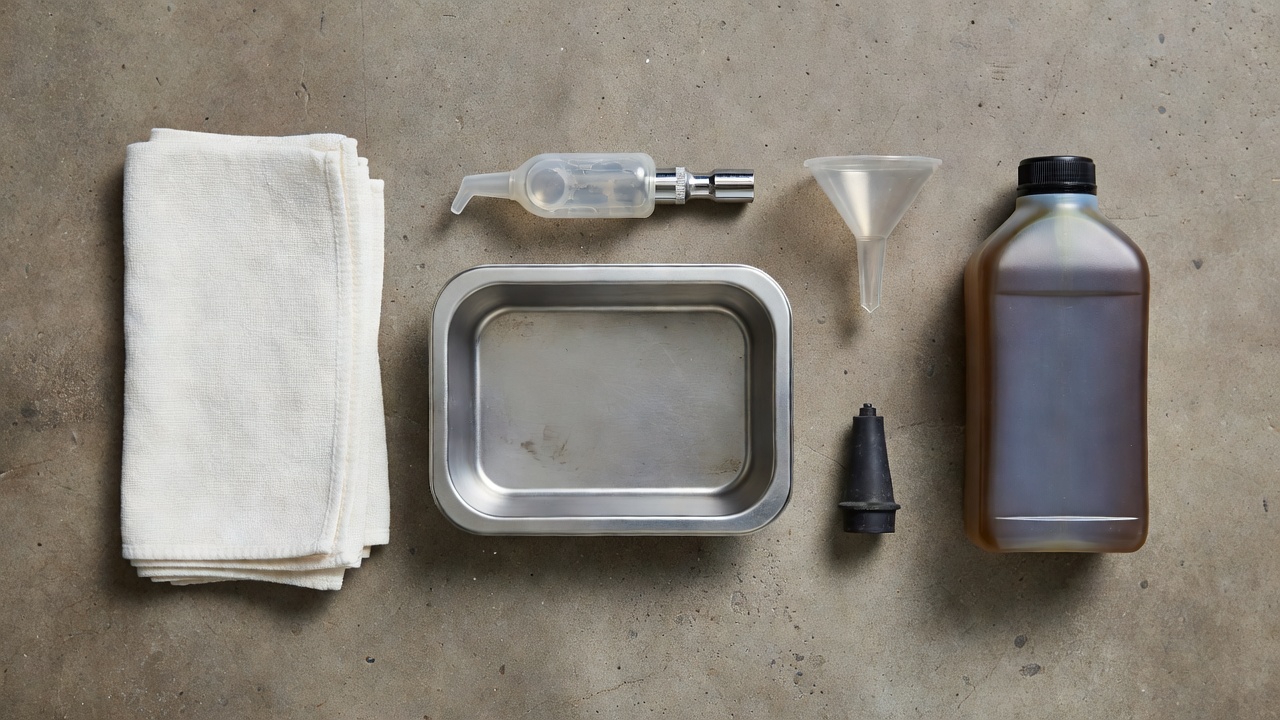
- Drain pan or oil catch pan (at least 1-quart capacity for push mowers; 2-quart for riding mowers)
- Socket wrench or adjustable wrench (drain plug size varies by engine brand — typically 3/8 in. or 5/8 in.)
- Turkey baster, hand siphon pump, or fluid extractor pump (for no-drain-plug scenarios)
- Clean rags or shop towels
- Funnel
- Sealable container for storing used oil until disposal
- Replacement oil — SAE 30 or 10W-30 small engine oil (see refill section below)
- Replacement drain plug washer (optional but recommended)
Safety Steps — Do These First, Every Time
- Disconnect the spark plug wire. Pull the rubber boot off the spark plug tip. This prevents accidental engine start while your hands are near moving parts or hot surfaces.
- Let the engine cool completely. Hot oil burns skin and hot engines can ignite spilled fuel. Wait at least 30 minutes after the last run.
- Work on a flat, hard surface. Gravel and uneven ground cause spills and make accurate dipstick readings impossible.
- Keep a fire extinguisher nearby if working in an enclosed garage — gasoline fumes accumulate quickly.
Running the engine for two to three minutes before draining is sometimes recommended to warm oil and improve flow. If you choose to do this, allow a full 30-minute cooldown before proceeding — never drain hot oil.
Method 1: Drain Plug Method (Best for Riding Mowers and Many Push Mowers)
The drain plug method is the cleanest and most complete way to remove oil. Riding mowers almost universally include a drain plug; push mowers vary significantly by engine brand — Briggs & Stratton, Honda, Kawasaki, and Kohler engines each place the plug in different locations, and some small push mower engines omit it entirely. Readers comparing setup options can review our technical analysis on jbl partybox club 120 vs sony srs xv500.
How to Find the Drain Plug
- Riding mowers: Check the underside of the engine block, typically toward the front or side. Consult your owner’s manual for the exact position — it varies between Briggs & Stratton, Kohler, and Kawasaki engines.
- Push mowers with a Briggs & Stratton engine: The drain plug is usually on the side or bottom of the engine block near the base.
- Push mowers with a Honda engine: Honda GCV series engines often have a drain plug on the side of the crankcase; some models use a drain tube and cap instead of a traditional plug.
- No plug visible? Skip to Method 2.
Step-by-Step Drain Plug Procedure
- Position the drain pan directly beneath the drain plug.
- Remove the oil fill cap or dipstick — this vents the crankcase and lets oil flow freely.
- Use a socket wrench to loosen and remove the drain plug. Turn counterclockwise. Keep your hand below the plug so it lands in the pan, not on the ground.
- Allow oil to drain fully — typically 3 to 5 minutes for a push mower, up to 10 minutes for a riding mower.
- Wipe the plug threads and the plug hole clean with a rag.
- Reinstall the drain plug. Hand-tighten first, then snug with a wrench — do not overtighten or you will strip the threads in the aluminum block.
- Replace the drain plug washer if it looks compressed or damaged.
- Refill with fresh oil (see the refill section below) before reconnecting the spark plug wire.
How long does it take? The full process — drain, wipe, reinstall, refill — takes 15 to 20 minutes for most mowers. Readers comparing setup options can review our technical analysis on jbl partybox club 120 vs sony srs xv500.
Method 2: Turkey Baster or Oil Extractor Pump Method (No Drain Plug)
Many walk-behind push mowers, particularly smaller and older models, have no accessible drain plug. The extractor method draws oil up through the oil fill tube or dipstick port — no tilting, no disassembly. For complementary field maintenance guidelines, examine our breakdown of z890 vs x870e motherboard.
Tool Options
- Turkey baster: Inexpensive, works for small engines with accessible fill tubes. Takes more strokes — expect 15 to 20 draws to empty a typical push mower crankcase.
- Hand siphon pump: Faster than a turkey baster. Insert one tube into the fill port, squeeze the bulb to prime, and discharge into the drain pan.
- Fluid extractor / vacuum pump: The most efficient option. A 1.5L to 2L capacity extractor empties most push mower crankcases in one or two pumping cycles. Available at auto parts stores for $20–$50.
Step-by-Step Extractor Procedure
- Remove the oil fill cap and set it aside.
- Insert the extractor tube straight down into the oil fill tube or dipstick port until it touches the bottom of the crankcase.
- Operate the pump — squeeze the bulb on a siphon, or pump the handle on a fluid extractor — until oil flows into the collection chamber or drain pan.
- Continue until no more oil draws up. Tip the mower slightly toward the fill tube side to pool remaining oil if needed.
- Wipe the fill tube opening clean.
- Reinstall the fill cap before refilling with fresh oil.
Limitation: Extractors may leave a small residual amount (typically less than 1 oz) in low spots of the crankcase. For a full oil change this is acceptable; for winterization, combining this method with a brief tipping step removes any remainder.
Method 3: Tipping Method (Quick but Requires Caution)
Tipping the mower lets gravity drain oil directly out of the fill tube. The critical rule: the carburetor and air filter must face up, not down. Tipping the mower with the carburetor side down forces raw fuel and oil into the air filter and carburetor bowl, which can cause hard starting, white smoke, and carburetor damage requiring cleaning or replacement. For complementary field maintenance guidelines, examine our breakdown of z890 vs x870e motherboard.
How to Identify the Correct Tipping Side
- Locate the air filter housing — it is typically a rectangular or round plastic box on the side of the engine.
- Locate the carburetor — it sits directly behind or beside the air filter.
- Tip the mower so that side faces up toward the sky.
- On most walk-behind mowers, this means tipping toward the right side when standing at the handle.
- When in doubt, check your owner’s manual — Honda, Briggs & Stratton, and other manufacturers specify the correct tipping direction in their documentation.
Step-by-Step Tipping Procedure
- Disconnect the spark plug wire.
- Remove the oil fill cap and hold a drain pan beside the fill tube opening.
- Slowly tip the mower onto its side — carburetor and air filter facing up.
- Hold or prop the mower until oil fully drains into the pan — typically 2 to 3 minutes.
- Return the mower to upright.
- Wipe away any spilled oil from the engine block and deck.
Treat the tipping method as a last resort or a supplement to the extractor method. It is not suitable for riding mowers due to size and risk of fuel spills from the tank.
How to Remove Oil If You Overfilled or Spilled It
Overfilling engine oil causes white smoke from the exhaust, oil burning on hot engine surfaces, rough running, and potential damage to crankshaft seals from excessive crankcase pressure. If the dipstick reads above the “FULL” mark, remove oil before starting the engine. To evaluate matched hardware tolerances, consult our detailed overview of marshall stanmore iii vs harman kardon onyx studio 8.
Removing Excess Oil (Overfill)
- Use a fluid extractor or turkey baster inserted into the dipstick port or fill tube.
- Extract small amounts — roughly 1 to 2 oz at a time.
- Check the dipstick after each extraction. Wipe the dipstick, reinsert fully, withdraw, and read the level.
- Stop when the level reads between the “ADD” and “FULL” marks — ideally closer to “FULL” but not above it.
Cleaning External Oil Spills from the Mower Deck and Engine Block
- Absorb pooled oil with rags or shop paper towels immediately — do not let it drip onto the ground.
- Apply a small amount of dish soap or engine degreaser to oily surfaces on the deck and engine block.
- Wipe clean with a damp rag. For deck buildup, a stiff brush works on dried oil and grass residue.
- Run the engine briefly outdoors after cleaning — any residual oil on the block will burn off and produce brief smoke, which is normal.
How to Drain Lawn Mower Oil Before Winter Storage
Whether to drain oil or change it before storage depends on engine type and storage duration. Most small engine manufacturers — including Briggs & Stratton and Honda Power Equipment — recommend changing the oil before long-term storage rather than leaving old oil in the crankcase. Used oil contains combustion byproducts and moisture that degrade seals and corrode internal surfaces over a winter.
Winterization Oil Procedure
- Run the engine for two to three minutes to warm the oil and distribute any contaminants.
- Cool for 30 minutes, then drain using Method 1 or Method 2 above.
- Refill with fresh SAE 30 or 10W-30 small engine oil to the correct level.
- Run the engine for 30 seconds to circulate fresh oil through the system, then shut off.
- Disconnect the spark plug wire and store the mower in a dry location.
Do not store a mower with no oil in the crankcase. Dry starts in spring cause rapid wear on cylinder walls and bearings. When planning workspace deployment, consider the engineering criteria outlined in our dyson v8 cyclone vs bissell featherweight stick guide.
What Type of Oil Goes Back In After Draining
Refilling with the wrong oil — or the wrong quantity — undoes the work of a clean drain.
Oil Type by Climate
| Oil Grade | Best For | Temperature Range |
|---|---|---|
| SAE 30 | Warm-climate mowing, summer use | Above 40°F (4°C) |
| 10W-30 | Variable temperatures, most regions | 0°F to 100°F (-18°C to 38°C) |
| Synthetic 5W-30 | Extended drain intervals, cold starts | Wide range; check OEM spec |
Always verify the grade in your engine owner’s manual — Briggs & Stratton, Honda, Kawasaki, and Kohler each publish specific oil recommendations for their engines. For additional operational safety benchmarks, see our published testing notes on bissell crosswave hydrosteam vs shark stainforce.
How Much Oil to Add
- Walk-behind push mowers: Typically 12 to 18 oz (0.35 to 0.53 L). Check the manual — overfilling is as harmful as underfilling.
- Riding mowers: Typically 48 to 64 oz (1.4 to 1.9 L) depending on engine displacement.
How to Read the Dipstick Correctly
- Wipe the dipstick clean with a rag.
- Reinsert fully into the tube — do not screw it in if it has threads; just seat it.
- Withdraw and read the oil film against the MIN and MAX (or ADD and FULL) marks.
- Target the upper quarter of the safe range, not the absolute maximum line.
Oil change interval: Briggs & Stratton and Honda both recommend changing small engine oil every 50 hours of operation or once per mowing season — whichever comes first. New engines require a break-in oil change after the first 5 hours.
How to Dispose of Used Lawn Mower Oil Responsibly
Used motor oil is a regulated waste in the United States under EPA regulations (40 CFR Part 279). Pouring it down a drain, into a sewer, onto soil, or into household trash is illegal in most jurisdictions and can contaminate groundwater.
Where to Take Used Oil
- Auto parts stores: AutoZone, O’Reilly Auto Parts, Advance Auto Parts, and Walmart Auto Centers accept used motor oil at no charge. Verify current store policy before visiting, as participation varies by location.
- Oil recycling centers: Use the Earth911 recycling locator to find certified drop-off sites near you.
- Municipal hazardous waste collection events: Many counties hold periodic collection days for used oil, paint, and other household chemicals.
How to Store Used Oil Until Disposal
- Pour used oil into a sealable, leak-proof plastic container — the original oil bottle works well.
- Do not mix used oil with gasoline, antifreeze, or other fluids. Mixed oil is harder for recyclers to process and may be refused.
- Store in a cool, dry location away from children and ignition sources.
- Transport upright in a sealed bag or tray in your vehicle to contain any leaks.
Buyer FAQs: How To Remove Oil From Lawn Mower Solved
Does my push mower have an oil drain plug?
It depends on the engine. Riding mowers almost universally have a drain plug. Push mowers vary: many Briggs & Stratton and Honda engines include one, but smaller or older engines may not. Check the underside and sides of the engine block, and consult the owner’s manual for your specific model. If no plug exists, use the extractor pump method through the oil fill tube.
Can overfilling oil damage a lawn mower engine?
Yes. Excess oil in the crankcase increases internal pressure, which can push oil past crankshaft seals and into the combustion chamber. Symptoms include white or blue smoke from the exhaust, fouled spark plugs, rough running, and hard starting. Remove excess oil with a fluid extractor before starting the engine if you suspect an overfill.
Which direction do I tip a push mower to drain oil safely?
Tip the mower so the carburetor and air filter face upward — never downward. Tipping with the carburetor side down allows fuel and oil to flood the air filter element and carburetor, causing damage and difficult starting. On most walk-behind mowers this means tilting to the right when standing at the operator handle, but verify with your owner’s manual.
How often should I change lawn mower oil?
The standard interval for most small engines — per Briggs & Stratton and Honda maintenance schedules — is every 50 hours of operation or once per mowing season, whichever occurs first. New engines require a break-in oil change after the first 5 hours of use. Mowers used in dusty or high-temperature conditions benefit from more frequent changes.
For more hands-on benchmarks and buying recommendations, consult our guides on heavy-duty chainsaw buyer guide, as well as high-CFM commercial leaf blower guide, as well as durable ride-on lawn tractor guide.
Mechanical safety standards, operational tolerances, and protective gear guidelines align with benchmark specifications established by the American National Standards Institute (ANSI).









