

Quick Answer: Do Push Mowers Work?
Yes. A push mower can cut a typical home lawn when the grass stays reasonably short, the blades stay sharp, and the machine matches the turf. Both manual reel mowers and walk-behind rotary mowers work for regular home use. They struggle when grass is too tall, wet, or dense, or when the ground is badly uneven or steep. “Working” means…

Pros
- Powerful 80V brushless motor delivers 32HP gas-equivalent performance with quiet fume-free operation and no engine maintenance.
- Complete kit includes four 6.0Ah batteries and 600W charger for substantial runtime up to 1.5 acres.
- SmartCut technology and 42-inch heavy-duty steel deck ensure consistent cuts without bogging in tough conditions.
- Versatile towing up to 350 lbs and optional cargo hauling plus comfort features like high-back seat and LED lights.
- Strong 4-year limited warranty and full compatibility with the Greenworks 80V tool ecosystem.
Cons
- Rear utility cargo bed for 200 lb hauling is sold separately and not included in the kit.
- Runtime of up to 1.5 acres varies with conditions and may require recharging or battery swaps on larger properties.
- As a fully cordless model continuous operation depends on battery levels unlike gas engines with unlimited runtime.
The Greenworks 80V 42" CrossoverT Cordless Riding Lawn Tractor is a ready-to-mow zero-emission tractor designed for homeowners managing medium to large lawns. It features a reinforced 42-inch stamped steel deck of 12-gauge construction along with premium comfort elements such as a high-back padded seat with foldable armrests. The overall build emphasizes durability and user convenience right out of the box with the included battery and charger set.
Performance centers on the 80V TruBrushless motor that provides 32HP gas-equivalent power with instant torque and quiet fume-free operation. SmartCut technology senses grass conditions and automatically adjusts power to maintain a consistent cut even in tall thick or wet areas. The four 6.0Ah batteries support runtime for up to 1.5 acres depending on conditions while dual LED headlights and a 7-position deck height range from 1.5" to 4.5" add practicality. Front and rear attachments further allow towing up to 350 lbs for added yard utility.
Key considerations include that the rear utility storage bin capable of hauling 200 lbs is sold separately so full cargo functionality requires an extra purchase. Runtime remains condition-dependent and may fall short for properties significantly larger than 1.5 acres without using the 600W charger or swapping batteries. The cordless design prioritizes ease and low maintenance but trades off the continuous runtime of traditional gas models.
This tractor delivers strong value for eco-conscious owners of residential properties who want gas-like power without the emissions noise or upkeep. It suits those who already use or plan to expand into the Greenworks 80V family of tools and who appreciate the 4-year limited warranty. Users with exceptionally large or commercial-scale lawns should evaluate battery logistics carefully before purchase.

Pros
- Delivers strong 21 horsepower equivalent power comparable to gas riding mowers.
- Provides up to 1.5 acres of runtime on a full charge with the six included batteries.
- Features low-maintenance dual brushless motors without belts for greater durability.
- Offers versatile 12-position cutting height adjustment from 1.5 to 4.5 inches.
- Includes digital controls for blade settings, drive speeds, and cruise control.
Cons
- Limited to 1.5 acres of cutting per charge without purchasing additional batteries for bigger lawns.
- Requires recharging time for the six 56V batteries after each use session.
- Relies solely on battery power with no hybrid or gas backup option for extended operation.
The EGO Power+ TR4204 is a cordless electric riding lawn mower built as a modern tractor alternative for residential use. It features a robust 42-inch stamped steel deck and arrives ready to go with six 56V 6.0Ah batteries plus a charger, creating an immediate impression of convenience and solid construction free from gas engine complexity.
Performance shines through its equivalent 21 horsepower output and top speed of 6 MPH, allowing efficient coverage of up to 1.5 acres on a single charge. Dual brushless cutting motors operate without belts for added durability and less upkeep, while the digital display lets users select three blade settings, three drive speeds, and cruise control. The 12 adjustable heights ranging from 1.5 to 4.5 inches combined with anti-scalp wheels deliver precise results across varied terrain.
Drawbacks center on battery dependency, as larger properties beyond 1.5 acres require extra batteries and recharging intervals can interrupt workflow. The fully electric design eliminates fuel storage needs but demands access to power sources between sessions.
This mower suits homeowners with medium to large yards who value quiet, emission-free operation and reduced maintenance. Those seeking expandable battery capacity for bigger areas will find the EGO Power+ TR4204 a strong long-term investment in cordless lawn care.
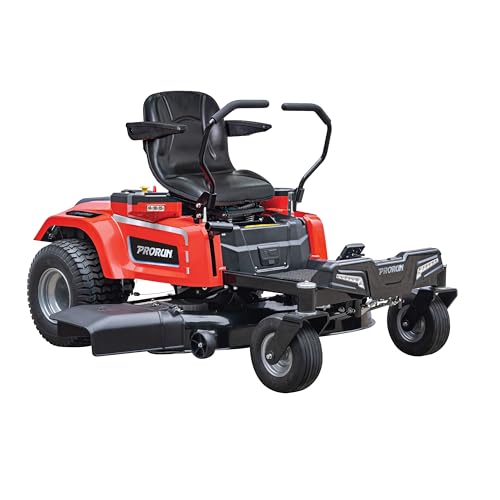
Pros
- High-efficiency brushless motors maximize power output and durability over traditional motors
- Up to 2 acres runtime with three included 10.0 Ah batteries supports substantial mowing sessions
- Zero-emission operation with gas-equivalent 20 HP power for quieter environmentally friendly use
- Six-port auto-switchover battery system provides flexible extended runtime options
- Durable 42-inch steel deck plus included mulch and towing kits add immediate functionality
Cons
- Runtime is limited to approximately 70 minutes or 2 acres which may require recharging for larger properties
- Fully battery-dependent design means performance relies on charge levels and spare battery availability
- 42-inch deck size may require more passes on expansive lawns compared to wider commercial models
The PRORUN PZT60V42 is a fully electric 60V zero-turn riding lawn mower built for residential and light commercial use. Its primary design centers on a robust 42-inch 14-gauge stamped steel twin blade deck powered by direct-drive brushless motors, giving an immediate impression of solid construction and modern battery-focused engineering. The mower arrives complete with three 10.0 Ah batteries, a charger, mulch kit, and towing kit for ready-to-work versatility.
In performance terms, four high-efficiency brushless motors deliver power equivalent to a 20 HP gas engine while producing zero emissions. The system supports up to 2.0 acres or 70 minutes of runtime, and six battery ports with auto switchover intelligently manage all PRORUN 60V battery sizes for continuous operation. A washout port on the steel deck further simplifies post-mow maintenance during real-world sessions.
Potential drawbacks include the finite 70-minute runtime window which can limit coverage on larger properties without spare batteries or recharge breaks. As a fully electric model, it also depends entirely on battery charge levels rather than continuous fuel refills, and the 42-inch deck width may demand extra passes compared with wider traditional options.
Overall the PRORUN PZT60V42 offers strong value for homeowners and small-property managers who want gas-like cutting power without emissions or noise. Those with medium-sized lawns seeking quiet efficient zero-turn performance and included accessories will benefit most from this electric mower.

Pros
- Strong 24HP FR730 engine power for demanding cutting conditions
- Wide 54-inch FAB deck reduces total mowing time
- Zero turn design delivers excellent maneuverability
- Fabricated deck supports durable everyday operation
Cons
- Sparse details beyond engine and deck leave other features unspecified
- Gas-powered FR730 engine needs regular fuel and maintenance
- Large 54-inch deck size may feel oversized on compact properties
The Husqvarna Z254F is a zero turn mower from the established Husqvarna brand in the riding lawn mowers category. It centers on a solid build that pairs a 24HP 726cc FR730 engine with a 54-inch FAB deck for straightforward residential grass care.
Performance stems directly from the listed specifications. The FR730 engine delivers the horsepower needed for steady operation across typical lawns while the wide FAB deck completes passes efficiently. Zero turn handling improves control in real yard layouts based on the model design.
Considerations arise from the limited data available. Secondary elements such as comfort features fuel capacity or extras receive no mention and the gas engine format involves routine upkeep. The large deck suits open areas better than confined spaces.
The Husqvarna Z254F provides the most value for owners of medium or large properties who want reliable engine power and a broad cutting width. Users with smaller lots or those seeking extensive accessory options should weigh the core specs carefully before purchase.
Yes — they work under ordinary lawn conditions
A push mower works if it shortens grass cleanly and leaves a surface you can maintain. That is different from being the easiest option. On a lawn that is already in a weekly or biweekly routine, a walk-behind machine is doing the same basic job as any other mower: it removes a portion of the leaf blade and leaves the rest standing.
People often ask the question after a hard afternoon, not after a typical Saturday. Thick clippings, missed strips, or a machine that feels stuck in the turf can make it seem as if push mowers do not work. Those symptoms usually mean the grass, the weather, or the setup is outside what that mower can handle in one pass—not that the design is incapable of cutting grass. When planning workspace deployment, consider the engineering criteria outlined in our jbl partybox club 120 vs sony srs xv500 guide.
An overgrown yard is a different job from regular cutting. Grass that has lodged, gone to seed, or grown far above the last cutting height asks the mower to chew through stems and a heavy mat of leaf. A push mower may still make progress, especially a rotary walk-behind, but the result is slower, rougher, and more tiring. Rescue cuts often need more than one pass, a higher first setting, and time for the lawn to recover. That is still “working,” just not in the same way as maintaining turf that never got out of hand. When planning workspace deployment, consider the engineering criteria outlined in our jbl partybox club 120 vs sony srs xv500 guide.
What people usually mean by a push mower
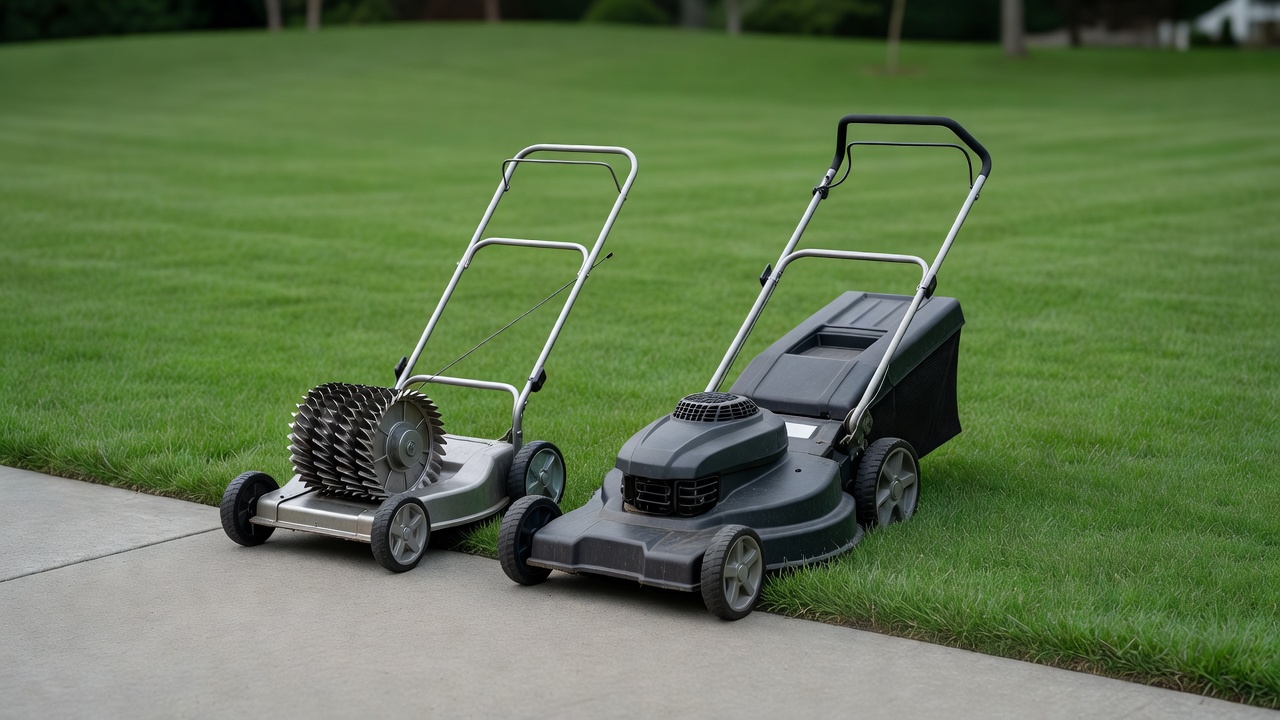
In everyday speech, push mower rarely means only a non-powered reel. It usually means any mower you walk behind: a manual reel or cylinder mower, a gas or electric rotary walk-behind, or a self-propelled walk-behind. The shared idea is that the operator stays on foot and steers from the handle, rather than sitting on the machine or sending a robot out alone. For additional operational safety benchmarks, see our published testing notes on z890 vs x870e motherboard.
A reel mower (also called a cylinder mower) uses a spinning reel of helical blades and a fixed bedknife. Many home versions have no engine. Some larger reel machines are powered, but the common backyard image is a human-powered unit you push across short, even turf.
A walk-behind mower with a rotary blade is the other common type. A horizontal blade spins under a cutting deck. Power may come from a gasoline engine or an electric motor. You still walk behind it. If the wheels are driven, it is a self-propelled mower. Self-propelled units still count as push mowers in ordinary language because you walk the path, control direction, and stay responsible for obstacles. The drive reduces pushing force; it does not turn the machine into a riding mower.
A riding mower puts the operator on a seat and is typically chosen when walking the whole property is impractical. A robotic mower works on a schedule inside a mapped or bounded area and does not need you to walk every pass. Those differences are about operator position, coverage style, and how much of the work is automated—not a ranking of quality. Lawn size matters, but there is no universal acreage line that makes one type “correct.” Slope, obstacles, storage, noise preference, and how often you can mow matter as much as square footage.
How a reel mower cuts versus a rotary walk-behind
Understanding the two cutting actions explains why height, wetness, and dull blades show up later as success or failure. For additional operational safety benchmarks, see our published testing notes on z890 vs x870e motherboard.
Reel or cylinder: a scissor-like shear
A reel mower shears grass the way scissors do. Helical blades on a spinning cylinder meet a fixed bedknife. Grass that stands in that meeting line is pinched and cut. The reel has to turn fast enough, and the blades have to meet the bedknife cleanly, or stems fold over instead of shearing. That is why a reel that is out of adjustment or dull leaves uncut tips and a chewed look even when you push hard.
Because the cut depends on grass standing into a narrow shear line, reel mowers prefer turf that is already fairly short, upright, and even. Very tall or flattened grass never reaches the bedknife in an orderly way. The machine may roll over it, push it down, or leave ridges of uncut growth. To compare alternative configurations, check our hands-on review of marshall stanmore iii vs harman kardon onyx studio 8.
Rotary walk-behind: impact and slice under a deck
A rotary walk-behind uses a high-speed horizontal blade under a cutting deck. The blade’s sharpened edges strike and slice grass as it is drawn into the deck. Airflow inside the deck lifts some of the leaf, then throws clippings into a bag, out a side discharge chute, or back down as mulch if the deck is set up for mulching.
The rotary cut is more forgiving of slightly taller or irregular grass because the blade sweeps a wide path and does not need each stem to meet a bedknife. It still depends on blade speed, sharpness, and enough space under the deck. When grass is soaked or extremely thick, the deck packs with clippings, airflow collapses, and the blade starts tearing or leaving clumps instead of slicing. Users looking for related component recommendations can explore our dyson v8 cyclone vs bissell featherweight stick breakdown.
Why sharpness and height change the result
A sharp edge parts the leaf. A dull or nicked edge bruises and shreds it. Torn tips brown quickly and make the lawn look ragged even if the overall height is right. On a reel, the same problem appears if the reel no longer meets the bedknife along its length. On a rotary, a bent blade or a clogged deck adds vibration and an uneven plane of cut.
Cutting height is the other half of the mechanism. Set too low, either type can scalp high spots: it removes so much leaf—or hits soil and thatch—that brown patches appear. Set too high relative to the last cut, a reel may not engage the grass, and a rotary may leave a shaggy top that still needs another pass. Height is not a single “correct” number for every lawn. It has to match the grass type, the season, and how long it has been since the last mowing. Before finalizing equipment decisions, refer to our comprehensive bissell crosswave hydrosteam vs shark stainforce comparison.
Lawn conditions where a push mower works well
Push mowers succeed on turf that is reasonably level, regularly maintained, and dry enough that clippings do not form wet mats. The grass should stand rather than lie in a soggy layer. Wheels should track without sinking into mud or hopping across ruts.
Both cool-season and warm-season lawns can be cut with a push mower if the height is appropriate for that grass and the machine can actually reach the leaf. Fine, upright turf is especially friendly to reel mowers. Broader-leaf or more aggressive warm-season lawns are often easier with a rotary walk-behind, but that is a tendency, not a rule about named cultivars. What matters is whether the grass is in a height range the mower can shear or slice in one or two overlapping passes.
Frequency is as important as grass type. A widely used rule of thumb—the one-third rule—is to remove no more than about one-third of the leaf height in a single mowing. It is a practical guideline, not a laboratory law. The point is that plants recover better, the mower works less hard, and the cut looks cleaner when you take a modest amount often instead of a rescue cut after a long gap. Regular mowing is easier for both reel and rotary push mowers than infrequent catch-up work.
Terrain that suits a walk-behind is open enough to push a deck through, with slopes you can walk safely and control. Gentle grades are usually fine. Tight corners, tree wells, and bed edges are often easier with a walk-behind than with a large rider, which is one reason push mowers remain common on modest home lots even when a rider could theoretically cover the open center.
Dry enough does not mean bone-dry and dusty. It means clippings fall or mulch instead of smearing on the bedknife or packing the deck. Early morning dew or a recent soaking rain is a common reason a perfectly capable mower suddenly “does not work.” Waiting for the surface to dry is often more effective than changing machines.
When a push mower struggles or fails
The same machine that looks effortless on short, dry turf can feel useless a week later. The usual limits are height, thickness, moisture, terrain, and a mismatch between mower type and the job.
Tall, wet, lodged, or very dense grass
Tall grass increases the volume of material the blade or reel must process. Wet grass adds weight and stickiness. Lodged grass lies over, so the cutting edge meets a mat instead of upright stems. Very dense turf does the same thing in a smaller space: more stems per step, more resistance, more clippings.
Results include clogging, missed strips, tearing, and much harder pushing. A rotary deck can fill until the blade is chopping a plug of wet clippings. A reel can stop turning freely or leave uncut ribbons. In both cases the lawn may look striped or chewed even though you covered every square foot.
Reel mowers and overgrown turf
A typical home reel mower is a maintenance tool, not a brush cutter. It generally needs more frequent, shorter cuts. If the lawn has grown well above the reel’s working height, the helical blades may roll the grass down instead of feeding it to the bedknife. You can sometimes recover by raising the cutting height if the mower allows it, making several light passes over days, or using a rotary machine for the first cut. Expecting a non-powered reel to reclaim a neglected meadow in one session is the most common way people conclude that “push mowers don’t work.”
Rotary walk-behinds still have a ceiling
Rotary walk-behinds tolerate slightly taller growth than most backyard reels. They still bog down. An engine or motor that labors, a deck that constantly clogs, or wheels that spin in place are signs the grass load is too high for one pass. Raising the deck for a first cut, slowing your walking pace, and discharging or bagging instead of trying to mulch a jungle are the usual workarounds. None of that is a failure of the idea of a push mower; it is a load the cutting system was not meant to swallow at once.
Slopes, ruts, obstacles, and uneven ground
Uneven ground changes the plane of the deck or reel. High spots get scalped; low spots are skipped. Ruts and holes make the machine lurch, which shows up as waves or gouges. Obstacles force constant lifting, reversing, or narrow passes that are tiring even when the grass itself is easy.
Slopes add a different problem: control and effort. Walking a non-self-propelled mower uphill through thick turf is hard work. Coming downhill, the machine can run ahead of you. There is no single safe slope angle that applies to every person and every mower. If you cannot keep stable footing, keep the handle under control, and keep bystanders out of the discharge path, a walk-behind is the wrong tool for that slope—or that day.
How to use a push mower so the cut actually works
Most “it doesn’t cut” complaints improve with setup and technique rather than a different category of machine.
Height, blades, and dryness
- Set a sensible cutting height for the grass and the season, then raise it if the lawn has grown too long for a single pass.
- Keep rotary blades sharp and undamaged. Keep a reel meeting the bedknife cleanly, following the manufacturer’s adjustment method in the owner’s manual.
- Mow when the grass is dry enough that clippings do not smear or clump.
- Do not try to remove far more than about one-third of the leaf in one pass if you can avoid it. Take a higher first cut, then return after the lawn stands back up.
If you are unsure how to inspect or service the cutting parts, stop and use the manual—or a qualified shop. Blade work involves sharp edges and, on powered mowers, stored energy in the starting system. This article will not walk through blade removal or fuel-system repairs.
Pattern and overlap
Walk at a pace the machine can process. Overlap each pass enough that the wheels or the uncut edge do not leave a thin ridge. Change direction from time to time so you are not always rolling the same wheel marks into the same soil. Around edges, a slower pass is cleaner than a fast one that leans the deck and scalps the high side.
On a first recovery cut, consider a higher pass in one direction and a slightly lower pass later, rather than forcing the lowest setting through a thick stand. Let the grass recover between those passes if it looks shocked or pale.
Bag, mulch, or side-discharge
These options change how clippings are handled. They do not replace sharp blades or a sensible height.
- Bagging collects clippings for cleanup and can help when the lawn is a bit long or you want a groomed look. Bags fill fast in heavy growth and add weight you have to push.
- Mulching returns finely cut pieces to the turf. It works best when growth is modest and dry enough to recut. In wet or tall grass, mulching is a common path to clumps and a packed deck.
- Side discharge throws clippings out of the deck so the machine can keep moving through heavier growth. You trade a cleaner deck for windrows you may need to disperse later.
Choose the mode that matches today’s grass load, not a single habit for the whole year.
When a self-propelled drive helps
A self-propelled drive reduces the force you apply on slopes, in thick turf, and over long sessions. It does not change cutting physics. A dull blade still tears. A clogged deck still clumps. Wet, overgrown grass still overloads the cutting chamber. Use the drive as an effort aid, and still match height, sharpness, and moisture to the lawn.
Problems that make it seem like the mower does not work
When the lawn looks worse after you finish, the cause is usually visible if you stop and look at the cut, the deck, and the grass condition.
Ragged, striped, or scalped turf
A ragged, gray-green finish often means dull or damaged cutting edges, or a reel that is not meeting the bedknife. Stripes of taller grass can mean you walked too fast, did not overlap, or the blade is not cutting across its full path. Scalped high spots usually mean the cutting height is too low for the unevenness of the ground, or a wheel is set differently from the others. Check that all height adjusters are on the same notch and that wheels roll freely.
Clumps, windrows, and a clogged deck
Clumps form when clippings are too wet or too bulky to exit the deck. Mulching in those conditions makes it worse. Stop the machine completely using the method in the owner’s manual, wait for all motion to end, and only then clear the deck if the manual says it is safe to do so. Never reach under a running deck or into a discharge opening while the blade can still turn. After clearing, raise the height, switch to discharge or bagging, and wait for drier grass if clumps return immediately.
Hard pushing, stalling, or a reel that will not turn freely
Hard pushing is normal in thick, wet, or uphill turf on a non-powered or non-self-propelled machine. It is a warning sign if the mower used to roll easily on the same lawn. Look for a packed deck, grass wrapped around the blade or axle, soft ground that sinks the wheels, or a reel jammed with debris. A powered rotary that stalls in the grass is overloaded or not running properly; treat fuel, electrical, and engine issues as shop work unless the manual gives a simple owner check you are comfortable doing.
If a reel leaves uncut tips even after you clean it, the reel-to-bedknife relationship may be off. Follow only the adjustment procedure in that mower’s manual. Do not invent gap measurements or force the reel against the bedknife.
Safety and physical limits
Mower blades can cut hands and feet, and they can throw stones, sticks, and wire. Keep bystanders and pets well clear of the machine and the discharge path. Never reach under a running deck. Do not pull a running mower toward your feet. Stop the blade or engine and wait for all motion to end before crossing gravel, clearing a clog, or tipping the machine—then follow the manual for how to tip it so fuel and oil stay where they belong.
Before each use, do a short walk-around: pick up debris, confirm guards and the discharge chute or bag are in place, check that handles and controls work, and look at the cutting area only after the machine is fully stopped. Read the labels on that mower. Features differ, and a general article cannot replace the instructions written for your model.
Pushing a non-powered or non-self-propelled mower takes more physical effort, especially on slopes, in heat, and in thick turf. Long sessions add strain. People with limited stamina, balance issues, or jobs that already fatigue the same muscles may find a self-propelled walk-behind or a different mower type more practical. That is a fit question, not a moral one. Stop if you feel dizzy, overheated, or exhausted. This is not medical advice; if you have health concerns about yard work, ask a clinician who knows your situation.
When another mower type is a better fit
A push mower is the wrong primary tool when walking the property is unsafe or unrealistic, not merely when the grass is “a bit long this week.” Use criteria, not a best-of list.
- Lawn size and time. A large, open lawn can still be cut with a walk-behind if you have the time and stamina. When coverage regularly exceeds what you can finish in good conditions, a riding or zero-turn machine becomes more practical for the open areas. Keep a walk-behind or trimmer for edges if the rider cannot reach them cleanly.
- Slope and footing. If you cannot walk the grade with stable control, do not treat a heavier walk-behind as the answer. Some slopes are better left to equipment designed for that terrain and an operator who is trained for it—or to a different landscape treatment.
- Obstacles and finish. Tight yards with trees, beds, and furniture often favor a compact walk-behind. People who want a very short, even, scissor-like finish on already short turf often prefer a reel mower and accept more frequent mowing. People who need to handle mixed height and occasional catch-up cuts usually prefer a rotary walk-behind.
- Noise, emissions, storage, and power. Electric walk-behinds and reels appeal when storage is tight or exhaust and engine noise are unwelcome. Gasoline rotaries remain common where runtime and cutting load are the priority. Check any local rules that apply to you; they vary and are not universal.
- Automation. A robotic mower can maintain a bounded lawn with frequent light cuts if the yard layout, boundary setup, and your tolerance for a machine working unattended all fit. It does not replace judgment about obstacles, pets, and steep or cluttered ground.
- The user’s ability to push. Self-propelled helps. It does not help enough if you cannot safely operate the handle, stop the blade, or recover the machine on a slope. Choose the type you can control for the whole job.
In short: push mowers work. They work best as regular maintenance tools on turf that is kept in a workable height range, with sharp cutting parts and conditions dry enough for clippings to move. When the lawn, the slope, or the operator is outside those conditions, the honest answer is not that push mowers are a myth—it is that this yard needs a different schedule, a different cutting action, or a different way to cover the ground.
Frequently Asked Questions About Do Push Mowers Work
Do I need a powered mower for a small yard?
Not always. A manual reel can maintain a small, even lawn that is already kept short. If the grass regularly gets tall, stays wet, or includes rough patches, a rotary walk-behind is usually easier even on a modest lot.
Can I use a push mower after skipping several weeks?
Often, but treat it as a recovery job. Raise the cutting height, avoid mulching a soaked mass, and plan more than one pass over time. A home reel mower may not engage very tall grass at all until a rotary cut brings the height down.
Is a self-propelled mower still a push mower?
In ordinary usage, yes. You still walk behind it. The drive assists the wheels; you still steer, overlap, and keep people away from the blade and discharge.
Mechanical safety standards, operational tolerances, and protective gear guidelines align with benchmark specifications established by the American National Standards Institute (ANSI).
If you require additional technical details and buying criteria, review our analysis of how to put in trimmer line.
Why does the lawn look worse right after mowing?
Torn tips from dull blades, clumps from wet grass, and scalp marks from a low setting on uneven ground are the usual reasons. Let the surface dry, inspect the cutting edges and deck (only with the machine fully stopped), and raise the height before assuming the mower type is wrong.









