

Quick Answer: How To Select A Lawn Mower?
Select a lawn mower by matching it to your lawn and your constraints, not by hunting for one best model. Note size, shape, slope, obstacles, mowing frequency, and what you can store, lift, fuel or charge, and maintain. Then choose a type, a power source, and only features that change the work—cutting width, height control, clipping handling, and propulsion. Favor…

Pros
- Powerful 80V brushless motor delivers 32HP gas-equivalent performance with quiet fume-free operation and no engine maintenance.
- Complete kit includes four 6.0Ah batteries and 600W charger for substantial runtime up to 1.5 acres.
- SmartCut technology and 42-inch heavy-duty steel deck ensure consistent cuts without bogging in tough conditions.
- Versatile towing up to 350 lbs and optional cargo hauling plus comfort features like high-back seat and LED lights.
- Strong 4-year limited warranty and full compatibility with the Greenworks 80V tool ecosystem.
Cons
- Rear utility cargo bed for 200 lb hauling is sold separately and not included in the kit.
- Runtime of up to 1.5 acres varies with conditions and may require recharging or battery swaps on larger properties.
- As a fully cordless model continuous operation depends on battery levels unlike gas engines with unlimited runtime.
The Greenworks 80V 42" CrossoverT Cordless Riding Lawn Tractor is a ready-to-mow zero-emission tractor designed for homeowners managing medium to large lawns. It features a reinforced 42-inch stamped steel deck of 12-gauge construction along with premium comfort elements such as a high-back padded seat with foldable armrests. The overall build emphasizes durability and user convenience right out of the box with the included battery and charger set.
Performance centers on the 80V TruBrushless motor that provides 32HP gas-equivalent power with instant torque and quiet fume-free operation. SmartCut technology senses grass conditions and automatically adjusts power to maintain a consistent cut even in tall thick or wet areas. The four 6.0Ah batteries support runtime for up to 1.5 acres depending on conditions while dual LED headlights and a 7-position deck height range from 1.5" to 4.5" add practicality. Front and rear attachments further allow towing up to 350 lbs for added yard utility.
Key considerations include that the rear utility storage bin capable of hauling 200 lbs is sold separately so full cargo functionality requires an extra purchase. Runtime remains condition-dependent and may fall short for properties significantly larger than 1.5 acres without using the 600W charger or swapping batteries. The cordless design prioritizes ease and low maintenance but trades off the continuous runtime of traditional gas models.
This tractor delivers strong value for eco-conscious owners of residential properties who want gas-like power without the emissions noise or upkeep. It suits those who already use or plan to expand into the Greenworks 80V family of tools and who appreciate the 4-year limited warranty. Users with exceptionally large or commercial-scale lawns should evaluate battery logistics carefully before purchase.

Pros
- Delivers strong 21 horsepower equivalent power comparable to gas riding mowers.
- Provides up to 1.5 acres of runtime on a full charge with the six included batteries.
- Features low-maintenance dual brushless motors without belts for greater durability.
- Offers versatile 12-position cutting height adjustment from 1.5 to 4.5 inches.
- Includes digital controls for blade settings, drive speeds, and cruise control.
Cons
- Limited to 1.5 acres of cutting per charge without purchasing additional batteries for bigger lawns.
- Requires recharging time for the six 56V batteries after each use session.
- Relies solely on battery power with no hybrid or gas backup option for extended operation.
The EGO Power+ TR4204 is a cordless electric riding lawn mower built as a modern tractor alternative for residential use. It features a robust 42-inch stamped steel deck and arrives ready to go with six 56V 6.0Ah batteries plus a charger, creating an immediate impression of convenience and solid construction free from gas engine complexity.
Performance shines through its equivalent 21 horsepower output and top speed of 6 MPH, allowing efficient coverage of up to 1.5 acres on a single charge. Dual brushless cutting motors operate without belts for added durability and less upkeep, while the digital display lets users select three blade settings, three drive speeds, and cruise control. The 12 adjustable heights ranging from 1.5 to 4.5 inches combined with anti-scalp wheels deliver precise results across varied terrain.
Drawbacks center on battery dependency, as larger properties beyond 1.5 acres require extra batteries and recharging intervals can interrupt workflow. The fully electric design eliminates fuel storage needs but demands access to power sources between sessions.
This mower suits homeowners with medium to large yards who value quiet, emission-free operation and reduced maintenance. Those seeking expandable battery capacity for bigger areas will find the EGO Power+ TR4204 a strong long-term investment in cordless lawn care.
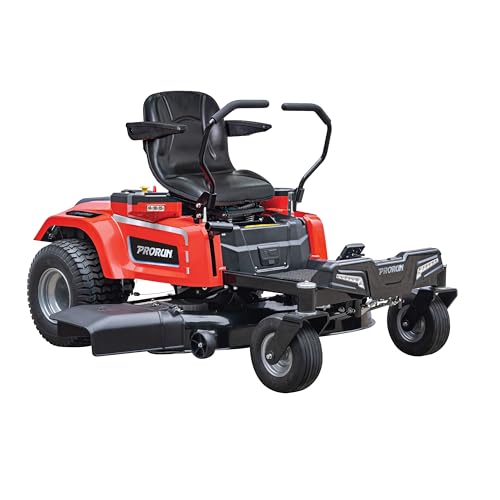
Pros
- High-efficiency brushless motors maximize power output and durability over traditional motors
- Up to 2 acres runtime with three included 10.0 Ah batteries supports substantial mowing sessions
- Zero-emission operation with gas-equivalent 20 HP power for quieter environmentally friendly use
- Six-port auto-switchover battery system provides flexible extended runtime options
- Durable 42-inch steel deck plus included mulch and towing kits add immediate functionality
Cons
- Runtime is limited to approximately 70 minutes or 2 acres which may require recharging for larger properties
- Fully battery-dependent design means performance relies on charge levels and spare battery availability
- 42-inch deck size may require more passes on expansive lawns compared to wider commercial models
The PRORUN PZT60V42 is a fully electric 60V zero-turn riding lawn mower built for residential and light commercial use. Its primary design centers on a robust 42-inch 14-gauge stamped steel twin blade deck powered by direct-drive brushless motors, giving an immediate impression of solid construction and modern battery-focused engineering. The mower arrives complete with three 10.0 Ah batteries, a charger, mulch kit, and towing kit for ready-to-work versatility.
In performance terms, four high-efficiency brushless motors deliver power equivalent to a 20 HP gas engine while producing zero emissions. The system supports up to 2.0 acres or 70 minutes of runtime, and six battery ports with auto switchover intelligently manage all PRORUN 60V battery sizes for continuous operation. A washout port on the steel deck further simplifies post-mow maintenance during real-world sessions.
Potential drawbacks include the finite 70-minute runtime window which can limit coverage on larger properties without spare batteries or recharge breaks. As a fully electric model, it also depends entirely on battery charge levels rather than continuous fuel refills, and the 42-inch deck width may demand extra passes compared with wider traditional options.
Overall the PRORUN PZT60V42 offers strong value for homeowners and small-property managers who want gas-like cutting power without emissions or noise. Those with medium-sized lawns seeking quiet efficient zero-turn performance and included accessories will benefit most from this electric mower.

Pros
- Strong 24HP FR730 engine power for demanding cutting conditions
- Wide 54-inch FAB deck reduces total mowing time
- Zero turn design delivers excellent maneuverability
- Fabricated deck supports durable everyday operation
Cons
- Sparse details beyond engine and deck leave other features unspecified
- Gas-powered FR730 engine needs regular fuel and maintenance
- Large 54-inch deck size may feel oversized on compact properties
The Husqvarna Z254F is a zero turn mower from the established Husqvarna brand in the riding lawn mowers category. It centers on a solid build that pairs a 24HP 726cc FR730 engine with a 54-inch FAB deck for straightforward residential grass care.
Performance stems directly from the listed specifications. The FR730 engine delivers the horsepower needed for steady operation across typical lawns while the wide FAB deck completes passes efficiently. Zero turn handling improves control in real yard layouts based on the model design.
Considerations arise from the limited data available. Secondary elements such as comfort features fuel capacity or extras receive no mention and the gas engine format involves routine upkeep. The large deck suits open areas better than confined spaces.
The Husqvarna Z254F provides the most value for owners of medium or large properties who want reliable engine power and a broad cutting width. Users with smaller lots or those seeking extensive accessory options should weigh the core specs carefully before purchase.
Start with the lawn and the person using the mower
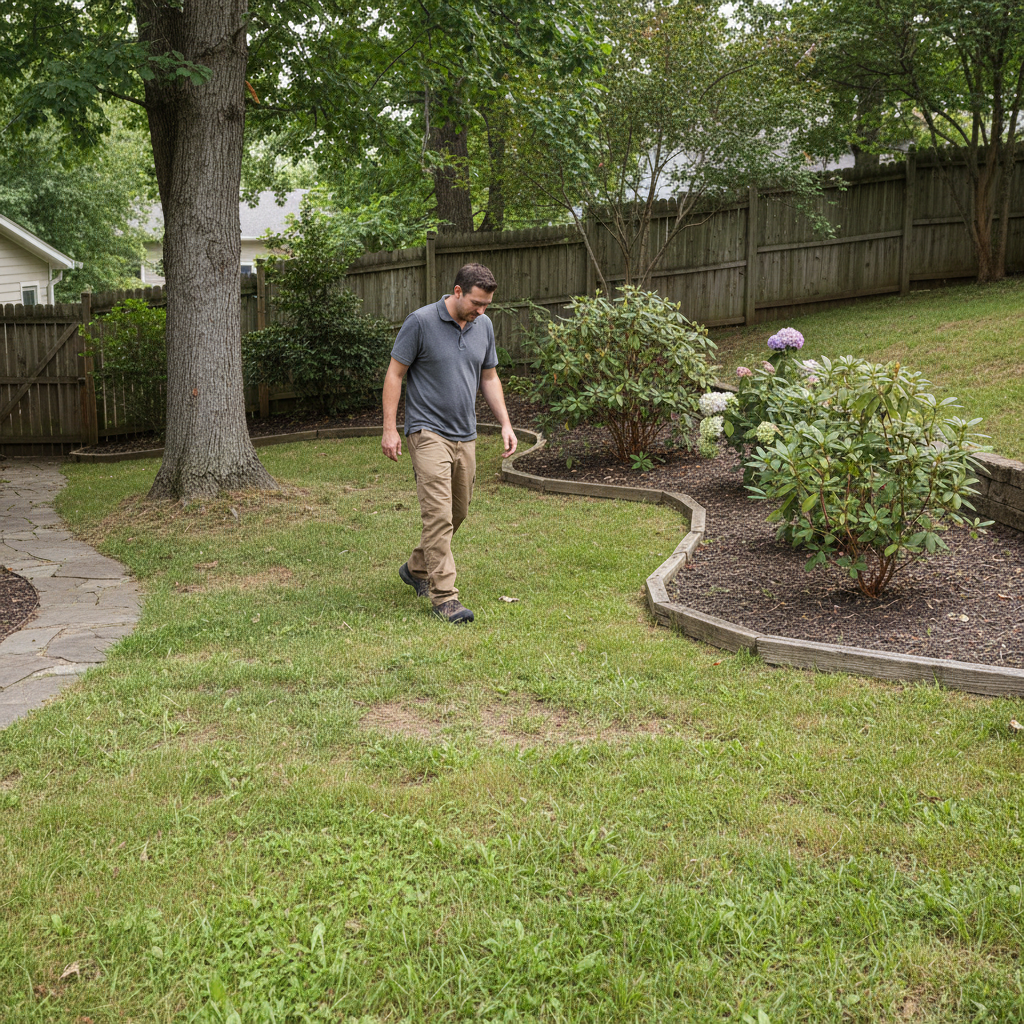
A residential lawn mower is a tool for a specific patch of grass and a specific person. The useful first step is not a feature list. It is a short, honest inventory of the yard and of the person who will start, push, steer, empty, charge, or service the machine. If those two pictures are vague, later choices about type and power become guesswork.
Walk the property as if you were already mowing. Notice overall size, but also shape. A long, open rectangle is a different job from the same area broken into side yards, a narrow strip beside a driveway, and a backyard cut up by beds. Openness matters as much as area. Trees, shrubs, play equipment, fences, retaining walls, and garden edges force extra turns and often leave grass that a wide deck cannot reach. Gates and side paths set a hard limit: if the machine cannot fit through the opening you actually use, the rest of the specification is academic.
Look at slope and surface quality next. A gentle, even grade is easier for almost any walk-behind or riding machine. Steep banks, sudden drops, wet clay, ruts, and hidden roots change both effort and control. On mixed yards, plan for the harder part rather than the average. A flat front lawn does not cancel a steep side yard or a tight, obstacle-filled back. The machine that is merely adequate on the easy section and unsafe or clumsy on the hard section is the wrong match.
Mowing habit belongs in the same checklist. Grass that is cut often and never allowed to get tall is a lighter job than grass that is left until it is thick, wet, or lodged. Thick growth and damp conditions ask more of the blade, the deck, and the power source. Uneven ground also changes how you set cutting height: you will want enough range to leave grass longer over humps instead of scalping them. If you routinely let the lawn get away from you, collection or discharge choices matter more, because a deck packed with wet clippings is harder to push and easier to stall.
Then inventory the user, not as a stereotype but as a set of limits:
- Strength and balance: starting a pull-cord engine, lifting a deck over a curb, dumping a full bag, and controlling a machine on a slope are different tasks from walking on flat turf.
- Time and patience: some owners want one uninterrupted session; others prefer shorter sessions and can recharge or swap a battery between them.
- Hearing and neighbors: noise tolerance is a real constraint even when no ordinance is written down.
- Storage and lifting: a garage bay, a shed door height, stairs, and whether anyone can lift the machine onto a hook or into a vehicle all filter the field.
- Willingness to maintain: engine care, blade sharpening, deck cleaning, and battery charging are ownership, not extras.
Local site limits should be noted without treating them as universal rules. You may or may not have a convenient outdoor outlet. You may or may not want gasoline stored at home. You may share a driveway with children or pets at the same hour you mow. Apartment-style storage, HOA expectations, and neighborhood noise customs vary; check those locally instead of assuming a single standard. The point of this intake is only to give later decisions a real surface to land on.
Match a residential mower type to the job
Household machines fall into a few familiar types. Each trades coverage, effort, storage, and setup. None is universally right. The common default on many residential lots is a walk-behind rotary mower: a cutting deck with a horizontal spinning blade, pushed or driven by the user. From that baseline, you add drive assistance, a seat, automation, or a completely different cutting action.
Push mowers and self-propelled walk-behinds
A push mower requires you to supply forward motion. That keeps the machine simpler and often lighter, which helps in tight turns and when you need to pull the deck backward out of a corner. It also means the entire load of the deck, the bag if you use one, and any slope is on your legs and arms. On a small, flat, regularly cut lawn, that can be acceptable exercise rather than a problem.
A self-propelled mower adds a drive system so the wheels help move the machine. Self-propulsion matters when the lawn is large enough that walking behind a dead weight becomes the main fatigue, when you bag clippings, or when you regularly work uphill. It does not remove the need to steer, stop, and keep the deck aligned. Drive systems add weight, parts, and something else to maintain. If your yard is small, flat, and open, the extra mechanism may be unused complexity. If you already struggle to keep a bagger moving through thick grass, drive assistance is one of the few features that changes the physical job.
Riding mowers on large, open lawns
A riding mower or lawn-tractor-style machine reduces walking on a large, relatively open lawn. Sitting down and covering more ground per pass can cut fatigue when the turf is wide and the obstacles are few. The trade is almost always maneuverability and storage. Tight trees, island beds, fences, and narrow gates turn a rider into a machine that needs a second tool for edges and leftover patches. Riders also need a place to park that is dry, reasonably secure, and large enough for the deck and any collection attachment. On a modest or highly broken-up lot, a rider can be clumsier and less necessary than a capable walk-behind.
Robotic mowers and their setup limits
A robotic mower can take over frequent, light cutting on a suitable lawn. The usual idea is many shallow passes instead of one weekly workout. That only works if the lawn is reasonably consistent: a defined area, grass that is not chronically overgrown, and a layout the navigation system can handle after you install a boundary or equivalent guidance. Installation is part of the product, not an optional extra. Slopes, dense obstacle fields, irregular islands, and tall neglected grass are common reasons a robot is a poor match or still needs a conventional mower and a trimmer. Treat robotic mowing as labor reduction on a prepared, regularly maintained lawn, not as a promise to replace every other tool.
Reel mowers versus rotary mowers
Most household rotary mowers cut with a horizontal blade under a deck. A reel mower uses a rotating cylindrical reel against a bedknife, more like scissors than a spinning knife. That scissor-like cut is usually discussed for smaller, flatter turf that is kept short and cut often. Reel mowers are generally a poor fit for rough ground, very tall grass, heavy weeds, or lawns that go long between cuttings. If your grass is uneven, infrequently cut, or mixed with coarse growth, a rotary deck is the more typical residential match.
Why a smaller machine can win
Width looks like productivity until you count the extra passes caused by backing up, lifting the deck, and trimming what the machine could not thread. Around trees, beds, fences, and gates, a narrower, more maneuverable walk-behind often finishes sooner and with less frustration than a wide deck that cannot take the line you need. Choose type for the geometry of the job. Coverage matters on open turf; control matters everywhere else.
Compare gas, corded electric, and battery power
Power source is a use-pattern decision. It changes how you start, how long you can work without stopping, what you store, what you hear, and what you maintain. Marketing labels do not settle that. Your outlet access, fuel comfort, session length, and lawn demand do.
Gasoline mowers
A gas mower typically supports longer uninterrupted work and can keep cutting when grass is thick, wet, or tall, because you can refuel and continue. That flexibility is the main reason gasoline remains common on larger or more demanding residential lawns. The ownership cost is not only fuel. You handle gasoline, live with exhaust and more noise than most electric options, and accept engine maintenance: seasonal storage, air and fuel system care, and the habit of keeping the machine ready after it sits. Fuel should be stored and poured outdoors, in approved containers, away from ignition sources, following the product labels. Spills, stale fuel, and neglected engines are ordinary reasons a gas mower becomes unreliable. If you do not want that burden, do not buy the runtime flexibility and then hope the engine will look after itself.
Corded electric mowers
A corded electric mower avoids gasoline, exhaust, and most engine tasks. You plug in, start more simply, and mow until you choose to stop—subject to the cord. The cord is the real limit. Outlet location, safe outdoor-rated extension practice as directed by the mower and cord manufacturers, and the shape of the lawn decide whether this is convenient or miserable. On an open rectangle near an outlet, a cord can be manageable. Around trees, beds, corners, and multiple gates, you spend attention on keeping the cord behind the machine and out of the blade path. That is a safety issue, not a minor annoyance. If you cannot keep the cord clear, or you lack a suitable outlet, corded power is the wrong source no matter how little maintenance it needs.
Battery mowers
A battery mower avoids both gasoline and a trailing cord. Many owners also find these machines quieter and easier to start. Work stops when the pack is depleted, and charging takes time you may not have in the middle of a session. Spare packs can extend a job, but they add cost, storage, and another thing to keep charged. Without quoting runtimes that vary by grass, height, and pack condition, the honest rule is qualitative: battery power fits lawns and habits that finish within a charge, or owners who can pause and recharge or swap. Very large lawns, very thick growth, or a habit of letting grass get tall can outrun a single pack. If that describes you and you cannot add charging time or extra packs, look at gasoline or at a different mowing schedule rather than assuming any battery deck will behave like a refuelable engine.
Do not treat voltage names, pack labels, or advertised minutes as proof of capability on your grass. Those figures are not supplied here and are not interchangeable across brands. Compare power sources by how you actually work: one long session versus several short ones, access to fuel versus access to charging, and tolerance for noise and exhaust. Skip electrical wiring changes and fuel-system modifications; use the machine as designed and have a qualified technician handle repairs.
Choose features that change the work
After type and power, only a short list of features reliably changes cutting quality, effort, and cleanup. Everything else is easier to treat as optional comfort. Buy the functions you will use every mowing, not attachments that sound complete in a product photo.
Cutting-deck width versus the yard’s bottlenecks
The cutting deck is the housing over the blade or blades. A wider deck covers more ground per pass on open turf. It is also harder to aim through gates, between trees, and along beds. Measure the openings and the tightest working alleys you actually use, and leave margin for your hands, the wheels, and imperfect steering. There is no universal best width. A deck that is slightly narrow for the open front lawn but honest about the side-yard pinch is usually more livable than a wide deck that forces constant lifting and reversing.
Cutting-height control
Easy, repeatable cutting-height adjustment is one of the few controls that protects the lawn. Leaving grass a bit longer in heat, drought, or on uneven ground reduces scalp marks and stress. Lowering the cut after the lawn is healthy and even is a separate decision. If height changes require tools, guesswork, or a fight with rusted levers, you will leave the deck where it last sat—often too low. Prefer a system you will actually use, with enough range for the high and low spots you already noticed on the walkthrough.
Mulching, bagging, and side discharge
These are three ways to handle clippings, not three grades of quality:
- Mulching recuts clippings and returns them to the lawn. It can reduce raking when you mow often enough that the pieces are small and dry enough to disappear. It is less helpful when grass is long, wet, or so thick that the deck clogs.
- Bagging collects clippings for disposal or composting and can leave a tidier surface. It adds weight, emptying stops, and more pushing effort. It is useful when you want clippings off the lawn or off a walkway, not automatically better for turf.
- Side discharge ejects clippings from the deck quickly. That helps when volume is high and you need the machine to keep moving. It can leave rows or clumps you later have to deal with, especially if you discharge onto a path or into a bed.
Many rotary decks support more than one of these modes with a plug, a bag, or a chute. Choose based on how often you mow and how you want the lawn to look when you stop, not on the idea that one mode is always correct. Switching modes should be simple enough that you will do it when the grass changes.
Self-propulsion as a feature, not a default
On a walk-behind, self-propulsion is worth extra weight and mechanical care when pushing is the limiting factor: hills, large area, or a heavy bagger. It is less valuable on a tiny flat lot where you already turn more than you travel in a straight line. Variable speed helps match your walking pace; a single aggressive speed can feel like the machine is dragging you. Remember that drive systems need cleaning and occasional service. If you will not maintain them, a simpler push mower you can actually control may be the more honest choice.
Convenience versus safety-related design
Folding handles, wash ports, and extra cup-style holders are convenience. They can matter for storage, but they do not cut grass. Safety-related design is different. Blade-stop or operator-presence systems that shut the blade down when you release a bail or leave the seat exist to reduce injury if you leave the controls. Do not disable them. Do not treat a missing guard, a defeated interlock, or a homemade chute as a feature. If a used machine has been altered, have a qualified service technician inspect it or pass it by. Lights, cruise-like speed holds, and extra collection kits are optional; keeping bystanders, debris, and body parts away from a spinning blade is not.
Plan for storage, maintenance, noise, and safe use
Ownership starts after the first cut. Storage space, seasonal prep, noise, and known hazard categories should be selection criteria, not surprises in week two.
Storage, lifting, and seasonal prep
Walk-behind mowers still need a dry, reasonably level place and a path to get there. Folding handles help in a crowded garage; they do not shrink a wide deck. Battery models need a place to charge packs according to the manufacturer, usually indoors and away from extremes the manual warns against. Gas models need safe fuel storage and a plan for the off-season so stale fuel and a gummed carburetor do not become the spring project. Riding mowers need the most floor space and a door they can actually pass through. If you must lift a machine onto a rack or into a vehicle, try the lift in person or accept that you need a lighter type. Do not assume you will “just hoist it” after purchase.
Routine care in general terms
A mower stays usable when the underside of the deck is not packed with debris, the blade is intact and reasonably sharp, and the power system is kept within its normal design: clean air intake on engines, charged and stored packs on battery units, undamaged cords on electric models. Blade work is sharp-object work. If you are not equipped to remove, sharpen, balance, and refit a blade as the manual describes, use a qualified shop. The same applies to engine repair, electrical faults, and anything that involves safety interlocks. General cleanliness and following the model manual are the conservative baseline; invented inspection calendars and homemade modifications are not.
Hazard categories to treat as part of the choice
Lawn mowers injure people with blades and with objects thrown from the deck. Clear the lawn of sticks, stones, wire, and toys before you start. Keep children, bystanders, and pets well away while the blade is turning. Wear substantial closed footwear and eye protection as the manual recommends. Never reach under a deck or into the discharge opening while the machine can start or the blade can spin.
Slopes add loss of control and, on riders, rollover risk. Mow in the pattern the manufacturer specifies for your machine type, avoid wet or unstable banks, and do not take a rider where the manual says not to. If a slope already felt questionable on your walkthrough, that is a reason to choose a more controllable walk-behind, to change how you maintain that bank, or to hire the job—not a reason to improvise.
Gasoline adds spills, fire, and exhaust. Fuel outdoors, cool the engine before opening a tank if the manual says to wait, and keep fuel away from ignition sources. Corded machines add electrical and entanglement hazards: keep the cord behind you and out of the cutting path, and do not use damaged cords. Do not disable guards to “make it easier.” If a procedure is not in the manufacturer manual, it is not part of selecting or owning the mower.
Noise is both courtesy and, in some places, a local rule. Check local expectations rather than assuming a number. If quiet hours or close neighbors matter to you, that can reasonably push the choice toward a battery or corded electric walk-behind, provided those sources otherwise fit the lawn.
A practical sequence for making the choice
Turn the criteria into an order so you are not sold attachments you will not use. A workable sequence is:
- Write down lawn and user constraints, including the hardest slope, the tightest gate, storage, and whether you will maintain an engine or manage batteries.
- Lock a residential type: push, self-propelled walk-behind, rider, robotic, or reel. If constraints conflict, favor the harder condition.
- Choose a power source from session length, outlet access, fuel comfort, noise, and upkeep—not from a label.
- Set cutting width against real openings and obstacle density; set height adjustment as a must-use control.
- Decide clipping handling: mulch, bag, side discharge, or a deck that can switch without a fight.
- Add self-propulsion only if pushing effort is a real limit.
- Check storage, starting method, turning behavior, and safety fit before you commit.
Take those notes to a store or a product page. Measure gate width and shed height at home. Photograph the worst obstacles. Write whether two people will share the machine and whether either of them cannot pull a cord or lift a bag. Shared users argue for simpler starting and controls that both people can manage. Limited storage argues against a rider even if the front lawn is large. Mixed conditions argue for the machine that remains controllable on the steep or tight section, plus a string trimmer or similar edge tool for what no deck finishes cleanly.
Some things you can decide at home: type, power family, whether you bag, and whether a robot’s setup burden is acceptable. Other things are easier in person: starting effort, handle height, how the drive engages, turning radius beside a display obstacle, and whether you can lift the rear to set it on end if the design allows. Following this sequence does not guarantee a perfect cut or a particular lifespan. It only keeps the purchase attached to the lawn you have.
What this guide cannot decide for you
This article cannot name a winning model, a correct deck width in inches, or a lawn-size cutoff that applies to every household. Lawn size, shape, slope, grass type, growth rate, mowing frequency, user mobility, budget, noise tolerance, and local fuel or battery constraints were not specified. Neighbor advice and advertised runtimes are starting points, not proof. Grass height, wetness, and pack condition change electric endurance; marketing copy does not mow your side yard.
A landscaper, a dealer walkaround, or a different tool is the better next step when the lawn is too steep or too broken up for a machine you can operate safely, when mobility limits make any walk-behind unrealistic, or when you would rather not own fuel, batteries, or a winterized engine at all. A trimmer, a manual reel on a tiny flat patch, or a mowing service can be the rational answer. Commercial and agricultural equipment is outside this guide.
Check local noise, fuel-storage, and any community rules yourself. Read the manufacturer manual for the machine you actually buy, and use qualified service for blade, engine, and electrical work. The sound selection is the one that fits the harder parts of your yard and the person who will live with the upkeep—not the one that claims to be best for everyone.









