

Quick Answer: What Does Brushless Mean On A Lawn Mower?
On a lawn mower, “brushless” almost always refers to a brushless electric motor, not the blades, deck, or engine fuel type. A brushless motor uses electronics to switch current instead of carbon brushes sliding on a commutator, which removes one common wear part and is why the word appears on many cordless and electric mower labels. It describes motor design…

Pros
- Powerful 80V brushless motor delivers 32HP gas-equivalent performance with quiet fume-free operation and no engine maintenance.
- Complete kit includes four 6.0Ah batteries and 600W charger for substantial runtime up to 1.5 acres.
- SmartCut technology and 42-inch heavy-duty steel deck ensure consistent cuts without bogging in tough conditions.
- Versatile towing up to 350 lbs and optional cargo hauling plus comfort features like high-back seat and LED lights.
- Strong 4-year limited warranty and full compatibility with the Greenworks 80V tool ecosystem.
Cons
- Rear utility cargo bed for 200 lb hauling is sold separately and not included in the kit.
- Runtime of up to 1.5 acres varies with conditions and may require recharging or battery swaps on larger properties.
- As a fully cordless model continuous operation depends on battery levels unlike gas engines with unlimited runtime.
The Greenworks 80V 42" CrossoverT Cordless Riding Lawn Tractor is a ready-to-mow zero-emission tractor designed for homeowners managing medium to large lawns. It features a reinforced 42-inch stamped steel deck of 12-gauge construction along with premium comfort elements such as a high-back padded seat with foldable armrests. The overall build emphasizes durability and user convenience right out of the box with the included battery and charger set.
Performance centers on the 80V TruBrushless motor that provides 32HP gas-equivalent power with instant torque and quiet fume-free operation. SmartCut technology senses grass conditions and automatically adjusts power to maintain a consistent cut even in tall thick or wet areas. The four 6.0Ah batteries support runtime for up to 1.5 acres depending on conditions while dual LED headlights and a 7-position deck height range from 1.5" to 4.5" add practicality. Front and rear attachments further allow towing up to 350 lbs for added yard utility.
Key considerations include that the rear utility storage bin capable of hauling 200 lbs is sold separately so full cargo functionality requires an extra purchase. Runtime remains condition-dependent and may fall short for properties significantly larger than 1.5 acres without using the 600W charger or swapping batteries. The cordless design prioritizes ease and low maintenance but trades off the continuous runtime of traditional gas models.
This tractor delivers strong value for eco-conscious owners of residential properties who want gas-like power without the emissions noise or upkeep. It suits those who already use or plan to expand into the Greenworks 80V family of tools and who appreciate the 4-year limited warranty. Users with exceptionally large or commercial-scale lawns should evaluate battery logistics carefully before purchase.

Pros
- Delivers strong 21 horsepower equivalent power comparable to gas riding mowers.
- Provides up to 1.5 acres of runtime on a full charge with the six included batteries.
- Features low-maintenance dual brushless motors without belts for greater durability.
- Offers versatile 12-position cutting height adjustment from 1.5 to 4.5 inches.
- Includes digital controls for blade settings, drive speeds, and cruise control.
Cons
- Limited to 1.5 acres of cutting per charge without purchasing additional batteries for bigger lawns.
- Requires recharging time for the six 56V batteries after each use session.
- Relies solely on battery power with no hybrid or gas backup option for extended operation.
The EGO Power+ TR4204 is a cordless electric riding lawn mower built as a modern tractor alternative for residential use. It features a robust 42-inch stamped steel deck and arrives ready to go with six 56V 6.0Ah batteries plus a charger, creating an immediate impression of convenience and solid construction free from gas engine complexity.
Performance shines through its equivalent 21 horsepower output and top speed of 6 MPH, allowing efficient coverage of up to 1.5 acres on a single charge. Dual brushless cutting motors operate without belts for added durability and less upkeep, while the digital display lets users select three blade settings, three drive speeds, and cruise control. The 12 adjustable heights ranging from 1.5 to 4.5 inches combined with anti-scalp wheels deliver precise results across varied terrain.
Drawbacks center on battery dependency, as larger properties beyond 1.5 acres require extra batteries and recharging intervals can interrupt workflow. The fully electric design eliminates fuel storage needs but demands access to power sources between sessions.
This mower suits homeowners with medium to large yards who value quiet, emission-free operation and reduced maintenance. Those seeking expandable battery capacity for bigger areas will find the EGO Power+ TR4204 a strong long-term investment in cordless lawn care.
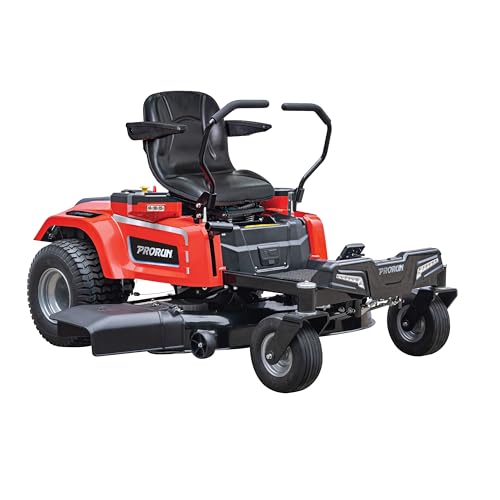
Pros
- High-efficiency brushless motors maximize power output and durability over traditional motors
- Up to 2 acres runtime with three included 10.0 Ah batteries supports substantial mowing sessions
- Zero-emission operation with gas-equivalent 20 HP power for quieter environmentally friendly use
- Six-port auto-switchover battery system provides flexible extended runtime options
- Durable 42-inch steel deck plus included mulch and towing kits add immediate functionality
Cons
- Runtime is limited to approximately 70 minutes or 2 acres which may require recharging for larger properties
- Fully battery-dependent design means performance relies on charge levels and spare battery availability
- 42-inch deck size may require more passes on expansive lawns compared to wider commercial models
The PRORUN PZT60V42 is a fully electric 60V zero-turn riding lawn mower built for residential and light commercial use. Its primary design centers on a robust 42-inch 14-gauge stamped steel twin blade deck powered by direct-drive brushless motors, giving an immediate impression of solid construction and modern battery-focused engineering. The mower arrives complete with three 10.0 Ah batteries, a charger, mulch kit, and towing kit for ready-to-work versatility.
In performance terms, four high-efficiency brushless motors deliver power equivalent to a 20 HP gas engine while producing zero emissions. The system supports up to 2.0 acres or 70 minutes of runtime, and six battery ports with auto switchover intelligently manage all PRORUN 60V battery sizes for continuous operation. A washout port on the steel deck further simplifies post-mow maintenance during real-world sessions.
Potential drawbacks include the finite 70-minute runtime window which can limit coverage on larger properties without spare batteries or recharge breaks. As a fully electric model, it also depends entirely on battery charge levels rather than continuous fuel refills, and the 42-inch deck width may demand extra passes compared with wider traditional options.
Overall the PRORUN PZT60V42 offers strong value for homeowners and small-property managers who want gas-like cutting power without emissions or noise. Those with medium-sized lawns seeking quiet efficient zero-turn performance and included accessories will benefit most from this electric mower.

Pros
- Strong 24HP FR730 engine power for demanding cutting conditions
- Wide 54-inch FAB deck reduces total mowing time
- Zero turn design delivers excellent maneuverability
- Fabricated deck supports durable everyday operation
Cons
- Sparse details beyond engine and deck leave other features unspecified
- Gas-powered FR730 engine needs regular fuel and maintenance
- Large 54-inch deck size may feel oversized on compact properties
The Husqvarna Z254F is a zero turn mower from the established Husqvarna brand in the riding lawn mowers category. It centers on a solid build that pairs a 24HP 726cc FR730 engine with a 54-inch FAB deck for straightforward residential grass care.
Performance stems directly from the listed specifications. The FR730 engine delivers the horsepower needed for steady operation across typical lawns while the wide FAB deck completes passes efficiently. Zero turn handling improves control in real yard layouts based on the model design.
Considerations arise from the limited data available. Secondary elements such as comfort features fuel capacity or extras receive no mention and the gas engine format involves routine upkeep. The large deck suits open areas better than confined spaces.
The Husqvarna Z254F provides the most value for owners of medium or large properties who want reliable engine power and a broad cutting width. Users with smaller lots or those seeking extensive accessory options should weigh the core specs carefully before purchase.
When the word shows up on a hangtag, a marketplace listing, or a spec sheet, it is naming how the electric motor is built. It is not a cutting-system name, a deck material, or a fuel type. Once you map the label to the motor, the rest of the machine—battery, deck, drive, and blade care—becomes easier to read on its own terms.
What “brushless” refers to on a lawn mower
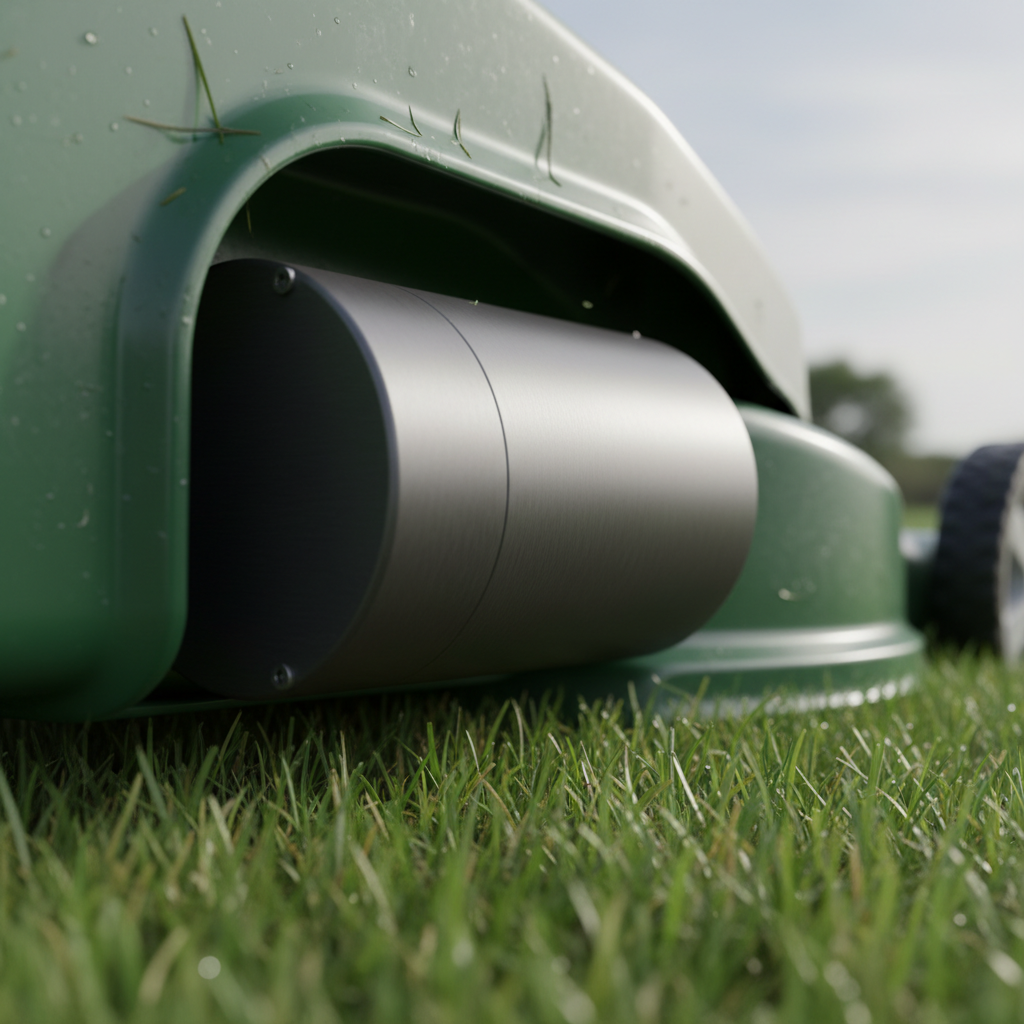
In lawn-mower language, brushless is a motor word. It almost always means the machine uses a brushless electric motor somewhere in the drive path. That is usually the blade-drive motor that spins the cutting blade or blades. On a self-propelled walk-behind, a separate self-propel motor or wheel-drive motor may also be brushless. The term does not describe the shape of the blade, the steel or plastic of the deck, or whether the mower mulches, bags, or side-discharges.
Readers often first see the word on a cordless lawn mower box, a battery-mower product page, or a printed badge near other electric features. The same word can appear on a corded electric lawn mower. It travels with electric machines because it names an electric-motor architecture. It is not a standard way to describe a gasoline combustion engine. A gas mower is not “brushless” in this product sense, even if it has an electric start or other electrical accessories.
Not every electric mower is brushless. Simpler or older electric designs may still use a brushed motor. A listing that only says “electric,” “battery,” or “cordless” does not, by itself, prove the motor type. A battery mower is also not automatically brushless just because many current cordless tools use that design. The reliable reading is narrower: if the documents for your model say brushless, they are talking about at least one electric motor on that machine.
Where owners typically see the word
The label is a spec callout, so it shows up wherever marketers and manuals list features:
- Product titles and bullet lists next to battery or cordless language
- Specification tables that list motor type
- Owner’s manuals, parts lists, and exploded diagrams
- A hangtag, deck decal, or line printed on the motor housing
If you assumed the word might mean a special blade coating, a scratch-proof deck, or a machine that never needs service, that mix-up is common. Those are different claims, and most of them are not what “brushless” names. In this context, start with the motor and only then read the rest of the spec sheet.
How a brushless motor differs from a brushed motor
Both motor types turn electrical energy into rotation. The difference is how current is switched as the shaft turns. You do not need a motor-design textbook to use the idea; you only need the contrast that shows up in mower marketing.
In a typical brushed DC motor, carbon brushes press against a commutator on the rotating assembly. In everyday language, the commutator is a segmented metal ring that works with those brushes to reverse current in the rotating windings at the right moments so the motor keeps turning one way. The brushes are sliding electrical contacts. They are a wear part. As they rub they create friction, they gradually wear down, and a worn brush-and-commutator interface can spark.
A brushless motor removes that sliding electrical contact. Permanent magnets usually sit on the rotor, the part that spins. The windings sit in the stator, the part that stays fixed in the housing. A motor controller switches current through the stationary windings in sequence. That electronic commutation creates a changing magnetic field that pushes the rotor around. There are no carbon brushes riding on a commutator to do the switching.
The mower still needs a power source and a controller. A brushless design does not run on “no electricity.” On a cordless lawn mower the pack supplies current; on a corded electric lawn mower the cord does. The blade still has mass. The deck still has to move grass. Only the method of commutation changed.
| Idea | Brushed motor | Brushless motor |
|---|---|---|
| How current is switched | Carbon brushes sliding on a commutator | Electronic commutation by a motor controller |
| Where the windings usually are | On the rotating assembly | In the stator (stationary windings) |
| What typically spins with the shaft | Wound rotor and commutator | Rotor with permanent magnets |
| Brush-related wear | Brushes are a consumable contact | No brush set to replace |
| What the mower still needs | Power source and basic control | Power source plus an electronic controller |
Taking the brushes out of the design removes that particular friction and sparking interface. It does not mean the motor has no moving parts, no heat, and no possible failure modes. Bearings still spin. Electronics still manage current. Heat still has to go somewhere. Dust, moisture, and overload still matter. Real machines also vary in layout, so it is not accurate to treat every brushless mower as if it used the same internals.
Qualitative differences people notice in other electric tools—smoother speed holding under changing load, less brush noise, less brush dust—can appear on mowers too, but they are not guaranteed by the word alone. Deck roar, blade tip speed, and grass conditions still dominate what you hear and feel. If the mower’s documents say brushless, they are telling you commutation is electronic rather than brush-and-commutator. They are not publishing a lab score.
Why the word appears in mower marketing and specs
Listings highlight brushless because “electric” only tells you the energy source is not gasoline. Brushless tells you the motor is not the older brushed type many people already know from drills, blowers, and earlier electric tools. It is a short architecture label, so it fits a title line and a spec table.
In general power-tool practice, buyers often treat the word as a quality cue: fewer brush-related service items, and more efficient use of stored battery energy than a comparable brushed motor in the same class of tool. Manufacturers lean on that association. On a cordless lawn mower the word usually sits next to battery language because runtime and battery cost are already on the shopper’s mind.
Keep that as category language, not a ranking. The term is a feature callout. It is not the name of a cutting system. It does not prove a better cut, a commercial-grade chassis, a longer warranty, or higher cutting power. Two pages can both say brushless and still describe very different decks, batteries, weights, and build quality. Premium positioning and motor type are not the same fact.
One word can cover more than one motor
A walk-behind is not limited to a single electric motor. Depending on the design, “brushless” might apply in several ways:
- Only the blade-drive motor is brushless
- Only the self-propel or wheel-drive motor is brushless
- Both the blade-drive motor and a drive motor are brushless
- The machine still uses a brushed motor, even if a marketplace title is vague or copied from another listing
If a page says brushless once and never says which motor, you still do not know whether the claim covers the blade, the drive, or both. Treat the word as a pointer to motor design, then read the rest of the specification for deck size, drive type, and battery system.
What a brushless motor generally means during ordinary mowing
Day to day, you still start and stop the mower with that model’s own controls and safety interlocks. Brushless does not replace the bail lever, the safety key, the handle switch, or the sequence in the manual. You still set cutting height, still walk at a pace that matches the grass, and still empty a bag or clear a chute when the machine calls for it.
What can feel different is how the motor holds speed as the load changes. A well-matched brushless motor and controller can keep blade speed more steady when you push into thicker or wetter grass than a simple brushed setup. That is a qualitative tendency, not a promise. Grass height, moisture, blade sharpness, walk speed, and how full the deck is still dominate the cut. A dull blade on a brushless mower will still tear grass. A deck packed with wet clippings will still bog almost any walk-behind.
Cordless runtime still depends on battery capacity, terrain, grass conditions, and user habits. A brushless design can use stored energy more efficiently than a brushed motor in general tool practice, but that does not translate into a fixed number of minutes or a set fraction of an acre. Two battery mowers with the same motor type can finish a yard very differently if their packs, decks, and cutting heights differ. A corded electric lawn mower is limited by the cord and the circuit, not by a pack, regardless of commutation.
Noise is mixed. You hear the motor, the blade, air moving through the deck, and wheels on the lawn. Motor type is only one contributor. It is not accurate to say brushless mowers are always quieter. Some of the sound people blame on “the motor” is actually the blade and the deck.
In ordinary use, then, brushless changes the motor’s internal switching and can change how steadily power is delivered as grass gets thicker. Operation is still limited by charge or cord, deck setup, and the lawn in front of you. The word does not rewrite mowing physics.
Maintenance and upkeep: what usually changes and what does not
The maintenance change people care about is simple: a brushless mower motor does not have user-replaceable carbon brushes. That specific wear item is not part of routine service. You will not be popping a brush cap and sliding in a new pair the way some older electric tools allow.
Almost everything else about a walk-behind or battery mower stays on the list. Blades still need inspection and sharpening or replacement when they are nicked, bent, or dull. Decks still need cleaning so clippings do not cake, unbalance the cut, or hold moisture against metal. Wheels, cables, handles, and safety levers still wear. Those jobs have nothing to do with commutation.
Batteries, terminals, and storage still matter
On a cordless lawn mower, the pack is still a service item in the broad sense: it needs the manufacturer’s charging and storage practices. Charge with the supplied or specified charger. Store the pack as the maker describes for your climate and off-season. Keep terminals clean and dry in the ordinary way the manual allows. Do not treat brushless as permission to ignore the battery. The motor can only run while the pack can deliver current.
Keep water out of electrical openings. Follow the manual for deck washing. A general safe stance is to avoid forcing spray into the motor housing, controller, switchgear, or battery bay. The machine is not maintenance-free because the brushes are gone.
When motor trouble is a shop job
When a brushless motor or its controller fails, the assembly is often sealed. Home repair is usually not a brush swap. Replacement of the motor-and-controller unit, or diagnosis by an authorized service shop, is the typical path. Do not open sealed motor housings or battery packs to “check the brushes.” There are none to service in a brushless design, and opening those assemblies can create shock, fire, and warranty problems.
If something smells burnt, the mower cuts out under modest load, or an error indicator appears, stop using the machine. Isolate it from its safety key, battery, or power cord. Use the manual’s troubleshooting path or a qualified technician. Do not bypass interlocks, improvise a controller, or probe live circuits. Those steps go beyond understanding the word on the label.
Brushless also does not remove blade and deck care. Motor type never sharpened a blade. A well-kept brushed machine can out-cut a neglected brushless one for that reason alone.
What brushless does not tell you
Because the word is short and prominent, it is easy to hang extra meanings on it. These are not what it means.
- It is not a synonym for cordless. A corded electric lawn mower can use a brushless motor. A battery mower can still use a brushed motor.
- It is not the same as self-propelled. Self-propel is a drive feature. The drive motor, if present, may or may not be brushless.
- It does not mean robotic, and it does not tell reel versus rotary.
- It does not describe mulching, bagging, side-discharge, or blade style.
- It does not name deck material or blade steel.
- It does not name the fuel system, because the relevant machines are electric.
Two brushless mowers can still perform very differently. Deck width, blade design, battery system, weight, wheel size, and how well the deck is kept clean all change the result. Motor architecture is one variable among many.
A brushed electric mower is not automatically a poor machine. If the deck, blade, and power delivery are sound for the yard, it can still cut well. Brushless is not a moral grade. It is a motor type. Brushed does not automatically mean cheap or unreliable, and brushless does not automatically mean the rest of the mower is built to a higher standard.
How to confirm what your mower actually has
Marketplace titles are incomplete more often than manuals are. If you saw the word on a box, an app, or a listing and want to know what your machine actually uses, start with documents that belong to the exact model number.
- Read the owner’s manual and any specification sheet for that model.
- Look at the rating plate on the mower frame or motor housing for motor-type language.
- Search the exact model number in the manufacturer’s own documentation rather than trusting a reseller headline alone.
If the listing says brushless and the manual never does, treat the conflict as unresolved until the manufacturer or an authorized service shop confirms it. Do not assume a stock photo or a copied bullet list is authoritative. Related models in the same family can differ.
When you inspect the machine for labels, power it down first. Remove the safety key or disconnect it from the charger or outlet. You are looking for printed specifications, not for internal parts. Do not open sealed motor housings or battery packs. Do not probe wires or test live circuits. There is no consumer teardown step that is worth taking just to confirm a marketing word.
If paperwork is missing and the housing is unmarked, the manufacturer’s support channel or an authorized shop with the serial and model numbers is the reliable check. A parts diagram that lists a brushless motor assembly is more useful than a marketplace title. A parts diagram that lists brushes points the other way.
Caveats when the word is used as a selling point
Brushless can be used loosely. A listing may apply it to the whole mower when only one motor is brushless, or it may copy the word from a related model. That is why the manual and rating plate matter more than a title. The word can be accurate and still be incomplete.
Runtime, lifespan, and power claims should not be treated as universal. Motor architecture is only one variable. Yard size, grass type, terrain, battery system, blade condition, and walking pace still decide whether the machine is pleasant to use. Any claim of a specific percent more runtime, a fixed hour lifespan, a decibel rating, or a warranty length is a manufacturer- or test-specific statement. It should not be generalized from the word alone.
The same caution applies to comparisons with gasoline mowers, lifetime-cost stories, and “never overheats” language. Those are not contained in the definition of brushless. A brushless electric lawn mower can still overheat, still fail, and still cut poorly if the blade, deck, or battery is neglected. Sealed electronics can fail even though brushes are not present to wear out.
What still determines fit for a yard is ordinary and unglamorous: how much grass you cut, how wet and thick it gets, whether you need self-propel, how you plan to charge or store batteries, and whether you will keep the blade and deck in working condition. Brushless does not answer those questions by itself.
The useful takeaway stays definitional. On a lawn mower, brushless names an electric motor that uses a controller instead of carbon brushes and a commutator. That change removes one wear part and explains why the word appears on many electric and cordless machines. It does not, by itself, tell you which mower to buy, how long a charge will last, or whether the rest of the machine matches your lawn.
Quick answers to nearby questions
Does brushless mean the mower has no moving electrical parts?
No. The rotor still spins. Bearings still turn. The difference is that current is switched electronically in the stator instead of through sliding carbon brushes on a commutator.
If the box says brushless, is the self-propel system brushless too?
Not necessarily. The callout may refer only to the blade-drive motor. Confirm drive-motor type in the manual or parts list if that distinction matters to you.
Can I ignore battery care because the motor has no brushes?
No. Cordless runtime and motor health still depend on the pack, the charger, and storage practices in the manufacturer’s instructions. Brushless removes a brush-service step, not battery care.
Is a brushed electric mower obsolete for a small yard?
Not automatically. A brushed motor can still cut well if the deck, blade, and power delivery match the grass. Motor type is only one part of whether the machine fits the job.









