To build a shed ramp for a riding lawn mower, measure the height of the shed floor above the ground and calculate the ramp length using a slope ratio of about 1:12 (roughly 4.8 degrees) for safe equipment access. Frame the ramp with pressure-treated lumber sized to support the mower’s weight, add a non-slip traction surface, and secure the ramp firmly to the shed. The exact dimensions and materials depend on your mower’s weight and the shed’s height, so confirm those measurements before you start building.
Measure the Shed Height and Calculate the Slope
The first step in building a shed ramp is establishing the vertical rise you need to overcome. This measurement drives every other decision, including ramp length, materials, and overall cost. Getting it right at the start prevents a ramp that is too steep, too short, or structurally inadequate.
How to Measure the Vertical Rise of the Shed Floor
Measure the distance from the ground surface at the ramp location to the top of the shed floor or threshold. Use a tape measure and record this value in inches. If the ground is uneven, take measurements at several points across the opening and use the largest rise so the ramp clears the floor everywhere. It also helps to check whether the shed floor is level; if it slopes, factor that into your calculations.
What Slope Ratio Is Safe for a Riding Lawn Mower Ramp
A commonly recommended slope for equipment ramps is a 1:12 ratio, meaning the ramp rises 1 inch for every 12 inches of horizontal run. This works out to an angle of roughly 4.8 degrees. This gentle slope gives a riding mower enough traction to climb and allows safe descent without excessive speed. Steeper slopes increase the risk of the mower tipping backward or sliding, especially on wet grass or when the deck is full of clippings.
How to Calculate Ramp Length from the Rise and Slope
Once you know the rise, multiply it by 12 to find the minimum horizontal run for a 1:12 slope. For example, if the shed floor is 8 inches above the ground, the ramp should be at least 96 inches (8 feet) long. This is the horizontal run, not the actual sloped length of the board. To find the true board length, use the Pythagorean theorem: the square root of (rise squared plus run squared). For an 8-inch rise and 96-inch run, the board length is roughly 96.3 inches. Always round up when purchasing lumber, and add a little extra length so the ramp rests securely on both the ground and the shed floor.
Choose Materials and Determine Weight Capacity
Selecting the right materials is critical because the ramp must support the full weight of a riding mower, which can be substantial. Outdoor exposure also demands lumber and fasteners that resist rot and corrosion over time.
What Lumber Should I Use for a Mower Ramp
Pressure-treated lumber is the standard choice for outdoor ramps because it resists moisture, insects, and rot. Use treated framing lumber for the stringers and decking boards. For the stringers, common sizes are 2×6 or 2×8 lumber, depending on the span and expected load. The decking surface can be made from 2×4 or 2×6 boards laid across the stringers. Avoid untreated lumber, which will deteriorate quickly when exposed to weather and ground contact.
How to Determine the Weight Capacity Your Ramp Needs
Riding lawn mowers typically weigh several hundred pounds, and the total can rise when you add a bagger, attachments, or a full fuel tank. Check your owner’s manual for the mower’s curb weight and add a safety margin of at least 25 to 50 percent to account for dynamic loads when the mower is moving. A ramp that only barely supports a stationary mower may fail under the stress of driving across it. If you are unsure about load ratings for specific lumber spans, consult a local building professional or structural reference before building.
Should the Ramp Be Permanent or Temporary
Decide whether you want a permanent structure or a removable ramp. A permanent ramp is anchored to the shed and left in place, which is convenient for frequent use. A temporary ramp can be moved or stored when not needed, which is useful if the opening is used for other purposes. Permanent ramps generally use heavier framing and more secure fasteners, while temporary ramps may use lighter materials and hinges or removable brackets. Consider your climate and how often you access the shed when making this choice.
Build and Frame the Ramp Structure
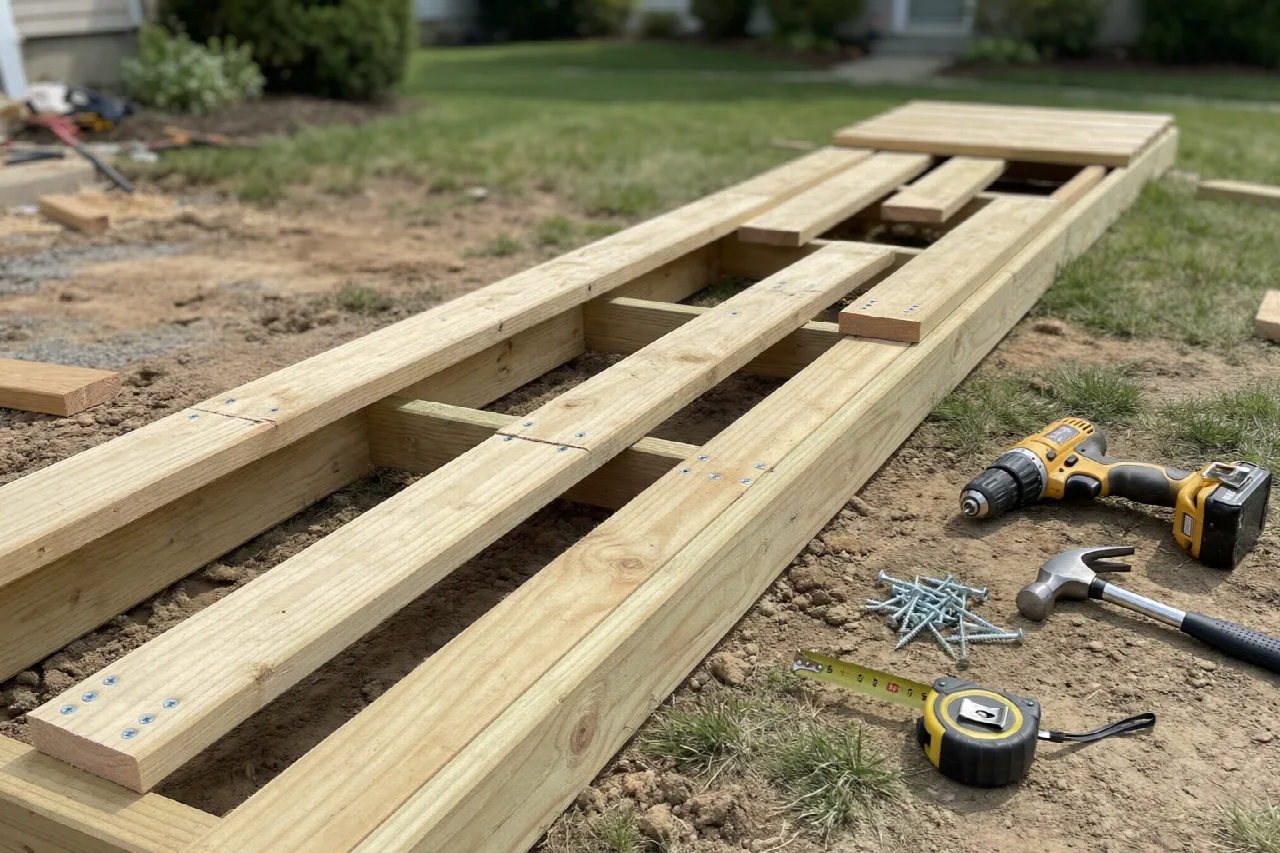
With measurements and materials confirmed, you can move on to construction. The frame consists of stringers that run the length of the ramp and decking boards laid across them. Proper spacing and secure attachment are essential for a stable, safe ramp.
How to Cut and Assemble the Ramp Stringers
Cut your stringer boards to the calculated length. If you are using a single continuous board for each stringer, mark the top end to sit flush against the shed floor and the bottom end to rest on the ground. For longer ramps, you may need to join boards, but a single piece per stringer is stronger and simpler. Lay the stringers parallel to each other, spaced evenly across the width of the ramp. The number of stringers depends on the ramp width and expected load; a typical mower ramp uses two or three stringers.
How Far Apart Should the Stringers Be Spaced
Space the stringers so the decking boards have solid support across the full width of the ramp. For a ramp wide enough to fit a riding mower, plan for a width of at least 36 to 48 inches. With three stringers, place one at each outer edge and one in the center. With two stringers, keep the spacing tight enough that the decking does not flex under the mower’s wheels. Wider ramps or heavier mowers may require additional stringers or thicker decking.
How to Attach the Ramp to the Shed
Secure the top of the ramp to the shed floor or threshold so it cannot shift or slide during use. Use heavy-duty brackets, lag screws, or angle iron fastened through the stringers into the shed framing. If the shed floor is concrete, use masonry anchors. For a temporary ramp, use removable brackets or a hinge system that allows the ramp to lift out of the way. Ensure the attachment point is strong enough to handle the mower’s weight and the forces of driving up and down.
Add Traction and Safety Features
A ramp that is structurally sound still needs a safe driving surface. Traction and edge protection reduce the risk of slipping, especially in wet or muddy conditions, and help keep the mower on the ramp.
What Traction Surface Should I Use on the Ramp
Bare wood becomes slippery when wet, so add a traction surface to the decking. Options include applying a non-slip paint or coating, attaching grip tape strips, or screwing down expanded metal mesh or traction treads. Some builders install small cross strips or cleats across the decking to give tires extra bite. Choose a method that suits your climate and budget, and make sure it covers the full width of the ramp where the mower’s tires will travel.
How to Prevent the Mower from Slipping Off the Ramp Edges
Add raised edges or side rails along the length of the ramp to guide the mower and prevent a wheel from dropping off the side. Simple 2×4 or 2×6 boards fastened along each edge create a low curb that keeps the mower centered. For wider ramps, consider a center guide strip as well. These edge guards are especially important on steeper ramps or when loading in poor visibility.
What Safety Features Should I Add for Loading and Unloading
Beyond traction and edge guards, consider a few additional safety measures. A spotter or second person can guide the driver when backing down a steep ramp. Make sure the area at the top and bottom of the ramp is clear of obstacles. If the ramp is steep, a winch or a rope attached to the mower can provide extra control during loading. Always operate the mower at low speed on the ramp and avoid sudden turns or stops.
Test the Ramp and Maintain It
After construction, verify that the ramp is stable and safe before regular use. Ongoing maintenance keeps a wooden ramp serviceable for years and helps you catch problems before they become hazards.
How to Test the Ramp Before Regular Use
Before driving the mower onto the ramp, inspect all fasteners and joints to confirm everything is tight. Walk across the ramp to check for flexing or movement. Then drive the mower onto the ramp slowly, stopping partway to check stability. Listen for creaking or shifting that might indicate a weak point. Repeat the test with the mower moving at a normal speed to confirm the ramp handles the load without excessive bounce. If the ramp flexes noticeably or feels unstable, reinforce it before regular use.
How Should I Maintain a Wooden Mower Ramp
Inspect the ramp regularly for signs of rot, cracking, or loose fasteners. Re-tighten screws and bolts as needed, and replace any boards that show significant deterioration. Reapply non-slip coating or traction material when it wears down. Keep the ramp free of leaves, mud, and debris that can hide damage or reduce traction. In wet climates, check the underside and ground-contact areas for moisture damage.
When Should I Replace or Repair the Ramp
Replace any stringer or decking board that is cracked, rotted, or severely warped, as these can fail under load. If the ramp sags noticeably when the mower is on it, or if fasteners no longer hold securely, the structure may need reinforcement or rebuilding. A ramp that has been in service for many years in harsh weather may be safer to replace entirely. When in doubt, err on the side of rebuilding rather than risking a failure while the mower is on the ramp.