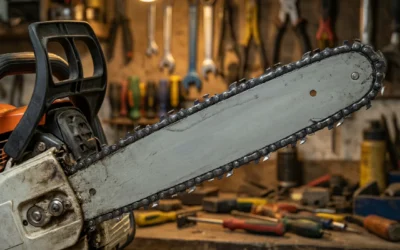
To sharpen a Stihl chainsaw with a file, match the file diameter to your chain’s pitch, clamp the bar, hold the file at the correct angle (typically 30 degrees), and push it across each cutter in smooth strokes, then lower the depth gauges with a flat file.
Choosing the Right File for Your Stihl Chain
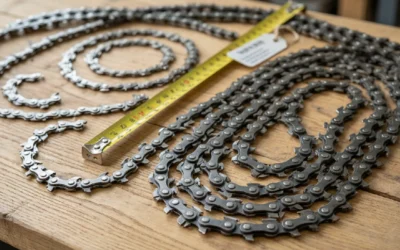
Selecting the correct file is the first step to a properly sharpened chain. The file diameter must match your chain’s pitch, which is the distance between drive links. For common Stihl chains, a 4.0 mm round file suits 1/4-inch pitch chains, a 4.8 mm file works with 3/8-inch low-profile chains, and a 5.5 mm file is used for standard 3/8-inch pitch chains. A .325-inch pitch chain typically uses a 4.8 mm file as well. You can find the pitch stamped on the chain’s drive links or in your saw’s manual.
You will use two types of files. A round file sharpens the cutting teeth, and a flat file dresses the depth gauges, also called rakers. The round file must be the exact diameter for your chain; using one that is too large or too small will produce an incorrect cutting angle and a poor edge. The flat file is used to lower the depth gauges so the chain can bite into the wood properly.
Stihl offers file kits that include the correct round file, a flat file, and a filing gauge for depth gauge adjustment. These kits are convenient because they remove the guesswork from file selection, but you can also buy files individually if you already know your chain’s pitch.
Preparing the Chainsaw for Filing
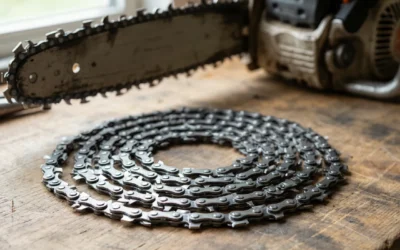
Before you file, make sure the chainsaw is turned off and the chain brake is engaged. Remove the bar and chain from the saw, or clamp the bar securely in a bench vise with the cutters facing up. A stable setup is essential because any movement will cause uneven filing and an unsafe working condition. If you prefer to keep the saw assembled, you can clamp the bar itself, but removing the chain gives you better access and control.
Clean the chain thoroughly with a brush to remove sawdust, oil, and grit. Debris on the cutters will dull your file quickly and produce a poor edge. Also check the chain for damage, such as cracked or broken teeth, before you begin. If you find serious damage, replace the chain rather than filing it.
Wear work gloves to protect your hands from sharp cutters, and consider safety glasses in case a file slips. Work in a well-lit area and keep the file handles dry so you maintain a firm grip throughout the process.
Step-by-Step Hand-Filing Technique
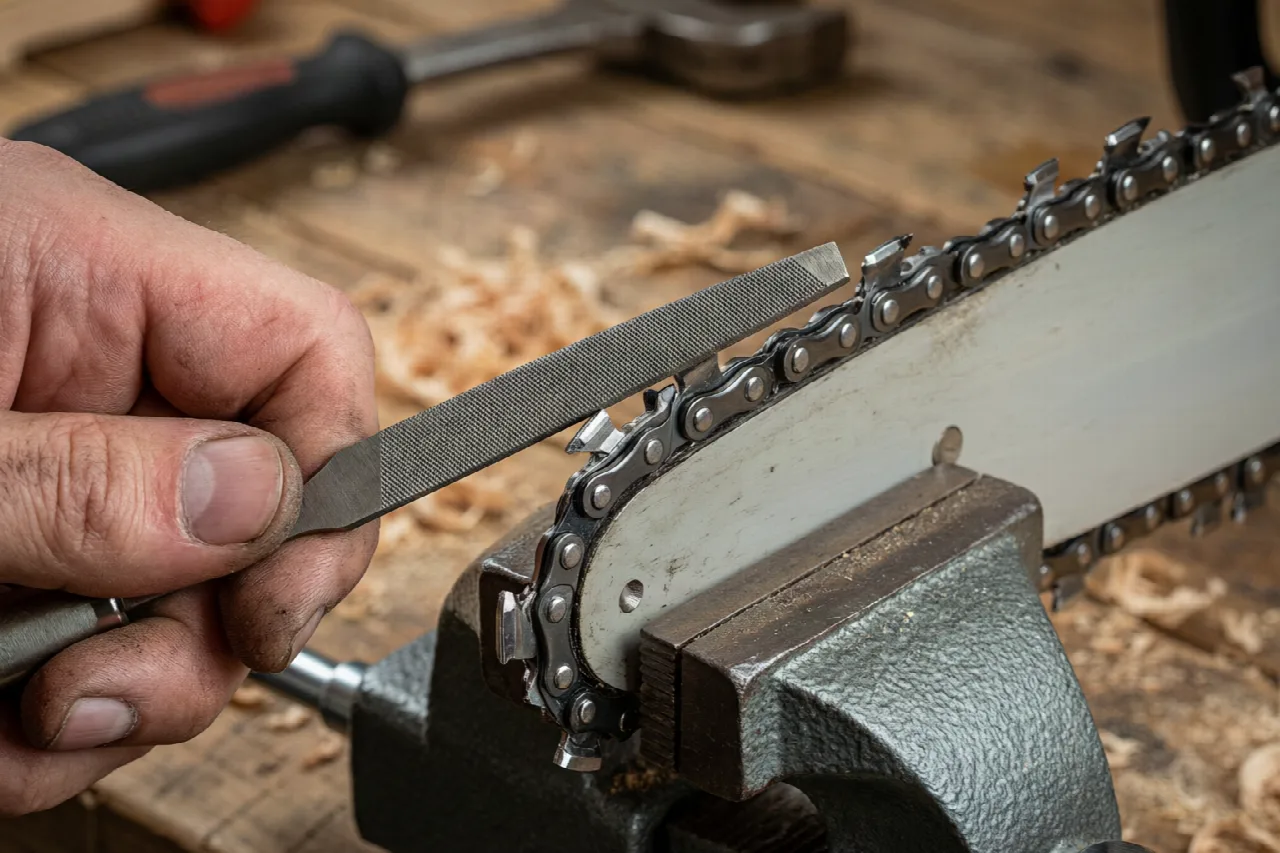
Start by positioning the file in the cutter’s gullet, the curved area between the tooth and the depth gauge. Hold the file so it is level and angled at about 30 degrees from the bar, which is the standard sharpening angle for most Stihl chains. Some chains may require a slightly different angle, so check your manual or the chain’s specifications if you are unsure.
Push the file across the cutter in a smooth, firm stroke, moving from the inside of the tooth toward the outside. Use only forward strokes; pulling the file back will dull it and round the edge. Apply moderate, even pressure and keep the file level throughout the stroke. One or two strokes per cutter is usually enough for a lightly dulled chain, while a heavily worn chain may need three or four. Count your strokes so every cutter receives the same number, which keeps the chain balanced.
Work through the chain, sharpening every other cutter first. When you finish one side, rotate the chain and sharpen the remaining cutters. This approach ensures you do not miss any teeth and helps you maintain a consistent angle. After sharpening, check that all cutters look uniform in length and shape. If any cutter is noticeably shorter or misshapen, it may need replacement.
Filing the Depth Gauges
The depth gauges control how deeply the cutters bite into the wood. If they are too high, the chain will not cut; if they are too low, the chain will grab and vibrate. After sharpening the cutters, you must check and file the depth gauges to maintain the correct height difference between the gauge and the cutter’s top plate.
Use a depth gauge tool, often included in Stihl file kits, to measure the height. Place the tool over the cutter and depth gauge; the gauge should sit level with or slightly below the tool’s surface. If the gauge protrudes above the tool, file it down with a flat file. Hold the flat file level and make a few light strokes across the top of the gauge until it is flush with the tool.
After filing, use the depth gauge tool again to verify the height. The correct height difference varies by chain type, but a common specification is around 0.025 to 0.030 inches. Refer to your chain’s manual for the exact figure. Filing the depth gauges is just as important as sharpening the cutters, so do not skip this step.
Stihl-Specific Tips and Maintenance
Stihl provides several tools to make filing easier, including a filing gauge that clips onto the bar and guides the file at the correct angle. This tool is especially helpful for beginners because it eliminates the guesswork of holding the file by hand. Stihl also sells complete file kits with the right file sizes for their chains, so you can be confident you are using the correct diameter.
When should you replace rather than sharpen the chain? Replace the chain when the cutters are too short to file safely, when the drive links are worn or stretched, or when you see cracks, broken teeth, or other damage. A chain that has been sharpened many times will eventually reach the end of its useful life, and continuing to file it will only produce a poor cut. As a general rule, if you cannot achieve a clean edge after several sharpening sessions, it is time for a new chain.
Between sharpening sessions, keep the chain clean and well-lubricated with bar oil. Check the chain tension regularly and adjust it as needed, since a loose chain will cut poorly and wear unevenly. With proper care and regular filing, your Stihl chain will deliver reliable performance for many hours of cutting.