

Quick Answer
Safe GPU core temperatures: 60 to 75°C under sustained load. Hotspot sensors (die junction) should remain below 85°C. VRAM modules typically tolerate 90 to 100°C but throttle aggressively above 95°C. Sustained operation above 88°C core or 110°C hotspot risks accelerated semiconductor degradation and lifespan reduction. Modern GPUs automatically throttle at manufacturer-defined limits; thermal throttling indicates inadequate cooling or silicon degradation.
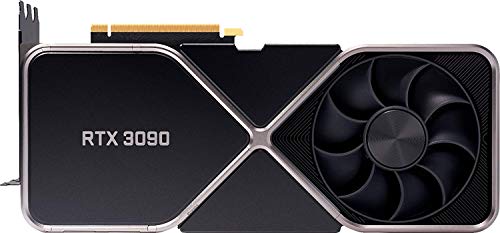
Pros
- 24GB VRAM is a major advantage for memory-intensive workloads
- 384-bit memory bus supports strong data throughput
- Modern display connectivity includes DisplayPort 1.4a and HDMI 2.1
- Official Founders Edition model from NVIDIA
Cons
- The listing does not include practical details such as power requirements or physical dimensions
- It is a flagship-class card that may be more than casual gamers or general users need
- Compatibility checks are necessary because the manufacturer listing does not specify cooling, PSU, or accessory details
Overview: The NVIDIA GeForce RTX 3090 Founders Edition is a premium desktop graphics card built for users who need top-tier GPU capability. It combines the RTX 3090 chipset with 24GB of GDDR6X memory, making it a strong specification choice for demanding graphics tasks.
Performance: With a 384-bit memory interface and modern output options, this card is well suited to high-resolution gaming, rendering, and other workloads that benefit from large VRAM capacity. The three DisplayPort 1.4a connections and one HDMI 2.1 port also make it practical for current monitors and multi-display setups.
Drawbacks: The manufacturer listing leaves out important setup information such as power draw, card size, and included accessories. It is also a high-end model, so users with lighter gaming or productivity needs may not fully use its capabilities.
Verdict: This card is best for enthusiasts, creators, and professionals who prioritize memory capacity and NVIDIA's reference Founders Edition design. If you need a powerful GPU for demanding workloads and want the RTX 3090 class of performance, it is a compelling option.

Pros
- Very large 24GB frame buffer for demanding workloads and future-facing gaming setups.
- Strong ray tracing and AI acceleration from 2nd Gen RT Cores and 3rd Gen Tensor Cores.
- Durable TUF build with military-grade components and dual ball fan bearings.
- Includes HDMI 2.1 and DisplayPort 1.4a for modern high-resolution displays.
Cons
- This is a high-end, premium-class GPU that will be excessive for casual or 1080p-only gaming.
- The product data does not list dimensions, power requirements, or included accessories, so build planning may require extra checking.
- Tuning software is included, but the card may still demand a capable cooling and power setup in a well-prepared system.
Overview & Design: The ASUS TUF Gaming NVIDIA GeForce RTX 3090 is a flagship-class graphics card built around NVIDIA Ampere architecture. It is positioned for users who want a high-end GPU with a focus on durability, cooling design, and long-term stability.
Performance & Key Features: With 24GB of GDDR6X memory, 2nd Generation RT Cores, and 3rd Generation Tensor Cores, this card is designed for demanding gaming and creative workloads. It is well suited to 4K and 8K output, ray tracing, and AI-assisted features such as DLSS, while HDMI 2.1 and DisplayPort 1.4a support modern display setups.
Drawbacks & Considerations: Based on the product data, this is clearly a premium, high-performance GPU, which makes it more card than many users need for everyday gaming. The listing also does not provide dimensions, power draw, or accessory details, so buyers should confirm system compatibility before purchase.
Verdict: The TUF RTX 3090 is best for enthusiasts, creators, and power users who want top-tier GPU memory capacity and strong cooling-focused construction. If you need a durable high-end card for heavy workloads or high-resolution gaming, it is a compelling option.

Pros
- High-end RTX 5080 performance platform with 16GB GDDR7 memory.
- Quad-fan cooling and vapor chamber design focus on stronger thermal control.
- Protective PCB coating adds practical durability benefits.
- Factory OC profile reaches up to 2790 MHz in OC mode.
- Backed by a 3-year warranty.
Cons
- The quad-fan cooler may be less suitable for compact cases, so fitment should be checked carefully.
- As a flagship-class GPU, it is most appropriate for users who truly need top-tier performance.
- The listing does not provide full compatibility details such as dimensions, power requirements, or display outputs.
Overview: The ASUS ROG Astral NVIDIA GeForce RTX 5080 16GB GDDR7 White OC Edition is a premium graphics card aimed at enthusiast gaming and advanced PC builds. Its white finish and quad-fan cooling solution give it a distinctive look while signaling a focus on thermal performance.
Performance: Built on NVIDIA Blackwell and supporting DLSS 4, this model is positioned for demanding gaming and GPU-heavy workloads. ASUS lists a boost of up to 2790 MHz in OC mode, 1899 AI TOPS, and 16GB of GDDR7 memory, while the quad-fan design is intended to improve airflow and pressure by up to 20%.
Considerations: This is a large, high-end card, so buyers should confirm case space and overall system compatibility before purchase. The raw listing does not include full details such as dimensions, power draw, or port layout, so those specifications should be checked separately.
Verdict: For users building a premium gaming or creator system that can benefit from strong cooling, modern memory, and RTX 5080-class performance, this ASUS ROG Astral model is a strong candidate. It is best suited to enthusiasts who want a feature-rich card with a focus on sustained thermal control.

Pros
- Advanced thermal system combines a quad-fan design, vapor chamber, and thermal pad for strong cooling potential
- 16GB GDDR7 memory suits demanding modern games and creator workloads
- PCIe 5.0 and HDMI/DP 2.1 provide up-to-date interface support
- Backed by a 3-year warranty for added ownership confidence
Cons
- The 3.8-slot, quad-fan design is large and may not fit smaller cases easily
- This is a premium RTX 5080 OC model, so it may be more power and performance than some users need
- The listing does not provide full fitment details such as exact dimensions, so buyers should verify case clearance before purchase
Overview: The ASUS ROG Astral NVIDIA GeForce RTX 5080 16GB GDDR7 OC Edition is a premium high-end graphics card built for serious gaming rigs and demanding creator systems. Its large 3.8-slot design and 4-fan cooler give it a substantial, performance-focused presence.
Performance: NVIDIA Blackwell support, DLSS 4, PCIe 5.0, and 16GB of GDDR7 memory make this card well suited to modern games and advanced graphics workloads. The quad-fan layout, patented vapor chamber, and phase-change thermal pad are all aimed at keeping temperatures lower during sustained heavy use.
Drawbacks: The biggest limitation is physical size. A 3.8-slot card can be difficult to fit in compact cases, and the premium OC positioning may be more than many mainstream users require. The manufacturer listing also does not include every compatibility detail, so measuring clearance beforehand is important.
Verdict: This ASUS ROG Astral RTX 5080 is best for enthusiasts who want advanced cooling, current-generation connectivity, and high-end NVIDIA performance in a well-built flagship card. If your case has the room and your system is built for top-tier gaming or creative work, it is a strong option.

Pros
- 10,240 CUDA cores with a 2.55 GHz boost clock
- 16GB GDDR6X on-board memory for heavy visual assets
- 3rd Gen Ray Tracing and 4th Gen Tensor Cores
- Supports NVIDIA DLSS and G-SYNC technologies
- Backward-compatible with PCIe 3.0 slots
Cons
- At over 12 inches long, case compatibility can be limited
- Significant power and system cooling requirements
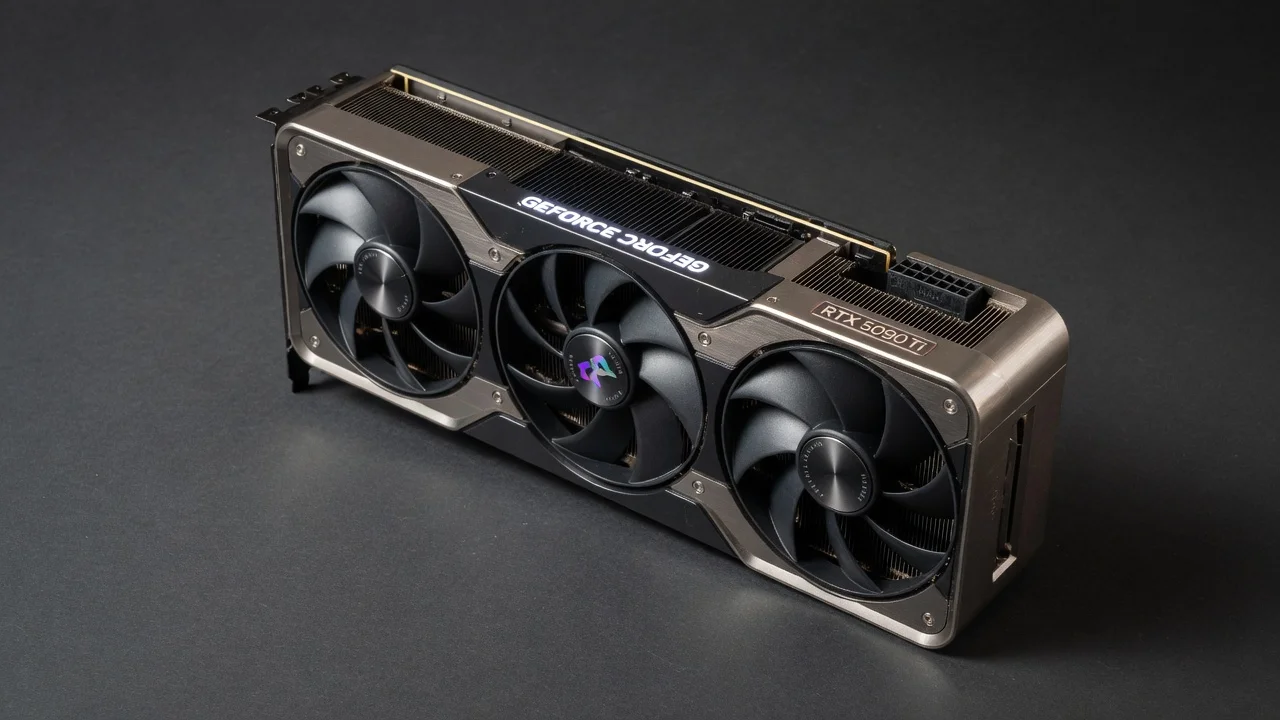
GPU Temperature Layers: Core, Hotspot, and Memory Explained
Modern discrete GPUs report multiple temperature sensors, each measuring different physical locations on the die. Understanding these distinctions prevents misdiagnosis of thermal problems. The GPU core temperature (also called GPU temperature) reflects the average die temperature measured by sensors distributed across the graphics processor. This is the metric most users monitor and is typically the lowest reported value under load. Readers comparing setup options can review our technical analysis on how to clean gpu dust.
The hotspot temperature, introduced in NVIDIA’s Pascal architecture and AMD’s RDNA series, measures the junction point of maximum heat concentration, usually near the power delivery phase and the densest compute clusters. Hotspot readings are 8 to 18°C higher than core temperature depending on load distribution. This metric matters because localized thermal stress accelerates electromigration and causes premature component failure even when average die temperature appears acceptable.
Memory (VRAM) Temperature Dynamics
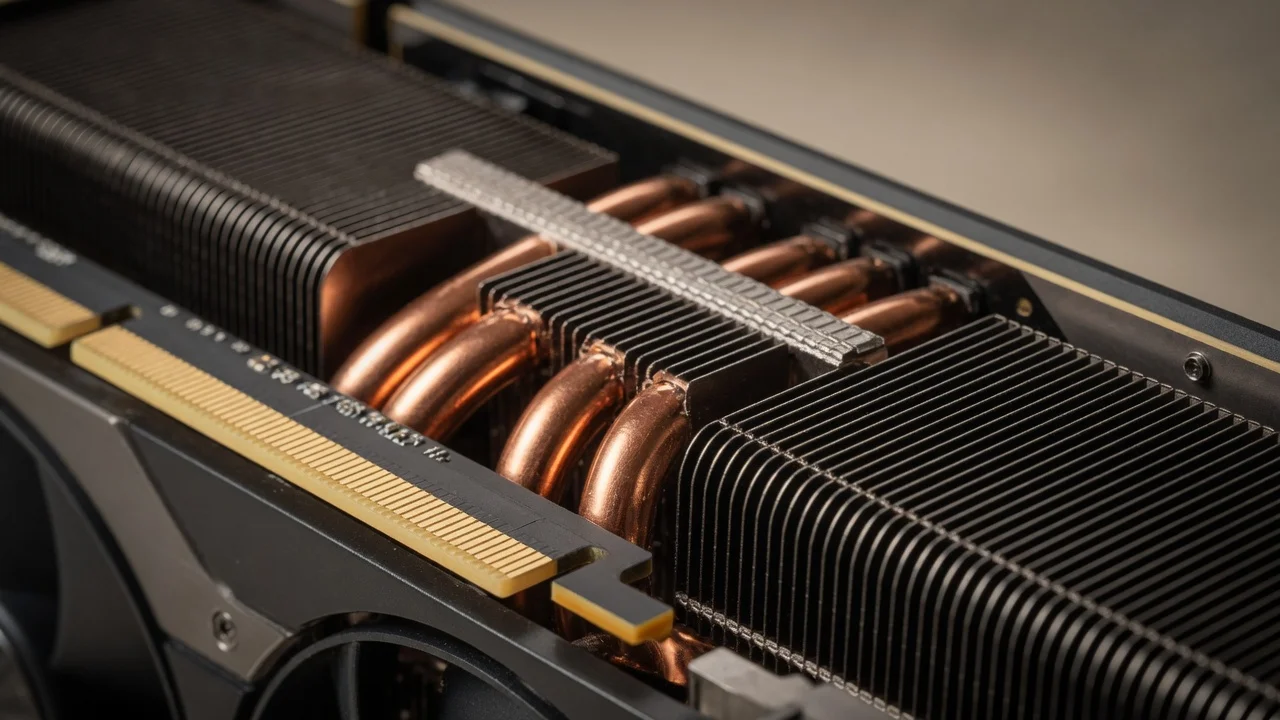
GDDR6X and newer memory types generate significant heat during high-bandwidth operations. GPU memory chips lack individual sensor reporting in consumer-grade cards, but engineering estimates and thermal imaging show VRAM junction temperatures 20, 35°C above reported GPU core values during compute workloads. High-end data center GPUs and select enthusiast models include dedicated VRAM sensors. When VRAM hits approximately 95°C on consumer cards (inferred from throttle behavior), memory bandwidth drops 15, 25%, cascading into frame rate collapse. For complementary field maintenance guidelines, examine our breakdown of vertical gpu mount airflow.
Power delivery components, phase inductors, capacitors, and VRM circuits, also generate substantial heat. These operate at core u00b15°C typically but can spike 25 to 40°C higher during transient power delivery events. Cheap thermal interface material (TIM) and passive cooling exacerbate this separation.
Safe Operating Temperature Ranges by Generation and Vendor
| GPU Architecture | Core Safe Range | Hotspot Max | VRAM Tolerance | Throttle Threshold |
|---|---|---|---|---|
| NVIDIA RTX 40-series (Ada) | 55 to 75°C | 85°C | 95 to 105°C | 83°C |
| NVIDIA RTX 30-series (Ampere) | 60 to 80°C | 88°C | 100 to 110°C | 83°C |
| AMD RX 7000-series (RDNA 3) | 60 to 73°C | 87°C | 95 to 100°C | 80°C |
| AMD RX 6000-series (RDNA 2) | 65 to 85°C | 90°C | 105 to 115°C | 85°C |
| Intel Arc A-series (Alchemist) | 60 to 75°C | 100°C | 98 to 108°C | 100°C |
These ranges reflect JEDEC specifications and manufacturer thermal design guidelines. AMD’s RDNA 3 architecture (RX 7900 XT, 7800 XT) runs cooler than prior generations due to improved power efficiency and chiplet design. NVIDIA’s Ada architecture benefits from 5nm process density and reduced power draw per SM, allowing lower core temperatures at equivalent performance tiers compared to Ampere. Intel’s Arc cards intentionally run hotter due to manufacturing process characteristics and will be covered in our detailed graphics card tests & GPU guides.
Temperature Thresholds and Performance Degradation
Thermal Throttling Mechanics
When GPU core temperature reaches manufacturer-defined limits (typically 80, 83°C for consumer cards), the GPU automatically reduces core clock frequency in discrete 50, 100 MHz steps. This prevents catastrophic thermal runaway but reduces gaming frame rates by 5, 12% per 5°C throttling event. VRAM throttling occurs independently and more aggressively; bandwidth-constrained workloads like 4K gaming experience 15, 25% performance loss when memory temperature exceeds manufacturer thresholds. To evaluate matched hardware tolerances, consult our detailed overview of weak psu cause gpu stutter.
Modern power management firmware (SMU on AMD, PMU on NVIDIA) samples temperature 1,000 to 4,000 times per second and adjusts voltage/frequency curves reactively. This introduces microperformance instability, frame latency variance, stuttering, and occasional application crashes, when thermal headroom is less than 5°C from throttle onset.
Sustained vs. Transient Temperature Excursions
A GPU reaching 82°C for 30 seconds during a shader spike poses minimal risk. Sustained operation at 82°C for hours accumulates electromigration stress and accelerates aging. Industry reliability models (MTTF, Mean Time To Failure) suggest that every 10°C sustained temperature increase above 55°C reduces semiconductor lifespan by approximately 50% due to exponential failure rate acceleration. Practical longevity analysis shows GPUs operating consistently at 70, 75°C core temperature degrade at rates permitting 5, 7 year service life, while sustained 85°C operation reduces this to 2, 3 years in high-performance scenarios. When planning workspace deployment, consider the engineering criteria outlined in our black screen gpu drivers guide.
GPU Temperature Measurement and Monitoring Tools
Not all temperature readings are reliable. Software monitoring depends on driver accuracy and sensor calibration. NVIDIA GeForce Hardware Documentation specifies temperature reporting accuracy within u00b13°C, though third-party tools often deviate 2 to 5°C from true junction temperature due to sampling latency and averaging algorithms.
Recommended Monitoring Utilities
- GPU-Z: Reads raw sensor data directly from GPU firmware; includes hotspot and memory temperature reporting for compatible cards.
- NVIDIA FrameView & GfXBench Monitor: Official NVIDIA telemetry with precise core, hotspot, and power metrics.
- AMD Radeon Software Overlay: Native driver integration; reports hotspot, core, and VRM temperatures in real-time.
- HWiNFO64: Independent monitoring with individual sensor logging; cross-references against firmware specifications.
- Thermal Camera Validation: IR thermography of heatsink baseplate and cooler exit air provides ground truth; spot-check against sensor readings quarterly.
For serious overclocking and workstation applications, dedicate USB temperature logging devices (external thermocouples affixed to heatsink mounting points) to detect sensor calibration drift over time. Firmware-reported temperatures may diverge u00b15 to 8°C from physical die temperature after 2 to 3 years of operation due to TIM degradation.
Cooling Solutions and Temperature Optimization
Air Cooling Performance Bands
High-quality dual-axial or triple-fan air coolers (like ASUS TUF, MSI Gaming Trio, or Gigabyte Gaming OC models) maintain RTX 4070 / RX 7700 XT class GPUs at 65 to 72°C under continuous 4K gaming in 22°C ambient conditions. Budget single-fan coolers push 78 to 88°C under identical loads. Ambient temperature rise significantly impacts headroom, every 5°C ambient increase translates to roughly 3 to 4°C GPU core temperature rise.
Custom loop liquid cooling achieves 55 to 65°C on high-end single-GPU systems, but installation complexity and maintenance requirements (pump reliability, coolant degradation over 18 to 24 months) warrant consideration before adoption. Pre-built closed-loop (AIO) solutions occupy a middle ground, delivering 58 to 70°C performance at lower maintenance burden than open-loop systems.
Thermal Interface Material Degradation
GPU manufacturers apply factory TIM, typically high-performance silicone or metal-infused compounds, with 0.15 to 0.25mm thickness targeting 3 to 5 W/mK thermal conductivity. After 24 months of continuous operation, TIM degrades 15 to 25% in performance due to pump-out (compound migration from contact interface) and moisture absorption. GPUs operating continuously experience 5 to 10°C temperature creep over 2 to 3 years without TIM replacement. Data center GPUs and mining rigs benefit substantially from TIM replacement every 18 months using quality aftermarket compounds (Thermal Grizzly Kryonaut, Corsair XTM70, or Noctua NT-H2).
Comparative GPU Temperature Performance Under Real Workloads
Gaming, ray tracing, and AI inference impose different thermal signatures on GPU silicon. A GPU achieving 68°C core in 1080p gaming may reach 82°C during 4K ray-traced scenarios due to increased shader utilization and memory bandwidth saturation. NVIDIA’s DLSS technology and AMD’s FSR reduce thermal load by 8 to 15% at perceived quality parity compared to native resolution rendering.
Compute workloads (CUDA, HIP, OpenCL kernels) stress all SM/CU units uniformly and generate higher sustained temperatures, often 10 to 15°C above gaming baselines. Professional workstations running Blender CUDA rendering, machine learning inference, or cryptocurrency operations should target 65 to 70°C core as upper comfortable limits, with 75°C representing engineering headroom.
When evaluating platform cooling capacity, stress-test GPUs with mixed workloads: combine gaming (GPU rasterization + driver overhead), ray tracing (shader-heavy, high ALU utilization), and memory-intensive compute (bandwidth saturation) over 90-minute sessions at ambient temperature representative of your data center or gaming room. Stable temperature below 78°C under these combined scenarios indicates adequate cooling margin for 5+ year service life.
Platform Integration: CPU, Motherboard, and Case Airflow Impact
GPU temperature depends not solely on card design but on systemic factors. CPU temperature influences case ambient, a 5.8 GHz Intel Core i9 operating at 88°C in the same case as your GPU will elevate ambient temperature 2 to 4°C compared to a 45°C idle CPU, directly impacting GPU thermals. When comparing GPU thermal performance, match CPU power profiles and ambient conditions across test platforms.
Motherboard choice affects VRM thermal distribution and case airflow patterns. Premium ATX boards like the ASUS ROG Maximus Z890 Hero vs MSI MEG Z890 ACE feature enhanced power delivery and thermal management, reducing localized hot-spots and improving overall case thermal stratification compared to budget B850 boards. A high-end CPU cooler positioned optimally (top-down, center-case orientation) improves rear exhaust efficiency by 8 to 12%, reducing GPU intake temperature 2 to 3°C.
Case design and airflow topology matter critically. Mesh-front cases with positive pressure setups (two front intake fans, one rear exhaust) maintain 2 to 5°C lower GPU temperature than closed-front cases under identical component loads. GPU placement, single-slot or dual-slot spacing, vertical vs. horizontal mounting, affects recirculation. Ensure minimum 2-slot spacing below your GPU cooler to prevent hot air recirculation; stacked dual-GPU configurations require 3 to 4 slot separation or liquid cooling to prevent thermal coupling (secondary card running 8 to 15°C hotter than primary).
For next-generation platforms, consult our AMD Ryzen 5 9600X vs Intel Core Ultra 5 245K guide for CPU thermal profiles and their cascade effects on platform thermals. CPU efficiency improvements in 2026 architectures reduce overall case thermal load, allowing GPUs to operate 3 to 5°C cooler than equivalent 2024 platforms.
Memory Temperature Considerations for High-Bandwidth Workloads
GDDR6X memory (RTX 40-series, RX 7000-series) exhibits nonlinear performance degradation above 95°C. The Radeon RX 9060 XT 8GB vs 16GB comparison illustrates how memory capacity influences thermal behavior, higher-capacity configurations dissipate heat across more chips, reducing per-chip junction temperature. 16GB memory configurations run approximately 5 to 8°C cooler than 8GB equivalents under bandwidth-saturated workloads (uncompressed 4K video encoding, large-scale AI batch inference).
Memory thermal pads on high-end coolers (ASUS, MSI, Gigabyte gaming series) improve VRAM cooling 8 to 12°C compared to cards without dedicated memory heatsinks. Budget OEM models often lack memory thermal interface, allowing VRAM to reach 105 to 110°C even when core stays below 80°C. This creates asymmetric degradation, memory fails prematurely while GPU core appears healthy.
Overclocking and Thermal Headroom Requirements
Overclocking demands conservative thermal targets. GPU core overclocks require 10 to 15°C additional headroom below throttle points, target 60 to 70°C maximum during sustained OC load. Voltage increases (even +25mV) elevate power dissipation 8 to 15W and require proportionally larger cooler capacity. Memory overclocks are thermal-sensitive; VRAM junction temperature increases nonlinearly with frequency scaling. Stable +500 MHz memory OC requires 8 to 12°C VRAM headroom above baseline; +1000 MHz pushes VRAM into 100 to 110°C zones even on well-cooled cards.
Dynamic voltage and frequency scaling (DVFS) firmware prevents runaway thermals during OC, but introduces micro-instability at temperature thresholds. Silicon binning (the pre-selection of silicon quality at manufacture) heavily influences OC stability; higher-bin GPUs tolerate aggressive clocking at lower temperatures, while lower-bin chips require conservative profiles with 5 to 8°C additional margin.
Final Diagnostic Verdict & Maintenance Checklist
Establish a thermal baseline immediately after GPU installation: document core, hotspot, and memory temperatures under standardized loads (3DMark Time Spy, Unigine Superposition, Cyberpunk 2077 maxed settings, 30-minute sustained runs). Re-test quarterly to detect thermal drift indicating TIM degradation or cooler fan bearing wear. When temperatures increase 5 to 8°C without environmental changes, schedule TIM replacement or professional cooler maintenance.
Safe operation targets differ by use case. Gaming enthusiasts should maintain 60 to 75°C core during peak load, a sustainable sweet spot balancing performance and longevity. Professional workstation users demand 55 to 70°C to ensure 5 to 7 year reliability; budget an additional 15 to 20% cooler capacity (larger radiators, more exhaust fans) than gaming setups. Cryptocurrency miners and 24/7 compute operators should treat 75°C core and 100°C hotspot as absolute maximum; sustained operation above these thresholds accelerates failure rates exponentially.
For comprehensive platform thermal optimization, review our desktop CPU benchmarks & reviews to understand CPU thermal contribution to system ambient, then cross-reference GPU cooling requirements against identical airflow conditions. Temperature management is systems engineering, optimizing GPU thermals requires balancing CPU cooler selection, case design, fan curve tuning, and ambient environment.
- Baseline Testing: Document core/hotspot/memory temps at month 0, 3, 6, 12, 24 under identical workload and ambient conditions.
- Monthly Fan Inspection: Check for dust accumulation on cooler fins; compressed air cleaning restores 2 to 4°C cooling performance.
- Annual TIM Audit: Compare core-to-hotspot differential; increase >15°C from baseline indicates TIM degradation requiring replacement.
- Ambient Tracking: Log room temperature during testing; establish correction factor (typically 1:1 core temperature to ambient ratio) for seasonal variation.
- Thermal Pad Replacement: Memory and VRM thermal pads degrade at 40 to 60% of TIM rates; consider replacement every 2 to 3 years for peak performance cards.
- Cooler Bearing Maintenance: High-performance liquid cooler pumps and fan motors age; replace pumps at 5 year mark or when acoustic noise increases >3dB above baseline.
GPU temperature management directly determines silicon longevity and sustained performance. Maintain core temperatures 60 to 75°C for gaming, 55 to 70°C for professional workloads, and never permit sustained operation above 83°C core without immediate cooling system diagnosis. Your GPU investment justifies proactive thermal stewardship.
Graphics Heat and Card Choice
Typical GPU temperatures depend on the card, the case airflow, and the workload, so a broader guide to graphics cards can help you judge what a normal range looks like.
General safety information on electrical equipment and heat is also listed at American National Standards Institute (ANSI).









