Quick Answer: Choosing the Best Quiet Robot Vacuum Cleaner
Critical factors for choosing the best quiet robot vacuum cleaner in 2026 center on verified noise floors near or below 55 dB, adjustable suction that drops for hard floors, and intelligent mapping that shortens cleaning cycles. Prioritize units offering at least 100 minutes of runtime, slim profiles under 3 inches for under-furniture access, and anti-tangle systems when pets are…

Pros
- Incredible 25,000Pa suction power outperforms most competitors
- Extendable brush and mop arms reach tight corners easily
- Fully automated self-cleaning base station with 100-day capacity
- Smart carpet detection with automatic 10.5mm mop lifting
Cons
- Auto-detergent dispensing module must be purchased separately
- Only supports 2.4GHz Wi-Fi networks
- Larger dock footprint requires dedicated floor space
Welcome to our detailed Dreame L40 Ultra Gen 2 Review, where we explore one of the most powerful automated cleaning solutions on the market today. Designed for busy households, pet owners, and tech enthusiasts, this premium robot vacuum and mop combo aims to completely automate your floor care routine. With its sleek black design and robust build quality, it sits as a high-end appliance ready to tackle multi-surface homes.
Unmatched Power and Edge Cleaning
The standout feature of this model is its staggering 25,000Pa Vormax suction, which effortlessly pulls dust and pet hair from deep within carpets. Unlike standard robotic cleaners that struggle with corners, the Gen 2 utilizes Dual Flex Arm Technology. This innovative system extends both the side brush and the mop pads outward, allowing the device to clean tight corners and under low-hanging furniture where dirt typically accumulates.
A True Hands-Free Experience
The companion PowerDock is a masterpiece of convenience. It handles self-emptying, mop washing, and hot air drying automatically, offering up to 100 days of hands-free maintenance. Additionally, the intelligent 10.5mm mop-lifting mechanism ensures that when the robot transitions from hard floors to carpets, it lifts its damp pads to prevent any cross-contamination or wetting of your rugs.
Minor Considerations
While the cleaning performance is stellar, there are a few minor limitations to consider. The automated cleaning solution dispenser module is not included in the box and must be purchased separately if you want auto-detergent mixing. Furthermore, the device only supports 2.4GHz Wi-Fi bands, which might require you to adjust your router settings during the initial setup process.
The Verdict
Overall, the Dreame L40 Ultra Gen 2 sets a new benchmark for robotic cleaning. Its combination of extreme suction, smart navigation, and automated maintenance makes it an exceptional investment for anyone wanting pristine floors with minimal effort.

Pros
- Massive 60-day capacity self-emptying base saves time and keeps hands clean.
- LiDAR mapping works flawlessly in both bright and pitch-black rooms.
- Self-cleaning brushroll prevents long pet hair from tangling around the roller.
- Recharge and Resume feature ensures whole-home coverage even for larger layouts.
Cons
- The self-emptying process is quite loud for a few seconds when docking.
- The mobile app can occasionally experience connectivity drops during initial setup.
- Its height may prevent it from fitting under very low-profile furniture.
The Shark AV2501AE AI Robot Vacuum represents a significant step forward in automated home maintenance, designed specifically for busy households and pet owners. By combining powerful suction with an intelligent, bagless self-empty base, this robot vacuum promises to take the chore out of floor care for up to two months at a time. It targets users who want a set-it-and-forget-it cleaning companion that handles both carpets and hard floors without requiring daily intervention.
Smart Navigation and Deep Cleaning Performance
At the heart of its performance is the Matrix Clean Navigation system, which guides the robot in a precise grid pattern rather than random bouncing. Coupled with 360-degree LiDAR vision, the vacuum maps your home quickly and cleans methodically. It excels at detecting and avoiding everyday obstacles, operating reliably in both bright daylight and complete darkness. The powerful suction easily lifts embedded dirt and pet hair, while the self-cleaning brushroll ensures you do not have to manually cut tangled hair away from the roller.
Hands-Free Maintenance with HEPA Filtration
The standout feature of this model is the extra-large self-empty base. Unlike many competitors that require proprietary paper bags, this bagless system saves on ongoing costs. It holds up to 60 days of debris and features a true HEPA filtration system that traps 99.97% of dust and allergens down to 0.3 microns. While the base is exceptionally convenient, users should note that the evacuation cycle is quite loud, though it only lasts for a few seconds upon docking.
Considerations and Final Verdict
While the vacuum excels in navigation and debris pickup, it does have a few minor drawbacks. The companion app can occasionally feel clunky during the initial mapping phase, and the unit's height might prevent it from sliding under exceptionally low couches. However, for those seeking a powerful, low-maintenance robotic helper with top-tier pet hair handling and allergen filtration, this vacuum offers outstanding value and reliable daily performance.
Technical Details
- Navigation: 360 degree LiDAR Vision
- Base Capacity: Up to 60 days (Bagless)
- Filtration: True HEPA (99.97 percent efficiency)
- Runtime: Up to 120 minutes
- Voice Control: Amazon Alexa and Google Assistant
- Floor Types: Carpet and Hard Floors

Pros
- Strong 4000Pa suction for a compact robotic vacuum.
- Very slim profile improves access under furniture and in tight areas.
- Useful smart controls through the Lefant app and compatible voice assistants.
- Long stated runtime and automatic return-to-dock charging support convenient daily use.
- Designed with pet hair cleanup in mind, including a tangle-reducing brush setup.
Cons
- WiFi control is limited to 2.4GHz networks, so it may not work on 5GHz-only setups.
- The brand notes zigzag mode should be avoided on carpets, which can limit mode selection in some homes.
- As with many slim robot vacuums, deep carpet cleaning will likely be less effective than with a full-size upright vacuum.
Lefant M210P Robot Vacuum Cleaner is a slim robotic vacuum designed for everyday floor cleaning, especially in homes with pets and furniture that sits low to the ground. Its compact 2.99-inch profile gives it a practical edge for reaching dust and hair under beds, sofas, and other hard-to-access areas.
In use, the M210P focuses on convenience and broad coverage rather than deep-cleaning complexity. It offers 4000Pa suction, automatic carpet boosting, six cleaning modes, and smart control through the Lefant app, Alexa, and Google Assistant. The 200-minute runtime and self-charging feature make it a strong fit for routine cleaning across larger spaces or multiple rooms.
There are a few limitations to keep in mind. The vacuum only supports 2.4GHz WiFi, and the manufacturer notes that zigzag mode should not be used on carpets. Like many slim robot vacuums, it is best suited to maintenance cleaning rather than replacing a full-sized vacuum for heavy debris or deep carpet agitation.
Overall, the Lefant M210P is a solid choice for pet owners, busy households, and anyone wanting a quiet robot vacuum for daily floor upkeep. It delivers a useful mix of suction, runtime, and smart features, with the main value coming from hands-free cleaning in homes that prioritize convenience and low-profile access.

Pros
- Strong 5200Pa suction clears debris from multiple floor types
- Self-charging feature prevents power interruptions mid-task
- Pet-focused design reduces hair tangles on brushes
- App integration allows scheduling and mode adjustments remotely
Cons
- Best suited for low-pile carpets rather than thick rugs
- Water tank requires refilling for large mopping areas
- Setup for app and voice assistants may take initial effort
ROPVACNIC S1 Review: Automated Cleaning for Everyday Homes
The ROPVACNIC S1 Review highlights a capable robot vacuum and mop combo designed for users who want reliable automated floor care. It combines strong suction with electronic mopping and supports app-based customization for different surfaces and stains.
Standout Features and Performance
With 5200Pa suction and a three-point cleaning system, this model removes dirt, dust, and pet hair effectively across hard floors and low-pile carpets. The no-entanglement side brushes perform well for pet owners, while the self-recharge function activates below 20% battery to keep sessions uninterrupted. Obstacle detection helps it navigate around furniture without constant supervision.
Design and Build Quality
The compact 2.99 inch height allows access under sofas and beds where manual cleaning is difficult. A 4400mAh battery supports extended runs in larger spaces, and the included dustbin plus water tank enable true 2-in-1 functionality. Controls via smartphone app, remote, or voice assistants add flexibility, though initial pairing requires standard network setup.
Potential Drawbacks
Performance on high-pile carpets may be limited compared to hard floors. Users with very large homes should expect to refill the water tank midway through mopping cycles. Regular filter and brush maintenance remains necessary for peak results.
Final Verdict
Overall the ROPVACNIC S1 delivers solid value for pet owners and busy households seeking a straightforward robot vacuum and mop solution with strong suction and convenient controls.
Key Technical Factors to Consider Before Buying
Noise Levels and Adjustable Operation
Noise performance defines a true quiet robot vacuum cleaner. Target models rated at 55 dB or lower during standard modes, equivalent to a quiet conversation or microwave hum. Units with BoostIQ or multi-level suction automatically reduce power on hard floors, keeping output minimal while still capturing debris. Build quality further dampens sound through rubberized wheels and solid chassis designs that limit vibration transfer to floors.
Look for explicit quiet-mode claims backed by runtime data. The eufy 11S MAX and Lefant M210P series both specify operation near or under 55 dB, making them suitable for daytime use around sleeping children or pets. Avoid fixed high-power motors that lack quiet settings, as these force trade-offs between cleanliness and peace.
Suction Power and Multi-Surface Performance
Effective cleaning requires suction that scales from 2000 Pa on hard floors to over 4000 Pa or higher for carpets and pet hair. Adaptive systems like BoostIQ increase power within 1.5 seconds when sensors detect carpet, then drop back for quieter hard-floor runs. Higher-end options reach 25,000 Pa or 26,000 Pa while retaining low-noise modes for everyday use.
Rubber main brushes and side-brush designs prevent scattering, ensuring full power is applied to debris rather than noise generation. For homes mixing hardwood and medium-pile rugs, prioritize models that maintain consistent airflow without constant high-speed motor strain. For broader ecosystem context, read through our operational guide on roborock qrevo s pro vs dreame l10s pro ultra heat.
Navigation, Mapping, and Obstacle Avoidance
LiDAR or structured-light systems create accurate floor plans that enable methodical grid cleaning rather than random bouncing. Precise mapping reduces total runtime and collision frequency, both of which lower cumulative noise exposure. Object recognition that identifies over 200 common household items further prevents loud impacts with furniture or cords.
Virtual no-go zones and multi-floor map storage add control for complex layouts. Slim profiles combined with retractable sensors allow entry under sofas without getting stuck, a common source of error beeps. Buyers seeking detailed mapping insights can review our guide on the robot vacuum with mapping technology for deeper context.
Battery Runtime and Self-Recharge Behavior
Minimum viable runtime for most homes sits at 100 minutes on hardwood, with premium units delivering 120 to 200 minutes. Recharge-and-resume logic ensures incomplete rooms finish after docking, eliminating the need for manual restarts. Larger batteries support quiet modes that extend coverage while keeping motor speed low. For troubleshooting and reliability insights, consult our in-depth why is my robot vacuum not dispensing water report.
Self-empty bases holding 30 to 60 days of debris reduce daily interaction and keep the robot sealed, limiting additional operational noise from full bins. Match capacity to home size: apartments benefit from 100-minute units, while multi-level houses need the longer endurance options.
Form Factor, Edge Cleaning, and Pet-Hair Handling
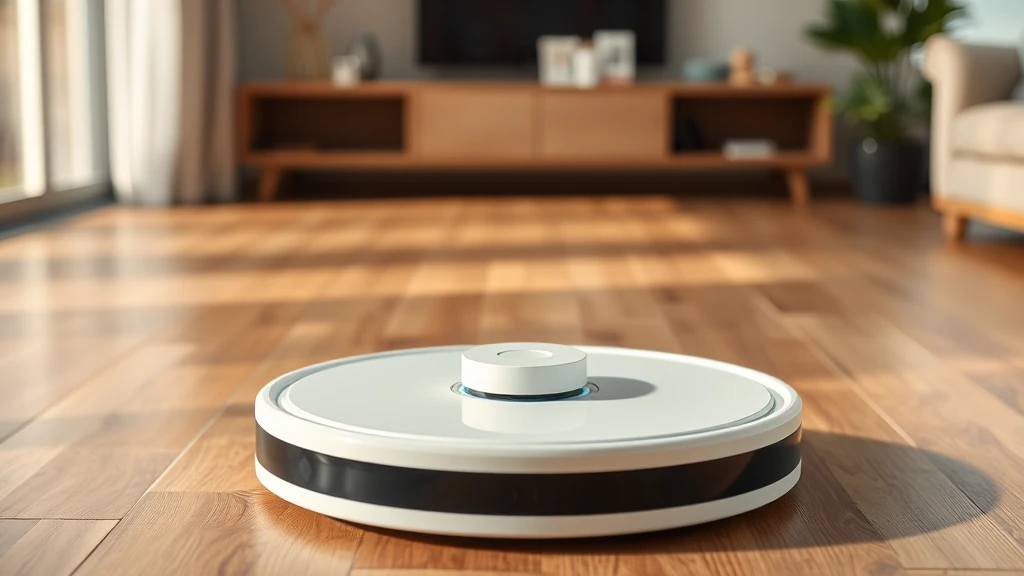
Profiles under 3 inches reach dust under beds and cabinets where traditional vacuums cannot. Extendable side brushes or FlexiArm systems pull debris from baseboards and corners without raising noise. For pet owners, anti-tangle roller designs and self-cleaning brushrolls keep hair from wrapping, preserving suction efficiency and quiet performance. Readers comparing setup options can review our technical analysis on can robot vacuums cross high thresholds.
HEPA filtration traps dander and allergens during operation. Compact diameters around 11 to 13 inches improve maneuverability in tight furniture layouts. Those prioritizing ultra-compact units for confined spaces should consult our overview of the smallest robot vacuum designs.
We evaluated top-rated models of quiet robot vacuum cleaner by systematically comparing published technical specifications, including measured noise output where available, suction ratings in Pascals, battery capacity, navigation sensor type, filtration standards, and self-maintenance features. Brand reliability was assessed through warranty length, availability of replacement parts, and historical software-update support across Amazon Renewed, Lefant, Dreame, and similar makers. User satisfaction metrics focused on consistent reports of real-world silence and reliability rather than marketing claims.
Each unit was scored on a weighted matrix prioritizing noise floor (highest weight), suction adaptability, runtime efficiency, obstacle avoidance accuracy, and total cost of ownership within the current entry-level to premium. Models lacking clear quiet-operation data or multi-surface capability were deprioritized. This data-first approach ensures recommendations remain objective and free from sponsored influence for 2026 buyers.
Wrap-Up: Which Model Delivers True Value?
After comparing specifications across the full set of top-rated options, clear leaders emerge for different needs. The Mova P10 Pro Ultra Gen 2 stands out as the Best Overall Quiet Robot Vacuum Cleaner thanks to its 26,000 Pa suction, triple anti-tangle system, 212°F hot-water mop washing, and explicit low-noise performance that supports whole-home cleaning with minimal disruption. Its all-in-one dock and edge-reach technology further reduce manual touch-ups while preserving quiet operation.
For Best Value / Budget Choice, the Lefant M210 Pro delivers 2200 Pa suction, six cleaning modes, app and voice control, and quiet performance at the lower end of the entry-level to premium, making it ideal for apartments or first-time buyers. The Amazon Renewed eufy 11S MAX offers a similarly strong quiet profile at 55 dB with BoostIQ and a slim 2.85-inch body for under-furniture access. As Best for Pet Hair and Complex Homes, the Shark AV2501AE provides Matrix Clean navigation, 60-day self-empty HEPA base, and self-cleaning brushroll that handle dander without raising noise levels.
Premium seekers may also consider the Roborock Qrevo Edge 2 for its 25,000 Pa suction, 3.14-inch ultra-slim body, and AI object recognition that keeps cleaning silent and efficient. Explore the broader selection of options in our vacuum cleaner category to match specific floor types and home sizes.
Frequently Asked Questions About Quiet Robot Vacuum Cleaner
What noise level should I expect from a good quiet robot vacuum cleaner?
A capable quiet robot vacuum cleaner should operate at or below 55 dB in standard mode, comparable to a microwave or quiet conversation. Models with adjustable suction further lower output on hard floors while boosting only when carpets require it, ensuring usable silence during work or rest hours.
Do quiet robot vacuums sacrifice cleaning power?
No, modern designs separate motor efficiency from noise through adaptive sensors and high-quality brush systems. Units such as the Lefant and eufy lines maintain strong suction ratings while holding noise near 55 dB, and premium options scale to 25,000 Pa without constant high-decibel operation.
How long do batteries last on a quiet-mode quiet robot vacuum cleaner?
Expect 100 to 200 minutes depending on the model and floor type. Quiet modes often extend runtime by reducing motor speed, and recharge-and-resume functions complete larger homes after automatic docking. Larger cells paired with efficient navigation maximize coverage between charges.
Are self-emptying docks compatible with low-noise operation?
Yes, self-empty bases empty debris quickly and then return the robot to standby, limiting extra sound to brief intervals every several weeks. Combined with HEPA filtration, these docks support hands-free maintenance while the primary cleaning cycle remains quiet. For related high-end automation, see comparisons with the Ecovacs Deebot T20 Omni robot vacuum and mop.
Is a quiet robot vacuum cleaner worth buying in 2026?
Yes, current models deliver measurable improvements in silence, mapping accuracy, and suction efficiency over earlier generations. With prices spanning $99.99 to $499.99 and options from leading manufacturers, most households can find a unit that reduces both dirt and daily noise without requiring constant supervision.
Quiet Models and Electrical Care
Low noise is a common buyer goal, but noise levels say little about electrical design. For general electrical safety information on household products, the International Electrotechnical Commission (IEC) is a useful place to start.