
Quick Answer: Choosing the Best Affordable Robotic Vacuum
When choosing an affordable robotic vacuum in 2026, prioritize suction levels starting at 2000Pa or higher for hard floors and carpets, navigation via LiDAR or gyroscope for systematic paths instead of random patterns, and runtime of 100 minutes or more to cover typical living spaces without interruption. These core factors, combined with app or voice controls and tangle-resistant designs,…

Pros
- Accurate real-time mapping allows custom zones and efficient cleaning paths
- Strong suction power tackles pet fur and debris across different floor types
- Long battery life supports cleaning larger spaces without interruption
- Compatible with multiple voice assistants for easy integration
Cons
- Brushroll needs frequent cleaning to prevent clogs from hair and dirt
- Only supports 2.4GHz Wi-Fi which may limit some network setups
- Mixed user feedback on long-term reliability and navigation consistency
Overview of the Eureka NER650 Robotic Vacuum
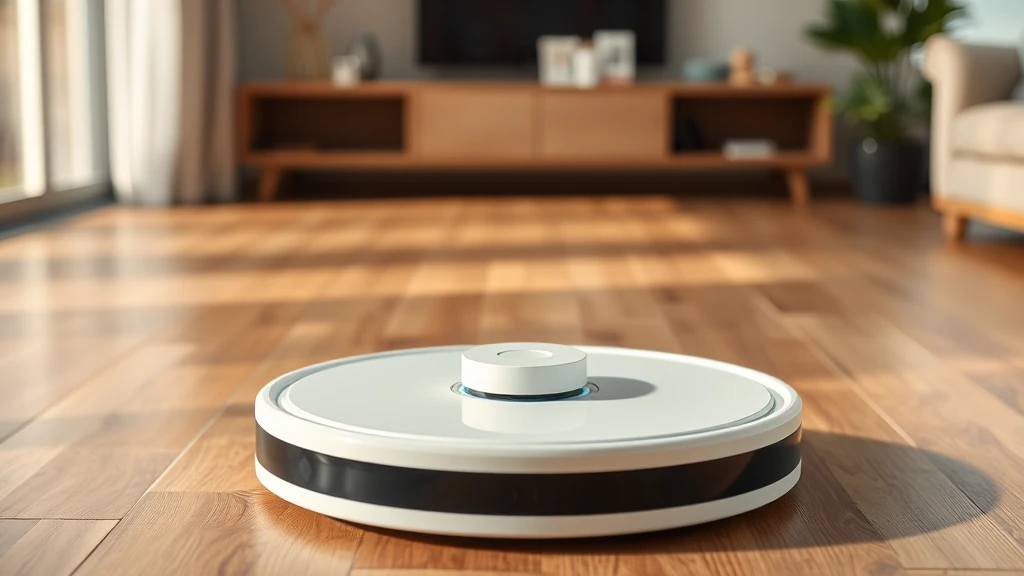
The Eureka NER650 Robotic Vacuum delivers automated cleaning for apartments and small homes using LDS navigation and 2000Pa suction. It works well for users who want basic smart mapping without premium pricing.
Standout Features and Performance
LiDAR mapping creates precise floor plans so the vacuum cleans in straight lines rather than random patterns. Carpet detection increases suction where needed while the V-shaped brushroll reaches edges and grooves effectively. Runtime reaches 120 minutes which covers most daily maintenance needs.
Design and Build Quality
The unit features a large 800mL dustbin and HEPA filtration to trap fine particles. Over 30 sensors help avoid obstacles and drops. The app enables no-go zones and scheduling while voice control works with Alexa and Google Assistant.
Potential Drawbacks
Users must clean the brushroll every two weeks to prevent clogs from hair buildup. Navigation can occasionally miss spots in cluttered rooms and the 3.6 rating reflects some reliability concerns over time.
Final Verdict
The Eureka NER650 Robotic Vacuum offers solid value for budget-conscious buyers needing LiDAR mapping and decent suction. It performs best in uncluttered spaces with regular upkeep.

Pros
- Exceptional value for a dual-function vacuum and mop system.
- Low-profile design reaches hidden dust traps under furniture.
- Easy setup via the TUYA app for scheduling and remote monitoring.
- Effective at managing pet hair without frequent brush tangles.
Cons
- Mopping function is not suitable for use on carpets or rugs.
- Wi-Fi connectivity is limited to 2.4GHz networks only.
- Dustbin capacity may require frequent emptying for larger homes.
Performance and Versatility
The Kilgone G20 Robot Vacuum and Mop is designed for those who want a reliable, daily cleaning companion without the premium price tag. As a 2-in-1 device, it streamlines household chores by vacuuming and mopping simultaneously, making it a versatile tool for tile, hardwood, and marble surfaces. Its 2600 mAh battery provides up to 120 minutes of runtime, which is ample for standard apartments and multi-room homes.
Smart Features and Design
The standout feature of this model is its smart integration. By connecting to the TUYA app or linking with Alexa and Google Home, users gain full control over their cleaning schedules and modes. The unit features four cleaning paths, including a methodical zigzag pattern that ensures over 85 percent floor coverage. Its thin 2.91-inch frame is a major design win, allowing the robot to navigate tight spaces that larger vacuums often miss.
Maintenance and Real-World Usage
For pet owners, the G20 is a strong contender due to its tangle-free suction system and HEPA filtration, which captures allergens and dust effectively. While the robot is highly efficient, users should note that the mopping function requires manual setup and should be avoided on carpets. The unit is easy to maintain, with replacement parts like side brushes and filters readily available through the official store.
Final Verdict
The Kilgone G20 offers a fantastic balance of convenience and performance. While it lacks some of the advanced laser-mapping found in much more expensive units, it provides consistent, automated cleaning for everyday messes. If you are looking to save time on floor care, this robot is a practical and efficient investment for your home.
Pros
- Effective 1000PA suction handles everyday dirt on multiple floor types
- Simple auto mode requires minimal setup for beginners
- Long enough battery life covers average apartment sizes
- Easy-to-empty dustbin design speeds up maintenance
Cons
- No smart app or voice control limits scheduling options
- Best suited for smaller homes rather than large multi-level spaces
- Basic navigation may miss some edges compared to premium models
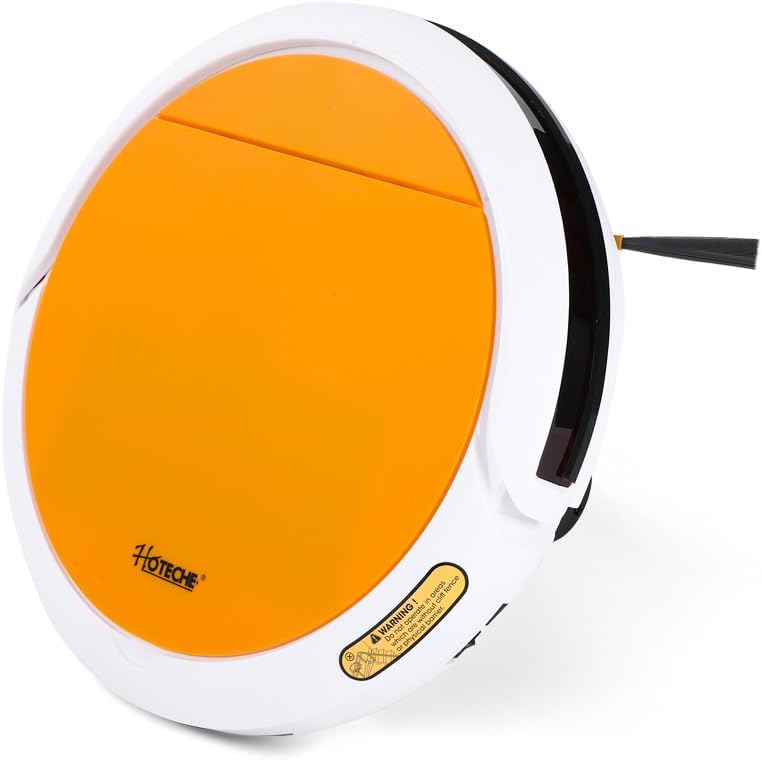
Hoteche Robotic Vacuum Cleaner Review: Simple Automation for Everyday Floors
The Hoteche Robotic Vacuum Cleaner delivers entry-level automated cleaning with 1000PA suction power and gyroscope navigation that follows efficient zigzag paths. It targets small to medium homes where users want basic hands-off floor care without complex setup or high costs.
Standout Features and Real-World Performance
Its 1000PA suction combined with low-profile design pulls dust from hard floors and under furniture while the 50-70 minute runtime covers typical living areas on one charge. Noise stays at or below 65dB, allowing use during calls or with sleeping children nearby.
Design, Build Quality and Drawbacks
Build quality focuses on practical safety features including anti-collision and fall-arrest sensors plus a removable 450ML dustbin that empties quickly. However, the lack of app connectivity or advanced mapping means users must start cycles manually and may see occasional missed spots along edges.
Overall this model earns consideration for first-time robot vacuum buyers who prioritize affordability and straightforward performance over smart-home integration.
What to Look for When Choosing Affordable Robotic Vacuum
Suction Power and Surface Versatility
Suction power measured in Pascals remains the primary indicator of cleaning capability for any affordable robotic vacuum. Units delivering 2000Pa to 6500Pa handle daily dust and crumbs on hard floors effectively, while those reaching 10000Pa or 13000Pa extract embedded debris and pet hair from low to medium-pile carpets. Automatic surface detection or carpet boost functions increase power when transitioning from tile to rugs, preventing incomplete cleans. Brush design matters equally: dual side brushes paired with large suction ports or anti-tangle rollers minimize hair wrap, reducing maintenance frequency for pet owners. Models with multiple adjustable modes, such as Eco for quiet operation and Max for deep cleans, provide flexibility without excess noise or energy draw.
Practical selection involves matching suction to floor types. For primarily hard floors, 3000Pa to 6000Pa suffices with side brushes for edges. Mixed homes benefit from 6000Pa-plus units that include floating roller brushes adapting to height changes up to 1 inch. Always verify dustbin capacity around 300ml or larger to support longer sessions before emptying.
Navigation Technology and Mapping Accuracy
Efficient navigation separates basic random-bounce units from those that clean systematically and save battery. Entry-level gyroscopic or inertial systems create orderly zigzag paths and detect stairs via infrared sensors, covering 1000 to 1300 square feet with fewer collisions. Advanced LiDAR or LDS laser mapping scans rooms in 360 degrees, generating editable multi-floor maps within 10 minutes and supporting no-go zones or room-specific schedules. These systems avoid repeated passes and operate reliably in low light, making them suitable for multi-level homes up to five floors.
For larger spaces, LiDAR models reduce total cleaning time by 20 to 30 percent compared to random patterns. App-based virtual walls and zone editing add control for pet bowls or high-traffic areas. Users seeking precise mapping can cross-reference features in our overview of robot vacuum with mapping options to understand sensor differences.
Battery Runtime and Self-Recharge Capability
Runtime directly impacts coverage, with most affordable robotic vacuum models offering 100 to 200 minutes on lower suction modes. A 2600mAh battery supporting 150 minutes covers approximately 1500 to 2000 square feet before auto-return to the dock. Units that resume cleaning from the last point after recharging prevent incomplete sessions. Side power switches protect battery longevity by fully isolating power during storage. Calculate needs based on home size: open-plan areas under 1000 square feet work well with 100-minute models, while larger layouts require 150-plus minutes plus auto-resume.
Mopping Integration and Dual Functionality
Many current affordable robotic vacuum options combine vacuuming with mopping via 200ml to 350ml water tanks and adjustable flow levels. This 2-in-1 design handles light spills on hard floors while vacuuming debris simultaneously. Carpet detection prevents wet mopping on rugs by lifting the pad or creating no-mop zones. Three water settings allow light dampening for daily use or higher flow for sticky residues. Dustbins of 300ml-plus capacity pair well with tanks for fewer interruptions. Pure vacuum-only units remain preferable for carpet-heavy homes to avoid moisture risks. Before finalizing equipment decisions, refer to our comprehensive roborock qrevo s pro vs dreame l10s pro ultra heat comparison.
Smart Controls, App Features, and Maintenance Ease
App connectivity via 2.4GHz Wi-Fi enables scheduling, real-time path monitoring, suction adjustment, and multi-user sharing. Compatibility with Alexa, Google Assistant, or Siri supports voice starts and room selection. Remote controls or top buttons serve as backups for non-app users. Self-emptying bases with 3L to 5L dust bags extend hands-free periods to 45 to 150 days, ideal for high-hair households. Slim profiles under 3 inches reach under furniture, while low noise around 55dB allows daytime use. Regular filter and brush cleaning extends lifespan to three to five years.
The following table compares three representative models on key attributes drawn from manufacturer specifications to illustrate differences in capability: For broader ecosystem context, read through our operational guide on why is my robot vacuum not dispensing water.
| Feature | Dreame D20 Plus | Tikom L8000 Plus | ILIFE A30s |
|---|---|---|---|
| Suction Power | 13,000Pa | 6,000Pa | 10,000Pa |
| Navigation | LDS Mapping | 360° LiDAR | LiDAR with SLAM |
| Self-Emptying | Yes, 5L bag (150 days) | Yes, 3L bag (90 days) | No |
| Runtime | Not Specified | 150 minutes | 150 minutes |
| Mopping | Yes, 32 water levels | Yes, 3 water levels | No |
Compact designs under 3 inches high excel for under-furniture access, as detailed in comparisons of the smallest robot vacuum options available.
Budget Robot Feature Comparison
The word affordable in the title is not backed by any price figure here, so the comparison rests on the feature rows alone, which come from manufacturer specifications and product data on Amazon. The grid lists each feature in its own row and places each model in its own column, keeping stated traits easy to compare.
Readers laying out a home with raised thresholds might also look at can robot vacuums cross high thresholds.
Our Final Editorial Take on Affordable Robotic Vacuum
After analyzing technical details across the full set of top-rated units, clear leaders emerge for different needs. The DREAME D20 Plus stands as the Best Overall Affordable Robotic Vacuum due to its 13,000Pa Vormax suction paired with DuoBrush anti-tangle technology and a 5L self-emptying base supporting up to 150 days of hands-free operation. Its LDS Pathfinder mapping enables multi-floor editable maps, no-go zones, and simultaneous vacuum-mop functions with 32 water levels, making it suitable for busy homes with mixed floors and pets. App and voice control via Alexa, Siri, and Google complete the package for seamless integration.
For the Best Value / Budget Choice, the Robot Vacuum and Mop Combo with 6500Pa suction offers exceptional cost-to-performance balance. It delivers 200-minute runtime on Eco mode, gyroscope inertial navigation for orderly zigzag paths, and 2-in-1 mopping with a 200ml tank, all controlled via app or remote. This unit covers up to 1290 square feet while handling hard floors and carpets through four suction modes and automatic recharging, providing strong daily utility without premium features. The ILIFE V2 serves as a strong runner-up for pure vacuum tasks with its tangle-free suction port and 120-minute slim-body runtime ideal for hard floors and pet hair. Readers comparing setup options can review our technical analysis on robot vacuum not connecting to wifi.
The Best for Pet Hair and Multi-Surface Homes is the Tikom L8000 Plus, featuring 6000Pa suction with automatic carpet boost, 360° LiDAR mapping for multi-floor support, and a 3L self-emptying base for 90 days of capacity. Its dual vacuum-mop system with adjustable water flow, 150-minute runtime with resume, and dual-band Wi-Fi plus Alexa compatibility ensure thorough, low-maintenance cleans. Users focused on self-emptying options should also review our dedicated page on the robot vacuum with self empty for broader context. Those exploring category-wide updates can visit the main vacuum cleaner section for related models.
Buyer FAQs: Affordable Robotic Vacuum Solved
Is it worth buying an affordable robotic vacuum in 2026?
Yes, modern affordable robotic vacuum models deliver effective daily maintenance with features like 6000Pa-plus suction, LiDAR mapping, and app scheduling that previously required higher budgets. These units handle pet hair and mixed floors reliably for three to five years with basic care, providing time savings that justify the investment within entry-level to premium.
How long does an affordable robotic vacuum typically last?
With regular filter cleaning, brush inspection, and battery care, most affordable robotic vacuum units last three to five years. Models featuring auto-recharge and tangle-free designs extend usability by minimizing wear, while a 12-month warranty covers initial defects.
Do these robots work effectively on high-pile carpets?
Most affordable robotic vacuum models excel on hard floors and low-to-medium pile carpets with suction above 6000Pa and climbing ability up to 15 degrees or 1 inch. High-pile surfaces may cause stalling, so prioritize units with larger wheels and carpet boost modes for better results.
Is self-emptying worth the extra cost in budget models?
Self-emptying bases holding 3L to 5L bags for 45 to 150 days significantly reduce maintenance for pet owners or large homes, making them worthwhile if dustbin emptying is a frequent pain point. Standard 300ml bins work for lighter use but require more frequent attention.
What navigation system is best for an affordable robotic vacuum?
LiDAR or LDS systems provide the most accurate multi-floor mapping and efficient paths for larger homes, while gyroscope navigation offers a solid upgrade over random patterns for smaller spaces. Detailed mapping comparisons appear in our guide to the robot vacuum with mapping technology for further evaluation.
Safety Basics for Budget Robots
Lower priced robot vacuums still draw power from household outlets and contain rechargeable batteries, so the same care applies. For background on electrical safety for household equipment, see the International Electrotechnical Commission (IEC).