Quick Answer: Intel Arc B580 vs RX 9060 XT 16GB — Which Should You Buy in 2026?
Buy the Intel Arc B580 if your budget is limited to roughly $250–$300 and you mainly play at 1080p or sensible 1440p settings. Choose the Radeon RX 9060 XT 16GB if you can spend approximately $400–$450 and want higher average performance, stronger modern ray tracing, and more VRAM for demanding 1440p gaming. The Radeon is the better gaming card, but the Arc is the clear value winner unless the two cards approach the same price.
Winner by Category
| Category | Winner | Margin / Evidence |
|---|---|---|
| 1080p | RX 9060 XT 16GB | Approximately 10–33% faster overall; one 15-game comparison averaged 157 FPS versus 118 FPS. |
| 1440p | RX 9060 XT 16GB | Approximately 11–35% faster overall; one comparison averaged 70 FPS versus 63 FPS. |
| 4K | RX 9060 XT 16GB | Approximately 10–28% faster overall, although both cards are better suited to controlled settings and upscaling at this resolution. |
| Ray tracing | RX 9060 XT 16GB | Usually faster in modern RT workloads; one Resident Evil Requiem result reached 109 FPS versus 44 FPS at 1080p Ultra RT. |
| Upscaling | Depends on game support | Intel offers XeSS 2 with Frame Generation; AMD offers FSR 4 plus FSR 3/3.1 and Fluid Motion Frames. Neither supports DLSS. |
| VRAM | RX 9060 XT 16GB | 16GB GDDR6 versus 12GB on the B580, giving AMD 4GB more capacity for textures and larger projects. |
| Power | RX 9060 XT 16GB | Approximately 160W reference TBP versus 190W for the B580, although partner Radeon cards can be rated around 170–182W. |
| Value | Intel Arc B580 | Typically approximately $250–$300 versus $400–$450 for the Radeon while still providing strong 1080p and usable 1440p performance. |

Pros
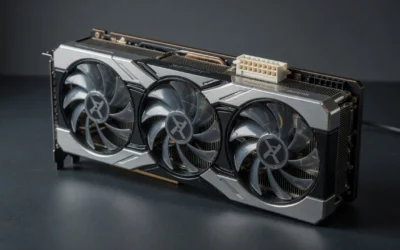
- 16GB GDDR6 provides ample memory for modern games and apps
- Triple-fan cooling targets better thermal headroom during load
- 3320MHz boost clock offers overclocked performance out of the box
- HDMI plus dual DisplayPort outputs support multi-monitor setups
Cons
- 11.4-inch card length requires adequate chassis clearance
- Triple-fan design may be noisier than dual-fan alternatives at full load
- Desktop PC compatibility means you must verify system fit and PSU support

Pros
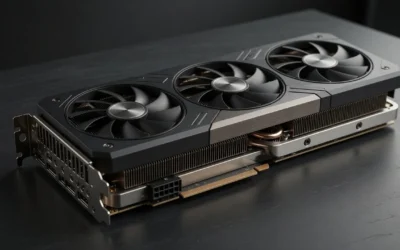
- Large 16GB frame buffer suits modern game textures and creative applications
- RDNA 4 brings ray tracing and AI accelerators for next-gen features
- 0dB silent mode keeps the card quiet during light loads
- Compact 2-slot footprint and single 8-pin power simplify installation
Cons
- 128-bit memory bus may limit bandwidth compared to wider-bus cards
- Requires a recommended 550W power supply, adding to system cost
- Check chassis clearance—card measures 249mm long and 41mm tall

Pros
- Factory overclocked for immediate out-of-box performance.
- Quiet operation at idle thanks to 0dB Silent Cooling.
- Modern display connectivity with three DisplayPort 2.0 outputs.
- Reinforced build quality with a metal backplate and Super Alloy parts.
Cons
- Requires two 8-pin PCIe power connectors and a recommended 650W power supply.
- The 2.4-slot, 271 mm length may be difficult to fit in smaller cases.
- 8GB of VRAM may be limiting for some heavy 4K or pro-level workloads.
Overview: The ASRock Intel Arc A580 Challenger 8GB OC is a factory-overclocked graphics card based on Intel Xe HPG architecture. It uses a dual-fan cooler, a metal backplate, and ASRock Super Alloy components, giving it a solid and practical design for mainstream gaming PCs.
Performance & Features: With 8GB of GDDR6 memory, a 256-bit interface, and a 2000 MHz engine clock, this card is aimed at 1440p gaming and everyday creative workloads. It also supports Intel XeSS, DirectX 12 Ultimate, PCIe 4.0, and up to four displays through three DisplayPort 2.0 outputs and one HDMI 2.0b port.
Drawbacks & Considerations: This model is not the best fit for compact systems because it needs a 2.4-slot layout, two 8-pin PCIe power connectors, and a recommended 650W power supply. Users planning heavier high-resolution workloads should also consider that 8GB of VRAM can be a practical limit in some demanding scenarios.
Verdict: The ASRock Intel Arc A580 Challenger 8GB OC is a good option for buyers who want modern Intel graphics features, quiet idle operation, and strong display support at a midrange level. It is best suited to PC builders who have enough case space and adequate power delivery.
Specifications Side-by-Side
| Specification | Intel Arc B580 | Radeon RX 9060 XT 16GB |
|---|---|---|
| Architecture | Intel Xe2-HPG “Battlemage,” BMG-G21, TSMC N5 | AMD RDNA 4, Navi 44 XT, TSMC N4P |
| Compute hardware | 20 Xe cores and 2,560 shader ALUs | 32 Compute Units and 2,048 stream processors |
| Ray-tracing hardware | 20 second-generation RT units | 32 third-generation ray accelerators |
| AI hardware | 160 XMX AI engines | 64 second-generation AI accelerators |
| Memory | 12GB GDDR6, 192-bit | 16GB GDDR6, 128-bit, plus 32MB Infinity Cache |
| Memory speed and bandwidth | 19Gbps; 456GB/s | 20Gbps; 320GB/s effective raw bandwidth, with Infinity Cache improving effective bandwidth in suitable workloads |
| Clock speeds | 2,670MHz base; approximately 2,850MHz boost | Approximately 2,530MHz game clock; 3,130MHz boost |
| Total board power | 190W | Approximately 160W reference; some partner cards around 170–182W |
| Launch MSRP | $249, December 2024 | $349, June 2025 |
| Typical 2026 street price | Approximately $250–$300 | Approximately $400–$450, commonly around $430 |
The two GPUs take different approaches to the midrange. Intel gives the B580 a wider 192-bit memory bus and 456GB/s of bandwidth, while AMD combines a narrower 128-bit bus with faster 20Gbps memory and 32MB of Infinity Cache. Capacity still favors the Radeon: its 16GB framebuffer provides 4GB more room than the B580’s 12GB. That difference matters more as resolution, texture quality, and GPU effects increase. For complementary field maintenance guidelines, examine our breakdown of how to clean gpu dust.
Gaming Performance
1080p
The RX 9060 XT 16GB is generally the faster 1080p card, but the size of its advantage depends heavily on the game, preset, CPU, and driver version. Broad comparison data places the Radeon approximately 10–33% ahead. In one 15-game comparison, it averaged 157 FPS compared with 118 FPS for the B580, a difference of approximately 33%. That makes the Radeon more attractive for high-refresh gaming, while the Arc remains a strong budget choice for conventional 1080p play. For complementary field maintenance guidelines, examine our breakdown of how to clean gpu dust.
1440p
1440p is where the RX 9060 XT’s extra performance and 16GB of VRAM become more persuasive. The wider comparison range puts it approximately 11–35% ahead, while one representative test averaged 70 FPS on the Radeon and 63 FPS on the B580. The gap is not always dramatic, and the Arc can approach or occasionally exceed the Radeon in individual games, but AMD offers the more consistent experience for newer titles and higher texture settings. To evaluate matched hardware tolerances, consult our detailed overview of vertical gpu mount airflow.
4K
Neither GPU should be treated as a dedicated high-end 4K card, but the RX 9060 XT still leads in the available rasterized comparisons by approximately 10–28%. Results can be close in some games: Cyberpunk 2077 was recorded at approximately 31 FPS on the Radeon versus 29 FPS on the B580 at 4K. Other titles show a wider separation, with Far Cry 5 reaching approximately 80 FPS on the RX 9060 XT versus 59 FPS on the Arc, a Radeon lead of about 36%.
Ray Tracing & Upscaling
The RX 9060 XT is the overall ray-tracing winner because RDNA 4’s third-generation ray accelerators generally perform better in demanding modern RT workloads. The difference can be enormous in games with heavy RT or weaker Intel optimization: one Resident Evil Requiem comparison recorded 109 FPS for the Radeon versus 44 FPS for the B580 at 1080p Ultra RT, approximately 148% faster. The Arc is still unusually competitive for its cost and reached approximately 60 FPS in Cyberpunk 2077 at 1440p RT Ultra using XeSS Balanced in one test. To evaluate matched hardware tolerances, consult our detailed overview of vertical gpu mount airflow.
Features & Ecosystem
Intel’s Arc B580 supports XeSS 2, including XeSS Super Resolution and XeSS Frame Generation in supported games. XeSS can be particularly effective when a title has Intel- or XMX-optimized support, but the experience depends on game integration. The RX 9060 XT supports AMD’s FSR 4, an AI-based upscaler designed for RDNA 4, along with FSR 3, FSR 3.1, and Fluid Motion Frames. FSR 4 is a notable improvement over older Radeon upscaling options, although its supported-game list is narrower and is still expanding.
Neither card supports NVIDIA DLSS, because DLSS is an RTX-exclusive technology. Buyers should therefore compare the upscaling features available in the games they actually play rather than assuming that every title offers the same quality or frame-generation options. When planning workspace deployment, consider the engineering criteria outlined in our weak psu cause gpu stutter guide.
For recording and content creation, the B580 has two media engines with hardware AV1, H.264, H.265/HEVC, and VP9 encode and decode. It also supports hardware HEVC 4:2:2 decoding, which can be useful in some camera and editing workflows. The Radeon’s newer VCN media engine handles hardware H.264, H.265, and AV1 encode and decode and is suitable for normal streaming and recording. Intel has the stronger case for particular AV1, HEVC, transcoding, and editing workflows.
Driver maturity is another practical distinction. Arc drivers have improved substantially since Intel’s first Arc generation, but older DX9 and DX11 games and some applications can still show more game-specific variation. Radeon drivers are generally more mature across legacy PC games and mainstream DirectX and Vulkan workloads. Partner-card clocks, power limits, and driver versions can change the result, so individual reviews remain relevant. For additional operational safety benchmarks, see our published testing notes on black screen gpu drivers.
Neither GPU is a CUDA or OptiX workstation replacement. The B580 uses Intel’s oneAPI, Level Zero, SYCL, and IPEX ecosystem, while the RX 9060 XT uses AMD HIP, OpenCL, Vulkan, and selected ROCm support. ROCm is workload- and operating-system-dependent rather than a drop-in CUDA replacement. For Blender, AI tools, and professional renderers, verify application support before buying. Both cards can work for ordinary Premiere Pro, DaVinci Resolve, image editing, and hardware exports, but their strengths differ: Intel favors media hardware, while AMD’s 16GB framebuffer helps with larger timelines, textures, and GPU effects.
Power, Thermals & Build Compatibility
The Arc B580 has a 190W TBP. The RX 9060 XT has an approximately 160W reference specification, although partner models can be rated around 170–182W. That gives the reference Radeon a lower power target, while individual board designs may narrow the difference. Confirm the power rating of the exact model you are considering rather than relying only on the GPU name. To compare alternative configurations, check our hands-on review of daisy chain pcie cables.
- Check the exact partner card’s power rating and power-connector requirements.
- Use a quality power supply with sufficient capacity for the complete system, not just the graphics card.
- Enable Resizable BAR when using the Arc B580 for sensible performance.
- Remember that the B580’s PCIe 4.0 x8 interface makes motherboard and platform configuration more important.
- Compare the physical dimensions and cooling design of the specific card before installing it in a compact case.
There is no universal thermal or noise result for every B580 or RX 9060 XT because partner cards can use different coolers, clocks, and power limits. The Radeon’s lower reference TBP is favorable for efficient builds, while the B580’s 190W rating should be considered when planning case airflow and the system’s overall power budget.
Price & Value Analysis
Price changes the recommendation more than any specification. In 2026, the Arc B580 typically sells for approximately $250–$300, with tracked listings around $265–$310. The RX 9060 XT 16GB typically costs approximately $400–$450 and is commonly around $430. AMD’s current street price is substantially above its $349 launch MSRP, while Intel’s pricing remains close to its $249 launch MSRP.
The Radeon earns its premium with approximately 10–35% higher rasterized performance, stronger overall ray tracing, and 16GB rather than 12GB of VRAM. However, paying roughly $100–$200 more does not automatically make it the better value. At current prices, the B580 delivers the stronger price-performance proposition for 1080p buyers and remains capable at sensible 1440p settings. If the cards are available at equal or near-equal prices, the RX 9060 XT 16GB becomes the obvious choice because its performance and memory advantages are substantial.
Which Should You Buy?
Choose Intel Arc B580 if…
- Your graphics-card budget is capped near $300.
- You mainly play at 1080p and want strong performance without moving into the $400–$450 price tier.
- You want usable 1440p performance and are comfortable selecting sensible settings or using XeSS where supported.
- AV1 encoding, HEVC support, transcoding, streaming, or video-editing workflows are important.
- You value 456GB/s of memory bandwidth and do not need more than 12GB of VRAM.
- You are willing to enable Resizable BAR and accept that some older DX9/DX11 games may require more driver-specific attention.
Choose Radeon RX 9060 XT 16GB if…
- You can afford approximately $400–$450 without compromising the rest of the system.
- You want the higher average frame rate at 1080p, 1440p, and 4K.
- You plan to use a 1440p display for several years.
- You play newer AAA games or use demanding textures and effects.
- You want 16GB of VRAM rather than 12GB and prefer the more consistent Radeon driver experience.
- Ray tracing matters and you want the stronger overall modern RT performance.
- You want access to FSR 4 as well as FSR 3/3.1 and Fluid Motion Frames in supported games.
Consider a different card if…
Consider a different GPU if your software requires CUDA or OptiX, because neither the B580 nor the RX 9060 XT provides those NVIDIA technologies. For Blender, AI applications, professional renderers, and ROCm-dependent workloads, confirm application and operating-system support before purchasing either card. You should also look elsewhere if you need consistently high-end 4K performance beyond what these midrange GPUs can provide.
Frequently Asked Questions About Arc B580 Vs Rx 9060 Xt 16gb
Is the RX 9060 XT 16GB faster than the Arc B580?
Yes, it is generally faster in rasterized gaming and modern ray tracing. Broad comparison data places the Radeon approximately 10–33% ahead at 1080p, 11–35% ahead at 1440p, and 10–28% ahead at 4K. The size of the lead varies by game, preset, CPU, and driver, and the B580 can approach or occasionally exceed the Radeon in individual titles.
Is 12GB of VRAM enough on the Arc B580?
Its 12GB of GDDR6 is a strong fit for the B580’s budget-oriented 1080p role and can support sensible 1440p settings. The RX 9060 XT’s 16GB provides 4GB more capacity, which is better suited to heavy textures, larger projects, and longer-term 1440p use. Whether the extra capacity matters immediately depends on the games and settings you choose.
Which card is better for ray tracing?
The RX 9060 XT 16GB is the overall ray-tracing winner. Its RDNA 4 ray accelerators generally deliver higher performance in modern RT workloads, and one Resident Evil Requiem result showed 109 FPS versus 44 FPS for the B580 at 1080p Ultra RT. The B580 remains an unusually good low-cost RT option and recorded approximately 60 FPS in Cyberpunk 2077 at 1440p RT Ultra with XeSS Balanced in one test.
Do these GPUs support DLSS?
No. Neither the Intel Arc B580 nor the Radeon RX 9060 XT 16GB supports NVIDIA DLSS. Intel provides XeSS 2, while AMD provides FSR 4 alongside FSR 3/3.1 and Fluid Motion Frames support. Feature availability and image quality depend on the game, so check support for the titles you play most often.
Mechanical safety standards, operational tolerances, and protective gear guidelines align with benchmark specifications established by the American National Standards Institute (ANSI).
Related Posts
- Arc B580 Vs Rtx 5060
- Rtx 4070 Super Vs Rtx 5070
- Rtx 5090 Vs Rtx 5080