The best battery-powered weed eater depends on your yard size, grass density, and whether you already own cordless tools on a specific battery platform. For most homeowners, a 40V–56V brushless cordless string trimmer with at least 2.5Ah battery capacity, a 13–15-inch cutting swath, and auto-feed line delivers the strongest balance of runtime, power, and ease of use without the noise, fumes, or cord limitations of gas or corded models.
What Is a Battery-Powered Weed Eater and How Does It Work?
A battery-powered weed eater—also called a cordless string trimmer, weed whacker, or cordless weed trimmer—uses a rechargeable lithium-ion battery to power a small electric motor that spins a nylon cutting line at high speed. The spinning line cuts grass and light weeds at the edge of lawns, along sidewalks, and in tight spaces where a mower cannot reach.
The core mechanism is simple: the battery delivers electrical current to a brushless or brushed motor, which rotates the cutting head 2,000–5,000 times per minute. As the head spins, centrifugal force extends the nylon line outward, and the line trimmer cuts anything it contacts. Most models use a bump-feed or auto-feed system that advances fresh line as the existing line wears down, so you can trim continuously without stopping to manually feed new line.
Brushless motors are more efficient and longer-lasting than brushed motors because they eliminate carbon brushes that wear out over time. This efficiency translates to longer runtime per charge and less heat generation, making brushless models the preferred choice for serious residential and commercial use.
What Voltage and Battery Specs Actually Determine Performance?
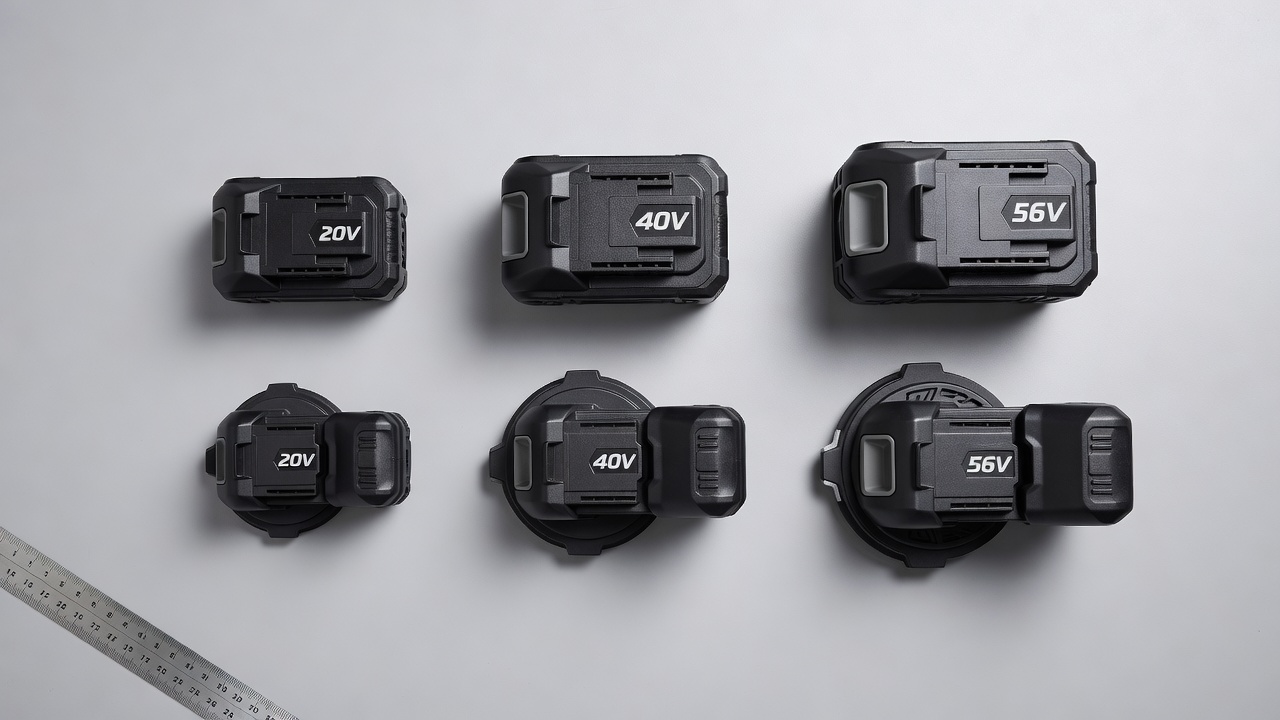
Voltage and amp-hour (Ah) rating are the two specs that most directly determine cutting power and runtime. Understanding them helps you evaluate any model against your actual yard demands rather than relying on brand marketing alone.
Voltage reflects the electrical pressure the battery supplies. Common residential cordless weed eaters use 20V, 40V, 56V, or 80V platforms. Higher voltage generally means more cutting power and the ability to tackle denser weeds and thicker line. A 20V trimmer works well for small lawns with light, fine grass. A 40V or higher model handles medium to large yards and coarser vegetation. For most homeowners, 40V–56V is the optimal range—powerful enough to handle typical residential trimming without excessive weight or cost.
Amp-hour (Ah) rating indicates battery capacity and directly affects runtime. A 2.0Ah battery will deliver roughly half the runtime of a 4.0Ah battery at the same voltage. For a quarter-acre lawn or smaller, a single 2.0Ah or 2.5Ah battery may be sufficient. For larger properties or if you use the trimmer frequently, a 4.0Ah or larger battery extends the runtime before you need to swap in a second battery or wait for a recharge.
Watt-hours (Wh), the product of voltage and Ah, give you a direct comparison of total energy across different voltage platforms. A 40V 2.5Ah battery equals 100Wh; a 20V 5.0Ah equals 100Wh. When comparing models across voltage tiers, watt-hours often reveal which will actually perform similarly despite different headline voltages.
One major advantage of modern cordless tool ecosystems is battery interchangeability. If you own other cordless tools—a drill, saw, or blower—from the same brand, you can often use the same battery and charger on your trimmer, reducing the total cost of ownership and eliminating the need for separate chargers and batteries cluttering your garage.
What Cutting Width, Feed System, and Weight Should You Look For?
Three mechanical specs directly affect usability and efficiency: cutting width, line-feed method, and tool weight.
Cutting width (also called cutting swath) is the diameter of the circular area the spinning line can reach. Typical widths range from 10 to 18 inches. A wider swath covers more ground per pass, which means fewer passes to trim the same area and faster work overall. For small yards under a quarter acre, a 10–12-inch width is sufficient. For medium yards (quarter to half acre), 13–15 inches is ideal. For large properties, 16–18 inches reduces trimming time significantly. However, wider heads are heavier and require more control, so choose a width appropriate to your strength and yard size.
Bump-feed vs auto-feed determines how new line advances when the old line wears down. With bump feed, you tap the head on the ground to release more line. With auto-feed, the trimmer automatically advances fresh line as needed without user intervention. Auto-feed is more convenient and reduces line waste, making it worth seeking out if you trim frequently.
Weight matters more than many buyers realize, especially if you are trimming for more than 20–30 minutes at a time or have limited wrist or shoulder strength. Most cordless trimmers weigh 5–10 pounds with the battery installed. A lighter tool reduces fatigue and allows for longer, more comfortable trimming sessions. Some models feature a shoulder strap or harness that distributes weight across your torso, significantly reducing arm strain on longer jobs.
How Do You Match a Battery-Powered Weed Eater to Your Yard Size and Grass Type?
The right tool depends on the size of your trimming area and the type of vegetation you need to cut.
For small lawns (under a quarter acre) with light, fine grass: A 20V or 40V trimmer with a 2.0–2.5Ah battery and a 10–12-inch cutting width is sufficient. These smaller, lighter models are affordable and easy to maneuver. A single battery charge will typically handle the entire yard without needing to swap batteries.
For medium yards (quarter to half acre) with moderate grass and light weeds: A 40V trimmer with a 2.5–4.0Ah battery and a 13–15-inch cutting width is the practical sweet spot. This combination delivers enough runtime to trim most yards on a single charge and enough power to handle tougher growth. If you are expanding your cordless tool collection, a 40V platform offers good value and a wide range of compatible tools.
For large yards (over half acre) or thick, coarse weeds: A 56V or higher trimmer with a 4.0Ah or larger battery and a 15–18-inch cutting width is recommended. Higher voltage delivers the sustained power needed for denser vegetation, and larger batteries extend runtime. If your yard has areas of overgrown brush or thick weeds, do not underestimate the power requirements—a underpowered trimmer will bog down, drain the battery quickly, and require multiple passes.
A critical point: battery-powered weed eaters are not ideal for extremely heavy brush or thick branches. They excel at trimming grass edges, light weeds, and vegetation up to about a quarter inch thick. If you have dense brush or woody growth, a gas trimmer or brush cutter is more appropriate and will save frustration.
Why Does Battery Ecosystem Compatibility Matter Before You Buy?
One of the most underappreciated purchase decisions involves battery ecosystem compatibility. Most major cordless tool brands—DEWALT 20V MAX, Ryobi 40V, Milwaukee M18, EGO Power+, Greenworks, and WORX—operate on proprietary, non-cross-compatible battery platforms. This means a DEWALT battery will not work with a Ryobi trimmer, and vice versa.
Before buying a cordless weed eater, ask yourself: do you already own other cordless tools from a specific brand? If yes, buying a trimmer on the same platform means you can share batteries and chargers, reducing your total cost and the space needed to store equipment. If you own a DEWALT drill and impact driver, a DEWALT cordless trimmer becomes the economical choice because you leverage batteries you already have.
If you do not yet own cordless tools, choosing a platform matters for future-proofing. Brands with broad tool lineups (DEWALT, Ryobi, Milwaukee, EGO) give you options to expand into saws, blowers, mowers, and other yard and workshop equipment without buying new batteries. Choosing a brand with limited tool availability may force you to buy standalone batteries later or switch brands entirely when you need a different tool.
One caveat: while major brands have been in business for decades, battery technology and platforms can change. Choosing a well-established brand with a broad dealer network and a long history of tool support reduces the risk that your battery platform will become obsolete quickly.
What Features Separate a Good Battery-Powered Weed Eater from a Great One?
Beyond the core specs, several secondary features improve usability and justify paying more for a premium model.
Variable speed trigger: Premium models allow you to adjust motor speed with the trigger, similar to a cordless drill. This lets you dial down power for delicate edging near flower beds and dial up power for tough weeds, extending battery life during lighter tasks.
Edging capability: Many cordless trimmers have a rotating head that allows you to orient the cutting line vertically for edging driveways and sidewalks. This dual function saves space and money if you currently own separate edger and trimmer tools.
Telescoping or adjustable shaft: A shaft that extends to fit your height improves comfort and control, especially if multiple people in your household use the trimmer or if you have back issues.
Tool-free head replacement: Some models allow you to swap the trimmer head without tools, making it faster to transition between different cutting attachments or line types.
Weather resistance rating (IPX): Tools rated IPX4 or higher can withstand splashing water and light rain, making them safer to use after watering your lawn or during damp conditions. This is a small but meaningful durability feature.
How Do Battery-Powered Weed Eaters Compare to Gas and Corded Models?
Understanding the trade-offs between power types helps you choose the right tool for your situation.
Battery-powered vs. gas: Gas trimmers offer unlimited runtime and raw cutting power for heavy, continuous use, but they require regular maintenance (spark plug replacement, fuel mixing, carburetor cleaning), produce loud noise and exhaust fumes, and have a steep learning curve for starting and operation. Battery-powered models are quieter, require no maintenance beyond line replacement and battery charging, produce zero emissions, and are easier to start—you press a button. The trade-off is limited runtime per battery and lower power for extremely dense vegetation. For typical residential use, battery-powered is more convenient.
Battery-powered vs. corded electric: Corded trimmers eliminate battery concerns and run indefinitely, but you are tethered to an extension cord, which limits your range and creates a trip hazard. Battery-powered models offer the freedom to roam anywhere in your yard. Cordless is the better choice for properties over a quarter acre or with complex layouts.
For most homeowners trimming once a week on a residential property, a battery-powered weed eater is the most practical and user-friendly option.
How Do You Maintain a Battery-Powered Weed Eater to Maximize Its Lifespan?
Proper maintenance extends the life of both your trimmer and battery, protecting your investment.
Battery storage: When not in use for extended periods (winter storage, for example), store the battery at roughly 50–60% charge rather than fully charged or fully depleted. Lithium-ion chemistry degrades faster at extreme charge states, so partial charge storage slows capacity loss over time. Store in a cool, dry location and avoid extreme heat or cold.
Charger use: Modern smart chargers automatically stop charging once the battery is full, but leaving a battery on the charger continuously for days or weeks offers no benefit and may contribute to long-term capacity loss. Charge when you need to use the tool, not as a default storage state.
Trimmer line replacement: Replace the line when you notice reduced cutting efficiency or when the line becomes too short to reach the cutting head. Most models have a simple spool design that allows you to wind new line yourself or purchase pre-wound spools. Follow your manual for the correct line diameter and winding method.
Head cleaning: After each use, inspect the cutting head for grass clippings and debris wrapped around the line or head housing. Remove grass by hand (after the battery is removed and the head is stationary) to prevent debris from causing vibration or imbalance.
Motor care: Cordless weed eaters require minimal maintenance, but store the motor in a dry location and avoid submerging the tool in water. If the tool has an IPX rating, it can handle splashing, but it is not designed for full immersion.
Following these simple steps keeps your battery-powered weed eater running efficiently for years and protects the battery from premature capacity loss.