

Quick Answer: Choosing the Best Zero Turn Mower Brands
The best zero turn mower manufacturer depends on your primary use case and budget. For commercial-grade durability and cutting performance, Hustler and Exmark lead the industry. John Deere dominates the residential market with strong dealer support and proven reliability. Toro excels in innovation and intermediate commercial applications, while Kubota offers premium build quality for those prioritizing longevity. Cub Cadet provides…

Pros
- Brushless motor system delivers gas-equivalent power without emissions or excessive noise
- High-capacity battery kit enables cutting coverage of up to 4.4 acres per charge set
- Durable 10-gauge steel deck and constant high blade tip speed handle dense grass effectively
- Premium seating and lighting features support comfortable extended operation
- 4-year warranty provides strong protection for the investment
Cons
- Runtime tops out around 4.4 acres depending on conditions, requiring recharges for bigger properties
- Electric design depends on charging infrastructure and battery management rather than simple refueling
- Height adjustment is noted only basically without extensive position details in available specs
The Greenworks 60V MaximusZ Zero Turn Riding Lawn Mower is a commercial-grade electric machine built for large lawns. Its primary construction centers on a heavy-duty 60-inch 10-gauge fabricated steel deck that prioritizes durability and airflow, paired with premium comfort elements including an adjustable suspension seat with lumbar support and foldable armrests for a solid first impression of quality and user focus.
Performance shines through an intelligent brushless motor system offering power equivalent to a 31HP gas engine with zero emissions. Three high-torque brushless hub motors sustain a constant 17,900 FPM blade speed, while SmartCut Technology auto-adapts to prevent bogging in thick or wet grass. The complete kit supplies (2) 20.0Ah suitcase batteries plus (4) 8.0Ah batteries and a 1.5kW fast charger for up to 4.4 acres of cutting. Additional capabilities include a 4-in-1 deck for mulching, bagging, rear and side discharge, 300 lb towing capacity with front/rear hitch, dual LED headlights, and an LCD display.
Drawbacks and considerations include the practical need to recharge the battery set after maximum runtime, which can interrupt work on properties exceeding 4.4 acres. Being fully electric means reliance on power sources for recharging instead of fuel, and height adjustment is referenced only in basic terms without more granular position data in the specifications.
In verdict, the Greenworks 60V MaximusZ delivers the most value to homeowners and professionals managing medium-to-large properties who want quiet, emission-free commercial power, versatile cutting options, and the security of a 4-year warranty in a comfortable zero-turn package.

Pros
- Strong stated cutting capacity for large properties, with up to 4 acres per charge.
- Zero-turn design supports fast, precise mowing around obstacles.
- Uses battery power instead of gas, reducing maintenance-related chores and emissions.
- Includes six high-capacity batteries and a charger, so it is ready for use out of the box.
Cons
- Heavy at 720 pounds, which may make transport, storage, or maneuvering by hand difficult.
- Large dimensions require substantial garage or shed space.
- The high upfront cost may put it out of reach for buyers with smaller lawns or limited budgets.
Overview & Design: The EGO Power+ ZT5207L is a 52-inch electric riding lawn mower with a zero-turn radius, built for users who need efficient coverage on larger properties. Its black finish, substantial frame, and 720-pound weight reflect a serious, full-size riding mower designed for demanding residential mowing.
Performance & Key Features: EGO says Peak Power+ technology combines up to six 56V ARC Lithium batteries, and the mower is rated at a 25 HP-equivalent output. The 52-inch deck and zero-turn steering should help reduce mowing time and improve control around landscaping, while the included six 56V 12.0Ah batteries are stated to support up to 4 acres per charge.
Drawbacks & Considerations: This model is large and heavy, so it will not suit every storage space or every user. Its premium positioning also means buyers should be confident they need this much capacity, since smaller yards may not justify the size, weight, or cost.
Verdict: The ZT5207L is best for homeowners with expansive lawns who want battery-powered convenience and zero-turn efficiency in one machine. It is a compelling option if you value gas-like performance, broad deck coverage, and compatibility with EGO's 56V battery ecosystem.
Pros
- Robust 26HP Kohler engine provides ample power for demanding mowing tasks and thick vegetation
- Large 60-inch fabricated steel deck enables faster coverage of extensive lawn areas
- Durable 3-blade fabricated construction enhances deck longevity and resistance to wear
- Zero-turn capability offers precise control and reduced mowing time in complex layouts
Cons
- Large 60-inch deck and overall zero-turn size demand significant storage space and may not suit smaller properties
- Base specifications lack details on accessories such as mulching kits or baggers, which may need separate purchase
- High-powered engine setup could increase fuel use during long sessions relative to lower-horsepower models
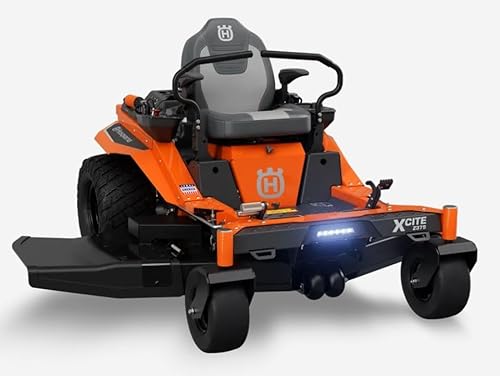
The Husqvarna Xcite Z375 is a zero-turn riding lawn mower engineered for large-scale residential and light commercial mowing. It combines a solid fabricated steel build with a capable Kohler power plant, creating an immediate impression of durability and purposeful design suited to expansive properties.
Performance centers on the 26HP 747cc Kohler V-Twin engine that supplies strong, consistent power for thick grass and varied terrain, paired with the 60-inch 3-blade fabricated steel deck. This setup delivers a wide, clean cut that covers ground efficiently and maintains quality across long sessions.
Considerations include the substantial footprint of the 60-inch deck and zero-turn frame, which requires ample storage and may feel oversized for compact yards. Available data also omits specifics on add-ons or comfort options, so buyers should confirm full feature sets independently.
The Husqvarna Xcite Z375 delivers the most value for owners of large lawns or light commercial operators who prioritize raw cutting power, deck durability, and zero-turn efficiency over compact size or extensive accessory packages.

Pros
- Offers quiet, emission-free electric operation with power matching traditional 22 HP gas mowers.
- Includes four high-capacity 56V 10.0Ah batteries for up to 2 acres of runtime right out of the box.
- Customizable LCD interface and multiple driving modes enhance user control and ride comfort.
- Versatile 10-position cutting height and 3-in-1 deck options provide flexible lawn finishing.
- Fast two-hour full recharge capability supports productive multi-session mowing days.
Cons
- Maximum single-charge coverage is limited to about 2 acres without purchasing additional batteries for bigger properties.
- Requires access to a power outlet for recharging, which may interrupt workflow on very large or remote lawns.
- Battery management and storage add extra steps compared to simple gas-powered alternatives.
The EGO Power+ ZT4204L is a premium electric zero-turn riding lawn mower built for homeowners seeking a clean alternative to gas models. It features a robust 42-inch stamped steel deck and includes four 56V 10.0Ah ARC Lithium batteries plus a charger, delivering an immediate impression of high-quality engineering focused on power and convenience.
In real-world use, this mower matches the performance of a 22 horsepower gas unit while reaching speeds up to 8 MPH. The zero-turn radius combined with three selectable driving modes via the LCD interface allows smooth navigation and efficient cutting of up to 2 acres per charge. Users can fine-tune the cut across 10 height positions from 1.5 to 4.5 inches and choose between mulching, bagging, or side discharge for complete lawn care flexibility. Full recharges take roughly two hours with the included Z6 charger.
Potential drawbacks include the 2-acre limit on the stock battery set, meaning larger properties will need extra batteries for uninterrupted operation. As a fully electric system, it also depends on regular charging access rather than quick refueling, and battery handling requires more attention than traditional gas mowers.
Overall, the EGO Power+ ZT4204L is an excellent choice for environmentally conscious homeowners with lawns up to a few acres who value quiet operation, low maintenance, and precise control. Those with extensive grounds should plan for additional battery capacity to maximize its benefits.

Pros
- Gas-equivalent power from electric Peak Power system with no emissions or fuel needs
- Long runtime covering up to 3 acres per charge with included high-capacity batteries
- Highly maneuverable 52-inch zero-turn deck with customizable blade speeds from 2300 to 3200 RPM
- User-friendly digital interface and app integration for real-time customization and monitoring
- Strong warranty coverage up to 5 years on mower and batteries with registration
Cons
- Runtime limited to approximately 3 acres per full charge, requiring recharges for larger properties
- Depends on multiple large 56V batteries which must be managed and recharged using the included charger
- No independent customer reviews available yet to confirm long-term real-world reliability
The EGO POWER+ Z6 Zero Turn Riding Lawn Mower model ZT5216L is a premium electric zero-turn rider built for efficient large-area mowing. It features a robust 52-inch 10-gauge fabricated steel deck, wide frame for slope stability, and durable IPX5-rated weather-resistant construction that creates an immediate impression of professional-grade quality without the noise or fumes of gas models.
In performance, Peak Power technology draws from up to six included 56V 10.0Ah ARC Lithium batteries to deliver power equal to a 27-horsepower gas engine while covering up to 3.0 acres per charge. The dual-blade system offers adjustable speeds from 2300 to 3200 RPM and 10 cutting heights between 1.5 and 4.5 inches. Three driving modes support speeds up to 8 MPH, and the color digital screen plus EGO Connect app allow full customization of speed, cruise control, and battery monitoring for real-world efficiency on varied terrain.
Considerations include the finite runtime of about 3 acres before recharging is needed, reliance on managing six batteries with the 880W charger, and the absence of extensive user feedback at launch that leaves long-term durability still to be proven in the field.
Overall, the EGO POWER+ Z6 ZT5216L delivers the most value to homeowners with mid-to-large lawns seeking quiet, powerful electric zero-turn performance, advanced controls, and reduced maintenance. Those with properties exceeding 3 acres or preferring simpler traditional mowers may want to evaluate battery logistics carefully.
Pros
- Powerful 24HP/726cc Kawasaki V-Twin engine for reliable high-output performance
- Wide 61-inch fabricated 3-blade deck for efficient coverage of large areas
- Commercial-grade Hydro Gear ZT-3100 transmission for durable zero-turn handling
- Generous 5-gallon fuel tank and included ROPS for practical all-day use and safety
- 4-year consumer warranty coverage on the complete machine
Cons
- Large 61-inch deck and zero-turn frame require substantial storage space and may feel oversized for small residential yards
- Commercial-oriented components can demand more maintenance knowledge than basic consumer mowers
- No bagging, mulching kit, or additional attachments listed as standard equipment
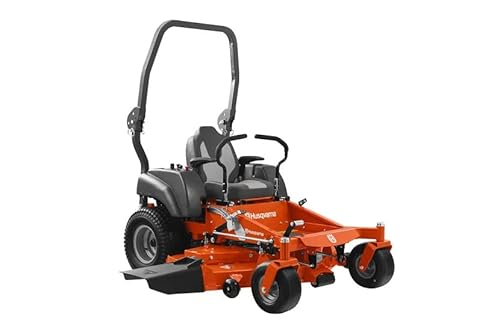
The Husqvarna MZ61 is a robust zero-turn riding lawn mower from the brand's commercial-leaning lineup, pairing a heavy-duty fabricated deck with a ROPS safety structure. Its overall build emphasizes durability and operator protection for demanding outdoor work rather than lightweight residential convenience.
Performance centers on the 24HP/726cc Kawasaki FR730V Series V-Twin engine that supplies ample torque for thick or wet grass, while the 61-inch 3-blade fabricated deck cuts wide swaths efficiently. The Hydro Gear ZT-3100 commercial hydrostatic transmission enables smooth, precise zero-turn steering that reduces time spent trimming edges and navigating landscaping. A 5-gallon fuel tank further supports longer continuous runs on expansive properties.
Potential drawbacks include the mower's substantial size, which can make storage and transport more challenging for users with limited space. The commercial-grade components also mean the machine may require more frequent or specialized maintenance compared to simpler residential models, and no bagging or mulching systems are noted as included.
Overall, the Husqvarna MZ61 delivers the strongest value for owners of large lawns, estates, or light commercial grounds who prioritize cutting speed, engine reliability, and safety features. Smaller-yard users will likely find it oversized for their needs.
What Defines a Quality Zero Turn Mower?
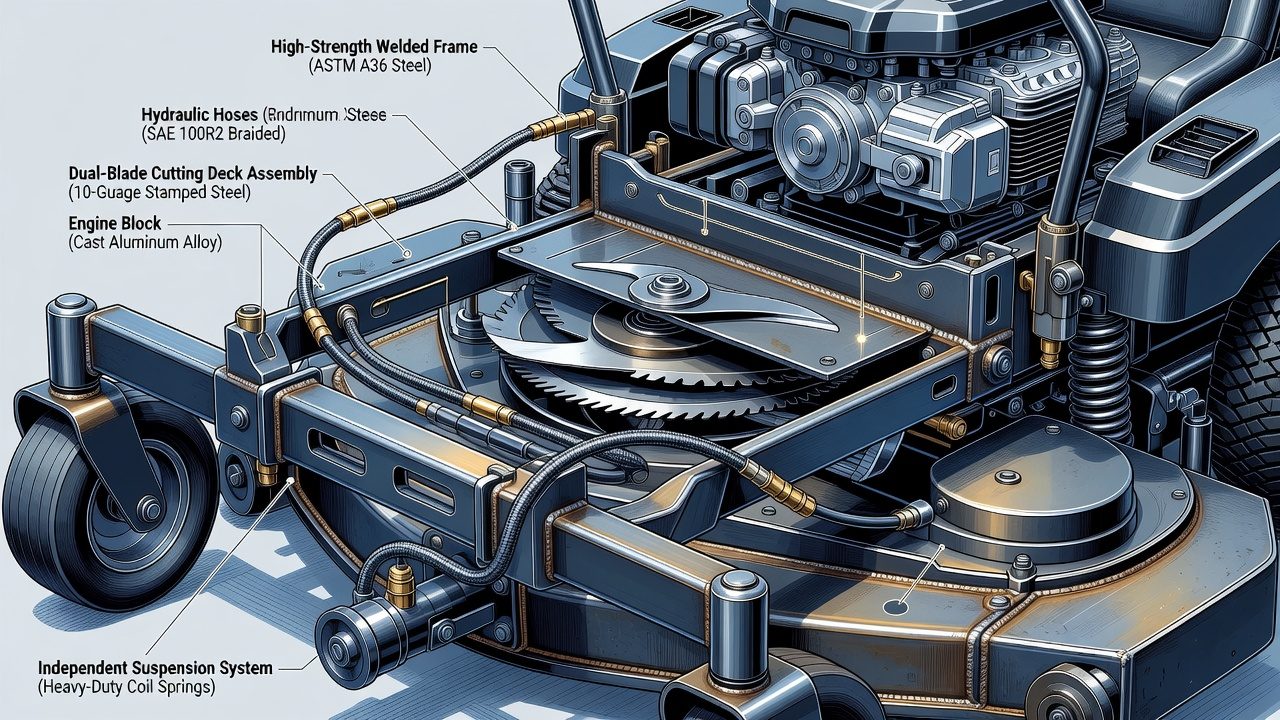
Zero turn mowers are judged by several interconnected factors that determine long-term satisfaction and performance:
- Cutting Quality: Blade design, deck construction, and cutting height precision determine whether your lawn looks professionally maintained or ragged.
- Build Quality: Frame welding, component sourcing, and manufacturing tolerances affect durability and resale value. Commercial-grade mowers use heavier gauge steel and industrial-spec components.
- Transmission and Hydraulics: The quality of hydrostatic or mechanical drive systems determines responsiveness, durability under stress, and maintenance frequency.
- Engine Reliability: Kohler, Kawasaki, and Briggs & Stratton engines vary in longevity and fuel efficiency. Premium brands use better-spec engines with improved cooling systems.
- Maneuverability: True zero turn radius capability, steering sensitivity, and seat ergonomics affect operator fatigue on large properties.
- Dealer Support and Warranty: Access to parts, service quality, and warranty coverage directly impact total cost of ownership.
Commercial-grade mowers differ from residential models in frame thickness, component redundancy, warranty length (3-5 years vs. 1-2 years), and expected lifespan (2,000+ hours vs. 500-1,000 hours). This distinction is crucial when evaluating which manufacturer fits your needs.
Key Factors to Consider Before Choosing a Brand
Before selecting a manufacturer, honestly assess your situation across these dimensions:
Property Size and Usage Pattern
Residential mowers (42-52 inches) suit properties under 3 acres with occasional weekend use. Commercial mowers (54-61 inches) are designed for properties over 3 acres or professional landscaping operations running 40+ hours weekly. Oversizing to a commercial mower for light residential use wastes money; undersizing to a residential mower for heavy use leads to premature wear.
Budget Range
Residential zero turns range from $3,000 to $8,000. Mid-range commercial models cost $8,000 to $15,000. Premium commercial mowers exceed $15,000. Your budget should account for a 10-year ownership horizon; a $6,000 mower used 100 hours annually costs $60 per hour of operation, while a $12,000 commercial mower used 500 hours annually costs $24 per hour, often justifying the higher upfront cost.
Local Dealer Network and Service Quality
A mower is only as reliable as its service infrastructure. John Deere benefits from thousands of authorized dealers nationwide. Hustler and Exmark have strong commercial dealer networks but fewer locations in rural areas. Kubota’s dealer network overlaps significantly with farm equipment dealers. Before purchasing, locate your nearest authorized dealer and verify they stock common parts (blades, belts, filters).
Cutting Quality vs. Durability vs. Value Priorities
If you demand manicured lawn appearance, Exmark’s cutting decks and blade design deliver industry-leading results. If you prioritize equipment longevity, Kubota’s engineering and component selection favor 3,000+ hour lifecycles. If you want the best entry-level option, Cub Cadet balances quality and affordability for homeowners unwilling to spend $10,000+.
Top Zero Turn Mower Manufacturers: Strengths and Market Position
Hustler: Best for Commercial Operators
Hustler specializes in commercial-grade zero turns with reputations for frame durability and transmission reliability. The brand emphasizes operator comfort through adjustable seats and intuitive control layouts. Hustler mowers excel in high-hour commercial environments where equipment must withstand 1,500+ hours annually. Their Fastrak line bridges residential and light commercial segments, while the Super Z and Raptor lines target professional landscapers. Hustler’s competitive advantage lies in aggressive marketing to professional operators and sponsorship of commercial landscaping associations, creating strong brand recognition within that segment. For additional operational safety benchmarks, see our published testing notes on marshall stanmore iii vs harman kardon onyx studio 8.
Exmark: Cutting Performance Leader
Exmark (owned by The Toro Company) is recognized for superior cutting quality through proprietary deck designs and blade geometry. Exmark invests heavily in cutting research, resulting in decks that produce cleaner cuts and reduce lawn stress. The brand dominates professional landscaping due to reputation for edge quality and operator experience. Exmark’s Lazer Z and Radius lines cater to professionals, while Vantage models serve residential buyers. The disadvantage: Exmark typically costs 15-20% more than comparable Hustler or Toro models, justified primarily by cutting performance rather than durability differences.
John Deere: Residential Market Dominance
John Deere’s zero turn portfolio focuses on the residential and prosumer segment through the Z series and X series. The brand benefits from unmatched dealer density, parts availability, and brand recognition built over 180+ years in equipment manufacturing. John Deere mowers are mid-range in price ($4,500-$8,500) and appeal to homeowners prioritizing brand familiarity and local service access. John Deere’s weakness lies in the commercial segment where Hustler and Exmark have stronger loyalty; commercial operators view John Deere as residential equipment adapted upward. However, for homeowners with 1-3 acre properties, John Deere’s dealer network and backward compatibility with common attachments make it the practical default choice. To compare alternative configurations, check our hands-on review of dyson v8 cyclone vs bissell featherweight stick.
Toro: Innovation and Intermediate Applications
Toro positions itself as a technology-forward manufacturer introducing features like iCommand telematics (fleet management for commercial operators), enhanced fuel efficiency, and suspension systems that reduce operator fatigue. Toro’s Z Master and Titan lines serve both commercial and prosumer markets. Toro competes effectively on innovation but lacks the specialized reputation of Hustler (commercial durability) or Exmark (cutting quality). Toro appeals to buyers prioritizing modern features and those managing multiple mowers who value fleet management integration.
Kubota: Premium Build Quality and Longevity
Kubota, known for construction equipment and tractors, applies industrial-grade engineering to zero turns. Kubota mowers feature heavier frame construction, premium component sourcing, and conservative hydraulic designs prioritizing reliability over aggressive performance. Kubota’s strength is longevity; machines routinely exceed 3,000 hours with minimal maintenance issues. The tradeoff: Kubota mowers are priced at the high end ($10,000-$15,000+) and appeal to buyers prioritizing 15+ year ownership horizons or those integrating with existing Kubota equipment. Kubota’s dealer network is smaller than John Deere but concentrated in regions with strong agricultural presence. Users looking for related component recommendations can explore our bissell crosswave hydrosteam vs shark stainforce breakdown.
Cub Cadet: Best Value for Homeowners
Cub Cadet (owned by MTD Products) occupies the budget-conscious homeowner segment with zero turns priced $3,500-$6,500. Cub Cadet mowers use proven components and adequate engineering without premium materials or exotic features. For properties under 2 acres and usage under 100 hours annually, Cub Cadet represents rational economic choice, the mower will likely outlive the owner’s need before reaching 1,500 hours. The limitation: Cub Cadet resale value trails premium brands, dealer networks are thinner, and parts availability can be inconsistent regionally.
Matching Your Needs to the Right Manufacturer
For Homeowners (Best Value)
If you own 1-2 acres, mow 40-60 times annually, and want to spend $4,000-$6,000, Cub Cadet or John Deere entry-level models deliver strong value. Both have adequate dealer networks and proven reliability in residential duty cycles. John Deere costs $500-$1,000 more but offers better resale value and dealer accessibility in most regions. Choose Cub Cadet if your nearest John Deere dealer is distant or if budget is the primary constraint.
For Small Commercial Operators (1-3 Accounts)
If you manage 3-5 small properties (10+ acres total) or operate part-time professionally, Hustler Fastrak or Toro Z Master models ($6,500-$10,000) justify the investment through durability and resale value. These brands are recognized by commercial peers and maintain better secondary markets. Avoid residential models in professional use; they wear prematurely under commercial duty cycles.
For Established Landscaping Businesses
If you operate 10+ accounts and budget $12,000-$15,000 per unit, Exmark or Hustler commercial lines are standard industry choices. Both brands dominate landscaper peer groups, parts are widely available at commercial suppliers, and dealer networks understand commercial duty cycles. The higher cost reflects commercial-grade warranties (4-5 years parts), proven longevity under 1,500+ hour annual use, and superior resale value.
For Long-Term Ownership Priority
If you prioritize keeping a mower 15+ years and plan 2,000+ total hours of use, Kubota justifies premium pricing through engineering and component quality focused on longevity. Kubota’s conservative hydraulic designs and heavy construction are optimized for multi-decade ownership rather than aggressive commercial performance. This segment appeals to operators managing their own equipment long-term rather than contractors replacing machines on 5-year cycles.
Reliability and Long-Term Ownership Considerations
Build Quality and Component Reliability
Frame construction differs significantly: commercial mowers use 7-gauge steel tubing and fully welded frames, while residential mowers use 10-12 gauge steel with bolted connections in stress areas. Premium brands like Kubota and Exmark employ robotic welding for consistency; budget brands use manual welding with wider tolerances. Hydraulic systems vary: Hustler uses Hydro-Gear units designed for 2,000+ hour lifecycles, while budget mowers use lower-spec transmissions rated for 1,000 hours. These differences compound over ownership; a commercial Hustler at 2,000 hours is mid-life, while a budget mower at 2,000 hours is approaching overhaul territory.
Manufacturer Reputation for Longevity
Kubota and John Deere benefit from equipment industry longevity reputations spanning decades. Both brands emphasize conservative engineering and parts quality. Hustler and Exmark show strong 3,000+ hour reliability in professional landscaping fleets where usage data is well-documented. Toro and Cub Cadet have adequate but unremarkable longevity records; these brands show higher rates of hydraulic transmission issues and premature frame rust in high-humidity environments. If longevity is paramount, Kubota > John Deere > Hustler ≈ Exmark > Toro > Cub Cadet.
Parts Availability and Long-Term Support
John Deere and Kubota parts are available through agricultural networks and mail-order suppliers nationwide. Hustler and Exmark parts flow through commercial equipment distributors; availability is reliable in metro areas but inconsistent in rural regions. Toro and Cub Cadet use OEM-exclusive parts channels, making secondary market parts harder to source. A hydraulic transmission failure on a John Deere costs $1,500-$2,000 and can be sourced within days. The same failure on a Cub Cadet may require factory ordering and 2-3 week lead times, effectively sidelining the equipment during peak season.
Warranty and Service Coverage
Residential mowers typically include 1-2 year limited warranties covering manufacturer defects. Commercial models offer 3-5 year warranties reflecting expected lifecycle. Hustler, Exmark, and Kubota offer extended warranty options extending to 7-10 years. John Deere’s dealer network often bundles maintenance packages into purchase agreements. Cub Cadet and budget Toro models have minimal warranty extensions available. Warranty length doesn’t guarantee reliability but does indicate manufacturer confidence in longevity and affects resale value (used commercial mowers with remaining warranty command 10-15% premiums).
Buyer FAQs: Who Makes The Best Zero Turn Mower Solved
Q: Is John Deere or Hustler better for a 2-acre residential property?
A: John Deere is the better choice for residential 2-acre properties. John Deere’s Z series delivers adequate performance, the dealer network is denser for most homeowners, and pricing ($4,500-$6,500) is optimized for residential duty cycles. Hustler’s commercial-grade mowers are overspecified for residential use and cost $1,500-$2,000 more without proportional benefits. Reserve Hustler for professional operators needing 1,500+ annual hours of durability.
Q: How many hours should a quality zero turn mower last?
A: A quality residential mower should deliver 1,000-1,500 hours reliably. A commercial-grade mower (Hustler, Exmark, Kubota) should exceed 2,000-3,000 hours with proper maintenance. Budget models may show premature wear at 1,200-1,500 hours. However, actual lifespan depends heavily on maintenance: mowers receiving annual service (oil changes, filter replacements, blade sharpening) routinely exceed these thresholds, while neglected equipment fails prematurely regardless of brand.
Q: What’s the difference between Exmark and Hustler, and which should I buy?
A: Exmark prioritizes cutting quality through specialized deck design and blade geometry; Hustler emphasizes durability and operator comfort through frame construction and seat design. For professional landscapers prioritizing lawn appearance, Exmark is superior. For contractors prioritizing equipment durability under heavy use, Hustler’s simpler design and proven transmissions offer reliability advantages. Both are excellent commercial choices; pick based on whether cutting quality or durability matters more to your specific operations.
Q: Is Kubota worth the premium price compared to Hustler or Exmark?
A: Kubota’s premium ($3,000-$5,000 above Hustler/Exmark) is justified only if you prioritize 15+ year ownership and accumulated hours exceeding 3,000. For contractors on typical 5-7 year equipment replacement cycles, Hustler or Exmark offer better value. Kubota appeals to owner-operators maintaining their own equipment long-term or those integrating with existing Kubota equipment for service convenience. For commercial fleets, the premium doesn’t pencil out; Hustler and Exmark have superior resale value at rotation time.
Final Recommendation Framework
Choose your zero turn mower manufacturer using this decision logic:
- Under $6,000, residential use: Cub Cadet or John Deere entry models
- $6,000-$10,000, part-time professional: Hustler or Toro intermediate models
- $10,000-$15,000, commercial landscaping: Exmark or Hustler commercial lines
- $12,000+, long-term ownership (15+ years): Kubota
Visit authorized dealers, test-operate equipment for comfort and control responsiveness, and verify parts availability in your region before committing. The ‘best’ zero turn mower is the one matching your actual use case, budget, and service infrastructure, not an abstract best that ignores your specific situation.
Related Maintenance and Operating Guides
To keep your equipment running at peak operating efficiency, explore our related technical walkthroughs and maintenance tutorials:
- Consult our detailed breakdown on heavy-duty chainsaw buyer guide.
Technical Standards and Compliance
Mechanical safety standards, operational tolerances, and protective gear guidelines align with benchmark specifications established by the American National Standards Institute (ANSI).









