The Short Answer: No — and Here Is Why It Matters Which Mower You Own
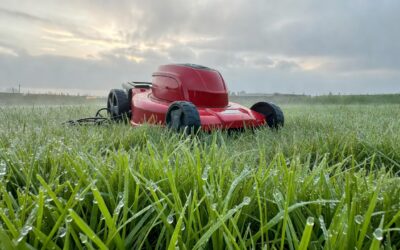
Cutting wet grass with an electric lawn mower is not recommended. With a corded electric mower, it is a genuine safety hazard: water and live electrical components create a real electrocution and short-circuit risk. With a cordless (battery-powered) mower, the direct shock risk is lower but motor damage, deck clogging, an uneven cut, and a voided warranty remain live concerns. Light morning dew on an otherwise dry lawn is a conditional exception; a soaking-wet or waterlogged lawn is not — regardless of which electric mower you own.
Corded Electric Mowers and Wet Grass: Why the Risk Is Highest
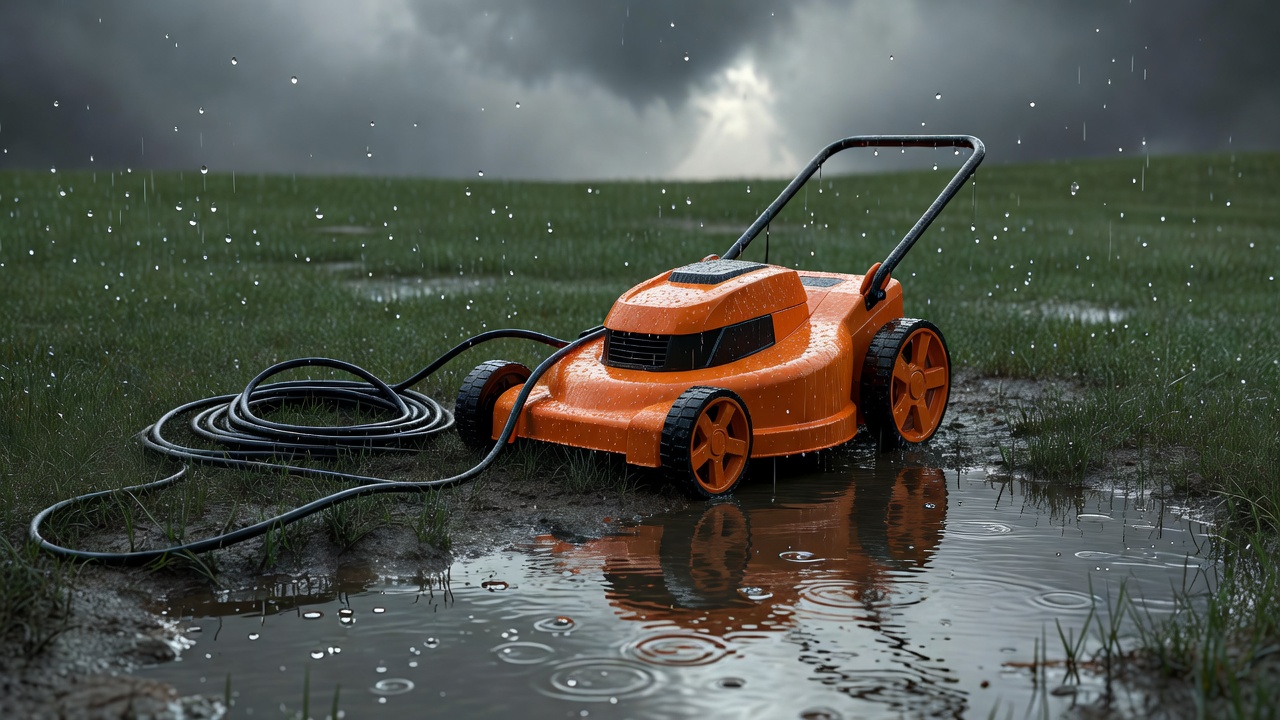
A corded electric mower draws power directly from your home’s mains supply — typically 120 V in North America or 230 V in the UK and Europe. That live current travels through an extension cord, into exposed motor windings, switch contacts, and blade terminals. Water is a conductor. Any moisture that bridges an insulation gap — at a cord junction, at the motor housing, or at a worn cable section — creates a path for current to flow where it should not.
The specific failure modes are:
- Electrocution through the operator: If current leaks from a wet housing or damaged cord and you are standing on wet ground, you complete the circuit. The U.S. Consumer Product Safety Commission (CPSC) identifies outdoor corded power tools used in wet conditions as a leading cause of electrocution fatalities among garden equipment incidents.
- Extension cord ingress: Standard extension cords are rated for dry or damp use, not submersion. A cord lying in wet grass or a puddle can absorb moisture at connection points. The Electrical Safety Foundation International (ESFI) specifically warns against using corded outdoor tools in wet or rainy conditions for this reason.
- Short-circuit and motor burnout: Even if you avoid shock, water entering the motor housing can short the windings, destroying the motor and potentially starting an electrical fire inside the housing.
The practical conclusion: never use a corded electric mower on wet grass. This is not a precautionary overstatement — it is the consistent guidance of electrical safety bodies and outdoor power equipment manufacturers.
Cordless (Battery-Powered) Electric Mowers and Wet Grass: Lower Risk, Still Not Safe
Cordless mowers run on a lithium-ion battery pack — typically 40 V, 56 V, or 80 V — which is far below the threshold of mains-supply shock risk. There is no extension cord to act as a water-ingress point, and the operating voltage is low enough that the direct electrocution risk is materially reduced. That does not make wet-grass mowing safe on a cordless machine.
IP Ratings and What They Actually Mean
Some cordless mowers carry an IP (Ingress Protection) rating under the IEC 60529 standard. The two-digit code describes resistance to solid particles (first digit) and liquids (second digit). A rating of IPX4 — common on mid-range cordless mowers — means the unit can handle water splashing from any direction, not sustained water exposure or mowing through soaked grass. An IPX6 rating indicates resistance to powerful water jets. Neither rating authorises mowing a waterlogged lawn. Manufacturers that publish IP ratings still typically exclude water damage from warranty coverage when the unit is used outside its stated operating conditions.
Battery and Motor Damage
Wet grass clippings are dense and sticky. They pack into the underside of the deck at a rate that forces the motor to work significantly harder than the design load. Over repeated wet-mowing sessions, this accelerates motor wear, can trip thermal cut-outs, and degrades battery cycle life. Lithium-ion cells are sensitive to moisture at the contact points; water ingress into the battery bay — particularly on mowers without a sealed battery compartment — can cause cell imbalance, swelling, or in rare cases thermal runaway.
Warranty Voidance
Most major cordless mower manufacturers — including Greenworks, EGO, Ryobi, and Husqvarna — include explicit warranty exclusions for damage caused by use in conditions outside the operator manual’s stated parameters. Operator manuals consistently advise against mowing wet grass. If a motor or battery fails after wet-grass use, warranty claims are routinely denied on this basis.
Specific Risks of Cutting Wet Grass With Any Electric Mower
Regardless of whether your mower is corded or cordless, the following risks apply whenever you mow wet grass. They are listed in descending order of severity.
- Electric shock or electrocution (corded mowers): The highest-severity risk, described above. Potentially fatal.
- Motor damage and burnout: Wet clippings increase deck resistance sharply. The motor compensates by drawing higher current, generating excess heat. Repeated overloading shortens motor life on both mower types.
- Deck clogging: Wet grass clippings clump and bind together under the deck. This reduces airflow, kills cutting efficiency, and can stall the blade — causing the motor to overheat or the thermal protection to trip mid-mow.
- Uneven and torn cut: Agronomic research on turf management consistently shows that mower blades tear wet grass rather than cleanly sever it. Torn grass blades create ragged, brown-tipped wounds that heal slowly and are significantly more susceptible to fungal infection — including grey leaf spot, brown patch, and pythium blight — than cleanly cut grass.
- Lawn disease risk: Open wounds on grass blades are entry points for pathogens. Wet conditions are already conducive to fungal growth; mowing in those same conditions compounds the risk. Turf management guidance from university extension programmes (including Penn State Extension and Purdue Extension) explicitly links wet-grass mowing to increased incidence of turf fungal disease.
- Slip and traction hazard: Wet grass reduces traction for both the mower’s wheels and your own footwear. On any slope, this creates a meaningful risk of the mower sliding, loss of operator control, and contact with the blade.
- Clippings smothering the lawn: Wet clippings clump into dense mats on the lawn surface rather than dispersing. These mats block light and airflow to the grass beneath, causing yellowing and dead patches — a condition sometimes called clipping scalding.
Damp vs. Soaking Wet: When Is It Conditionally Acceptable?
Wetness is a spectrum, and the risk level changes meaningfully across it. Understanding the distinctions allows you to make an informed judgment rather than applying a blanket rule.
| Condition | Description | Corded Mower | Cordless Mower |
|---|---|---|---|
| Light morning dew | Surface moisture only; soil dry underneath; grass blades slightly wet to the touch | Still not recommended — cord and connection risk persists | Conditionally acceptable with precautions; lowest-risk wet scenario |
| Post-rain damp | Rain stopped 1–3 hours ago; grass surface wet; soil softening but not saturated | Do not mow | Not recommended; clogging and cut-quality risks are significant |
| Wet after recent heavy rain | Rain stopped recently; grass visibly wet; soil soft and beginning to waterlog | Do not mow | Do not mow |
| Waterlogged / standing water | Puddles visible; soil saturated; grass lying flat | Do not mow under any circumstances | Do not mow under any circumstances |
How Long Should You Wait After Rain?
The standard guidance from turf management authorities — including the Royal Horticultural Society (RHS) in the UK and multiple U.S. university extension services — is to wait until the grass blades are dry to the touch and stand upright before mowing. In practice, this means:
- After light rain or morning dew: 1–2 hours of sun and airflow is typically sufficient.
- After moderate rain: a minimum of 24 hours, longer in overcast or humid conditions.
- After heavy or prolonged rain: 48 hours or more, particularly on clay-heavy or compacted soils that drain slowly.
The practical test: walk across the lawn before mowing. If your footprints leave visible impressions in the soil, the ground is too wet — the mower wheels will compress and rut the turf, and the soil will not recover cleanly.
What To Do Instead: Practical Alternatives When the Grass Is Wet
The best outcome when you need to mow and the grass is wet is to wait. When that is not possible, the following options reduce risk and lawn damage.
Speed Up Drying
- Mow in the morning after dew has lifted: Mid-morning — typically between 8 a.m. and 10 a.m. — is generally the optimal mowing window. Dew has evaporated, but peak afternoon heat (which stresses freshly cut grass) has not yet arrived.
- Use a leaf blower or fan: Running a leaf blower across the lawn surface removes surface moisture from grass blades without disturbing the soil. It does not dry saturated soil, but it substantially reduces blade-level moisture before a cordless mow.
- Rake or drag a hose: Dragging a garden hose or a lawn brush across the grass knocks off pooled surface water and encourages blades to stand upright — improving cut quality even on a still-damp lawn.
If You Must Mow Damp Grass
- Raise the blade height: Set the deck to its highest or second-highest position. Removing less blade length per pass reduces the volume of clippings under the deck, lowering clog risk and motor load.
- Mow in narrower passes: Overlap passes by 30–40% rather than taking full-width cuts. Reducing the cutting width per pass further reduces the clipping volume the motor must handle.
- Mow slowly: A slower forward pace gives the blade more time per square foot, producing smaller clipping fragments that are less likely to clump.
- Discharge to the side rather than mulching: Wet clippings clog mulching decks far faster than side-discharge decks. Switch to side-discharge mode if your mower supports it, and rake up the clippings immediately — do not leave wet mats on the lawn surface.
- Use a gas mower if available: Gas-powered mowers carry no electrocution risk and their engines are more tolerant of the elevated motor load that wet grass imposes. If you have access to a gas mower, this is the appropriate tool for genuinely wet conditions.
Safety Precautions If You Decide to Mow Slightly Damp Grass
This guidance applies to damp-but-not-soaking conditions with a cordless mower. If you are considering mowing with a corded mower in any wet condition — stop. That situation does not have a safe precaution checklist; it has one instruction: wait until the lawn is dry.
For a cordless mower on lightly damp grass, follow these steps in order:
- Inspect the mower before starting. Check the battery bay seal, the underside of the deck, and all housing panels for existing cracks, damage, or debris. Do not operate a mower with a compromised housing in any wet condition.
- Wear appropriate footwear. Rubber-soled, closed-toe shoes or boots provide both slip resistance on wet grass and a degree of electrical insulation. Never mow in sandals or bare feet.
- Avoid slopes. Wet grass on any incline dramatically increases the risk of slipping and loss of mower control. Restrict wet-condition mowing to flat or very gently sloping ground.
- Keep bystanders and children away. Wet clippings ejected from the deck are heavier and carry farther than dry clippings. Maintain a larger exclusion zone than usual.
- Stop and clear the deck frequently. If you hear the motor laboring or the blade tone change, stop the mower, remove the battery, and clear the deck of compacted clippings before continuing. Never reach under a running deck.
- Clean the mower thoroughly after use. Wet clippings left under the deck accelerate corrosion and can trap moisture against motor seals and battery contacts. After mowing, remove the battery, use a brush or blower to clear all clippings from the deck and housing, and allow the machine to dry fully before storage.
For corded mower users in any wet-adjacent situation: if you use a corded electric mower outdoors, plug it into a GFCI (Ground Fault Circuit Interrupter) outlet at all times. A GFCI outlet detects current leakage as small as 4–6 milliamps and cuts power within milliseconds — fast enough to prevent a fatal shock. GFCI protection is required by the National Electrical Code (NEC) for all outdoor receptacles in the United States. It is a baseline safety requirement, not a substitute for avoiding wet conditions; it reduces but does not eliminate the risk of corded mower electrocution in damp environments.
Frequently Asked Questions
Can you mow wet grass with a battery-powered lawn mower?
Technically yes, but it is not recommended. A cordless (battery-powered) mower does not carry the same direct electrocution risk as a corded model, but wet grass still clogs the deck, strains the motor, produces a torn and uneven cut, increases lawn disease risk, and can void your warranty. Lightly damp grass — where only the blade surfaces are moist — is the only scenario where a cordless mower can be used with acceptable risk, provided you raise the blade height and mow slowly.
What happens if you mow wet grass with a corded electric mower?
Water bridging any insulation gap — at the motor housing, the switch, or the extension cord connection — can create a path for mains-voltage current to pass through the operator or short-circuit the motor. The result ranges from motor burnout to fatal electrocution. No safety precaution fully neutralises this risk. The correct action is to wait until the lawn is completely dry before using a corded electric mower.
How long should I wait after rain to mow with an electric mower?
After light rain or morning dew: wait 1–2 hours for surface moisture to evaporate. After moderate rain: wait at least 24 hours. After heavy or prolonged rain: wait 48 hours or more, especially on poorly draining soils. The reliable field test is to walk the lawn — if your footprints leave visible impressions in the soil, it is too wet to mow safely or without causing turf damage.
Does cutting wet grass damage the lawn?
Yes. Mower blades tear wet grass rather than cut it cleanly, leaving ragged wounds on each blade. Those wounds heal slowly, turn brown at the tip, and are significantly more vulnerable to fungal infection — including brown patch and pythium blight — than cleanly cut grass. Wet clippings also clump into dense mats on the lawn surface, blocking light and airflow and causing dead patches beneath. Both effects are well-documented in turf management literature from university extension programmes.