

Quick Answer: Can You Use Regular Motor Oil In A Lawn Mower?
Often yes: many typical gasoline 4-stroke lawn mowers can use regular automotive motor oil in the crankcase when the SAE viscosity and quality specification match the owner’s manual. Regular motor oil here means conventional or synthetic 4-stroke oil sold for cars and light trucks, not 2-stroke mix oil. Never pour automotive oil into a 2-stroke fuel tank or use it…

Pros
- Large-size design named in product title
- Sharpening and balancing functions listed
- Listed as a new upgraded version

Pros
- Adjustable 15-to-45-degree range in title
- Sharpening and balancing functions listed
Pros
- Includes replacement gaskets and a 98079-55846 spark plug
- Matches Honda HRR216 and HRS216 lawn mower models
- Designed around the 16100-Z8B-901 carburetor specification
Cons
- Restricted to select Honda GCV160 mower applications
- Installation requires basic mechanical tools and skills
Four-stroke or two-stroke: check this before you add oil
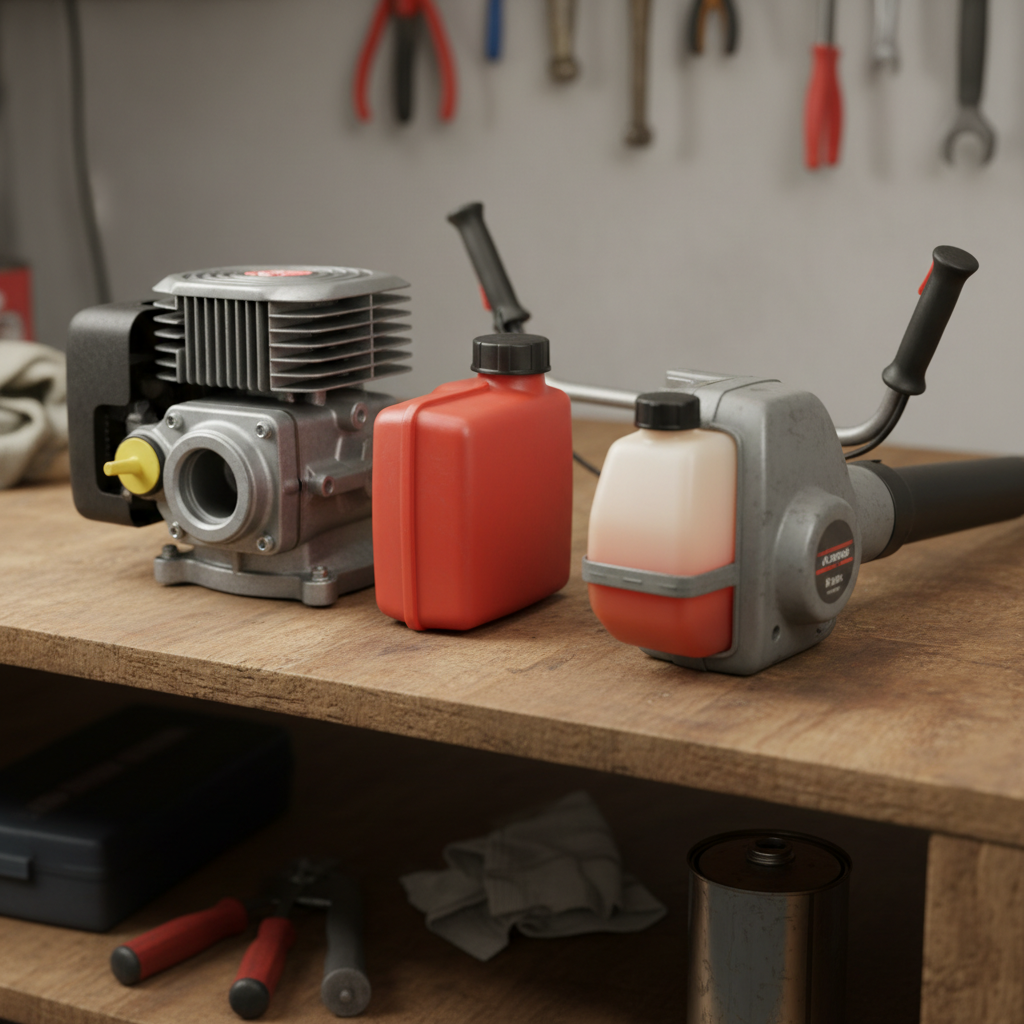
The first question is not “car oil or mower oil.” It is where the oil is supposed to go. Most gasoline walk-behind and riding mowers sold for home lawns use a 4-stroke engine. A 4-stroke engine has a crankcase that holds engine oil separately from the fuel tank. Gasoline goes in the fuel tank. Oil goes in its own fill opening, often with a dipstick or a marked fill cap. You check and change that oil the way you would on a small engine, not by blending it into the gas.
A 2-stroke (two-cycle) engine is different. Oil is mixed with gasoline at a ratio the manufacturer specifies, then that mixture lubricates the engine as it burns. Some older walk-behind mowers and many handheld tools use this design. Typical clues include a fuel cap or tank label that says to mix oil with gas, the absence of a separate oil fill and dipstick, and packaging or a manual that talks about pre-mix fuel. Those clues are common, not universal. If the machine tells you to mix oil with gasoline, automotive motor oil is the wrong product.
When people ask whether they can use regular motor oil in a lawn mower, they almost always mean 4-stroke automotive crankcase oil from an auto-parts aisle. That product is designed to stay in a sump, circulate or splash onto moving parts, and be drained later. It is not designed to dissolve cleanly into gasoline and burn as 2-stroke lubrication. Mixing up those two jobs is the most important mistake to avoid.
If you are unsure which engine you have, look for a separate oil-fill cap or dipstick and a fuel tank that should contain gasoline only. Read the fuel cap, the engine shroud, and the owner’s manual before you open a bottle. Do not guess from the brand of the deck or from what a neighbor uses in a different machine.
When regular motor oil is acceptable in a 4-stroke lawn mower
In the common case, a 4-stroke walk-behind or riding mower with a separate crankcase, automotive engine oil often does the same basic job as oil sold for small engines. Both are 4-stroke crankcase oils. The words “for cars” on the bottle do not automatically make the oil unsafe for a mower. What matters is whether the viscosity grade and the quality level listed on the bottle match what the manufacturer asks for on that engine.
“Regular motor oil” usually means conventional or synthetic 4-stroke oil sold for passenger cars and light trucks. It may be a single-grade or a multi-grade product. It is not 2-stroke mix oil, gear oil, hydraulic fluid, or transmission fluid. If a bottle of automotive oil meets the SAE grade and the specification the mower manual names, many common 4-stroke mower engines can use it in the crankcase.
That is not the same as saying every mower can take any car oil. Some manuals call for a particular viscosity in a given temperature range. Some mention a quality standard or service category. Some prefer or allow oil labeled for air-cooled small engines. Matching those instructions is more important than whether the front of the bottle says “mower.” A bottle marketed for lawn equipment can still be the wrong grade. A bottle marketed for cars can still be the right grade if it matches the book.
Dedicated small-engine oil is still a reasonable choice. It is generally formulated with air-cooled, high-RPM service in mind, and it removes guesswork if you do not want to cross-check automotive labels. It is an alignment and convenience option, not proof that automotive oil is automatically unsafe when the listed grade and specification already match.
Do not treat “regular” as a single recipe. Conventional and synthetic 4-stroke oils are both 4-stroke oils. A thick winter-grade product and a hot-weather single-grade product are not interchangeable just because both came from a car aisle. Read the viscosity and the spec, then compare them with the manual for that engine. When planning workspace deployment, consider the engineering criteria outlined in our marshall stanmore iii vs harman kardon onyx studio 8 guide.
Why regular motor oil is the wrong choice for 2-stroke mowers
If the mower is a 2-stroke that requires oil mixed with gasoline, regular automotive motor oil must not be used as that mix oil. It also must not be poured into a 2-stroke crankcase as if the engine had a car-style sump. Two-stroke mix oil is meant to blend with fuel, lubricate the piston, bearings, and other parts as the mixture moves through the engine, and then burn with the fuel. Automotive crankcase oil is meant to stay in a closed oil system, resist breakdown over long drain intervals, and not be consumed as fuel.
Using car oil as mix oil can leave poor lubrication, deposits, smoking, fouled plugs, and, if the engine is run that way, serious wear or seizure. The reverse mistake is also wrong: 2-stroke mix oil is not a substitute for 4-stroke crankcase oil just because both labels say “oil.” Pouring mix oil into a 4-stroke sump does not give the film and drain-interval behavior that crankcase oil is supposed to provide. For additional operational safety benchmarks, see our published testing notes on dyson v8 cyclone vs bissell featherweight stick.
If the fuel cap or manual calls for a gasoline-to-oil mix, buy oil labeled for 2-stroke engines and follow the ratio and product type on that machine’s manual or on the 2-stroke oil label. Do not invent a ratio from memory or from another tool. Do not “thin” automotive oil with gasoline as a homemade mix. If you already added the wrong product, stop and treat it as a contamination problem rather than hoping it will burn off.
How lawn-mower oil needs differ from car engines
A typical passenger-car engine is liquid-cooled, spends much of its life at varying speeds, and has a relatively large oil sump and a pressurized lubrication system. A typical walk-behind or riding-mower engine is air-cooled. It has no radiator full of coolant. It often runs at high, fairly steady speed under cutting load, then sits for days or months. That duty cycle is why a matching grade still matters even when automotive oil is acceptable in principle. To compare alternative configurations, check our hands-on review of bissell crosswave hydrosteam vs shark stainforce.
Heat is the practical difference most owners feel. Air-cooled cylinders and heads can run hotter than a water-jacketed car engine under the same outdoor temperature, especially when the deck is working hard in tall or wet grass, the cooling fins are packed with clippings, or the mower is used on a slope that changes how oil sits in a shallow sump. Viscosity, how easily the oil flows when cold and how well it holds a lubricating film when hot, matters more when there is no liquid cooling system to keep metal temperatures in a narrow band.
Lubrication hardware is often simpler as well. Many small engines use splash lubrication, a simple pump, or a combination of the two. Oil is flung or delivered onto journals and the cylinder wall rather than being metered through a complex gallery system with the same margins a car engine has. Overfilling can whip air into the oil (foaming), raise crankcase pressure, and push oil past seals or into the combustion chamber. Underfilling can leave the pickup or splash surfaces dry. Either problem shows up faster in a small crankcase than in a large automotive pan.
Additive packages in modern automotive oils are designed for cars: long drain intervals, emissions hardware, and mixed city-highway use. That does not automatically make those detergents or friction modifiers wrong for a mower. It also does not prove they are ideal. The honest position is narrower: differences in heat, speed, and lubrication style are reasons to follow the specified grade and to avoid random leftovers, not a blanket ban on car oil and not a chemistry lecture about zinc or detergents that this article cannot verify for your engine.
Seasonal storage is another difference. Mower oil may sit all winter with combustion residues in a small volume of oil. That is an argument for changing oil on the schedule the manufacturer gives and for using a product that meets the listed spec. It is not an argument for mixing mystery bottles “to use them up.”
Viscosity, SAE grades, and API ratings: what actually matters
SAE viscosity describes how an oil flows. In plain language, a lower number when the oil is cold means it pours and reaches parts more easily at startup. The hot rating describes how the oil holds together as a film after the engine is up to temperature. A single-grade oil (for example, a straight summer grade) does not change its cold-flow behavior the way a multi-grade oil does. A multi-grade oil is designed to flow more readily when cold and still provide a specified hot viscosity. Neither style is automatically better in a mower. The correct choice is the grade or grades the manufacturer lists for the air temperatures you will actually mow in.
Some manuals allow more than one grade. That is usually because cold-spring starting and midsummer heat ask different things of the oil. Use the option that matches the weather you have, not a grade you happen to have left from a car oil change unless that leftover bottle also matches the book. Do not assume a multi-grade oil is always “more modern and therefore better,” and do not assume a single-grade oil is always “what small engines need.” Both claims skip the only document that knows your engine.
An API service rating is a quality and performance category for engine oil, shown as a service symbol or letter designation on many bottles. In general terms, it tells you the oil was tested against a set of engine-oil standards used in the automotive world. You should match or follow only what your manual actually lists. This article cannot name a universal API category for lawn mowers, and it cannot say that a newer letter category is always an approved substitute for an older one. Older manuals sometimes list categories that are no longer stamped on current bottles. Whether a current oil that meets a later category is acceptable is a question for that manufacturer’s guidance, not a rule of thumb.
Read the bottle the same way you read the manual: viscosity first, then any specification the book names, then whether the oil is 4-stroke crankcase oil rather than 2-stroke mix, gear lube, or “small engine” marketing language with no grade at all. If those lines do not line up, pick another bottle.
Conventional, synthetic, and oils labeled for small engines
If conventional automotive oil meets the viscosity and specification in the manual, it is generally usable in a 4-stroke mower crankcase. Synthetic 4-stroke oil that meets the same listed grade and spec is also generally usable. Synthetics are often chosen for cold starts or for engines that see high heat, and they are appropriate when the manual allows them. They are not a licensed upgrade that automatically lasts a stated multiple longer, runs a stated number of degrees cooler, or lets you skip oil changes. Those performance numbers are marketing claims this article will not invent.
Oil labeled for small engines usually signals that the blender aimed the product at air-cooled, high-RPM equipment such as mowers, tillers, and generators. That can be the simpler choice if you want one bottle that is obviously meant for the machine in the shed. It is still not a free pass to ignore viscosity. A small-engine label with the wrong grade for your climate is still the wrong oil.
Do not mix leftover oils of unknown grade. Do not pour 2-stroke oil into a 4-stroke crankcase to “top it off.” Do not blend conventional and synthetic leftovers unless you know both products meet the same listed spec and you accept that you no longer know the exact properties of the mixture. The cheap insurance is a sealed bottle that matches the book, filled to the mark, and changed when the manufacturer says to change it.
How to choose and add oil using the owner’s manual
The owner’s manual, or equivalent manufacturer guidance for that exact engine, is the primary source for oil type, SAE grade, capacity, how to read the dipstick, and when to change the oil. Many mowers also print a short oil note on the engine shroud, the oil-fill cap, or the dipstick. Use those labels as reminders, not as a substitute for the full instructions, especially if the machine allows more than one grade.
If the paper manual is missing, identify the engine brand and model from the engine’s own data plate, not only from the mower deck brand. Obtain the current guidance from the engine or equipment manufacturer for that model. Do not copy a neighbor’s grade, a forum default, or the leftover 5-quart jug from a pickup truck unless you have confirmed it matches that engine.
A practical sequence looks like this:
- Confirm the engine is 4-stroke with a separate crankcase, or 2-stroke that needs mix oil. Stop if you cannot tell.
- Read the listed viscosity and any quality specification for the temperature range you will mow in.
- Buy 4-stroke crankcase oil that matches those lines, whether it is packaged as automotive oil or small-engine oil. For a 2-stroke, buy 2-stroke mix oil and the ratio the book names.
- Park the mower on level ground, shut the engine off, and let it sit so oil can drain back to the sump. Check the level with the method in the manual, full dipstick insertion or a fill-to-threads mark, depending on the design.
- Add oil slowly. Small crankcases overfill easily. Recheck rather than pouring a full quart “to be safe.”
- After a change, look for leaks, confirm the fill cap or dipstick is seated, and verify the level again after a brief run and a cooldown if the manual describes that check.
When you change oil, work on a cool or only mildly warm engine so you are not burned by hot oil or a hot muffler, but follow the manual if it asks for a short warm-up so the oil drains more completely. Keep the mower stable. Catch used oil in a pan that will not tip. Wipe spills off the deck and the engine so clippings do not bake onto oily fins. Take used oil and oil-contaminated rags or fuel to an approved collection site. Do not dump oil on the ground, into a storm drain, or into household trash where local rules forbid it.
This article does not give capacities, drain-plug torque, or hour-or-calendar intervals. Those figures belong to your engine. Do not start a mower that has no oil “to see what happens.” If the dipstick is dry and you do not know how long it has been that way, add the correct oil to the proper level and consider a professional inspection before you cut another lawn.
Main risks of using the wrong oil
Wrong oil is a lubrication problem first and a warranty problem second. Oil that is too thin for the heat and design may not hold a film on bearings and the cylinder wall. Oil that is too thick may not flow quickly at startup or may not splash or pump the way a small engine expects, especially in cool weather. Either mismatch can mean poor lubrication, harder starting, extra heat, smoking, or accelerated wear. In severe cases the engine can be damaged or seize.
Using automotive oil as 2-stroke mix, or using 2-stroke mix in a 4-stroke crankcase, is a different kind of error: the product is doing a job it was not designed to do. Overfilling a 4-stroke crankcase can foam the oil, foul the air filter or spark plug with oil mist, smoke heavily, and leak from seals or the breather. Running low on oil can starve splash surfaces and bearings. Continuing to mow after you know the oil type, level, or mix is wrong multiplies the chance of damage. Stopping and correcting the oil is almost always cheaper than finishing the yard.
Warning signs after a bad choice can include unusual smoke, knocking or ticking that was not there before, a sudden rise in engine temperature or a smell of hot oil, oil on the cooling fins or under the deck, metal flakes on the dipstick, or a loss of power. Some engines have an oil-level or oil-pressure switch that will stop the engine or prevent starting; that is a protection feature, not a reason to bypass the switch and keep cutting.
Warranty language should be read as a process, not as a courtroom result. Coverage often depends on following manufacturer recommendations for fuel, oil, and maintenance. If a claim is filed, the manufacturer decides whether the oil you used was acceptable. This article cannot say that automotive oil always voids a warranty or that it never will. Keep receipts and follow the book if you care about remaining coverage.
None of this means a single pour of matching automotive oil into a 4-stroke crankcase is guaranteed destruction. It also does not mean any car oil is guaranteed safe. The risk tracks the mismatch: wrong type (2-stroke versus 4-stroke), wrong viscosity for the weather and design, wrong level, or continued use after a known mistake.
Special cases: riding mowers, older engines, and weather extremes
A riding mower with a 4-stroke engine still follows the same crankcase logic as a walk-behind mower: gasoline in the fuel tank, engine oil in the engine, grade and spec from the manual. The tractor body does not change the chemistry. What does change is that many riders also have a hydrostatic transmission, hydraulic lift, or gearbox with its own fluid. That fluid is not automatically motor oil. Do not top off a transmission or hydraulic reservoir with automotive engine oil unless the manufacturer says that product is the correct fluid for that compartment. Using the wrong fluid there can damage the drive even if the engine is fine.
Older splash-lubricated engines can be more sensitive to viscosity and to overfilling because they depend on a consistent oil level and a predictable splash pattern. A sump that is too full can churn foam; a sump that is too low can miss the dipper or rod. Follow the fill mark exactly. The manual from that era still governs the grade. Do not assume an older mower needs a “classic car” high-zinc oil or any other specialty chemistry unless the manufacturer of that engine says so.
Hot-summer or cold-spring mowing should change the grade only when the manual offers temperature options. Do not invent your own summer/winter cutoff. If the book lists one grade year-round, use that grade. If it lists two, pick the one that matches the air temperature you will actually start and work in, and change the oil when you switch seasons if the manufacturer describes that practice.
Commercial mowers, dual-engine machines, and equipment with separate hydraulic packs are outside the “typical home gasoline mower” picture. Treat each reservoir as its own system. The same caution applies to electric mowers: they do not take crankcase motor oil at all.
If you already put the wrong oil in the mower
Stop using the machine if the wrong oil type went in or if you ran the engine with a known lubrication mistake. Hope is not a lubricant.
If automotive oil went into a 2-stroke fuel tank or was used as mix oil, do not keep running the engine to “clear it out.” Drain the contaminated fuel into an approved container, dispose of it at a collection site, and refill with the correct gasoline and 2-stroke oil mixture from the manual. If the engine ran on that fuel, have a small-engine shop inspect it. Tell the shop exactly what was added, roughly how much, and whether the engine started, smoked, or lost power.
If a 4-stroke crankcase was filled with 2-stroke mix oil, the wrong viscosity, or far too much oil, drain the crankcase, replace the filter if the engine has one and the manual includes that step, and refill with the specified 4-stroke oil to the correct mark. If you only overfilled slightly and the engine has not been run, draining to the mark may be enough. If the engine ran while overfilled, smoked heavily, or ingested oil into the air filter, inspection is wiser than another mowing session.
If the engine ran with little or no oil, with 2-stroke mix in a 4-stroke crankcase, or with car oil burned as 2-stroke mix, do not assume it is fine because it still starts. Internal wear is not always obvious from the driveway. A qualified small-engine technician can check compression, listen for bearing noise, and look for metal in the drained oil. There is no reliable home “flush recipe,” bottled additive, or short run-time limit that undoes a lubrication failure.
When you talk to a shop, bring the bottle if you still have it, the engine model, and a clear account of what happened. That information is more useful than a guess about whether the engine “sounds okay.”
The short decision path
Identify the engine type. If it is a 2-stroke that needs mix oil, buy 2-stroke oil and follow the manual’s ratio. If it is a 4-stroke, use 4-stroke crankcase oil, automotive or small-engine labeled, that matches the listed SAE viscosity and specification. Check the level on flat ground with the engine off. Do not overfill. Do not treat transmission or hydraulic compartments as extra places to pour motor oil. If you already used the wrong product, stop, drain, refill with the specified oil or mix, and get the engine inspected when it was run under a true lubrication mistake.
Regular motor oil is often acceptable in a typical 4-stroke lawn mower crankcase. It is never a substitute for 2-stroke mix oil. The owner’s manual remains the document that turns that general answer into the right bottle for your machine.
Related Maintenance and Operating Guides
To keep your equipment running at peak operating efficiency, explore our related technical walkthroughs and maintenance tutorials:
- Consult our detailed breakdown on heavy-duty chainsaw buyer guide.
Technical Standards and Compliance
To compare alternatives and performance metrics, read our evaluation of how to restring weed wacker.
Mechanical safety standards, operational tolerances, and protective gear guidelines align with benchmark specifications established by the American National Standards Institute (ANSI).









