Quick Answer
A tiller is a motorized machine with rotating tines that breaks up and turns soil to a significant depth (typically 6–8 inches or more), designed for initial bed preparation and heavy soil work. A cultivator is a lighter tool—often manual or smaller motorized—with shallower-working tines that breaks up surface soil and removes weeds, designed for ongoing maintenance and lighter cultivation after tilling.
Key Functional Differences
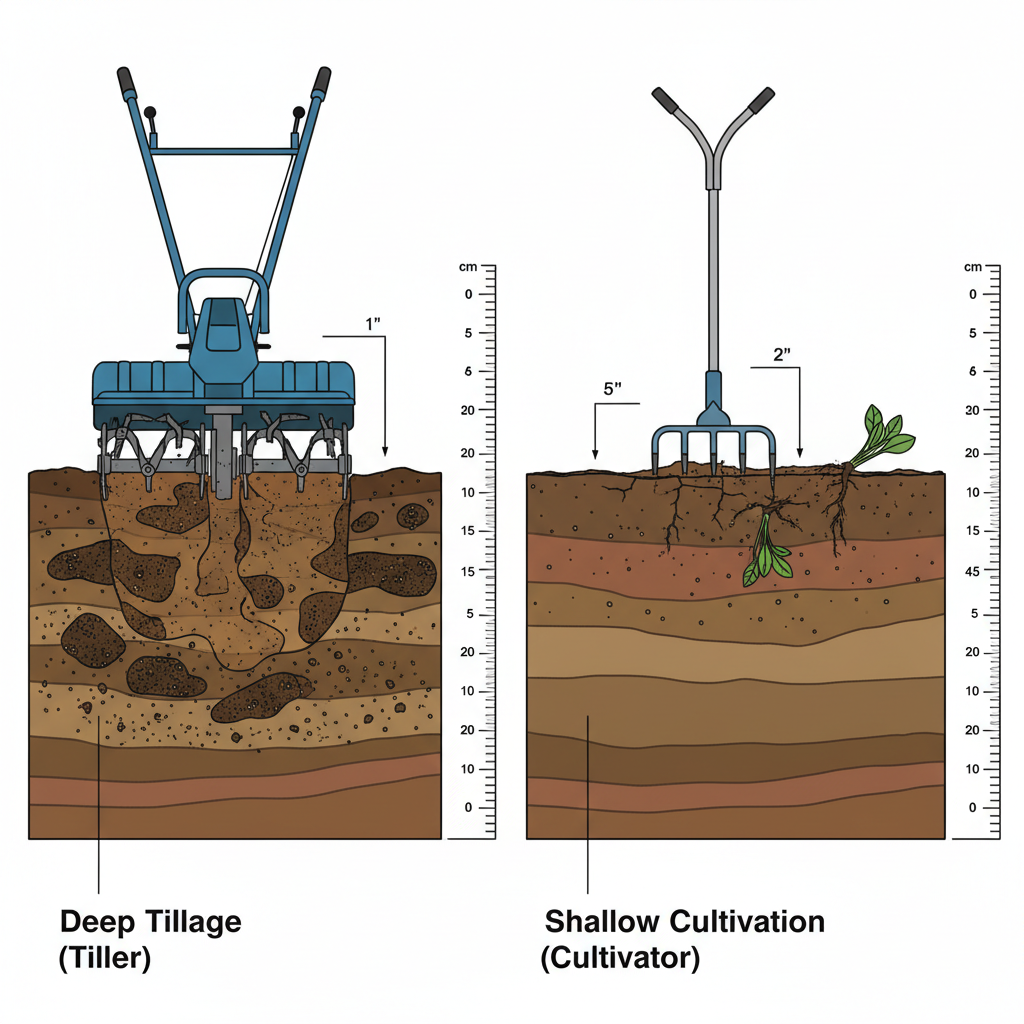
Tillers and cultivators are often confused because both machines use rotating tines to work soil. However, they serve different purposes and operate at different soil depths, making them suited for distinct gardening tasks.
The primary differences are:
- Depth of operation: Tillers work 6–8 inches deep or deeper; cultivators work 2–4 inches deep
- Power and weight: Tillers are heavier and more powerful; cultivators are lighter and more maneuverable
- Intended use: Tillers prepare new beds or heavily compacted soil; cultivators maintain existing beds and control weeds
- Soil disturbance: Tillers turn soil completely; cultivators break up surface crust and uproot shallow-rooted weeds
Understanding these distinctions helps you avoid renting or purchasing the wrong tool and ensures you prepare your garden efficiently.
Tiller: Purpose, Power, and Performance
A tiller is a motorized machine designed to break up, churn, and aerate soil. Most tillers feature a powerful engine connected to metal tines or teeth that rotate at high speed, digging into the ground and turning the soil over as the machine moves forward.
When to Use a Tiller
- New garden bed preparation: Breaking up compacted earth or sod before planting
- Large-scale projects: Preparing vegetable gardens, flower beds, or lawn areas
- Heavily compacted soil: Areas that have been walked on, driven over, or left undisturbed for years
- Deep soil amendment: Incorporating compost, fertilizer, or other amendments throughout the root zone
- Initial land clearing: Converting a grass area to a planting bed
Tiller Specifications and Types
Rear-tine tillers are the most common full-sized models, typically featuring:
- Engine power: 5–8+ horsepower
- Working depth: 6–10 inches
- Tine width: 18–36 inches
- Weight: 150–300+ pounds
- Best for: Initial bed preparation and large areas
Front-tine tillers are lighter-duty machines that blur the line between tillers and cultivators:
- Engine power: 3–5 horsepower
- Working depth: 4–6 inches
- Tine width: 12–20 inches
- Weight: 80–150 pounds
- Best for: Small to medium gardens and moderately compacted soil
Why Tiller Depth Matters
Deep tilling (6+ inches) achieves several critical goals:
- Breaks compacted hardpan, improving drainage and root penetration
- Turns over layers of soil, bringing nutrients from below to the surface and burying weeds and residue deeper
- Creates ideal conditions for new plantings, especially in virgin or neglected ground
- Improves soil structure for vegetable gardens, where deep root systems are essential
Cultivator: Purpose, Power, and Performance
A cultivator is a lighter-duty tool designed to maintain already-prepared soil rather than break it from scratch. Cultivators can be manual (hand-operated), push-powered, or small motorized machines. Their shallower working depth and lighter construction make them ideal for ongoing garden maintenance.
When to Use a Cultivator
- Weed control: Uprooting shallow-rooted weeds and breaking up soil crust
- Maintenance cultivation: Working between existing plants after initial tilling
- Small gardens: Maintaining raised beds, containers, or modest planting areas
- Established beds: Aerating and loosening soil in beds that have been prepared but not recently worked
- Mulch incorporation: Working light amendments into the top few inches of soil
- Accessible spaces: Working around obstacles and tight spaces where a full-sized tiller cannot reach
Cultivator Specifications and Types
Manual/hand cultivators include claw-style, stirrup, and adjustable hoes:
- Cost: $15–$50
- Working depth: 1–3 inches
- Best for: Small areas, precise weeding, and soil that is already loose
Push cultivators are human-powered but larger:
- Cost: $50–$150
- Working depth: 2–4 inches
- Tine width: 8–24 inches
- Best for: Medium-sized beds and weeding without motorized noise
Small motorized cultivators are front-tine machines with modest engines:
- Engine power: 2–4 horsepower
- Working depth: 2–4 inches
- Tine width: 10–18 inches
- Weight: 40–100 pounds
- Best for: Frequent maintenance and larger home gardens
Why Cultivator Depth Matters
Shallow cultivation (2–4 inches) serves specific purposes:
- Uproots annual weeds without bringing deep-buried perennial seeds to the surface
- Breaks soil crust, improving water infiltration and aeration for existing plants
- Avoids disturbing beneficial soil life and mycorrhizal networks in established beds
- Preserves the soil structure you created during initial tilling
Side-by-Side Comparison: When to Use Each
| Factor | Tiller | Cultivator |
|---|---|---|
| Primary purpose | Initial soil preparation | Maintenance and weed control |
| Typical depth | 6–10 inches | 2–4 inches |
| Power source | Motorized (5–8+ hp) | Manual, push, or motorized (2–4 hp) |
| Soil disturbance | Complete turnover | Surface working only |
| Weight | 150–300+ pounds | 40–150 pounds |
| Typical cost (rental/purchase) | $50–$100/day rental; $1,000–$5,000+ purchase | $20–$50/day rental; $100–$1,500 purchase |
| Best for area size | Large gardens, multiple beds, or new areas | Small to medium gardens, maintenance, precision work |
| Can work around plants | No—too large and aggressive | Yes—especially manual or small motorized versions |
Common Confusion: Front-Tine Tillers and Cultivators
The line between a small tiller and a cultivator can blur, especially when front-tine tillers are involved. This is a major source of confusion for gardeners.
Front-Tine Tillers: The Gray Area
Front-tine tillers are lighter machines where the tines are powered and also propel the machine forward. These machines:
- Work at intermediate depths: typically 4–6 inches (deeper than cultivators, shallower than rear-tine tillers)
- Weigh 80–150 pounds (lighter and easier to control than rear-tine models)
- Suit moderately compacted soil and established gardens better than full-sized tillers
- Cost less than rear-tine models but more than hand cultivators
Many home gardeners can accomplish bed preparation with a front-tine tiller instead of renting a larger rear-tine model, and then switch to a cultivator for ongoing maintenance.
Why Regional and Product Terminology Varies
In some regions and among some gardeners, the terms “tiller” and “cultivator” are used more interchangeably, particularly when referring to motorized machines. However, professional gardeners and agricultural suppliers maintain the distinction:
- Tillers = deep, intensive soil preparation
- Cultivators = surface maintenance and weed control
When shopping for equipment, focus on the specifications (depth, power, weight) rather than the label alone.
Choosing the Right Tool for Your Garden
Use a Tiller If:
- You are converting lawn or compacted ground into a new planting bed
- Your garden soil has been untouched for several years
- You are planting root vegetables or other crops requiring deep, loose soil
- You have a large area (more than 500 square feet) to prepare
- You need to incorporate significant amounts of compost or amendments throughout the soil profile
Use a Cultivator If:
- Your garden bed was prepared within the last year or two
- You are maintaining an established garden and need to control weeds
- Your garden is small (under 200 square feet)
- You need to work around existing plants
- You prefer quieter, lighter-duty operation
- You are incorporating only a light top dressing of mulch or compost
A Two-Tool Strategy
Many serious gardeners use both tools:
- Year 1: Rent or purchase a tiller to break up new ground thoroughly
- Years 2+: Use a cultivator for annual or seasonal maintenance, weed control, and light soil work
This approach ensures proper initial preparation and then maintains soil quality and structure without the repeated deep disturbance that constant tilling causes.
Frequently Asked Questions
Can a cultivator replace a tiller?
For ongoing maintenance, yes—a cultivator is designed for that purpose. However, a cultivator cannot replace a tiller for initial bed preparation on compacted or virgin ground. If you are converting lawn or heavily compacted soil, you need the power and depth of a tiller first. Once soil is prepared, a cultivator handles year-to-year maintenance efficiently.
Is a front-tine tiller the same as a cultivator?
Not exactly. A front-tine tiller works deeper (typically 4–6 inches) than a cultivator (2–4 inches) and offers more power, making it suitable for initial preparation of moderately compacted soil. A cultivator is primarily a maintenance tool. However, the overlap is real—a front-tine tiller and a small motorized cultivator occupy similar territory and may be interchangeable for some tasks. Check the working depth and horsepower to determine which tool suits your needs.
How often should I use a cultivator in my garden?
Most home gardeners cultivate 2–4 times per growing season: once in early spring to prepare beds, once or twice mid-season for weed control, and once in late summer or fall. The exact frequency depends on weed pressure, weather (rain and compaction), and whether you mulch. Raised beds and well-mulched gardens may need less frequent cultivation.
Can I use a tiller on an established garden without damaging it?
Full-sized tillers can disturb soil structure, harm beneficial organisms, and bring dormant weed seeds to the surface. They are best used for initial preparation or major renovation. For established gardens, reserve tilling for every 3–5 years at most, or not at all if you use raised beds, mulch, and compost. Stick with a cultivator for regular maintenance to preserve soil health and structure.