Quick answer by mower type
The honest answer depends on the machine and on what you mean by alternator. In a car, that word usually means a separate, belt-driven generator that keeps a 12-volt battery charged and feeds lights, computers, and accessories. On a lawn mower, the same word is often borrowed for a much smaller charging coil. It can also be used loosely for any part that makes electricity. Those are not the same device.
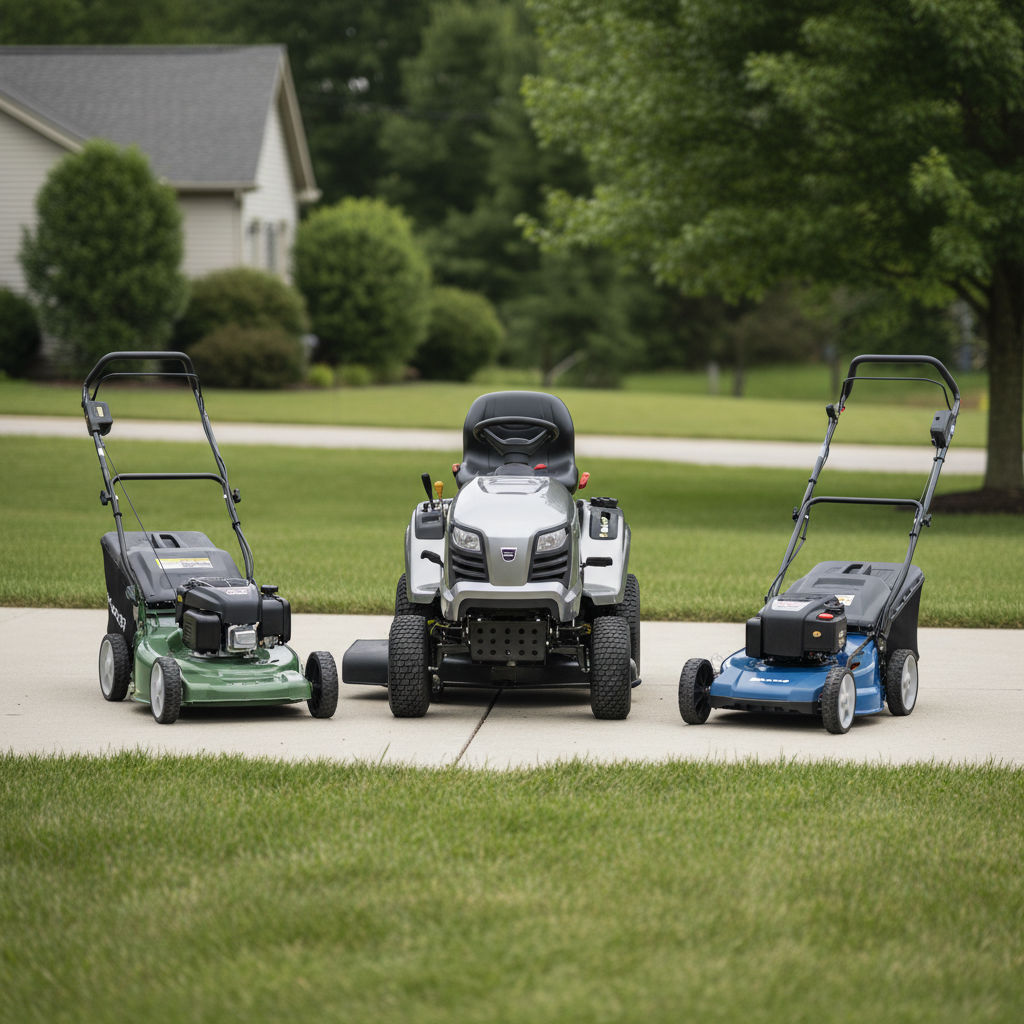
A typical recoil-start walk-behind gasoline mower almost never uses a separate automotive alternator. It usually has no storage battery and no charging circuit at all. Pulling the starter rope spins the flywheel. Magnets on that flywheel pass an ignition coil and produce the spark that fires the plug. That magneto arrangement is an ignition system, not a battery charger.
Riding mowers, lawn tractors, and many other electric-start gas machines are different. They need stored battery power to crank the engine, and often to run lights or an electric clutch. Those machines commonly recharge the starting battery while the engine runs. The charging hardware is usually a stator or charging coil under or around the flywheel, plus a rectifier or voltage regulator. Manuals and parts catalogs may label that assembly an alternator even when it is not a car-style unit bolted beside the engine.
A true belt-driven automotive alternator is less typical on ordinary home riders. It is more plausible on some larger lawn or garden tractors that carry heavier electrical loads, but it is not a rule you can assume from the word “tractor” alone. Always treat the model’s parts diagram as the authority.
Battery-electric and corded mowers have no gas engine, so they have no engine-driven alternator. A battery model stores energy in a removable or built-in pack and restores that energy with a plug-in charger or charging dock. A corded electric mower draws wall power through the cord while you cut. Neither design generates charge the way a running gasoline engine can.
If you mean “does any generator exist on this mower,” the answer can be yes on many battery-equipped gas machines. If you mean “is there a car-style belt-driven alternator,” the answer for most consumer walk-behinds is no, and for many home riders it is still no, even when the charging part is sold under the alternator name.
What a lawn mower actually needs electricity for
Car analogies mislead because a simple lawn mower and a modern automobile do not share the same electrical job list. A basic walk-behind gasoline mower has one essential electrical task: create a timed spark at the plug so the fuel-air mix can ignite. That spark is a brief pulse. It does not require a charged battery, a dash of warning lights, or a continuously regulated charging system.
A battery and a way to recharge it become necessary only when the machine also has to store power. Electric start is the most common reason. Headlights, a key switch, an hour meter, and some electric blade clutches or power-take-off systems also draw from stored battery energy. Not every rider has lights or an electric clutch, so you cannot infer a full accessory list from the fact that a machine has a seat. You can infer that if those loads exist, something has to keep the battery from going flat after repeated starts.
Ignition spark and battery charging are different jobs. Spark can be made on demand by a magneto without storing energy in a battery. Charging is a slower, ongoing conversion of mechanical motion into current that can refill a battery and support accessories. A no-start or a dead battery often sends people looking for an “alternator” because that is the part they know from cars. On a mower, the real issue may be the battery itself, a corroded cable, a failed starter, a fouled plug, a safety interlock, stale fuel, or a charging coil that never replenished the battery after the last successful start. Treating every electrical complaint as a bad car-style alternator skips those other, more common paths.
Walk-behind gas mowers: magneto ignition, not a car alternator
A typical consumer push mower can spark with no battery and no belt-driven generator because the magneto is a self-contained ignition generator. In plain language, a magneto uses moving magnets and a coil to induce a voltage high enough to jump the spark-plug gap. The engine’s flywheel does two jobs at once: it stores rotational inertia so the crankshaft keeps turning between power strokes, and it carries magnets that sweep past a stationary ignition coil mounted near the flywheel rim. To evaluate matched hardware tolerances, consult our detailed overview of marshall stanmore iii vs harman kardon onyx studio 8.
Each pass of a magnet changes the magnetic field in the coil. The coil’s windings convert that change into electrical energy. A switching arrangement in the ignition module or points-style system (depending on engine age and design) times the collapse of that field so the high-voltage output arrives when the piston is in the right place. The result is a spark. No storage battery is required for that pulse, which is why a recoil-start walk-behind can sit all winter, then fire after a few pulls if fuel, compression, and the plug are in decent shape.
That arrangement is why a typical recoil-only walk-behind has no charging circuit. There is nothing onboard that needs a continuous supply of low-voltage current. The ignition coil is not an alternator in the automotive sense. It is dedicated to spark. Some electric-start walk-behinds do add a small charging coil or a modest charging path so a compact starting battery can recover after cranking. That is an exception you should confirm on the specific engine, not a rule for push mowers as a class. Many electric-start walk-behinds still look like ordinary mowers from the deck up; the clue is a battery box, a key or push-button start, and extra wiring around the engine, not a car alternator hanging off a belt. When planning workspace deployment, consider the engineering criteria outlined in our dyson v8 cyclone vs bissell featherweight stick guide.
If you remove the blower housing on a typical small engine, you will not find a separate, fan-cooled automotive alternator. You will find the flywheel, its magnets, the ignition coil (sometimes called an armature or magneto coil), and, on charging models, a second set of windings or a stator plate. Those parts live under the cover that also directs cooling air. They are compact because the electrical demand is small compared with a car.
Riding mowers and other battery-equipped gas machines
A riding mower or lawn tractor with electric start needs a battery that can deliver a heavy burst of current to the starter motor. After the engine is running, that battery should be replenished so the next start is not weaker than the last. Many home riding mowers and similar battery-equipped gas machines do that with a flywheel stator or charging coil. As the flywheel spins, its magnets induce alternating current in stationary windings. A rectifier converts that alternating current to direct current the battery can accept. A voltage regulator, often combined with the rectifier in one module, limits how high the charging voltage can climb so the battery and lamps are not overfed.
That system is a charging system. It is fair to call the generating part an alternator in the broad electrical sense: it produces alternating current from rotation. It is not fair to picture the familiar car part, an aluminum housing with a pulley, internal fan, and external regulator or built-in electronics, driven by a serpentine belt from the crankshaft. On ordinary home riders, the charging windings are usually tucked under the flywheel or mounted as a coil beside it. The regulator/rectifier may sit on the engine, on the frame, or near the battery, depending on the design.
Does the battery recharge whenever the engine runs? Often that is the intent, but it is not a guarantee you can treat as a specification. Charging output on small engines is modest. Idle, a failing regulator, a slipping or damaged flywheel key that upsets timing and charging, corroded grounds, or a battery that can no longer hold a charge can all leave you with a machine that runs yet still goes dead after a few key starts. Some systems also charge more effectively in a higher rpm range than at a lazy idle. Exact amp ratings, the engine speed at which charge begins, and a promised system voltage are model-specific. Do not assume a number from a car or from another mower.
Larger lawn and garden tractors sometimes carry more electrical load: extra lighting, more robust starting, or additional electric accessories. On those machines a more car-like, separately mounted alternator is more plausible than on a compact home rider. “More plausible” is not “standard.” Plenty of substantial tractors still use a stator under the flywheel. The only reliable way to know is the manufacturer’s parts list for that serial-number range.
How a mower charging system differs from a car alternator
Packaging and drive method are the easiest contrasts. A modern automotive alternator is a self-contained machine. A belt spins a rotor inside a stator. Internal diodes rectify the output. A regulator, inside or nearby, holds voltage in a band the vehicle battery and electronics can tolerate. The unit bolts to a bracket on the engine and is serviceable as one assembly.
A typical small-engine charging setup splits those functions. The magnets often live on the flywheel, which is already required for starting and smoothness. The stator or charging coil is a stationary winding. Rectification and regulation happen in a separate module. There is usually no dedicated charging belt. The same rotation that turns the blades and the crankshaft turns the magnetic field. The whole package is smaller because the job is smaller: keep a starting battery from going flat and, on some machines, feed a few lights or an electric clutch, not run a cabin full of electronics.
That is why a small-engine stator does not look or act like the alternator on a modern car. You will not typically see a ribbed pulley, a tensioner, or a fat output cable headed to a power-distribution box. You may see one or two thin leads leaving the engine area and disappearing into a regulator. When the charging assembly fails, shops often replace the stator, the regulator/rectifier, or both, rather than unbolting a single automotive-style unit.
Parts diagrams still say “alternator” because catalogs reuse familiar language. To a parts system, the generating assembly is the alternator whether it is a flywheel stator, a charging coil, or a rare belt-driven unit. The word is a function label, not a promise that the part will interchange with a passenger-car alternator. Swapping a car alternator onto a lawn mower is not a generic repair. Mounting, drive method, polarity, regulator setpoints, and wiring are not universal. Homemade adaptations can overcharge a small battery, undercharge it, or create a short next to fuel and spinning parts. That kind of conversion belongs only in a shop that will take responsibility for the wiring, not in a general how-to.
Parts that do the work: magneto, stator, flywheel, regulator, battery
It helps to split the electrical map into spark parts and charging parts. They can share the flywheel and still be separate circuits.
Spark side
- Flywheel magnets. Permanent magnets cast or fastened into the flywheel. They create the moving field for ignition and, on charging engines, for the stator as well.
- Ignition coil (magneto coil). A stationary coil, often with a laminated iron core that sits close to the flywheel rim. Its job is high-voltage spark, not battery charging.
- Spark plug and high-tension lead. The path that delivers the pulse to the combustion chamber.
- Kill switch or safety interlock wiring. These ground or interrupt the ignition so the engine can be stopped, or so it will not run when a handle, seat, or blade control is in an unsafe position. They are not charging parts, but they are a frequent reason a “no spark” complaint is not an alternator problem.
Charging side
- Stator or charging coil. Windings that produce relatively low-voltage alternating current while the engine runs. This is the part most often nicknamed an alternator on a mower.
- Rectifier. Converts alternating current to direct current so a battery can be charged.
- Voltage regulator. Limits charging voltage. Frequently combined with the rectifier.
- Battery. Stores energy for the starter and for accessories that must work when the engine is off or at low electrical output.
- Starter motor and solenoid or relay. Consume battery current. They do not generate charge.
An ignition coil and a charging coil can look similar to an untrained eye because both may sit near the flywheel and both may have a metal core and windings. Function separates them. The ignition coil’s output is a brief high-voltage pulse to the plug. The charging coil’s output is a lower-voltage supply meant to be rectified and fed toward the battery. Sharing a flywheel does not make them the same circuit. A machine can have a healthy spark and a dead charging path, or a battery that cranks strongly while the plug never fires.
The flywheel’s extra contribution is timing and inertia. Besides carrying magnets, it is keyed to the crankshaft. If that key shears after a blade impact, ignition timing can shift and charging magnets may no longer align the way the designer intended. Owners sometimes chase coils when the overlooked mechanical part is a damaged key. That is a diagnosis a small-engine shop can confirm; it is not a reason to pry the flywheel off without the service procedure for that engine.
Naming overlap is a terminology issue, not a second physical system. One maker’s “alternator” is another’s “stator,” “charging coil,” or “magneto charge coil.” “Magneto” itself is used both for the whole ignition generator and, loosely, for the ignition coil. When a parts list uses several names, match the illustration and the part number for your model rather than shopping by the everyday word alone. Wire colors, connector pinouts, and polarity are not universal, so a coil that looks right can still be wrong for that harness.
Battery-electric and corded mowers
A battery-electric mower does not generate electricity with an onboard gas-engine alternator while you mow. The pack you installed or that lives in the deck is the energy source. Motors turn the blade or drive the wheels by drawing from that pack. When the pack is low, you recharge it from household power with the charger or dock the manufacturer supplies. Some owners keep a second pack so one can charge while the other is in use, but that is a convenience pattern, not a hidden alternator.
There is electronics on a battery mower, controllers, battery-management circuitry, safety interlocks, but those circuits manage stored energy. They do not replace a small-engine stator. Do not expect the mower to top up its own pack from blade rotation in any way that substitutes for plugging in. If a battery-electric machine will not run, the useful questions are about the pack, the charger, contacts, and the mower’s own fault indications, not about a missing automotive alternator.
A corded electric mower is even simpler on this point. It has no charging system because it has no onboard energy store to refill. Power arrives through the extension cord from an outlet. Unplug it, and the electrical supply is gone. There is no magneto and no stator in the gasoline-engine sense. The motors are loads, not generators.
How to tell what your mower has
You can usually classify the machine with observation and the official paperwork, without a teardown.
- Recoil-only walk-behind, no battery tray, no key switch. This usually implies magneto ignition only and no need for a charging alternator. Look for a pull handle and a simple engine with a fuel cap and a primer or choke. Absence of a battery is the strongest everyday clue.
- Battery box, key switch, or push-button start. The machine stores energy and almost certainly has some charging path if it is gasoline-powered. That path may be a stator, a charging coil, or, less often on home machines, a separate alternator.
- Headlights or an electric blade clutch / PTO switch. These are extra clues that a charging system may be present, because those loads are awkward to support from a battery that never gets replenished. They are clues, not proof of a car-style unit.
- Battery-electric styling: removable pack, charger brick, no fuel tank, no pull rope or gas-engine muffler. There is no engine-driven alternator. Charge comes from the wall.
- Cord and no battery pack. Wall power only.
The owner’s manual and the exploded parts diagram overrule generic advice. Search those documents for the engine model as well as the mower model. The same deck can be sold with more than one engine family, and charging hardware follows the engine more than the color of the hood. If the diagram shows a stator under the flywheel and a regulator with two or three wires, that is your “alternator,” whatever the index calls it. If it shows only an ignition coil and a flywheel, you are looking at spark hardware.
Stop and ask a dealer or a small-engine shop when the machine has a battery that repeatedly goes dead, when you cannot match the parts diagram to what you see, or when you would have to remove the flywheel, blower housing, or battery cables to go further. Those steps involve pinch points, a spring-loaded starter, residual fuel, and the chance of a short at the battery. Identification does not require you to become the test technician.
Safety notes if charging or spark is the real problem
A dead battery, a click-and-no-crank start, dim lights, or a mower that runs only after a jump are often blamed on a bad alternator. Other causes are at least as common: a battery at the end of its life, loose or corroded terminals, a failed ground strap, a starter that drags, a blown fuse or fusible link on machines that have one, a regulator that has shorted, an ignition coil that has failed, a grounded kill wire, a safety switch under the seat or in the brake path, or fuel that will not ignite even when spark is present. Replacing a stator or regulator will not restore starting if the battery cannot hold a charge or if the engine has no spark for an ignition reason.
Work around a mower as if the blade can move. Disable the spark plug lead and keep hands away from the deck before you inspect belts, the flywheel area, or anything under the housing. Fuel and spark together are a fire hazard; do not create sparks near an open carburetor or a spilled tank. Battery cables can weld or spray molten metal if a tool bridges the positive terminal to the frame. Remove jewelry, use insulated tools if you must work near the battery, and disconnect the battery only in the order the manufacturer specifies for that machine, when in doubt, have a shop do it.
Do not improvise jump methods that bypass safety interlocks, and do not run a gasoline mower in an enclosed space while you “watch it charge.” Exhaust is hazardous, and a running deck is not a test bench. Universal multimeter pass/fail voltages, coil-resistance charts, and rpm numbers for the onset of charge are not safe to treat as one-size-fits-all. Those figures belong to a specific service manual. If you need a measured diagnosis, a qualified small-engine technician can test the charging path and ignition with the procedure that matches your engine.
The practical takeaway is modest. Most walk-behind gas lawn mowers do not have a car-style alternator; they spark with a magneto. Many electric-start riding mowers and similar battery-equipped gas machines do have a charging system that may be sold as an alternator even when it is a stator and regulator. Battery-electric mowers charge from a plug. Match the type you own, use the factory names on the parts list, and treat blades, fuel, spark, and battery cables as hazards rather than as a weekend wiring project.
Buyer FAQs: Does A Lawn Mower Have An Alternator Solved
Does a push mower have an alternator like a car?
Usually no. A typical recoil-start walk-behind uses flywheel magnets and an ignition coil to make spark. That magneto is not a belt-driven automotive alternator, and many of these mowers have no battery to charge.
Why does my riding mower parts list say “alternator” if I cannot see one?
Catalogs often use alternator for the stator or charging-coil assembly under the flywheel. The generating windings are hidden by the blower housing. A separate, pulley-driven unit is less typical on ordinary home riders.
If the mower starts with a pull rope, can it still have a charging system?
Yes. Some machines offer both recoil backup and electric start, and some electric-start walk-behinds add a small charging coil. A battery tray or key switch is a better clue than the presence of a rope.
Is a magneto the same thing as an alternator?
No. A magneto’s usual job on a mower is ignition spark. An alternator or stator’s usual job is producing current that can be rectified and sent toward a battery. They may share flywheel magnets and still be different circuits.
Related Maintenance and Operating Guides
To keep your equipment running at peak operating efficiency, explore our related technical walkthroughs and maintenance tutorials:
- Consult our detailed breakdown on lawn.
Can I put a car alternator on my lawn tractor?
Not as a generic swap. Drive method, mounting, regulation, and wiring are not interchangeable by default. Incorrect charging can damage a small battery or create a short near fuel and moving parts. Use the charging parts specified for that model, or have a shop evaluate any nonstandard design.
Technical Standards and Compliance
Mechanical safety standards, operational tolerances, and protective gear guidelines align with benchmark specifications established by the American National Standards Institute (ANSI).