

Quick Answer: Does Mowing Lawn Stimulate Growth?
Yes, with conditions. Regular, moderate lawn mowing can encourage turfgrass to send up new shoots (tillers) and form a denser canopy. It does not create unlimited extra biomass or speed up the whole plant. Cutting off too much leaf at once, or keeping grass chronically too short, reduces photosynthesis, can slow roots, and may thin the lawn. Mowing height, frequency, blade…
What “stimulated growth” means after you mow
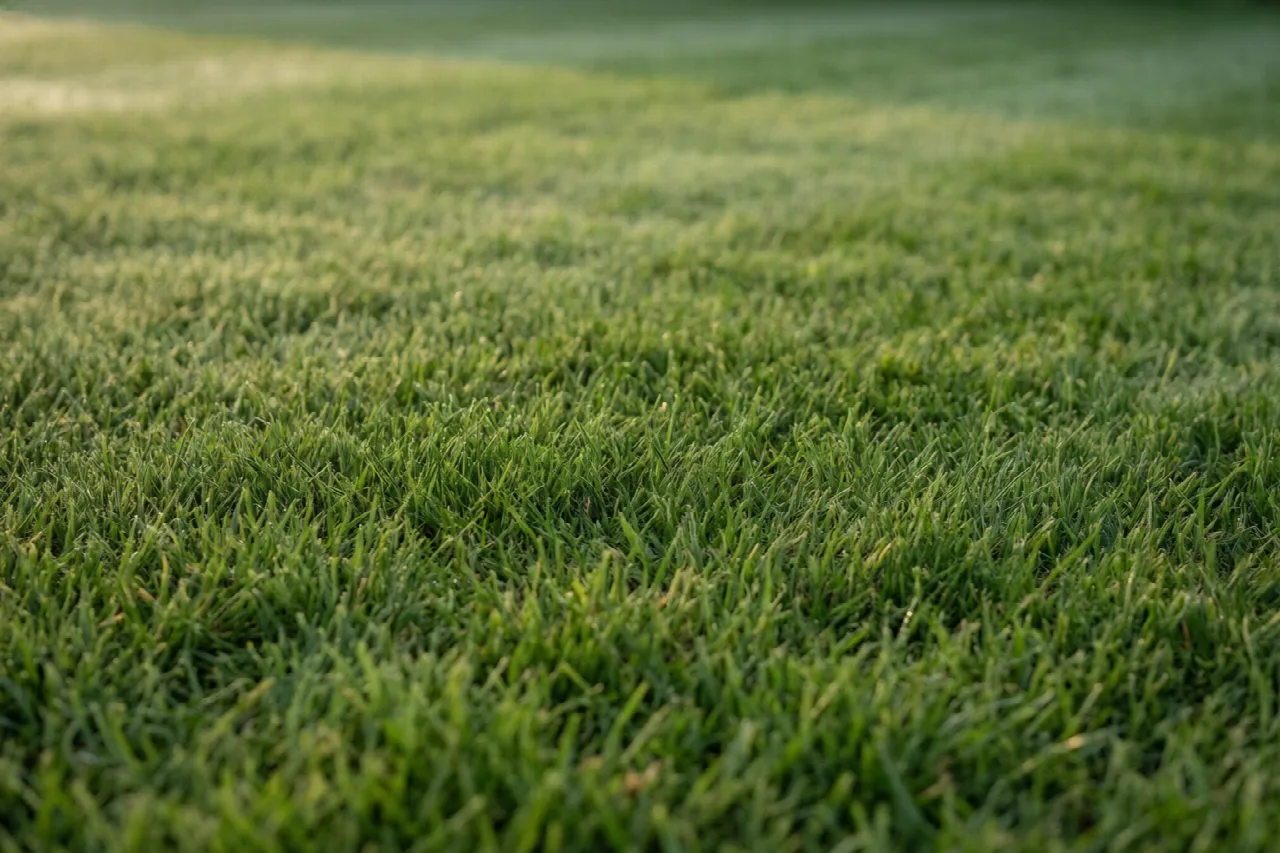
People ask whether mowing stimulates grass growth for different reasons. Some want a faster flush of green after a weekend cut. Others want a thicker stand that crowds weeds. Those are not the same outcome, and treating them as one idea is how lawns get overcut.
A freshly mowed lawn can look as if it is growing faster. New leaf tips appear, the surface greens, and the canopy fills in. That is often compensatory shoot growth: the plant is replacing the leaf area you removed. It is not proof that the whole plant, shoots plus roots plus stored energy, is more vigorous than it was before the cut.
Mowing changes how turfgrass allocates growth. It does not add light, water, or nutrients, and it does not create extra biomass from nothing. When a moderate amount of leaf is removed on a regular schedule, many lawn grasses respond by producing more tillers from the crown and keeping a shorter, more uniform canopy. When too much leaf is removed, or when the remaining canopy stays too small for too long, the plant draws down carbohydrate reserves, root growth can slow, and the stand may thin even if the surface looks briefly tidy.
So the useful definition of “stimulated growth” is not a taller hayfield. It is a living crown that keeps making new shoots, enough leaf area to feed those shoots, and a canopy dense enough to shade soil. If a lawn greens up quickly after a hard cut and then fades, browns, or opens gaps, the flush was recovery, not a healthier plant.
How turfgrass responds after a cut
Most lawn grasses do not grow the way a tree grows. A tree adds height at a tip meristem. Turfgrass leaves elongate from a basal growing region, and the plant persists from a crown near the soil surface. That is why you can mow the same lawn for years without “using up” the plant the way repeated topping would ruin a shrub. The growing points that matter are low, as long as you do not cut into the crown itself.
A cut still has a cost. Leaf blades are the main photosynthetic surface. Remove them and you reduce the plant’s ability to make sugars until new leaf area forms. In the meantime the grass draws on carbohydrate reserves stored in the crown, remaining leaves, and, in some species, underground stems. Recovery is the process of rebuilding leaf area before those reserves are exhausted.
Many turfgrasses respond to an opened canopy by tillering: new shoots arise from buds at the crown. Some species also spread by stolons (above-ground runners) or rhizomes (below-ground stems). Opening the canopy a little can favor more of those lateral shoots because light reaches the base of the plant. That is the biological basis for the idea that mowing can thicken a lawn. It is a simplified picture, plant hormones such as those involved in apical dominance are part of the story, but it is not a measured lab result you can treat as a growth-rate guarantee.
Roots are part of the same energy budget. After a hard mowing, the plant often prioritizes new leaves over new roots. Root growth can slow until the canopy is rebuilt. That is one reason a lawn can look acceptable on top and still struggle in heat or drought a week later: the visible flush used energy that might otherwise have supported the root system. For troubleshooting and reliability insights, consult our in-depth marshall stanmore iii vs harman kardon onyx studio 8 report.
None of this happens in isolation. A plant with good light, moisture, and a well-fed crown can replace leaf area and still tiller. A plant already short on reserves, new seedlings, shaded turf, drought-stressed grass, or turf coming out of dormancy, has less to spend. The same mowing height that densifies a healthy stand can set a weak stand back.
When regular mowing densifies a lawn
A lawn that is mowed on a schedule matching its growth often looks thicker than neglected grass that is finally cut back. The neglected stand has usually become tall and stemmy. Lower leaves are shaded, tillering slows, and a hard cut then removes most of the remaining green tissue at once. The regularly mowed stand keeps a shorter canopy, more light at the base, and a habit of producing new tillers instead of a few long shoots. Readers comparing setup options can review our technical analysis on dyson v8 cyclone vs bissell featherweight stick.
Turf density in this sense is a tighter, more uniform surface: more shoots per area, fewer gaps, and a canopy that shades soil. That shade helps limit some weed seedlings and reduces drying of the soil surface. Mowing does not create those conditions by itself. Light, water, and a living crown still have to be present. If those are missing, more frequent cutting will not invent density.
Appropriate, repeated mowing favors density when: For complementary field maintenance guidelines, examine our breakdown of bissell crosswave hydrosteam vs shark stainforce.
- Each pass removes a modest share of the leaf, so the plant keeps enough photosynthetic area to recover.
- The remaining height is within what that grass type can sustain, so crowns stay covered and soil stays shaded.
- Growth is active enough that tillers can form; a dormant or stalled lawn cannot “thicken on command.”
- The stand is already established. New seedings need leaf area first; they are not ready for the same pressure as mature turf.
A frequently mowed lawn is not automatically a putting-green lawn. Fine, extremely short turf is a different cultural system, with species, irrigation, and fertility demands that ordinary home lawns do not share. The practical win for most yards is a consistent canopy that tillers instead of a hayfield that is scalped back to brown stems.
When mowing stresses or thins grass
Any cutting is not stimulative. The same biology that allows tillering also explains why aggressive mowing weakens turf.
Scalping is cutting so low that brown stems, crowns, or bare soil show. It happens when the deck is set far below the current canopy, when the ground is uneven and the mower dips, or when grass has grown tall and is reduced in one pass. Scalping strips photosynthetic tissue, exposes crowns to sun and drying, and opens space for weeds. The lawn may turn tan immediately because you have cut into older, non-green tissue rather than into a green leaf blade.
Chronic low cutting is a slower version of the same problem. If the remaining leaf area is always small, the plant never rebuilds a comfortable energy surplus. Roots stay shallower in effect because the plant cannot support a large underground system. Heat and drought hit harder because there is less canopy to shade soil and less reserve to replace scorched leaves. Weeds that germinate in thin spots face less competition.
Removing most of the leaf in one pass differs from frequent light cuts. A light cut leaves enough green tissue that photosynthesis continues while new tips elongate. A severe cut forces a larger draw on reserves and a longer period of reduced carbon gain. That is why a lawn that was skipped for weeks often looks worse after the catch-up mowing than a lawn cut a little more often at a higher setting.
Cut more gently, or leave the grass taller, when recovery capacity is low:
- New or thin lawns that still need leaf area to establish.
- Drought-stressed turf, or grass that has gone off-color from heat.
- Shaded lawns that already make less energy per day.
- Turf coming out of dormancy, when reserves and new roots are still limited.
- Any stand that shows crowns, thatch-colored stems, or soil after a normal pass, the height is already too low for that site.
There is no universal survival rate or “never cut below this number” that fits every species and climate. The mechanism is what stays true: too little remaining leaf, exposed crowns, more heat and drying, weaker roots, and openings for weeds.
Height and frequency principles that matter most
Exact inch charts only help when you know the grass species, the cultivar, and the site. Those are unspecified for most readers, so principles matter more than a fake schedule.
Match frequency to growth rate, not to the calendar. In a cool, moist stretch of active growth, grass may need cutting more often. In heat, drought, or a slow season, the same weekly habit can remove too much relative to what the plant is making. Mow when the canopy has grown enough that a pass will take a modest amount of leaf, not because a certain weekday arrived.
Avoid taking off a large share of the canopy at once. A widely used practical guideline is to remove about one-third of the leaf height in a single mowing. That is a rule of thumb, not a measured scientific threshold that has been proven for every turf type. The idea behind it is sound: leave enough leaf area that photosynthesis continues and the crown is not shocked. If grass has gotten far ahead of the mower, raise the deck and come back later at a lower setting rather than forcing one severe cut.
Within a species’ tolerance, a bit more leaf is usually safer than a bit less. Taller-within-reason means more photosynthetic area and better soil shade. It does not guarantee a measured root depth, but it supports the energy budget that roots depend on. Raise the deck in heat, drought, or shade if the grass type can be grown taller. Lower the height only within what that turf can sustain through the hardest weeks, not just on a cool morning when it looks lush.
Change the plan when growth changes. A spring or rainy-season surge may require more frequent passes at the same height so you never take a third-plus bite. A summer slowdown may require fewer passes and a higher setting. After a long absence, treat the first cut as a reduction of a tall canopy, not as a chance to return instantly to the shortest height you used last month.
Do not treat a neighbor’s setting, a mower’s lowest notch, or a remembered number from another climate as a law. Cool-season and warm-season grasses, sun and shade, and different soils do not share one ideal cutting height. Local extension guidance or the grass type already on the site is the place for exact ranges.
Cutting habits that support a healthy response
How you cut matters almost as much as how short you cut. The plant recovers from a clean wound more easily than from a torn one, and it recovers better when clippings and soil are not working against it.
Keep blades sharp. A sharp blade slices the leaf. A dull blade shreds it, leaving ragged tips that brown or whiten. That browning is extra water loss and extra tissue the plant must replace. Sharpening on a regular maintenance interval, whatever the mower’s manual recommends for your use, is one of the simplest ways to reduce avoidable stress. Follow the machine’s instructions for blade work, or have a shop do it; spinning blades are a serious hazard.
Return unclumped clippings when the lawn can take them. Scattered clippings decompose and return some nutrients and organic matter to the soil. They are not a complete fertilizer program, and no honest article can assign them a precise percentage of annual nitrogen without a specific study and lawn. Thick clumps are a different matter: they smother turf, block light, and can yellow the grass underneath. If growth is heavy, bag or redistribute clumps rather than leaving mats.
Wet grass is harder on the cut and on the soil. Moisture makes leaves limp and more likely to tear or clump. Soft ground ruts under wheels and can scalp high spots while missing low ones. Waiting for the surface to dry is not only cosmetic; it produces a more even remaining height and less mechanical damage. If you must mow damp turf, go slower, empty or clear clippings more often, and watch for piles.
Vary the pattern and avoid a permanent low path. Repeatedly following the same lines can compact the same tracks and gradually lower those strips. Changing direction from time to time helps the canopy stand more evenly. Avoid forcing the deck down in ruts or against curbs where the blade can scalp a strip that never quite recovers.
General mower safety belongs here only as a caution: keep feet and hands clear of the deck, wait for the blade to stop, and follow the machine’s instructions. This is not a mechanical how-to.
Species, season, and site caveats
Mowing tolerance, preferred height range, and peak growing season differ by species group and even by cultivar. Treating all turf the same is how a height that thickens one lawn thins another.
Cool-season and warm-season grasses are not interchangeable. Cool-season lawns typically grow most in milder weather and can struggle when heat combines with a short canopy. Warm-season lawns typically grow most in heat and can be more forgiving of lower heights when they are actively growing, but they are not immune to scalping, and they recover poorly if cut hard while they are slow or dormant. “Actively growing” is the shared requirement: tillering and leaf replacement need a plant that is already making energy.
Sun versus shade changes the energy budget. Shaded grass produces less carbohydrate per day. It usually needs more remaining leaf area, less frequent severe reduction, and more patience after a cut. The same mowing height that looks crisp in full sun can thin a north-side or tree-covered lawn because the plant cannot replace what you remove.
Established versus new turf is a different job. A mature crown can tiller after a moderate cut. A new seeding or sod that is still knitting has limited reserves and shallow roots. Those lawns need leaf area first. Cutting them as if they were established stands is a common way to stall establishment.
Dormancy and green-up are high-risk windows. Grass that is brown from winter or drought is not “resting in a way that makes low mowing free.” Crowns can still be damaged, and the first growth of the season is drawing on reserves. Wait for enough green tissue that a pass removes leaf, not straw-colored stems, and do not drop the deck to the season’s lowest setting on the first outing.
Because species, climate, and even the mix in one yard vary, this article cannot name a best month to lower the deck or a regional calendar. Use categories, cool-season versus warm-season, sun versus shade, established versus new, and confirm exact heights with local extension or with the grass type you actually have.
If the lawn looks worse after mowing
A bad-looking result after a cut is usually diagnostic, not a reason to buy a new product line.
Brown, gray, or white shredded tips usually mean a dull or damaged blade, or cutting when the leaf was too wet to slice cleanly. Sharpen or replace the blade, and recut only when the grass has grown enough that you are not chewing the same wounded tips again.
Sudden tan or straw-colored patches after a pass often mean scalping or cutting off a tall canopy down into old stems. High spots, ruts, a deck set too low, or a long vacation growth spurt are typical causes. Raise the height immediately. Do not try to “even it up” by going lower on the green areas. Water only if the site is dry and watering is appropriate for your conditions; a scalp is a leaf-area problem, not automatically a fertilizer problem.
After an accidental scalp or a long-skip cut, be conservative. Raise the deck, wait for new leaf, and avoid another severe pass. Let the plant rebuild canopy before you chase a short, formal look. Overseeding, fertilizer rates, and pest products are separate decisions with their own labels and local rules; they are not a guaranteed recovery timeline after one bad mowing.
When recovery stays poor, look past the mower. Chronic shade, compacted or waterlogged soil, drought, a grass type unsuited to the site, or a stand that was thin before the cut will not be fixed by a different Saturday routine. Mowing can encourage tillering only in a plant that still has a living crown and enough light and water to use it. If those are missing, the honest next step is to fix the site or the species mix, not to cut more often.
Putting the answer to work
Mowing can stimulate the kind of grass growth most people want, new tillers, a denser canopy, a uniform lawn, when the cut is moderate, regular, and matched to how fast that turf is actually growing. It does not magically accelerate the whole plant. Leaf area, the crown, carbohydrate reserves, and roots are one budget. Take too much leaf and you spend the budget on emergency regrowth. Leave enough leaf, cut cleanly, and keep height within what the species and site can support, and mowing becomes a way to shape a tighter stand rather than a stress that thins it.
The practices that follow from that biology are simple: mow on growth, not on habit; take a modest share of the canopy; err taller in heat, drought, shade, and on new or weak turf; keep blades sharp; return scattered clippings and remove clumps; and treat a tan, torn, or collapsing surface as a signal to raise the deck and wait. Exact heights belong to the grass on your ground and to local guidance. The mechanism does not: photosynthesis pays for tillering, and tillering is what “stimulated growth” should mean on a lawn.
Related Maintenance and Operating Guides
To keep your equipment running at peak operating efficiency, explore our related technical walkthroughs and maintenance tutorials:
- Consult our detailed breakdown on residential zero-turn lawn mower guide.
- Consult our detailed breakdown on heavy-duty chainsaw buyer guide.
Technical Standards and Compliance
Mechanical safety standards, operational tolerances, and protective gear guidelines align with benchmark specifications established by the American National Standards Institute (ANSI).









