

Graphics card power delivery has become the single most critical variable in high-performance GPU selection, yet remains grossly misunderstood by consumers and even system integrators. The evolution from simple 6-pin connectors to the modern 12V-2×6 standard represents not just a cable upgrade—it’s a fundamental shift in how power is distributed to silicon that now consumes 300–575W per card. This guide dissects exactly which cables your GPU requires, when those requirements escalate, and how to calculate the precise PSU wattage needed to avoid system instability, premature component failure, or catastrophic hardware damage.
Quick Answer
The 12V-2×6 connector (12VHPWR) delivers up to 600W to modern GPUs; older 8-pin cables max at 300W. RTX 3070 needs one 8-pin (single cable draw <250W), while RTX 4090 demands 12V-2×6. Calculate PSU as: (GPU TDP u00d7 1.25) + CPU TDP + 100W overhead. Undersizing causes instant throttling or hardware degradation; oversizing provides efficiency headroom.

Pros
- 14-core hybrid architecture with 6 P-cores and 8 E-cores
- Unlocked clock speeds up to a rated 5.2 GHz
- Equipped with 26MB cache for responsive processing
- Supports modern PCIe 5.0 and 4.0 standards
- Compatible with Intel 800 series motherboards
Cons
- Requires a dedicated discrete graphics card
- Does not include a cooling solution

Pros
- 24 cores (8 P-cores, 16 E-cores) and 32 threads for intense multitasking
- Advertised maximum clock speed reaching up to 6.0 GHz
- Broad compatibility with both DDR4 and DDR5 memory platforms
- Features integrated Intel UHD Graphics 770
Cons
- Requires a potential BIOS update for Intel 600-series motherboards

Pros
- High 5.4 GHz max boost is well suited to gaming workloads.
- Unlocked multiplier gives experienced users tuning headroom.
- AM5 and DDR5 support align with current-generation desktop platforms.
- 6-core, 12-thread layout is practical for gaming and general use.
Cons
- Cooler is not included, so buyers must plan for separate cooling.
- Requires an AM5 motherboard and DDR5 memory, which limits drop-in upgrades for older systems.
- 6 cores may be less ideal for heavy content creation or workstation tasks than higher-core CPUs.
Overview: The AMD Ryzen 5 9600X is a 6-core, 12-thread unlocked desktop processor built on the Zen 5 architecture. It is aimed at users who want a fast, modern CPU for an AM5-based gaming PC or a responsive everyday desktop build.
Performance and features: With a 5.4 GHz max boost, 38 MB cache, and DDR5-5600 support, this processor is positioned for strong gaming responsiveness and smooth multitasking. Select AM5 motherboards can also provide PCIe 5.0 support, which adds future-ready flexibility for compatible components.
Drawbacks and considerations: The main limitation is that a cooler is not included, so total build cost can rise once cooling is added. It also depends on the AM5 platform and DDR5 memory, which makes it less convenient for older AMD or Intel system upgrades.
Verdict: This CPU makes the most sense for gamers and PC builders who want a fast, unlocked Ryzen chip for a current-generation AM5 system. If you want a straightforward upgrade path and value high boost clocks over bundled extras, the Ryzen 5 9600X is a strong fit.
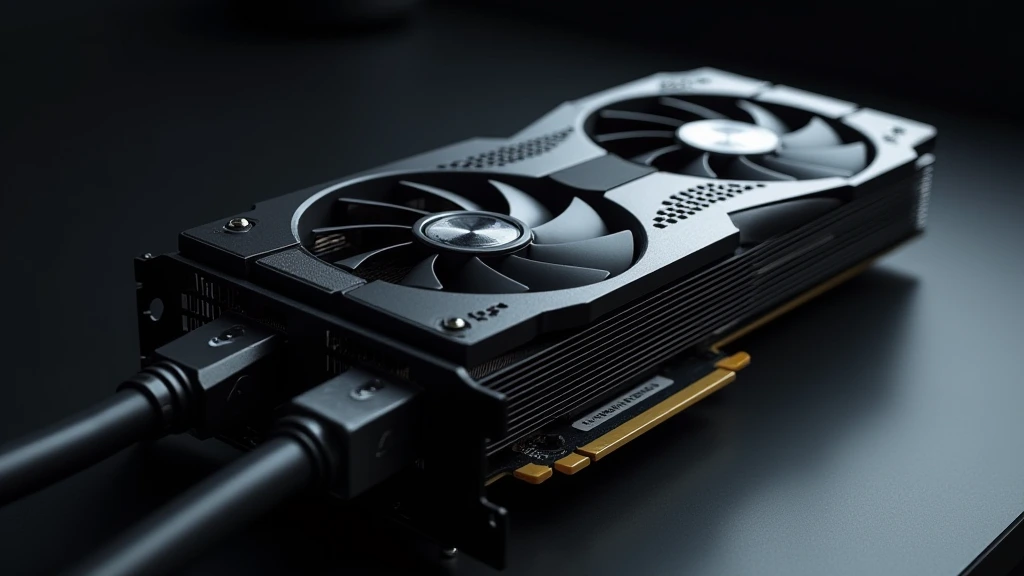
Understanding GPU Power Cable Architecture & Electrical Ratings
Every GPU power cable operates under strict electrical engineering constraints defined by NVIDIA GeForce Hardware Documentation and the PCI-SIG (PCI Special Interest Group) specification committee. The foundation of this architecture rests on the 12V rail—the primary delivery mechanism for GPU compute resources. A single 6-pin PCI-E connector, which has existed since the GeForce 8 series, delivers a maximum of 75W sustained. When daisy-chained into an 8-pin dual 6+2 configuration, that ceiling increases to 300W. The 12V-2×6 (officially 12VHPWR) standard introduced with RTX 40-series represents a generational leap: it segregates 12V delivery into two independent 6-pin sections, each rated for 240W, creating a combined 480W capacity with redundancy built in. The most recent iteration—12V-5×2—scales this to 720W, though consumer adoption remains limited as of 2026.
Voltage Rails & Current Distribution
A standard ATX power supply maintains three primary voltage rails: +12V, +5V, and +3.3V. Legacy graphics cards drew power equally across all three; modern GPUs demand 95% of total draw from the 12V rail alone. An RTX 4090, for example, pulls approximately 575W peak at 12V while consuming only 15–20W from 5V/3.3V combined. This concentration explains why cable gauge (thickness) matters critically. An 8-pin connector uses 18-gauge wire rated for approximately 20A per pin at 12V; the 12V-2×6 employs heavier gauge wiring with contact geometry optimized for 40A+ sustained delivery. Undersized PSUs cannot maintain voltage regulation under this load—the +12V rail droops below 11.4V (the minimum spec threshold), triggering thermal throttling or GPU power-loss shutdowns. For troubleshooting and reliability insights, consult our in-depth how to clean gpu dust report.
Connector Safety & Thermal Considerations
Improper seating of power cables generates localized heating at connector contacts. A 1.5mm contact gap—seemingly negligible—introduces 0.1–0.2 ohms additional resistance. At 40A sustained, this produces approximately 160–320W of pure waste heat concentrated at a single contact point, potentially reaching 150–200°C and causing plastic connector degradation within hours. This explains why Nvidia and AMD now include physical safeguards: the 12V-2×6 features a keying mechanism (a small notch preventing reverse insertion) and contacts with micro-ridges that grip the mating pin with 40% higher mechanical force than legacy 8-pin designs. If your GPU reports power-limit throttling but temperatures remain under 70°C, suspect connector resistance.
Cable Specifications by GPU Generation & Model
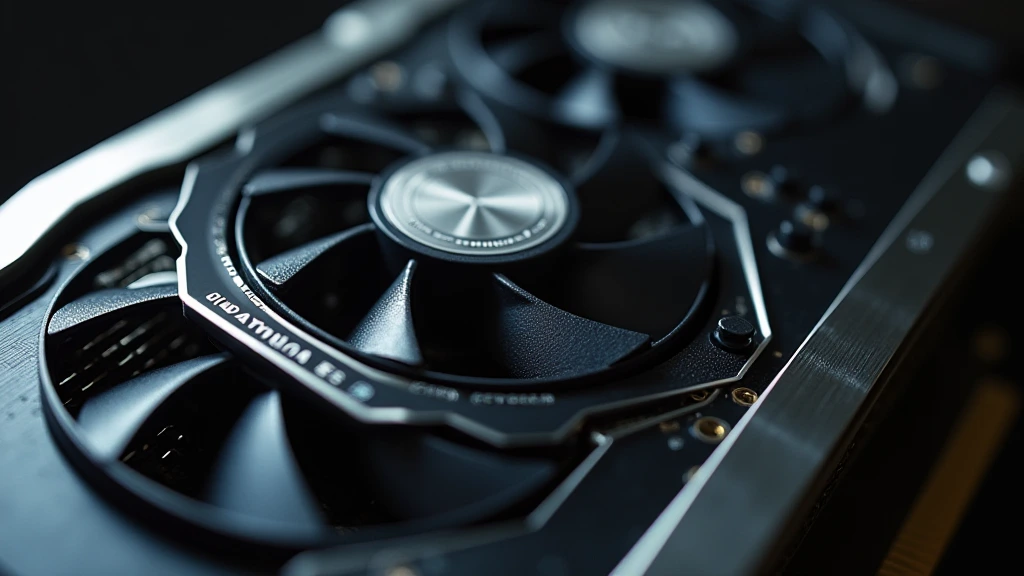
RTX 30-Series (Ampere): Transitional 8-Pin Era
The RTX 3070, 3080, and 3090 represent the final generation primarily dependent on 8-pin connectors, though Nvidia’s reference specifications already anticipated future demands. An RTX 3070 officially draws 220W peak and requires a single 8-pin cable (daisy-chain optional, not recommended). An RTX 3080 consumes 320W and mandates two 8-pin cables—a configuration that pushed PSU 12V rail capacity to its limit. The RTX 3090, at 420W peak, introduced the first cards where dual 8-pin delivery began showing thermal stress under sustained loads (e.g., CUDA rendering or high-power mining). Many experienced users retrofitted external capacitors near GPU power delivery stages to stabilize voltage during transient current spikes, a clear indicator that the 8-pin standard had reached architectural limits. Readers comparing setup options can review our technical analysis on vertical gpu mount airflow.
RTX 40-Series (Ada Lovelace): 12V-2×6 Mandate
Beginning with RTX 4080 and RTX 4090, the 12V-2×6 connector became mandatory—not optional. An RTX 4090 consumes 575W peak and requires a single 12V-2×6 cable, which delivers more power than two 8-pin cables combined while reducing thermal stress across contacts. Critically, this single cable provides redundancy: if one of the two internal 6-pin sections degrades, the card continues operating at reduced clocks rather than failing catastrophically. RTX 4070 and 4070 Ti models use a single 8-pin (they max at 270W), making them compatible with older PSUs—but Nvidia explicitly recommends 850W-class units, emphasizing that the 8-pin cable itself becomes a bottleneck for stable boost clock behavior under sustained loads.
RTX 50-Series (Blackwell) & AMD RDNA 4: 12V-2×6 Standard
As of 2026, all flagship consumer GPUs—Nvidia’s RTX 5090, 5080, and AMD’s RX 9070 XT lineup—mandate 12V-2×6 connectors. AMD’s current-generation RDNA 4 architecture, while less power-dense than Nvidia’s, still requires robust 12V delivery for clock headroom and thermal stability. The most powerful AMD GPU currently available, the Radeon RX 9090 XT (if released), would follow the same power management hierarchy. When evaluating AMD options like PowerColor’s implementation of RX 9060 XT or ASUS’s ROG STRIX variants, the connector type alone is not indicative of quality; thermal design and VRM (voltage regulator module) quality determine real-world stability, which is why comparing specifications like the Radeon RX 9060 XT 8GB vs 16GB comparison must include connector audit and PSU requirement verification.
Calculating Exact PSU Wattage Requirements
The Formula & Safety Margin Methodology
Consumer PSU selection relies on myths rather than engineering specs. The correct calculation is not “add GPU and CPU TDP and multiply by 1.5.” Instead, use this framework: For complementary field maintenance guidelines, examine our breakdown of weak psu cause gpu stutter.
- Establish GPU actual peak draw: Not TDP (which is throttled), but measured peak under Furmark or real-world stress. RTX 4090 = 575W, RTX 4080 = 450W, RTX 4070 = 300W.
- Establish CPU actual peak draw: Ryzen 9 7950X = 180W sustained, Intel Core Ultra 9 285K = 165W sustained (not boost transient spikes).
- Add 12V rail auxiliary load: NVME SSDs = 10W, fans = 20W, RAM = 15W, motherboard = 40W. Total ~100W.
- Apply 25% headroom for PSU efficiency losses: A PSU rated 850W operates at peak efficiency between 50–80% load. At loads beyond 90%, efficiency drops sharply and voltage regulation suffers.
- Final calculation: (575W GPU + 180W CPU + 100W aux) u00d7 1.25 = 1,218W u2192 select 1300W PSU minimum.
Oversizing by 200–300W provides margin for capacitor aging (PSUs lose 10–15% capacity over 5 years) and prevents operation in the efficiency dead zone. An undersized PSU by even 100W results in +12V droop under load, causing the GPU to enter power-limit throttling, reducing gaming frame rates by 5–15% unnoticed by users who incorrectly blame the GPU silicon itself.
Real-World Examples: Common System Configurations
| Configuration | GPU | CPU | Total Draw (W) | Recommended PSU (W) | Cable Type |
|---|---|---|---|---|---|
| Entry Gaming | RTX 4060 | Ryzen 5 5600X | 370W | 550–650W | Single 8-pin |
| Mainstream (1440p) | RTX 4070 Ti | Intel Core Ultra 9 285K | 520W | 750–850W | Single 8-pin |
| High-End (4K) | RTX 4080 | Ryzen 9 7950X | 680W | 900–1000W | 12V-2×6 |
| Flagship | RTX 4090 | Ryzen 9 7950X3D | 805W | 1300–1600W | 12V-2×6 |
| Professional Rendering | RTX 6000 Ada | Ryzen Threadripper | 950W+ | 1600–2000W | Dual 12V-2×6 |
Note: Wattage excludes storage, peripherals, and overclocking headroom. Add 200W if pursuing aggressive GPU overclocking. To evaluate matched hardware tolerances, consult our detailed overview of black screen gpu drivers.
Common Pitfalls: Cable Mismatches & Performance Impact
Using 8-Pin Where 12V-2×6 Required
This occurs when users retrofit older PSUs into new systems or use daisy-chained 6+2 pin adapters. An RTX 4090 on dual 8-pin cables (via adapter) will appear stable during light loads—browsers, office applications run fine. However, under sustained gaming (>15 minutes) or professional rendering loads, the GPU’s power management firmware detects voltage droop on the 12V rail (dipping below 11.5V) and triggers Power Limit Throttling (PLT). Frame rates drop 8–15% invisibly; users blame the GPU until review testing reveals identical hardware performs normally with proper 12V-2×6 connectivity. Worse, this condition stresses the VRM and capacitors, shortening GPU lifespan by 2–3 years.
Adapter Cable Reliability Issues
12V-2×6 to dual 8-pin adapters (passive converters) are engineering compromises, not solutions. They work mechanically but introduce four additional contact interfaces—each a potential failure point. Users report intermittent power-loss events, where the system suddenly shuts down during load spikes because contact resistance spikes above 0.5 ohms. If your system requires an adapter cable, your PSU is incompatible with your GPU; upgrade the PSU rather than attempting electrical workarounds. When planning workspace deployment, consider the engineering criteria outlined in our daisy chain pcie cables guide.
Overheating From Insufficient Wattage
When a PSU cannot deliver peak current, GPU core voltage regulators compensate by increasing switching frequency, generating more waste heat in the VRM. GPU memory also experiences temperature elevation (vRAM sits 5–10°C higher than under adequate power delivery). This explains why some users report “GPU running 8–12°C hotter than reviews” despite identical cooling hardware—they’re likely on undersized PSUs. Memory temperature directly impacts clock stability; GDDR6X and GDDR6X operate at rated speeds only between 0–60°C junction; above 70°C, manufacturers derate performance by 5–7% per 10°C increment.
GPU Thermal & Performance Considerations
Power Efficiency vs. Absolute Performance
Modern GPUs implement dynamic voltage scaling (DVFS), adjusting voltage downward during low-load scenarios to reduce power consumption. An RTX 4090 in idle or light desktop use consumes 20–30W; under full Furmark load, it reaches 575W. This 19u00d7 range means undersizing a PSU doesn’t uniformly impact performance—it degrades only sustained high-performance workloads. Conversely, gaming workloads oscillate: a typical frame averages 400–450W instead of peak 575W. This is why some users report “my GPU performs fine” on 750W PSUs with RTX 4090—they’re gaming at 1080p with lower detail settings, staying below the power ceiling where throttling engages.
Overclocking & Power Delivery Dependencies
GPU overclocking requires stable voltage delivery far more than CPU overclocking. A 100 MHz GPU core clock increase requires approximately 30–50 mV additional voltage to maintain stability. If your 12V rail droops under transient spikes, overclocking becomes impossible—the GPU will crash instantly under increased clock load. This explains why identical GPU models produce different overclocking results across systems: PSU 12V rail response time (how quickly voltage stabilizes after load transients) varies from 10–20 microseconds depending on PSU capacitor quality and cable routing. Premium PSUs from Seasonic, Corsair, or EVGA maintain regulation within 0.5% even during nanosecond-scale load steps; budget units drift 3–5%, making stable overclocking impossible.
GPU Wattage Optimization in Gaming & Applications
Power Limit Adjustment in NVIDIA Control Panel
NVIDIA GPUs ship with a power limit slider allowing users to reduce peak power draw by 50–95% without affecting base clocks proportionally. Reducing power limit from 100% to 80% typically decreases performance 8–12% while cutting power draw 25–35%. This is useful for users on undersized PSUs, though it’s a band-aid solution—the real answer is PSU upgrade. Some games like Elden Ring allow in-game settings that dramatically reduce GPU power draw: lowering render resolution from 4K to 1440p, reducing shadow quality, and disabling ray tracing can drop power consumption from 500W to 280W on identical hardware. Regarding how to increase GPU wattage in Elden Ring, the inverse applies—increasing graphics quality, enabling ray tracing, and pushing resolution to native 4K will maximize power draw and frame rates simultaneously (assuming adequate PSU and cooling).
AMD & NVIDIA Power Management Differences
AMD’s RDNA architecture (RX 7000, RX 9000 series) implements different power management than NVIDIA. AMD GPUs typically engage power-limit throttling at lower thermal thresholds (85–90°C junction temperature) compared to NVIDIA’s 84°C limit, but AMD’s voltage scaling is more granular. When evaluating what is the most powerful AMD GPU or what is the most powerful GPU overall, consider that peak wattage doesn’t guarantee performance—it depends on VRM quality, thermal design, and power delivery stability. PowerColor, ASUS, Sapphire, and MSI all manufacture quality AMD implementations. Is PowerColor a good GPU brand? Yes—PowerColor’s Devil and Red Devil custom designs use high-phase VRMs and robust power delivery, though they command price premiums reflecting that engineering investment. Compare any custom design across thermal performance and clock stability, not just wattage ratings.
Diagnostic Troubleshooting: Power Delivery Issues
| Symptom | Root Cause (Ordered by Probability) | Immediate Fix |
|---|---|---|
| GPU clock throttles 30 sec after load starts | Power limit throttling (undersized PSU); Thermal throttling (cooler failure); Bad power connector seating | Reseat power cable firmly; monitor +12V rail voltage in HWiNFO; if below 11.4V, upgrade PSU |
| System cold-boots fine but shuts down during gaming after 5 min | PSU capacitor aging (insufficient hold-up time under transient spikes); Cable contact resistance causing voltage collapse; OCP (over-current protection) activation | Measure PSU 12V rail with multimeter under load; if ripple exceeds 200 mV, PSU is failing; replace immediately |
| GPU reports memory errors in MemTest86 | vRAM temperature >75°C (thermal throttling in memory controller); Unstable VDDA voltage from weak VRM | Check vRAM temps; if high, reseat cooler or improve case airflow; reduce GPU clock by 50 MHz |
| Coil whine intensifies during load | VRM inductors oscillating at audible frequencies due to ripple current in 12V rail; PSU inadequate or PSU capacitors aging | Measure PSU 12V ripple with oscilloscope; coil whine is not a safety issue but indicates marginal power delivery; consider PSU upgrade |
| Frame rates inconsistent; GPU power meter shows fluctuating 200–400W despite load | GPU oscillating between power states (firmware DVFS loop instability); Bad adapter cable causing intermittent dropout | Update GPU driver; disable power-saving features in BIOS if applicable; replace with direct 12V-2×6 cable if using adapter |
| GPU consumes 50W more power than reference spec under identical loads | Custom cooler design; VRM topology drawing extra standby current; Firmware voltage offset applied; Cooler fan PWM curve reducing heat extraction below reference | Flash reference BIOS if possible; verify fan curves in software; this is often variant-dependent (not a defect) but wastes PSU capacity |
Purchasing & Compatibility Guidelines for 2026
PSU Brand & Certification Tiers
80 Plus certification (Bronze, Gold, Platinum, Titanium) measures efficiency at 20%, 50%, and 100% load—not voltage regulation quality under transient spikes. A Gold-rated PSU from a budget manufacturer may have worse 12V regulation than a Platinum unit from a premium brand. For GPU systems, prioritize tier-1 manufacturers: Seasonic, Corsair, EVGA, and MSI. Tier-2 (Super Flower, Gigabyte, Thermaltake) offer acceptable performance. Tier-3 and no-name brands—regardless of wattage or certification—should be avoided for systems with high-end GPUs. Expect to spend $180–280 for a quality 850W unit and $280–420 for 1300W+.
Cable Generation Compatibility
A 12V-2×6 connector physically plugs into older PSUs lacking the connector, requiring adapters—which we’ve established are problematic. Before purchasing a new GPU, verify your PSU’s onboard connectors. A Corsair RM850x (2023+) includes one 12V-2×6 socket as standard; older RM850 (2020) does not. If your PSU manual doesn’t explicitly list 12V-2×6 connectivity, assume it’s not equipped. When comparing PSU options, request the manual or check the retailer’s detailed specifications—this single detail determines whether your new GPU works reliably or not.
Multi-GPU Scaling & Cable Routing
Dual-GPU systems (still used in professional rendering, rare in gaming) require separate PSU cables per GPU. Daisy-chaining two 12V-2×6 connectors to a single cable is not supported by any manufacturer and will cause voltage collapse under simultaneous load. For multi-GPU workloads, calculate total power as GPU1 peak + GPU2 peak + 150W headroom (not averaged). A dual RTX 4090 system requires 1350W+ PSU, not 900W, despite many users believing the latter is sufficient. Proper cable routing also matters: keep 12V-2×6 cables as short as possible (<2 meters from PSU to GPU) and avoid sharp bends that might damage insulation. Modern cables often feature braided sleeves; they're attractive but slightly increase inductance—a non-issue for consumer hardware but relevant if overclocking aggressively.
Final Diagnostic Verdict & Maintenance Checklist
GPU power delivery complexity has escalated dramatically since 2020, yet most consumers still approach PSU selection as an afterthought. The 12V-2×6 standard exists because 8-pin cables literally cannot deliver power safely to 400W+ GPUs without thermal degradation at contact points. When selecting your next system, calculate PSU requirements before choosing a GPU, not vice versa. Verify motherboard compatibility with your chosen hardware by reviewing comparison resources like the ASUS ROG Maximus Z890 Hero vs MSI MEG Z890 ACE comparison, which details power delivery across component tiers. For detailed GPU specifications across all current models, consult our graphics card tests & GPU guides.
Use this maintenance checklist annually or whenever thermal/performance issues emerge:
- Visual inspection: Power connectors show no burn marks, discoloration, or plastic deformation. Cables have no cuts, fraying, or exposed copper.
- Voltage monitoring: Run HWiNFO or similar for 30 minutes at full GPU load. Log minimum 12V rail voltage. Acceptable range: 11.6–12.4V. Below 11.5V indicates PSU degradation.
- Thermal baseline: Measure GPU and vRAM temperature under known load (e.g., Furmark 1920u00d71080 for 15 min). Temperature elevation >5°C year-over-year suggests cooler dust accumulation or VRM capacity loss.
- Power draw verification: Using an external kill-a-watt meter, measure total system draw at peak load. Compare against specification. If draw exceeds spec by >15%, investigate PSU efficiency loss or GPU firmware changes.
- Cable connector contact: Every 2 years, carefully reseat power cables (unplug, wait 10 sec, reconnect firmly). This clears contact oxidation that naturally accumulates.
- Overclocking stress test: If overclocking, run Prime95 or CUDA stability test for 8 hours. Any crash indicates marginal power delivery—consider PSU upgrade before further OC attempts.
The relationship between PSU wattage and GPU performance is non-linear and often counterintuitive to consumer intuition. An adequate PSU enables consistent peak performance; an undersized PSU triggers throttling that degrades performance silently. Review desktop CPU benchmarks & reviews to ensure your processor matches your GPU tier, preventing power imbalances in the other direction—a common but overlooked configuration error. Whether you’re deploying an entry-level RTX 4060 system or a dual-GPU professional workstation, meticulous attention to power delivery specifications prevents hardware degradation, system instability, and premature component failure. Plan PSU budget as 15–20% of total system cost; this investment yields disproportionate returns in system longevity and reliability.
Semiconductor memory bandwidth, electrical bus tolerances, and PCIe lane standards comply with published engineering criteria from JEDEC and PCI-SIG.
Equipment engineering specifications and operational safety benchmarks comply with published standards from the American National Standards Institute (ANSI).









