Quick Answer: How Long Does Electric Lawn Mower Last?
Electric lawn mowers typically last 10-15 years with proper maintenance. However, the lifespan varies significantly depending on whether you own a cordless or corded model. The motor and cutting deck can function for the full 10-15 year span if regularly maintained, but battery life is considerably shorter at 3-5 years and usually requires replacement during the mower’s lifetime. Overall longevity…

Pros
- Powerful 80V brushless motor delivers 32HP gas-equivalent performance with quiet fume-free operation and no engine maintenance.
- Complete kit includes four 6.0Ah batteries and 600W charger for substantial runtime up to 1.5 acres.
- SmartCut technology and 42-inch heavy-duty steel deck ensure consistent cuts without bogging in tough conditions.
- Versatile towing up to 350 lbs and optional cargo hauling plus comfort features like high-back seat and LED lights.
- Strong 4-year limited warranty and full compatibility with the Greenworks 80V tool ecosystem.
Cons
- Rear utility cargo bed for 200 lb hauling is sold separately and not included in the kit.
- Runtime of up to 1.5 acres varies with conditions and may require recharging or battery swaps on larger properties.
- As a fully cordless model continuous operation depends on battery levels unlike gas engines with unlimited runtime.
The Greenworks 80V 42" CrossoverT Cordless Riding Lawn Tractor is a ready-to-mow zero-emission tractor designed for homeowners managing medium to large lawns. It features a reinforced 42-inch stamped steel deck of 12-gauge construction along with premium comfort elements such as a high-back padded seat with foldable armrests. The overall build emphasizes durability and user convenience right out of the box with the included battery and charger set.
Performance centers on the 80V TruBrushless motor that provides 32HP gas-equivalent power with instant torque and quiet fume-free operation. SmartCut technology senses grass conditions and automatically adjusts power to maintain a consistent cut even in tall thick or wet areas. The four 6.0Ah batteries support runtime for up to 1.5 acres depending on conditions while dual LED headlights and a 7-position deck height range from 1.5" to 4.5" add practicality. Front and rear attachments further allow towing up to 350 lbs for added yard utility.
Key considerations include that the rear utility storage bin capable of hauling 200 lbs is sold separately so full cargo functionality requires an extra purchase. Runtime remains condition-dependent and may fall short for properties significantly larger than 1.5 acres without using the 600W charger or swapping batteries. The cordless design prioritizes ease and low maintenance but trades off the continuous runtime of traditional gas models.
This tractor delivers strong value for eco-conscious owners of residential properties who want gas-like power without the emissions noise or upkeep. It suits those who already use or plan to expand into the Greenworks 80V family of tools and who appreciate the 4-year limited warranty. Users with exceptionally large or commercial-scale lawns should evaluate battery logistics carefully before purchase.

Pros
- Delivers strong 21 horsepower equivalent power comparable to gas riding mowers.
- Provides up to 1.5 acres of runtime on a full charge with the six included batteries.
- Features low-maintenance dual brushless motors without belts for greater durability.
- Offers versatile 12-position cutting height adjustment from 1.5 to 4.5 inches.
- Includes digital controls for blade settings, drive speeds, and cruise control.
Cons
- Limited to 1.5 acres of cutting per charge without purchasing additional batteries for bigger lawns.
- Requires recharging time for the six 56V batteries after each use session.
- Relies solely on battery power with no hybrid or gas backup option for extended operation.
The EGO Power+ TR4204 is a cordless electric riding lawn mower built as a modern tractor alternative for residential use. It features a robust 42-inch stamped steel deck and arrives ready to go with six 56V 6.0Ah batteries plus a charger, creating an immediate impression of convenience and solid construction free from gas engine complexity.
Performance shines through its equivalent 21 horsepower output and top speed of 6 MPH, allowing efficient coverage of up to 1.5 acres on a single charge. Dual brushless cutting motors operate without belts for added durability and less upkeep, while the digital display lets users select three blade settings, three drive speeds, and cruise control. The 12 adjustable heights ranging from 1.5 to 4.5 inches combined with anti-scalp wheels deliver precise results across varied terrain.
Drawbacks center on battery dependency, as larger properties beyond 1.5 acres require extra batteries and recharging intervals can interrupt workflow. The fully electric design eliminates fuel storage needs but demands access to power sources between sessions.
This mower suits homeowners with medium to large yards who value quiet, emission-free operation and reduced maintenance. Those seeking expandable battery capacity for bigger areas will find the EGO Power+ TR4204 a strong long-term investment in cordless lawn care.
Pros
- High-efficiency brushless motors maximize power output and durability over traditional motors
- Up to 2 acres runtime with three included 10.0 Ah batteries supports substantial mowing sessions
- Zero-emission operation with gas-equivalent 20 HP power for quieter environmentally friendly use
- Six-port auto-switchover battery system provides flexible extended runtime options
- Durable 42-inch steel deck plus included mulch and towing kits add immediate functionality
Cons
- Runtime is limited to approximately 70 minutes or 2 acres which may require recharging for larger properties
- Fully battery-dependent design means performance relies on charge levels and spare battery availability
- 42-inch deck size may require more passes on expansive lawns compared to wider commercial models
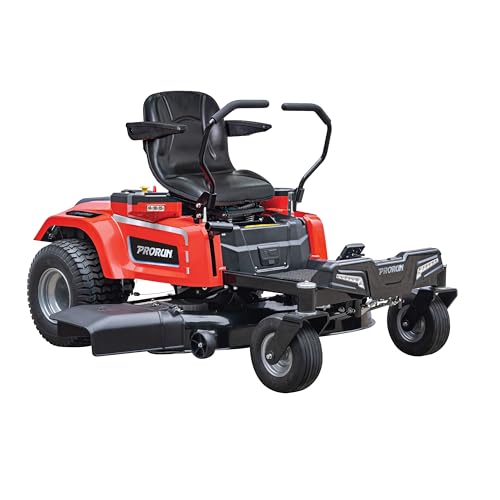
The PRORUN PZT60V42 is a fully electric 60V zero-turn riding lawn mower built for residential and light commercial use. Its primary design centers on a robust 42-inch 14-gauge stamped steel twin blade deck powered by direct-drive brushless motors, giving an immediate impression of solid construction and modern battery-focused engineering. The mower arrives complete with three 10.0 Ah batteries, a charger, mulch kit, and towing kit for ready-to-work versatility.
In performance terms, four high-efficiency brushless motors deliver power equivalent to a 20 HP gas engine while producing zero emissions. The system supports up to 2.0 acres or 70 minutes of runtime, and six battery ports with auto switchover intelligently manage all PRORUN 60V battery sizes for continuous operation. A washout port on the steel deck further simplifies post-mow maintenance during real-world sessions.
Potential drawbacks include the finite 70-minute runtime window which can limit coverage on larger properties without spare batteries or recharge breaks. As a fully electric model, it also depends entirely on battery charge levels rather than continuous fuel refills, and the 42-inch deck width may demand extra passes compared with wider traditional options.
Overall the PRORUN PZT60V42 offers strong value for homeowners and small-property managers who want gas-like cutting power without emissions or noise. Those with medium-sized lawns seeking quiet efficient zero-turn performance and included accessories will benefit most from this electric mower.

Pros
- Strong 24HP FR730 engine power for demanding cutting conditions
- Wide 54-inch FAB deck reduces total mowing time
- Zero turn design delivers excellent maneuverability
- Fabricated deck supports durable everyday operation
Cons
- Sparse details beyond engine and deck leave other features unspecified
- Gas-powered FR730 engine needs regular fuel and maintenance
- Large 54-inch deck size may feel oversized on compact properties
The Husqvarna Z254F is a zero turn mower from the established Husqvarna brand in the riding lawn mowers category. It centers on a solid build that pairs a 24HP 726cc FR730 engine with a 54-inch FAB deck for straightforward residential grass care.
Performance stems directly from the listed specifications. The FR730 engine delivers the horsepower needed for steady operation across typical lawns while the wide FAB deck completes passes efficiently. Zero turn handling improves control in real yard layouts based on the model design.
Considerations arise from the limited data available. Secondary elements such as comfort features fuel capacity or extras receive no mention and the gas engine format involves routine upkeep. The large deck suits open areas better than confined spaces.
The Husqvarna Z254F provides the most value for owners of medium or large properties who want reliable engine power and a broad cutting width. Users with smaller lots or those seeking extensive accessory options should weigh the core specs carefully before purchase.
Understanding Electric Mower Lifespan: Cordless vs. Corded
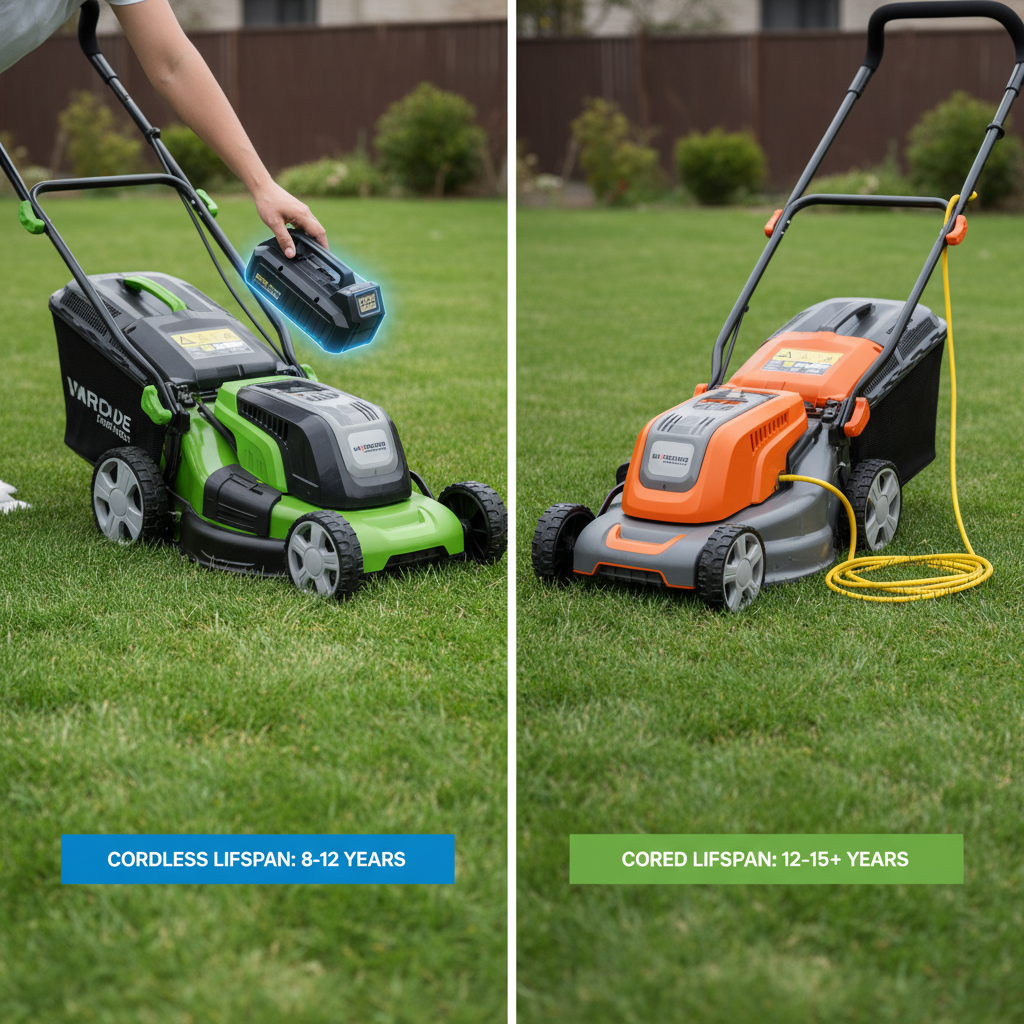
The two main types of electric lawn mowers have distinctly different durability profiles. Understanding the difference helps you set realistic expectations for your investment.
Cordless Electric Mowers
Cordless (battery-powered) electric mowers typically have an effective lifespan of 8-12 years, though the motor and deck may remain functional beyond this timeframe. The limiting factor is battery degradation. Lithium-ion batteries, which power most modern cordless mowers, gradually lose capacity with each charge cycle. After 300-500 full charge cycles—roughly 3-5 years of regular use—batteries typically retain only 70-80% of their original capacity. While the mower may still operate, reduced runtime becomes inconvenient, often prompting replacement before the machine itself fails.
Corded Electric Mowers
Corded electric mowers generally last 12-15+ years because they eliminate battery degradation as a limiting factor. The electric motor, which has no moving parts beyond the blade assembly, is inherently durable. Corded models are ideal if you have a smaller yard and don’t mind managing a power cord. They offer the longest effective lifespan of any lawn mower type when properly maintained.
Battery Life and Replacement Cycles
Battery replacement is the most common maintenance expense for cordless electric mower owners and often the primary driver of replacement decisions.
Lithium-Ion Battery Degradation
Modern cordless mowers use lithium-ion batteries that degrade predictably. A typical battery rated for 500 charge cycles will reach the end of its serviceable life in 3-5 years with regular weekly use. Factors that accelerate battery decline include:
- Frequent full discharge cycles
- Storage in extreme temperatures
- Exposure to direct sunlight
- Operating at high power continuously
Replacement Battery Costs
Replacement batteries are a significant cost factor. OEM (original manufacturer) batteries typically range from $150-$400 depending on voltage and capacity. For example, a 40V lithium-ion battery for a popular brand may cost $250-$350. Third-party compatible batteries are sometimes available at lower prices ($100-$200), though quality and warranty coverage vary. This cost should factor into your decision of whether to replace the battery or invest in a new mower.
Extending Battery Life
Proper battery care can add 1-2 years of serviceable life:
- Store in cool, dry conditions: Avoid extreme heat or cold when the mower is not in use
- Avoid complete discharge: Recharge before the battery is fully depleted
- Use appropriate charge cycles: Shallow discharge cycles extend overall lifespan more than full drains
- Keep away from moisture: Store in a garage or shed rather than exposed to rain or humidity
Motor and Deck Durability
The motor and cutting deck are the core components that determine whether your mower remains functional. When properly maintained, these parts often outlast the battery by several years.
Electric Motor Longevity
Electric motors in lawn mowers are highly durable because they have minimal moving parts and operate at relatively constant speeds. Unlike gas engines, electric motors don’t experience combustion stress, carbon buildup, or oil degradation. A well-maintained electric motor can easily last 15+ years. Motor failure is relatively rare in quality cordless or corded mowers and usually occurs only after years of neglect or heavy abuse.
Cutting Deck and Blade Assembly
The cutting deck (the housing containing the blade) typically lasts 10-15 years if protected from rust and maintained properly. Common durability issues include:
- Rust and corrosion: Caused by wet grass clippings left on the deck; clean after each use to prevent
- Blade wear: Blades dull over time and should be sharpened or replaced annually; a dull blade stresses the motor
- Housing cracks: Impact damage or material fatigue may cause cracks, but these are often repairable
Regular cleaning and blade maintenance prevent most deck-related issues and keep the mower operating smoothly throughout its lifespan.
Key Maintenance Factors That Extend Lifespan
How long your electric mower lasts depends heavily on how you care for it. Strategic maintenance can add 2-3 years to the mower’s effective lifespan.
Regular Cleaning and Inspection
After each use, clear grass clippings and debris from the deck. Clippings trap moisture and promote rust. Use a soft brush or compressed air to clean the motor vents and battery contacts. Inspect the blade for damage or excessive wear.
Blade Maintenance
Sharpen blades at least once per season or every 20-30 hours of use. A dull blade tears grass rather than cutting cleanly, stressing the motor and reducing cutting quality. Replace the blade if it’s cracked, bent, or severely worn. This inexpensive maintenance task ($20-$50 for a replacement blade) extends motor life by reducing unnecessary load.
Off-Season Storage
Proper winter storage is critical for longevity:
- Empty the deck: Remove all grass clippings before storage
- Store the battery separately: Remove cordless batteries and store them in a cool, dry location (50-70°F is ideal)
- Protect from moisture: Store the mower in a garage, shed, or under a tarp to prevent rust
- Charge batteries periodically: If storing for more than 2-3 months, charge batteries every few months to prevent deep discharge
Usage Frequency and Load
Usage patterns directly affect durability. A mower used weekly on a small lawn will last longer than one used several times per week on a large property. Heavy usage accelerates motor wear and battery degradation. If you have a large yard (over 1 acre), a corded mower or a model with dual batteries may be more appropriate than a standard cordless unit.
Signs Your Electric Mower May Need Replacement
Even with excellent maintenance, electric mowers eventually reach end-of-life. Recognizing when repair is no longer cost-effective helps you make a timely replacement decision.
Common Failure Points Near End of Life
- Severely reduced runtime: Battery only operates for 10-15 minutes instead of 30-45 minutes
- Motor sluggishness: The blade rotates slowly or struggles to cut through normal grass
- Intermittent operation: The mower cuts out unexpectedly during use
- Rust or corrosion: Visible rust on the deck or frame, especially if spreading despite cleaning
- Unusual noise or vibration: May indicate blade damage, motor bearing wear, or structural issues
Repair vs. Replacement Cost Analysis
Before investing in major repairs, compare the cost to replacement. A new entry-level electric mower typically costs $300-$600. Major repairs such as motor replacement ($200-$500) or frame repairs ($150-$300) may not be worthwhile if the mower is already 8-10 years old. However, simple repairs like blade replacement ($20-$50) or deck cleaning are always cost-effective. Use this rule of thumb: if repair costs exceed 50% of a new mower’s price and your mower is older than 8 years, replacement is usually the better choice.
Frequently Asked Questions About How Long Does An Electric Lawn Mower Last
Do cordless or corded electric mowers last longer?
Corded electric mowers typically last longer—12-15+ years—because they eliminate battery degradation as a limiting factor. Cordless mowers usually have an effective lifespan of 8-12 years due to battery replacement needs, though the motor and deck may remain functional beyond this timeframe. If you have a small to medium yard and want maximum longevity, a corded model is the better choice.
How often should you replace an electric mower battery?
Most lithium-ion batteries in cordless mowers last 3-5 years before requiring replacement. This depends on usage frequency and care practices. Weekly use typically means battery replacement every 3-4 years. If you use your mower sporadically or practice excellent battery care (proper storage, avoiding complete discharge), the battery may last closer to 5 years.
Can you replace just the battery instead of buying a new mower?
Yes, battery replacement is often the most cost-effective option when your cordless mower is still 5-8 years old and the motor functions well. A replacement battery costs $150-$400, which is significantly less than a new mower ($300-$1,000+). However, if you’re replacing a battery in a mower older than 10 years, consider whether a new mower might offer better value with improved features and a new warranty.
What’s the most important maintenance task for extending mower lifespan?
Keeping the deck clean and blades sharp are equally important. Regular deck cleaning prevents rust and corrosion, while sharp blades reduce motor strain. Both tasks take 5-10 minutes per season and cost very little but dramatically extend the mower’s lifespan by 2-3 years.
Conclusion
An electric lawn mower is a durable investment that typically lasts 10-15 years when properly maintained. While cordless models require battery replacement every 3-5 years, the motor and cutting deck often remain functional for the mower’s full lifespan. Corded electric mowers tend to last longest since they avoid battery degradation. By following a basic maintenance routine—cleaning after each use, sharpening blades regularly, and storing properly during the off-season—you can maximize your mower’s durability and delay replacement by several years. When deciding whether to repair or replace, compare repair costs to the price of a new mower and consider the age of your current unit.