Direct Answer: Lawn Mower Price Ranges
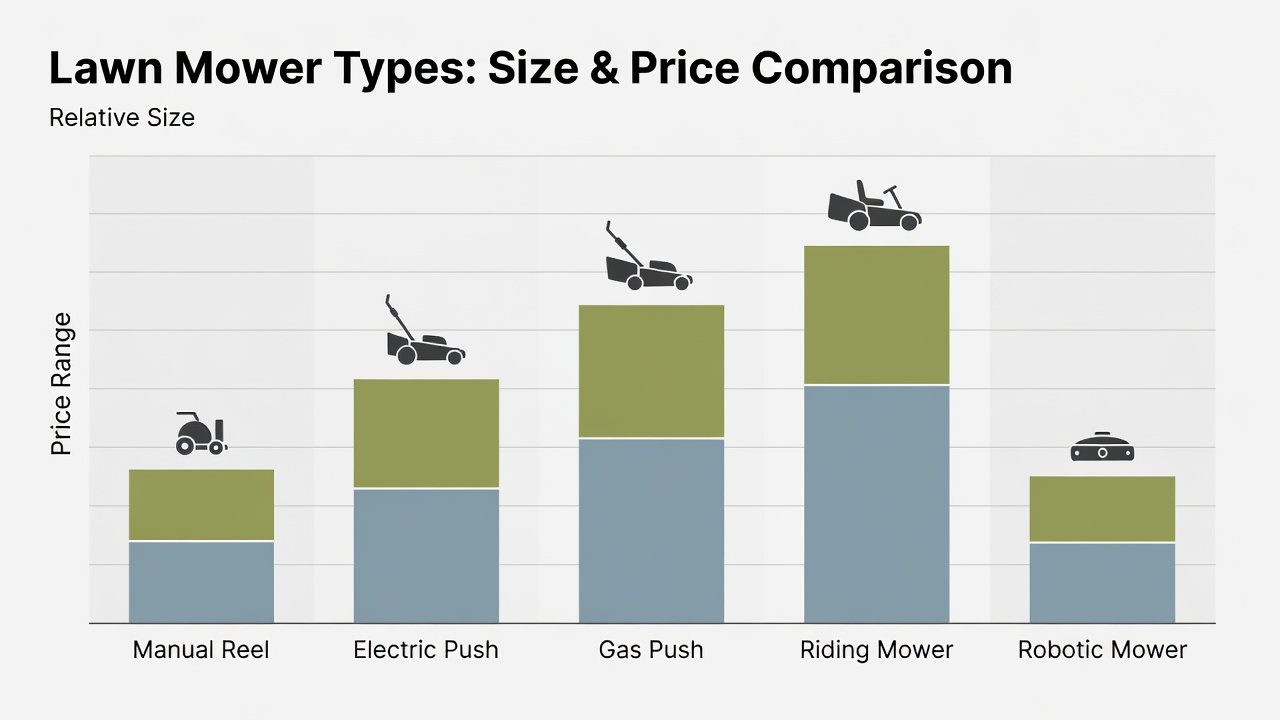
Lawn mower costs vary significantly by type. Manual push mowers cost $150-$400, electric models run $300-$800, gas-powered push mowers range from $400-$2,500, and riding mowers typically cost $1,500-$6,000+. Robotic mowers start around $800 and can exceed $3,000. Price depends on cutting width, engine type, features like mulching and self-propulsion, brand reputation, and whether you’re buying new or used.

Pros
- Powerful brushless motor and dual 5.0Ah batteries support efficient mowing on lawns up to 1/2 acre
- Includes complete accessories: two batteries, dual charger, bag, discharge chute, and mulch plug
- Versatile 3-in-1 functionality and AeroDeck design improve cut quality and collection
- Convenient single-lever height control and collapsible handle for quick adjustments and space-saving storage
- Expandable PowerShare platform allows batteries to power other WORX outdoor tools
Cons
- Push-only design requires manual propulsion without self-propelled drive, which may increase effort on larger or uneven lawns
- Optimized for up to 1/2 acre so larger properties may need multiple charges or additional batteries
- Relies solely on battery power with no corded backup option for extended continuous use
The WORX Nitro WG752 is a 21-inch cordless walk-behind electric lawn mower built for residential yards up to half an acre. It features a robust brushless motor design and comes ready to use with two 20V 5.0Ah PowerShare Pro batteries plus a dual charger. The fully collapsible handle supports compact vertical storage while the overall construction prioritizes durability and ease of handling for regular lawn maintenance.
Performance stands out through AeroDeck technology that increases air volume under the deck to reduce clogs and clumping while improving cut quality and bag filling. IntelliCut sensors automatically increase power for thick grass and reduce speed in lighter areas to conserve runtime. Users can switch between mulching, bagging, and rear side-discharge with the included accessories, and the single 7-position lever quickly sets cutting height from 1.5 to 4 inches for consistent results across different lawn conditions.
Key considerations include its push-only operation, which demands more physical effort than self-propelled models especially on slopes or dense turf. The system is battery-dependent and best suited to the stated half-acre limit, so larger spaces or very long sessions may require planning around charge times. No additional runtime hours or weight figures are specified beyond the included batteries and charger package.
Overall the WORX Nitro WG752 delivers strong value for homeowners seeking a versatile cordless mower with expandable PowerShare compatibility. It is an excellent choice for medium-sized lawns where quiet electric operation, efficient cutting technologies, and multi-tool battery sharing matter most, provided the user is comfortable with a manual push design.
Pros
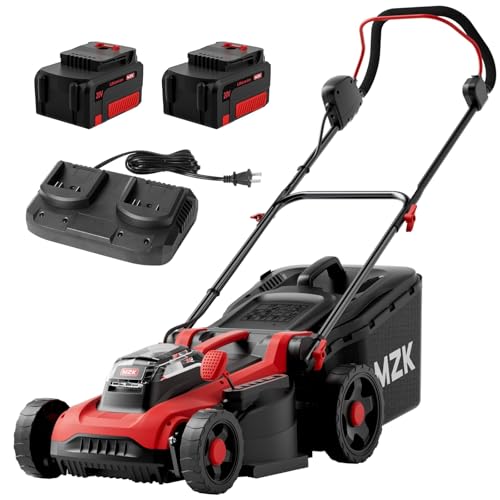
- Brushless motor provides cutting speeds up to 3400 RPM
- Includes two 20V 4.0Ah batteries and a dual-port charger
- Versatile 2-in-1 capability supports mulching and rear bagging
- 5-position single adjustment ranges from 1.4 to 3 inches
- Generous 40-liter (approx. 11-gallon) grass collection bag
Cons
- Manual push design lacks self-propelled drive
- Actual battery life varies depending on grass height and terrain

Pros
- Brushless 3,000 RPM motor providing up to 1,200W maximum output
- 17-inch cutting deck with 6 height adjustments from 1 to 3 inches
- Dual 20V 4.0Ah batteries covering up to 5,380 sq. ft. per charge
- Lightweight 30 lb (14 kg) design simplifies transport and storage
- Simple push-button and pull-bar starting mechanism
Cons
- Up to 40-minute runtime may limit coverage on larger properties
Price Ranges by Lawn Mower Type
Manual Push Mowers
Manual (reel) push mowers are the most affordable option, costing between $150 and $400. These mowers use rotating blades powered entirely by human force, no engine or electricity required. They’re lightweight, quiet, and excellent for small, flat yards under 2,000 square feet. Entry-level models start around $150, while higher-quality manual mowers with better blade construction and ergonomic handles reach $300-$400.
Best for: Small residential yards, eco-conscious buyers, and homeowners seeking zero-maintenance alternatives.
Electric Push Mowers (Corded and Battery-Powered)
Electric push mowers typically cost $300-$800. Corded models ($300-$500) are lighter and cheaper but limited by cord length. Battery-powered (cordless) mowers ($500-$800) offer greater freedom but include the cost of rechargeable lithium-ion batteries. Most battery-powered mowers require 30 to 90 minutes charging between uses and cut for 30 to 60 minutes per charge.
Factors affecting price: Battery capacity (measured in amp-hours), cutting width, runtime, and whether the battery is included. Premium battery-powered models with larger cutting widths and extended runtime sit at the upper end of this range.
Best for: Residential yards up to 4,000 square feet, noise-sensitive properties, and buyers comfortable with charging schedules. Before finalizing equipment decisions, refer to our comprehensive z890 vs x870e motherboard comparison.
Gas-Powered Push Mowers
Gas mowers are more powerful and cost $400-$2,500. Small, basic 4-stroke gas push mowers start around $400-$600, while mid-range models with better engines and features (self-propulsion, mulching capability) run $800-$1,500. Premium gas mowers with commercial-grade engines, wider cutting decks, and advanced features can reach $2,000-$2,500.
Why the wide range? Engine size (measured in cubic centimeters, or cc), cutting width, and build quality drive price. A 140cc engine costs less than a 200cc engine. Self-propelled models (which move themselves forward) are significantly more expensive than push-only versions. For broader ecosystem context, read through our operational guide on marshall stanmore iii vs harman kardon onyx studio 8.
Best for: Yards 4,000 to 10,000 square feet, dense or overgrown grass, and properties requiring durability and power.
Riding Mowers
Riding mowers are the most expensive consumer option, ranging from $1,500 to $6,000+. Basic compact riding mowers start around $1,500, $2,000, mid-range models cost $2,500, $4,000, and premium zero-turn-radius mowers or those with advanced features (cruise control, power steering, mulching systems) exceed $5,000, $6,000. For troubleshooting and reliability insights, consult our in-depth dyson v8 cyclone vs bissell featherweight stick report.
Key variables: Cutting deck width (32 to 54 inches is typical for residential use), engine displacement, transmission type (automatic or manual), and turning radius. Zero-turn-radius (ZTR) mowers command a premium because they offer superior maneuverability on larger properties.
Best for: Residential properties over 1 acre, properties with hills, and homeowners prioritizing comfort and speed.
Robotic Lawn Mowers
Robotic mowers operate autonomously and cost $800-$3,500+. Budget models start around $800-$1,200, mid-range options run $1,500-$2,500, and premium robotic mowers exceed $3,000. Costs reflect autonomous navigation technology, battery capacity, cutting width, and whether installation (including boundary wire setup) is included.
Best for: Tech-savvy homeowners with yards up to 0.5 acres, those seeking convenience, and properties with consistent weekly mowing needs.
Key Factors That Affect Lawn Mower Pricing
Cutting Width
Cutting width, the distance the mower blade covers in one pass, directly impacts price. A wider deck cuts grass faster but costs more to manufacture and power. Manual mowers typically have 14 to 20 inch decks and are cheaper. Gas push mowers range from 18 to 22 inches, while riding mowers start at 32 inches and go up to 54+ inches. Each additional 2 to 4 inches of cutting width adds $100-$300 to the final price.
Engine Type and Power
Engine displacement (measured in cubic centimeters) determines power and cost. A 140cc gas engine costs less than a 200cc engine but struggles with dense or wet grass. Similarly, battery capacity in electric mowers affects price: a 2Ah (amp-hour) battery costs less than a 6Ah battery but provides shorter runtime. More powerful engines and larger batteries mean higher costs but better performance on challenging yards.
Self-Propulsion
Self-propelled mowers, which move forward on their own, cost $200-$600 more than equivalent push-only models. This premium covers the transmission system, additional gearing, and engineering. For large yards or hilly terrain, self-propulsion is worth the investment; for small, flat properties, it may be unnecessary.
Mulching and Bagging Features
Mowers with mulching capability (chopping clippings finely and returning them to the lawn) or bagging systems (collecting clippings) cost more than basic models. A mulching mower adds $100-$300 to the base price. Dual-function mowers that both mulch and bag are at the premium end of their category.
Brand and Warranty
Established brands like Toro, Husqvarna, John Deere, and Honda command higher prices because of reputation, durability, and warranty coverage. A Toro push mower may cost $150-$300 more than an unknown brand with comparable specs. Warranty length also affects price: longer warranties (3 to 5 years) indicate manufacturer confidence and typically reflect higher-quality components.
Additional Features
Premium features increase cost: adjustable cutting heights, ergonomic handles, variable-speed transmissions, cruise control, and noise reduction technology all add $50-$500 depending on the mower type. Smart features (app connectivity, GPS tracking for robotic mowers) push costs upward.
New vs. Used Lawn Mower Costs
Savings on Used Mowers
Used lawn mowers typically cost 30 to 50% less than new equivalents. A gas push mower worth $800 new might sell used for $400-$560. Used riding mowers offer similar discounts. The savings are substantial, but buyers must assess condition, remaining warranty, and maintenance history.
Risks and Trade-Offs
Used mowers may have hidden engine wear, damaged blades, or electrical issues (especially on battery-powered models). Gas mowers can develop carburetor problems if stored improperly. Used robotic mowers may have degraded batteries. Without warranty protection, repair costs can quickly eliminate initial savings. A $400 used mower requiring a $300 engine repair is no longer a good deal.
Where to Find Used Mowers
Used lawn mowers are available through local classified ads, Facebook Marketplace, Craigslist, pawn shops, and specialized equipment resellers. Estate sales and rental companies clearing inventory are also reliable sources. Inspect any used mower in person, test the engine or battery, and ask for maintenance records before purchasing.
Budget Guidance by Yard Size
| Yard Size | Recommended Mower Type | Typical Price Range | Key Consideration |
|---|---|---|---|
| Under 2,000 sq ft | Manual push or electric corded | $150-$500 | Compact storage, quiet operation |
| 2,000 to 5,000 sq ft | Electric push (battery) or basic gas push | $400-$900 | Balance of power and cost; battery runtime sufficient |
| 5,000 to 10,000 sq ft | Gas push (self-propelled) or entry-level riding | $1,000-$2,500 | Self-propulsion reduces fatigue; riding mower speeds workflow |
| Over 1 acre | Riding mower or zero-turn-radius mower | $2,000-$6,000+ | Riding mower essential; ZTR offers superior handling on larger properties |
How to Find the Best Value
Prioritize Features Over Brand
A less-known brand with the right specs for your yard often delivers better value than a premium brand’s entry-level model. Compare cutting width, engine power, warranty, and user reviews rather than brand reputation alone. Mid-tier brands often offer excellent value, good quality without the premium pricing.
Consider Total Cost of Ownership
Initial purchase price is only part of the cost. Factor in maintenance and repairs: gas mowers need annual tune-ups ($100-$200), oil changes, and occasional repairs. Electric mowers require battery replacement ($300-$600 every 5 to 7 years). Manual mowers have minimal maintenance costs. A cheaper mower with high maintenance costs may be more expensive over 10 years.
Wait for Seasonal Sales
Lawn mower prices drop significantly at the end of mowing season (late August through September). Retailers clear inventory to make room for new models, offering discounts of 20 to 40%. Spring sales also occur but are smaller. Buying off-season saves money and secures better selection.
Evaluate Warranty Coverage
A 1-year warranty on a $500 mower is standard, but 3 to 5 year warranties indicate durability and justify higher prices. Check what’s covered: engine failures, manufacturing defects, and normal wear typically vary. Extended warranties from retailers may be worthwhile for expensive riding mowers.
Match Power to Your Lawn’s Needs
Overspending on power you don’t need is wasteful. A dense, thick lawn or frequent thick growth requires a more powerful gas mower; a thin, well-maintained lawn operates fine on a budget electric model. Conversely, underspending on power for challenging terrain will result in frustration and potential engine damage.
Buyer FAQs: How Much Are Lawn Mowers Solved
What is the cheapest lawn mower available?
Manual (reel) push mowers are the cheapest option, starting at $150-$200 for basic models. They have no engine, require no fuel or electricity, and offer decades of durability. For small, flat yards with thin grass, manual mowers are both affordable and effective. However, they require physical effort and are unsuitable for dense or tall grass.
Are expensive lawn mowers worth the cost?
Expensive mowers are worthwhile if they match your yard size, grass type, and usage frequency. A $5,000 zero-turn-radius riding mower is worth the investment for 2 to 3 acres but wasteful for a quarter-acre lot. Premium models offer better durability, longer warranties, and advanced features that reduce mowing time. For the average residential yard, mid-range mowers ($500-$1,500) deliver excellent value.
How much does lawn mower maintenance cost annually?
Gas mowers cost approximately $100-$200 per year for tune-ups, spark plug replacement, and air filter changes. Electric mowers have minimal maintenance, blade sharpening ($30-$50 annually) is typically the only cost. Battery replacement is needed every 5 to 7 years ($300-$600 for cordless mowers). Manual mowers need occasional blade sharpening but otherwise have near-zero maintenance costs.
Should I buy a used lawn mower to save money?
Buying used can save 30 to 50% on purchase price, but inspect the mower thoroughly before buying. Test the engine, check for rust or damage, and ask about maintenance history. For gas mowers, carburetor problems are common in neglected used equipment. For battery-powered mowers, battery degradation is a concern. If the used mower requires immediate repairs, savings evaporate quickly. A 3 to 5 year old well-maintained mower from a reputable owner is typically safe; older or poorly maintained mowers carry higher risk.
Key Takeaways
- Manual push mowers ($150-$400) are the most affordable but require physical effort.
- Electric mowers ($300-$800) offer quiet operation and low maintenance but limited runtime.
- Gas push mowers ($400-$2,500) provide the best power-to-price ratio for most residential yards.
- Riding mowers ($1,500-$6,000+) are essential for properties over 1 acre.
- Cutting width, engine power, self-propulsion, and brand reputation drive pricing within categories.
- Used mowers save 30 to 50% but require careful inspection and may need repairs.
- Match mower type to yard size: small yards benefit from budget electric or manual models; large properties justify riding mower investment.
- Factor in annual maintenance costs when comparing total cost of ownership over 10 years.
Budget and Safety Considerations for Mowers
Lawn mower prices vary by engine type, cutting width, and retailer, so comparing features tells you more than the sticker figure alone. Operator protections such as blade brakes and presence controls deserve attention at every price point. For general outdoor power equipment safety, see American National Standards Institute (ANSI).