Direct Answer: How Much Oil Does a Lawn Mower Need?
There is no single answer because oil capacity depends entirely on your mower’s engine size and type. Most small push mowers hold roughly 15–20 fluid ounces (about 0.5 quart) of oil, self-propelled walk-behind mowers typically hold 18–20 ounces, and riding mowers generally hold 48–64 ounces (1.5–2 quarts). To find the exact amount for your specific machine, check the owner’s manual, the oil fill cap or dipstick markings, or look up the model on the manufacturer’s website. Always add oil gradually and recheck the dipstick to avoid overfilling, which can damage the engine.
Why Lawn Mower Oil Capacity Varies by Machine
When someone asks “how much oil goes in a lawn mower,” the question seems straightforward—but it cannot be answered with a single number. The reason is simple: lawn mowers are not one-size-fits-all machines. A small electric-start push mower with a 140cc engine has a completely different oil capacity than a zero-turn riding mower with a 25 horsepower engine.
Oil capacity is determined by the size of the engine’s crankcase—the chamber that holds the oil and lubricates all internal moving parts. A larger engine has a larger crankcase and therefore requires more oil. Additionally, different manufacturers design their engines with different crankcase volumes, so two push mowers from different brands may have slightly different oil requirements even if they are similar in size.
This is why relying on a generic answer can be dangerous. Adding too little oil starves the engine of lubrication, causing friction and heat buildup that can seize the engine. Adding too much oil can cause the engine to smoke, foul the spark plug, and damage internal seals. The only safe approach is to determine your mower’s specific capacity and follow that guideline exactly.
Typical Oil Capacities by Mower Type
While every mower is different, manufacturers have established general capacity ranges based on mower class. Understanding these ranges helps you know what to expect when you look up your specific model.
Small Push Mowers (Manual or Electric Start)
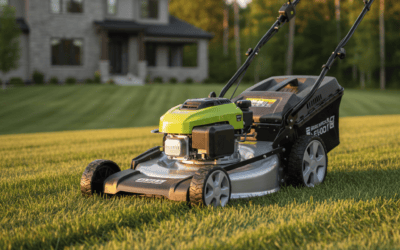
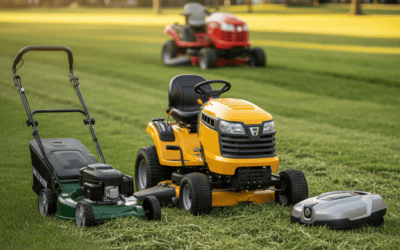
Small push mowers—typically with engines between 140cc and 190cc—are the most common residential lawn mowers. These compact machines are designed for yards up to about half an acre and use relatively small engines.
- Typical oil capacity: 15–20 fluid ounces (0.47–0.59 quarts)
- Some models may hold as little as 12 oz or as much as 22 oz
- This is roughly equivalent to a standard soda bottle or a small coffee mug
- Oil changes are typically required every 50–100 hours of operation or once per season
Self-Propelled Walk-Behind Mowers
Self-propelled mowers have slightly larger engines than push mowers because they must power both the cutting blade and the wheels. These machines are ideal for larger lawns or hilly terrain where pushing becomes difficult.
- Typical oil capacity: 18–24 fluid ounces (0.56–0.71 quarts)
- Engines typically range from 160cc to 210cc
- The extra oil capacity accommodates the additional engine power
- Oil capacity may be marked in both ounces and milliliters on the dipstick
Riding Mowers and Zero-Turn Mowers
Riding mowers and zero-turn radius mowers are equipped with much larger engines—often 15 to 30+ horsepower—and therefore require significantly more oil to properly lubricate their larger crankcases.
- Typical oil capacity: 48–64 fluid ounces (1.5–2 quarts)
- Some commercial-grade or large-deck riding mowers may hold up to 2.5 quarts
- Engines are typically V-twin designs with two cylinders, requiring more lubricant
- Oil changes are usually required every 100–200 hours of operation
Measuring Oil: Ounces vs. Quarts
Oil capacity can be expressed in either fluid ounces (oz) or quarts (qt). One quart equals 32 fluid ounces. Most manufacturers use fluid ounces for small mowers and quarts for larger machines, though both measurements appear on dipsticks and fill caps.
| Measurement | Equivalent | Common Mower Type |
| 16 oz | 0.5 qt | Small push mower |
| 20 oz | 0.625 qt | Push or self-propelled mower |
| 48 oz | 1.5 qt | Riding mower |
| 64 oz | 2 qt | Large riding mower |
How to Find the Exact Oil Capacity for Your Mower
Now that you understand the general ranges, the next step is to find the exact oil capacity for your specific mower model. There are several reliable methods to locate this information.
Check the Owner’s Manual
The owner’s manual is always the most authoritative source for your mower’s specifications. If you still have the original manual, look for a section titled “Maintenance,” “Oil and Fluid Capacities,” or “Engine Specifications.”
- The manual will list the exact oil capacity in both ounces and milliliters
- It will also specify the recommended oil viscosity (such as SAE 30 or 10W-30)
- The manual often includes a diagram showing the location of the oil fill cap and dipstick
- If you don’t have the original manual, search online for “[Your Mower Brand and Model] owner’s manual PDF”
Examine the Oil Fill Cap or Dipstick
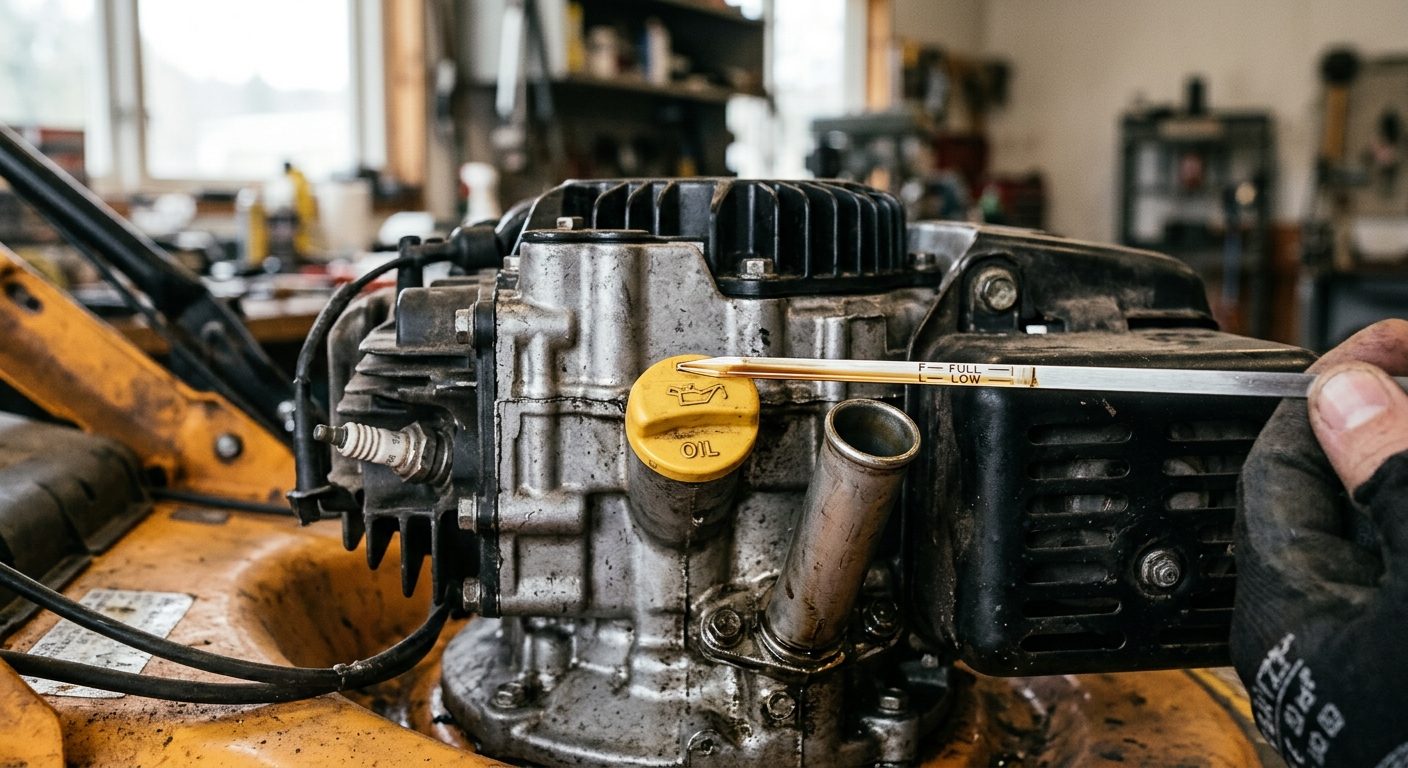
Most lawn mower engines have an oil fill cap or a dipstick with capacity markings printed directly on them. These markings are simple but essential.
- The dipstick or cap will show a “Full” or “Max” line and often a “Low” or “Min” line
- Some dipsticks display capacity in both ounces and milliliters
- If markings are faded or illegible, you can still use the dipstick as a guide: fill until the oil reaches the full mark, then note the amount you added
- Never rely on the dipstick alone if markings are unclear—cross-reference with the manual or manufacturer
Look Up the Model on the Manufacturer’s Website
If you don’t have the manual, most manufacturers maintain online databases where you can search by model number and find specifications.
- Find your mower’s model number (usually on a sticker on the frame or engine)
- Visit the manufacturer’s website and use their “Support” or “Manuals” section
- Enter the model number to retrieve the full specification sheet
- Common manufacturers include Briggs & Stratton, Honda, Kohler, Kawasaki, and Toro
- The specification sheet will clearly state oil capacity and recommended viscosity
Contact the Manufacturer or Dealer
If you cannot locate the information online, calling the manufacturer’s customer service or visiting a local dealer is a reliable option.
- Have your mower’s model and serial number ready
- Customer service representatives can provide exact oil capacity and type recommendations
- Dealers can also verify the information and may offer to perform an oil change if you prefer professional service
How to Add Oil Correctly (Step-by-Step)
Once you know your mower’s oil capacity, the process of adding oil must be done carefully to avoid overfilling or underfilling. Follow these steps to ensure proper oil levels.
Step 1: Prepare the Mower
- Place the mower on level, flat ground—this ensures an accurate dipstick reading
- Allow the engine to cool for at least 5–10 minutes if it has been running
- Never check or add oil to a hot engine, as hot oil can cause burns
Step 2: Locate and Remove the Oil Fill Cap or Dipstick
- Refer to your manual or the engine diagram to locate the oil fill cap
- On most small mowers, the cap is on the side of the engine and is clearly labeled with an oil can symbol
- Unscrew the cap or dipstick slowly and set it aside on a clean surface
- Wipe the dipstick with a clean cloth or paper towel to remove old oil
Step 3: Check the Current Oil Level
- Reinsert the dipstick fully into the fill tube without screwing it in
- Pull it out again and observe where the oil level sits relative to the “Full” and “Low” marks
- If the oil level is already at or near the “Full” mark, do not add more oil
- If the level is below the “Low” mark or the dipstick shows no oil, you need to add oil
Step 4: Add Oil Gradually
- Use a funnel to pour oil into the fill opening
- Add oil slowly in small amounts—do not pour the entire amount at once
- After each pour, wait a few seconds for the oil to settle into the crankcase
- Add approximately one-quarter of the recommended capacity, then check the level again
- Repeat this process until the dipstick shows the oil level at the “Full” mark
Step 5: Recheck and Secure the Cap
- After adding oil, wait 30 seconds and check the dipstick one final time
- The oil level should be at or just below the “Full” mark—not above it
- Wipe the dipstick clean and reinsert it fully
- Screw the oil fill cap back on tightly
- Wipe up any spilled oil with a cloth
What Happens If You Overfill or Underfill?
Overfilling (adding too much oil) causes several problems:
- Excess oil is forced into the combustion chamber, causing white or blue smoke from the exhaust
- Oil fouls the spark plug, preventing proper ignition
- Pressure builds up inside the crankcase, potentially damaging seals and gaskets
- Engine performance decreases and fuel efficiency suffers
Underfilling (not enough oil) is equally dangerous:
- Metal-to-metal friction increases as moving parts lack proper lubrication
- Heat buildup accelerates wear on pistons, cylinders, and bearings
- The engine may seize (stop abruptly) without warning, causing permanent damage
- Repair costs for a seized engine often exceed the cost of the mower itself
What Type of Oil Should You Use?
Oil capacity is only half the equation. The type of oil you use is equally important for engine health and longevity.
Oil Viscosity Ratings
Oil viscosity refers to how thick or thin the oil is. Lawn mower manufacturers specify a viscosity rating that balances protection across different temperatures.
- SAE 30: A single-grade oil recommended for most small mowers operating in moderate to warm temperatures (above 50°F). This is the most common recommendation for push and self-propelled mowers.
- 10W-30: A multi-grade oil that flows easily in cold temperatures (the “10W” rating) but maintains protection at higher temperatures. Recommended for mowers used in variable climates or during spring and fall.
- 5W-30: An even lighter multi-grade oil for cold-climate use. Less common in residential mowers but may be recommended in northern regions.
Can You Use Car Motor Oil in a Lawn Mower?
Many homeowners wonder if they can substitute car motor oil for mower-specific oil. The answer is nuanced:
- Car motor oils (such as 10W-30 or 5W-30) are generally compatible with lawn mower engines
- However, car oils often contain detergents and additives designed for longer drain intervals in cars, which may not be necessary for small engines
- The safest approach is to use the oil viscosity specified in your mower’s manual
- If your manual specifies SAE 30, use SAE 30—not a multi-grade substitute
- Avoid synthetic or high-mileage oils unless your manual specifically approves them
Checking Your Manual for Oil Specifications
Always defer to your mower’s manual for the exact oil type and viscosity. The manual will state:
- The recommended oil viscosity (e.g., “SAE 30” or “10W-30”)
- Whether synthetic oil is acceptable
- Any specific brand recommendations or certifications (such as API SJ or higher)
- Oil change intervals based on hours of operation or seasonal use
Frequently Asked Questions
Q: How often should I check my lawn mower’s oil?
A: Check your mower’s oil level before each use, especially at the beginning of the season. A quick dipstick check takes only 30 seconds and can prevent engine damage. If you mow frequently (more than once per week), check the oil every 2–3 uses. For seasonal mowers, check before starting after a long storage period.
Q: Can I use the same oil capacity for my old and new mower?
A: No. Each mower model has its own specific oil capacity based on engine size. Even if you replace an old mower with a newer model from the same brand, the oil capacity may differ. Always check the new mower’s manual or specifications rather than assuming the same capacity applies.
Q: What should I do if I accidentally overfilled my mower with oil?
A: If you realize the overfill before starting the engine, use a clean turkey baster or syringe to remove excess oil until the dipstick reads at the “Full” mark. If you have already started the engine and notice smoke, shut it off immediately, let it cool, and remove the excess oil. Running an overfilled engine can cause spark plug fouling and internal damage.
Q: Is it normal for my mower to use oil between changes?
A: Slight oil consumption is normal for small engines—typically 1–2 ounces per 10 hours of operation. However, excessive oil loss (more than this rate) may indicate worn piston rings, a damaged gasket, or an oil leak. If you notice your mower burning through oil quickly, have it inspected by a professional technician.
Summary
The amount of oil your lawn mower needs depends on its engine size and type, not on a universal standard. Small push mowers typically require 15–20 fluid ounces, self-propelled mowers need 18–24 ounces, and riding mowers hold 48–64 ounces or more. To find your exact capacity, consult the owner’s manual, check the dipstick or fill cap markings, or look up your model on the manufacturer’s website. When adding oil, do so gradually on level ground, recheck the dipstick frequently, and never overfill. Using the correct oil type (viscosity) as specified in your manual, combined with proper capacity management, ensures your mower’s engine runs smoothly and lasts for many seasons.