Quick Answer: How Often to Mow Lawn in Texas?
In Texas, the short answer is that you should mow warm-season grasses like Bermuda and St. Augustine every 5 to 7 days during the peak growing months of late spring and summer. However, this baseline shifts with rainfall, temperature, grass type, and your specific region within the state. The most reliable guide is the one-third rule: never remove more than one-third of the grass blade in a single mowing. If your grass grows faster than your scheduled cut allows, you need to mow more frequently.
Texas Climate and Grass Types
Texas spans multiple climate zones, from the humid, subtropical conditions of the Gulf Coast and East Texas to the semi-arid and arid environments of West Texas. This diversity directly influences which grasses thrive and how quickly they grow. The majority of Texas lawns are planted with warm-season grasses, which are adapted to the state’s hot summers and mild winters. These grasses grow most actively when soil temperatures are between 80°F and 95°F, which in Texas typically means a long growing season that begins in late spring and extends into early fall.

Pros
- Powerful 80V brushless motor delivers 32HP gas-equivalent performance with quiet fume-free operation and no engine maintenance.
- Complete kit includes four 6.0Ah batteries and 600W charger for substantial runtime up to 1.5 acres.
- SmartCut technology and 42-inch heavy-duty steel deck ensure consistent cuts without bogging in tough conditions.
- Versatile towing up to 350 lbs and optional cargo hauling plus comfort features like high-back seat and LED lights.
- Strong 4-year limited warranty and full compatibility with the Greenworks 80V tool ecosystem.
Cons
- Rear utility cargo bed for 200 lb hauling is sold separately and not included in the kit.
- Runtime of up to 1.5 acres varies with conditions and may require recharging or battery swaps on larger properties.
- As a fully cordless model continuous operation depends on battery levels unlike gas engines with unlimited runtime.
The Greenworks 80V 42" CrossoverT Cordless Riding Lawn Tractor is a ready-to-mow zero-emission tractor designed for homeowners managing medium to large lawns. It features a reinforced 42-inch stamped steel deck of 12-gauge construction along with premium comfort elements such as a high-back padded seat with foldable armrests. The overall build emphasizes durability and user convenience right out of the box with the included battery and charger set.
Performance centers on the 80V TruBrushless motor that provides 32HP gas-equivalent power with instant torque and quiet fume-free operation. SmartCut technology senses grass conditions and automatically adjusts power to maintain a consistent cut even in tall thick or wet areas. The four 6.0Ah batteries support runtime for up to 1.5 acres depending on conditions while dual LED headlights and a 7-position deck height range from 1.5" to 4.5" add practicality. Front and rear attachments further allow towing up to 350 lbs for added yard utility.
Key considerations include that the rear utility storage bin capable of hauling 200 lbs is sold separately so full cargo functionality requires an extra purchase. Runtime remains condition-dependent and may fall short for properties significantly larger than 1.5 acres without using the 600W charger or swapping batteries. The cordless design prioritizes ease and low maintenance but trades off the continuous runtime of traditional gas models.
This tractor delivers strong value for eco-conscious owners of residential properties who want gas-like power without the emissions noise or upkeep. It suits those who already use or plan to expand into the Greenworks 80V family of tools and who appreciate the 4-year limited warranty. Users with exceptionally large or commercial-scale lawns should evaluate battery logistics carefully before purchase.

Pros
- Delivers strong 21 horsepower equivalent power comparable to gas riding mowers.
- Provides up to 1.5 acres of runtime on a full charge with the six included batteries.
- Features low-maintenance dual brushless motors without belts for greater durability.
- Offers versatile 12-position cutting height adjustment from 1.5 to 4.5 inches.
- Includes digital controls for blade settings, drive speeds, and cruise control.
Cons
- Limited to 1.5 acres of cutting per charge without purchasing additional batteries for bigger lawns.
- Requires recharging time for the six 56V batteries after each use session.
- Relies solely on battery power with no hybrid or gas backup option for extended operation.
The EGO Power+ TR4204 is a cordless electric riding lawn mower built as a modern tractor alternative for residential use. It features a robust 42-inch stamped steel deck and arrives ready to go with six 56V 6.0Ah batteries plus a charger, creating an immediate impression of convenience and solid construction free from gas engine complexity.
Performance shines through its equivalent 21 horsepower output and top speed of 6 MPH, allowing efficient coverage of up to 1.5 acres on a single charge. Dual brushless cutting motors operate without belts for added durability and less upkeep, while the digital display lets users select three blade settings, three drive speeds, and cruise control. The 12 adjustable heights ranging from 1.5 to 4.5 inches combined with anti-scalp wheels deliver precise results across varied terrain.
Drawbacks center on battery dependency, as larger properties beyond 1.5 acres require extra batteries and recharging intervals can interrupt workflow. The fully electric design eliminates fuel storage needs but demands access to power sources between sessions.
This mower suits homeowners with medium to large yards who value quiet, emission-free operation and reduced maintenance. Those seeking expandable battery capacity for bigger areas will find the EGO Power+ TR4204 a strong long-term investment in cordless lawn care.
Pros
- High-efficiency brushless motors maximize power output and durability over traditional motors
- Up to 2 acres runtime with three included 10.0 Ah batteries supports substantial mowing sessions
- Zero-emission operation with gas-equivalent 20 HP power for quieter environmentally friendly use
- Six-port auto-switchover battery system provides flexible extended runtime options
- Durable 42-inch steel deck plus included mulch and towing kits add immediate functionality
Cons
- Runtime is limited to approximately 70 minutes or 2 acres which may require recharging for larger properties
- Fully battery-dependent design means performance relies on charge levels and spare battery availability
- 42-inch deck size may require more passes on expansive lawns compared to wider commercial models
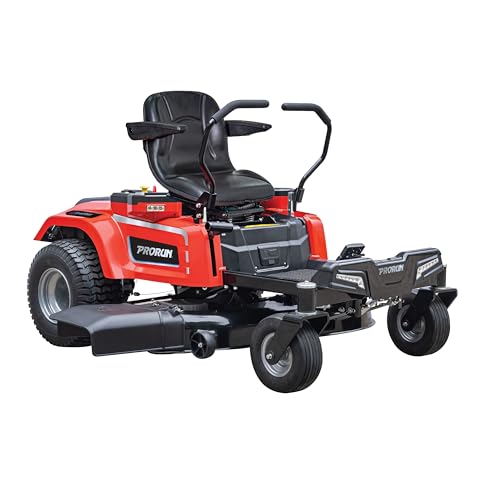
The PRORUN PZT60V42 is a fully electric 60V zero-turn riding lawn mower built for residential and light commercial use. Its primary design centers on a robust 42-inch 14-gauge stamped steel twin blade deck powered by direct-drive brushless motors, giving an immediate impression of solid construction and modern battery-focused engineering. The mower arrives complete with three 10.0 Ah batteries, a charger, mulch kit, and towing kit for ready-to-work versatility.
In performance terms, four high-efficiency brushless motors deliver power equivalent to a 20 HP gas engine while producing zero emissions. The system supports up to 2.0 acres or 70 minutes of runtime, and six battery ports with auto switchover intelligently manage all PRORUN 60V battery sizes for continuous operation. A washout port on the steel deck further simplifies post-mow maintenance during real-world sessions.
Potential drawbacks include the finite 70-minute runtime window which can limit coverage on larger properties without spare batteries or recharge breaks. As a fully electric model, it also depends entirely on battery charge levels rather than continuous fuel refills, and the 42-inch deck width may demand extra passes compared with wider traditional options.
Overall the PRORUN PZT60V42 offers strong value for homeowners and small-property managers who want gas-like cutting power without emissions or noise. Those with medium-sized lawns seeking quiet efficient zero-turn performance and included accessories will benefit most from this electric mower.

Pros
- Strong 24HP FR730 engine power for demanding cutting conditions
- Wide 54-inch FAB deck reduces total mowing time
- Zero turn design delivers excellent maneuverability
- Fabricated deck supports durable everyday operation
Cons
- Sparse details beyond engine and deck leave other features unspecified
- Gas-powered FR730 engine needs regular fuel and maintenance
- Large 54-inch deck size may feel oversized on compact properties
The Husqvarna Z254F is a zero turn mower from the established Husqvarna brand in the riding lawn mowers category. It centers on a solid build that pairs a 24HP 726cc FR730 engine with a 54-inch FAB deck for straightforward residential grass care.
Performance stems directly from the listed specifications. The FR730 engine delivers the horsepower needed for steady operation across typical lawns while the wide FAB deck completes passes efficiently. Zero turn handling improves control in real yard layouts based on the model design.
Considerations arise from the limited data available. Secondary elements such as comfort features fuel capacity or extras receive no mention and the gas engine format involves routine upkeep. The large deck suits open areas better than confined spaces.
The Husqvarna Z254F provides the most value for owners of medium or large properties who want reliable engine power and a broad cutting width. Users with smaller lots or those seeking extensive accessory options should weigh the core specs carefully before purchase.
The most common warm-season grasses in Texas include Bermuda grass, St. Augustine grass, Zoysia grass, and Buffalo grass. Bermuda grass is the most widely used across the state because of its durability, drought tolerance, and aggressive growth habit. St. Augustine is favored in the humid eastern and coastal regions, where it thrives in the shade and moisture. Zoysia offers a dense, medium-textured lawn that performs well in transitional areas. Buffalo grass is a native option that requires minimal water and is best suited for the drier western parts of the state.
Because warm-season grasses grow rapidly in Texas heat, they demand more frequent mowing than cool-season grasses found in northern states. Understanding your grass type is the first step in determining a realistic mowing schedule, as each species has its own growth rate and preferred height.
Recommended Mowing Frequency in Texas
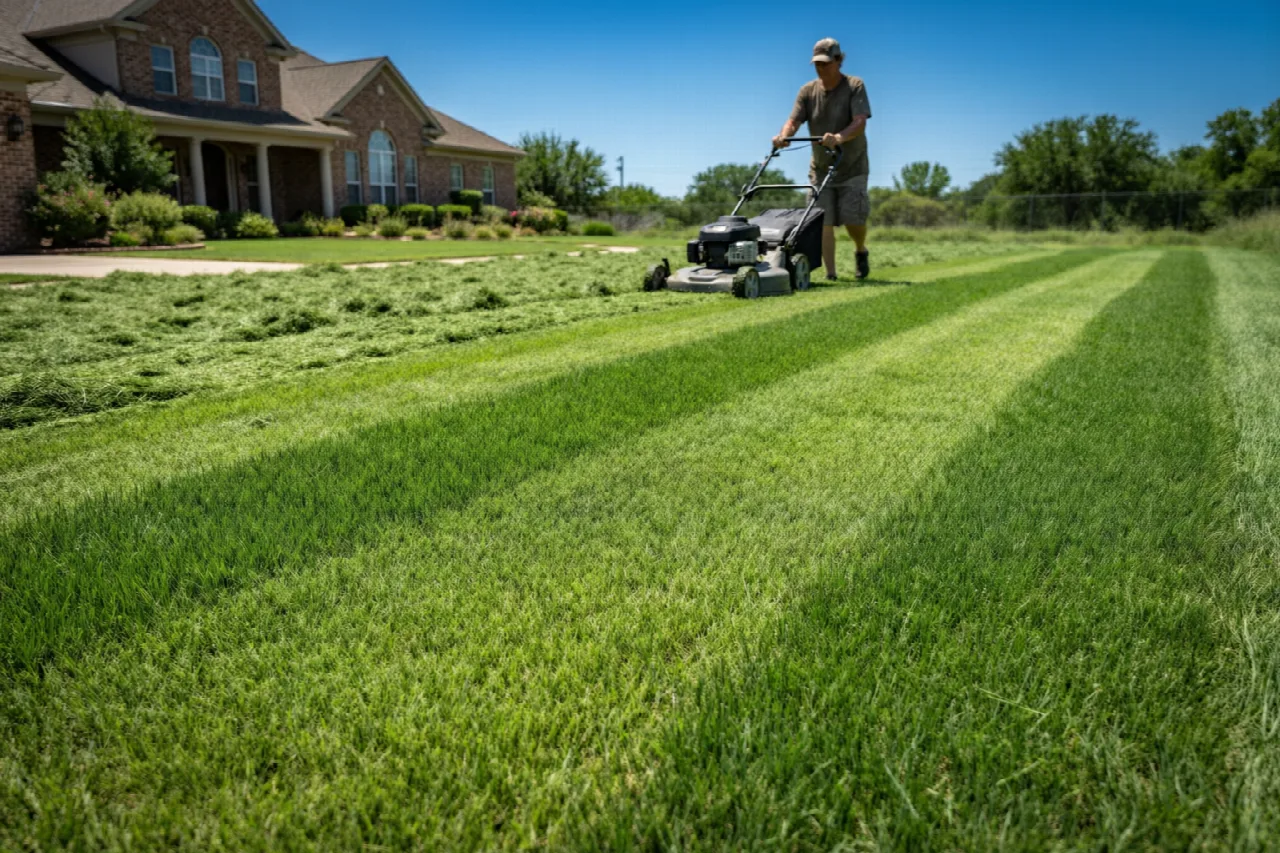
During the peak growing season, which generally runs from May through September, most Texas lawns need to be mowed every 5 to 7 days. This frequency keeps growth in check and prevents the grass from becoming too tall, which can stress the plant and encourage pests or disease. Mowing on a consistent weekly schedule is a practical starting point for most homeowners, but you should be prepared to cut more often during periods of rapid growth.
Bermuda grass, the most common turf in Texas, grows aggressively in full sun and can easily require mowing every 5 days during the height of summer. It responds well to frequent cutting and actually becomes denser and healthier when maintained at a lower height. St. Augustine grass, by contrast, grows somewhat more slowly and is often mowed every 5 to 7 days during peak season. Because St. Augustine has a coarser blade and prefers a taller cut, it does not need to be mowed as frequently as Bermuda, but it still benefits from a weekly schedule during active growth.
Zoysia grass falls between the two, typically requiring mowing every 7 days during peak growth. Buffalo grass, being a slower-growing native, may only need mowing every 10 to 14 days, even in summer. The key is to observe your lawn’s growth rate and adjust your schedule so that you are never removing more than one-third of the blade at a time. Readers comparing setup options can review our technical analysis on z890 vs x870e motherboard.
Seasonal Adjustments
Mowing frequency in Texas changes significantly with the seasons. In the summer, when temperatures regularly exceed 90°F and daylight is abundant, warm-season grasses grow at their fastest rate. This is when you will mow most often, typically every 5 to 7 days. During heat waves or periods of heavy rainfall, growth can accelerate even further, and you may need to mow every 4 to 5 days to keep up.
In the spring and fall, growth slows as temperatures moderate. During these shoulder seasons, mowing every 7 to 10 days is usually sufficient. You should also adjust your mowing height seasonally. In the spring, you can gradually lower the blade to encourage a denser lawn. In the fall, as growth slows, you may raise the cutting height slightly to help the grass store energy for the winter. For complementary field maintenance guidelines, examine our breakdown of marshall stanmore iii vs harman kardon onyx studio 8.
Winter is the major exception. Most warm-season grasses in Texas go dormant when soil temperatures drop below about 55°F, which typically occurs from December through February. During dormancy, the grass stops growing and does not need to be mowed at all, or at most only once or twice to clean up debris. In milder winters, particularly in South Texas, you may see occasional growth spurts that require a light mowing, but the frequency drops dramatically compared to summer.
Regional Differences Across Texas
Texas is large enough that mowing practices vary considerably from one region to another. In humid East Texas and along the Gulf Coast, frequent rainfall and high humidity keep the soil consistently moist, which promotes rapid grass growth. Lawns in these areas often need mowing on the shorter end of the 5-to-7-day range, and sometimes more frequently during rainy spells. The abundant moisture also favors St. Augustine grass, which thrives in these conditions but can become lush and fast-growing. To evaluate matched hardware tolerances, consult our detailed overview of dyson v8 cyclone vs bissell featherweight stick.
In contrast, arid West Texas receives far less rainfall, and lawns there are often irrigated or planted with drought-tolerant grasses like Bermuda or Buffalo. Growth is slower in dry conditions, so mowing every 7 to 10 days is often sufficient. During drought periods, grass growth may slow dramatically, and you may be able to extend the interval between mowings to 10 to 14 days. However, it is important not to let the grass become too tall, as taller grass can help shade the soil and reduce water loss.
Central Texas, including the Austin and San Antonio areas, sits in a transitional zone with hot summers and variable rainfall. Mowing frequency here typically falls between the eastern and western extremes, usually every 6 to 7 days during peak season. The key is to monitor your local rainfall and adjust your schedule accordingly, as a week of heavy rain can quickly produce a growth surge that demands more frequent cutting. When planning workspace deployment, consider the engineering criteria outlined in our bissell crosswave hydrosteam vs shark stainforce guide.
The One-Third Rule in Texas
The one-third rule is the most important guideline for mowing any Texas lawn. It states that you should never remove more than one-third of the grass blade’s height in a single mowing. This rule protects the grass from stress, encourages deeper root growth, and prevents scalping, which can expose the soil to weeds and erosion. If you cut too much at once, the grass loses too much leaf area to photosynthesize effectively, and it may turn brown or become vulnerable to disease.
Applying the one-third rule in Texas means setting your mowing height based on your grass type and then mowing frequently enough to keep growth within that limit. For Bermuda grass, the recommended mowing height is typically 1 to 1.5 inches, so you should mow when the grass reaches about 1.5 to 2 inches. For St. Augustine, the recommended height is 2.5 to 3.5 inches, meaning you should mow when it reaches roughly 3.5 to 4.5 inches. Zoysia is usually mowed at 1 to 2 inches, while Buffalo grass is best kept at 3 to 4 inches.
The one-third rule also tells you when to mow. Rather than sticking to a rigid calendar schedule, you should mow based on growth. If your grass reaches the one-third threshold before your scheduled mowing day, you should cut it sooner. This approach is more responsive to weather and ensures your lawn stays healthy throughout the Texas growing season.
Adjusting for Weather and Rainfall
Texas weather is notoriously variable, and your mowing schedule should adapt to it. After a period of heavy rain, grass growth accelerates rapidly, often requiring more frequent mowing. If your lawn receives several inches of rain in a week, you may need to mow every 4 to 5 days to keep growth under control. Conversely, during drought conditions, grass growth slows, and you can extend the interval between mowings to reduce stress on the lawn.
Temperature also plays a role. During extreme heat waves, when temperatures exceed 100°F, grass growth may slow as the plant conserves water, even if it is irrigated. In these conditions, you may be able to mow less frequently, but you should still monitor growth and avoid letting the grass become too tall. During mild spells in the spring or fall, growth can pick up, and you may need to mow more often than you expected.
It is also important to adjust your mowing practices during wet or dry periods. After rain, wait until the grass has dried before mowing to avoid clumping and to prevent the mower from tearing the blades. During drought, raise your mowing height slightly to provide more shade to the soil and reduce water evaporation. By staying flexible and responding to weather conditions, you can keep your Texas lawn healthy and well-maintained throughout the year.
Texas Mowing Safety Reading
Mowing frequency in Texas depends on grass type, rainfall and the heat of the season, so schedules vary widely. Whatever the rhythm, general safety guidance for outdoor power equipment from American National Standards Institute (ANSI) is worth keeping in mind during hot weather work.