

Quick Answer: How To Mow A Lawn Professionally?
Mowing a lawn professionally involves preparing the lawn and mower, setting the correct cutting height, using proper mowing patterns and techniques, and following up with aftercare. Key steps include clearing the lawn of debris, sharpening the blade, adjusting the deck to the right height (typically removing no more than one-third of the grass blade), mowing in straight overlapping lines with…
Preparing the Lawn and Mower
Before you start the mower, take time to prepare both your lawn and equipment. Clear the lawn of debris such as sticks, stones, and toys that could damage the mower blade or become projectiles. Walk the perimeter and any open areas, removing hazards that might interfere with smooth mowing.
Check your mower before each use. Verify that the fuel tank has adequate gas and the oil level is correct, consult your mower’s manual for the specific type and quantity needed. Inspect the blade for visible damage or excessive wear. A dull or damaged blade tears grass rather than cutting cleanly, leading to brown edges and increased disease susceptibility.
Sharpen the blade regularly to maintain a clean cut. A sharp blade is essential for professional results because it reduces stress on the grass plant and promotes faster healing. If you are unfamiliar with blade sharpening, consult your mower manual or have a professional service handle it. Always disconnect the spark plug wire before removing or working on the blade to prevent accidental starting.
Setting the Correct Mowing Height
The height at which you cut your grass directly affects lawn health and appearance. The one-third rule is a fundamental principle: never remove more than one-third of the grass blade in a single mowing session. This guideline protects the plant’s ability to photosynthesize and recover quickly.
Adjust your mower deck to the appropriate height for your grass type and season. Cool-season grasses like fescue and bluegrass typically thrive at heights between 2.5 and 3.5 inches during the growing season. Warm-season grasses such as bermuda and zoysia are often maintained at 1 to 2.5 inches. During late spring and early fall, when growth slows, slightly taller cutting heights reduce stress on the plants.
To adjust your mower deck, park it on level ground and engage the parking brake. Set all four wheels to the same height using the adjustment levers or mechanisms on your specific mower model. Verify the height with a ruler or tape measure placed under the blade at multiple points. Uneven deck adjustment results in scalped patches and uneven appearance, so take care to level it correctly.
Mowing Technique and Patterns
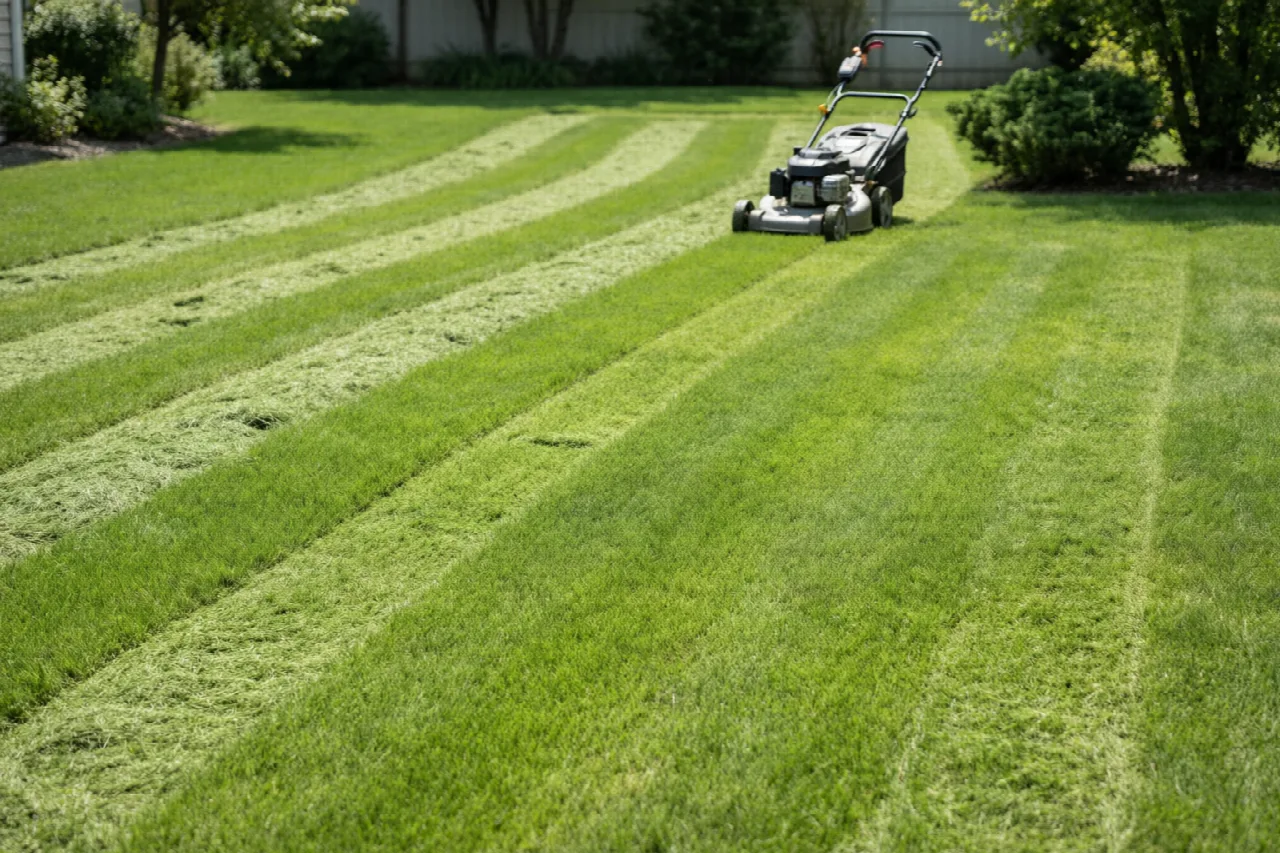
Proper mowing technique combines straight lines with slight overlap to ensure even coverage. Start by mowing along the perimeter of your lawn in one direction, creating a border. Then mow the interior in parallel, overlapping each pass by about two to four inches to avoid leaving unmowed strips.
Alternating your mowing pattern each time you mow prevents soil compaction in the same paths and promotes more uniform grass growth. If you mowed north-south one week, mow east-west the next week. This variation also helps prevent the formation of visible stripes or ruts in your lawn. Readers comparing setup options can review our technical analysis on marshall stanmore iii vs harman kardon onyx studio 8.
Mow at a steady, deliberate pace to allow the blade adequate time to cut each grass plant cleanly. Rushing causes uneven cutting. Handle edges and tight corners carefully, moving slowly and making multiple passes if needed to avoid scalping or missing sections. For tight areas like around trees or garden beds, you may need to reduce your mower’s speed or make careful back-and-forth passes.
Aftercare and Maintenance
After mowing, decide whether to bag clippings or leave them on the lawn. Leaving clippings, called mulching, returns nutrients to the soil and reduces the need for supplemental fertilizer. Mulching works best when clippings are fine and dispersed evenly; if clippings clump, bag them to prevent smothering the grass underneath. For complementary field maintenance guidelines, examine our breakdown of dyson v8 cyclone vs bissell featherweight stick.
Establish a consistent mowing schedule based on growth rate and your desired lawn height. During active growth periods, you may need to mow weekly or every ten days. During slower growth seasons, mowing every two to three weeks may suffice. Consistent mowing produces a more uniform, professional appearance than irregular scheduling.
Perform routine mower maintenance after each use or at regular intervals. Clean grass clippings and dirt from the underside of the deck to prevent rust and corrosion. Check and change the air filter as recommended, typically every season or after 50 hours of use. Drain fuel before storing the mower for the off-season, or use a fuel stabilizer if storing with fuel in the tank. A well-maintained mower operates more efficiently and lasts longer. To evaluate matched hardware tolerances, consult our detailed overview of bissell crosswave hydrosteam vs shark stainforce.
Common Mowing Mistakes to Avoid
Cutting grass too short violates the one-third rule and stresses the plant. Scalped grass recovers slowly, turns brown, and becomes susceptible to weeds and disease. When in doubt, mow at a slightly taller height rather than cutting too close.
Mowing wet grass creates several problems: clippings clump and smother underlying grass, the mower is harder to control on slippery surfaces, and wet blades are more prone to rust and damage. Wait until the lawn dries after rain or heavy dew before mowing.
Uneven ground causes scalping, where high spots are cut too short while low spots remain taller. Fill visible low areas with topsoil and reseed, or mow slowly and carefully over uneven terrain to minimize the problem. Over time, consistent mowing and proper care help level minor irregularities.
Related Maintenance and Operating Guides
To keep your equipment running at peak operating efficiency, explore our related technical walkthroughs and maintenance tutorials:
- Consult our detailed breakdown on residential zero-turn lawn mower guide.
- Consult our detailed breakdown on heavy-duty chainsaw buyer guide.
Technical Standards and Compliance
Mechanical safety standards, operational tolerances, and protective gear guidelines align with benchmark specifications established by the American National Standards Institute (ANSI).









