The Short Answer: How Lawn Striping Works
\nLawn stripes are created by bending grass blades in alternating directions as you mow. When grass leans toward you, it reflects more light and appears bright; when it leans away, it absorbs more light and appears dark. Mow one pass in one direction, then mow the next pass in the opposite direction, the contrast between those two angles creates the stripe effect. A roller attachment deepens the bend and sharpens the contrast, but stripes are achievable with a standard mower using consistent, straight, slightly overlapping passes.
\nHow Lawn Stripes Actually Work
\n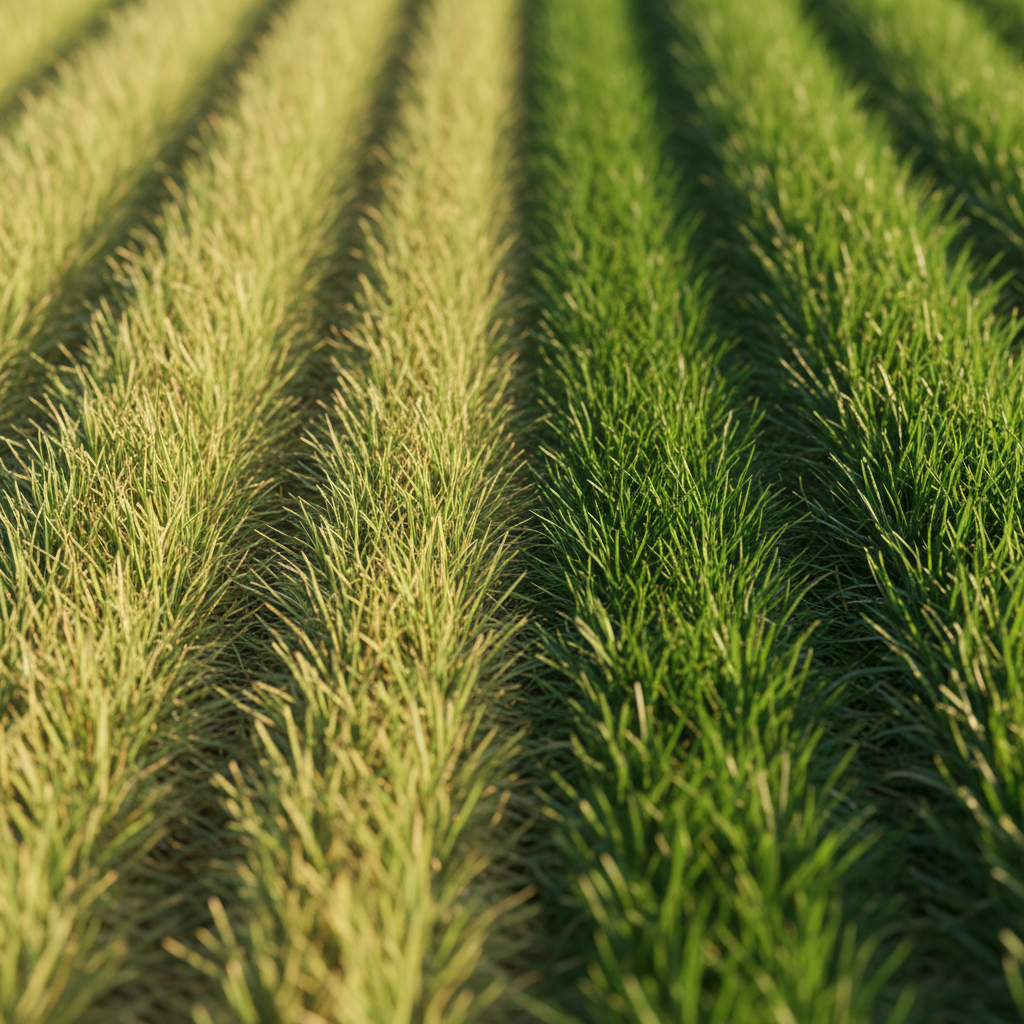
The striped appearance on a lawn is entirely optical. No dye, no paint, only the angle at which grass blades reflect sunlight back to your eye.
\nAs a mower passes over grass, the blades are pushed and bent in the direction of travel. When you view the lawn from a fixed point:
\n- \n
- Grass bent toward you catches direct light and appears pale or bright green. \n
- Grass bent away from you shows its underside and shadow, appearing deep or dark green. \n
The alternating bright-dark-bright pattern is what your eye reads as a stripe. The effect is purely a function of light reflection on grass, which is why stripes look different (or disappear) when viewed from the opposite end of the lawn or from the side.
\nTwo variables control how vivid the stripe appears:
\n- \n
- How far the grass bends. A more pronounced lean creates sharper contrast. Rollers increase bend depth. \n
- Grass blade length. Taller grass bends more dramatically than short grass. Cutting at 3 to 4 inches generally produces more visible stripes than cutting at 1.5 to 2 inches. \n
Cool-season grasses, including Kentucky bluegrass, perennial ryegrass, and tall fescue, have longer, softer blades that bend readily and hold that position longer, making them the best candidates for lawn striping. Warm-season grasses like Bermuda and zoysia have shorter, stiffer blades that resist bending and produce weaker stripe contrast.
\n\nEssential Equipment: Mowers, Rollers and Setup
\nCan You Stripe With a Standard Push Mower?
\nYes. Any mower that moves in a straight line can produce stripes. The mower deck pushes grass down as it passes, and the wheels press the blades slightly. Stripes from a standard push mower will be visible but softer compared to roller-equipped mowers.
\nTo improve results without a roller:
\n- \n
- Mow at maximum recommended height for your grass type (typically 3 to 4 inches for cool-season varieties). \n
- Mow slowly, faster ground speed means less contact time and a weaker bend. \n
- Maintain straight lines by fixing your eye on a landmark at the far end of the lawn, not on the mower deck immediately in front of you. \n
What Is a Roller Attachment and How Does It Help?
\nA lawn striping roller is a weighted cylinder mounted behind the mower deck. As the mower moves forward, the roller presses grass blades firmly to the ground in the direction of travel. The increased downward pressure creates a deeper, more lasting bend than the deck or wheels alone. For complementary field maintenance guidelines, examine our breakdown of marshall stanmore iii vs harman kardon onyx studio 8.
\nRoller attachments come in two forms:
\n- \n
- Integrated rollers: Built into the mower deck on models marketed for striping. Common on many rear-roller cylinder mowers popular in the UK and Europe. \n
- Aftermarket striping kits: Universal kits that bolt or clip to the rear of most walk-behind or zero-turn mowers. These typically consist of a rubber flap, a foam-filled drum, or a water-fillable plastic roller that adds adjustable weight. \n
Heavier rollers produce more pronounced stripes on firm soil. On soft or freshly watered ground, even a light roller creates clear results because the grass bends and stays easily. Roller weight recommendations vary by manufacturer, but most aftermarket kits in the 15, 25 lb range produce visible results on residential lawns. To evaluate matched hardware tolerances, consult our detailed overview of dyson v8 cyclone vs bissell featherweight stick.
\n\nDo Ride-On and Zero-Turn Mowers Stripe Differently?
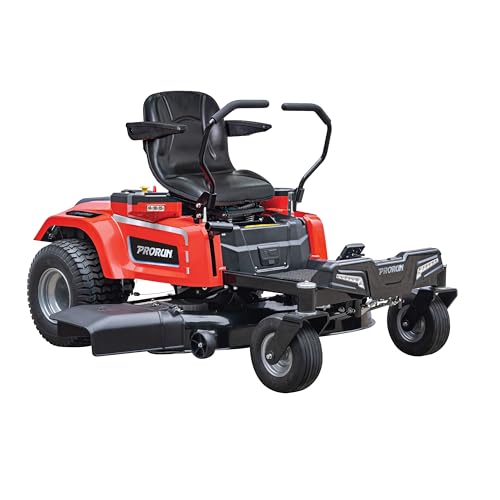
\nRide-on and zero-turn mowers cover more ground per pass and typically have wider decks (42 to 60 inches), which means each stripe is wider. Zero-turn mowers allow very tight end-of-row turns without the gradual arc of a traditional tractor, making it easier to keep passes parallel and precise. Many zero-turn models accept aftermarket striping roller kits designed for their specific deck widths. The underlying technique, alternating direction on each pass, is identical regardless of mower type.
\n\nStep-by-Step Striping Technique
\nBefore You Start
\n- \n
- Mow the perimeter of the lawn first (two passes around the border edge). This gives you a turning lane at each end so your stripes don’t need to start or end at a hard boundary. \n
- Set blade height to the upper range recommended for your grass, for cool-season grasses, 3 to 3.5 inches is a practical striping height. \n
- Check that mower blades are sharp. Dull blades tear grass rather than cut it cleanly, causing frayed tips that reduce stripe contrast and invite disease. \n
- Mow when grass is dry. Wet grass clumps, clogs the deck, and sticks unevenly, all of which degrade stripe definition. \n
Executing the First Pass
\n- \n
- Choose a reference line, a fence, driveway edge, or straight garden border, to align your first pass. \n
- Begin mowing parallel to that reference line, keeping your eye on a fixed point at the far end of the lawn to hold a straight path. \n
- At the far end, drive onto the perimeter turning strip you mowed earlier, turn 180 degrees, and align the inside edge of your mower deck with the inside edge of the stripe you just completed. \n
Overlapping Passes
\nOverlap each pass by 1, 3 inches , roughly the width of one mower wheel , over the previous stripe. This overlap prevents uncut strips of grass between passes (called misses) without doubling over the same ground excessively. Consistent overlap width keeps stripe widths uniform across the whole lawn. When planning workspace deployment, consider the engineering criteria outlined in our bissell crosswave hydrosteam vs shark stainforce guide.
\n\nAlternating Direction on Every Pass
\nThe defining action of lawn striping: each pass runs in the opposite direction to the one before it. Pass one goes north; pass two goes south; pass three goes north. This is what bends adjacent strips in opposing directions and creates the alternating light-dark contrast. Never mow all passes in the same direction and expect a stripe, that only produces one uniform grass lean with no visual contrast.
\n\nFinishing the Lawn
\nAfter completing all passes, run a final trim along the perimeter turning strip if it looks uneven. Avoid walking across newly mowed stripes before viewing the finished result, foot traffic bends individual blades out of alignment and creates scuff marks visible in the pattern.
\n\nCommon Striping Patterns Explained
\n\nStraight Stripes
\nThe foundational pattern. Mow parallel lines end to end across the longest dimension of the lawn, alternating direction on each pass. Align your reference pass along the longest straight edge available (driveway, fence). Straight stripes are the easiest to execute consistently and the most recognizable on residential lawns.
\n\nDiagonal Stripes
\nSet your reference pass at a 45-degree angle to the lawn’s longest edge. Everything else follows the same alternating-direction logic. Diagonal stripes make rectangular lawns appear wider and are often more visually striking than straight stripes on standard rectangular plots. The trade-off: turning at corners is less efficient because the mower reaches the boundary at an angle rather than square-on, so perimeter turning strips need to be slightly wider.
\n\nCheckerboard Pattern
\nA checkerboard requires two full mowing sessions over the same lawn surface:
\n- \n
- Session one: Mow straight stripes across the full lawn in one direction (north-south, for example), completing all passes with alternating directions as normal. \n
- Session two: Mow the entire lawn again in a perpendicular direction (east-west), crossing the first set of stripes at a 90-degree angle with the same alternating-pass technique. \n
The result is a grid of squares where each square reflects light differently from its four neighbors. Checkerboard patterns demand precise overlapping and very straight passes, any drift compounds visibly across the grid. They work best on flat, level lawns with no obstacles interrupting the grid lines.
\n\nDiamond Pattern
\nExecute a checkerboard pattern, but run both sessions diagonally (at 45-degree angles to the lawn edge, perpendicular to each other). Diamonds read as more dynamic than squares and work well on larger lawns where the larger scale of the pattern is visible from a distance.
\n\nFactors That Affect Stripe Quality
\n\nGrass Type
\nAs noted, cool-season grasses stripe most effectively. Kentucky bluegrass and perennial ryegrass are the benchmark striping grasses, fine blades, high flexibility, and strong light reflection. Tall fescue also stripes well given its blade length. Warm-season grasses (Bermuda, St. Augustine, zoysia, centipede) have stiff, short blades and produce significantly weaker stripe contrast. In warm-season lawns, using a heavy roller and mowing at the tallest permissible height for the variety will maximize whatever contrast is achievable, but results will not match cool-season lawns.
\n\nSoil Moisture
\nModerately moist soil allows grass roots to flex without snapping, producing a clean, pronounced bend. Bone-dry, drought-stressed grass is brittle, blades crack rather than bend smoothly, and stripes appear irregular or faded. Conversely, waterlogged ground causes clumping and uneven cuts. Mowing one to two days after a moderate rain, or the day after irrigation has dried from the blade surfaces, provides near-optimal conditions.
\n\nMowing Height
\nTaller grass bends more and reflects light across a longer blade surface, producing sharper stripes. Cutting below the recommended height for your grass type (scalping) weakens the plant, removes the blade length needed for visible bending, and increases disease risk. For maximum stripe definition on cool-season grasses, maintain a cutting height of 3 to 4 inches during the growing season. Never remove more than one-third of the blade length in a single mow, this stresses the plant and impairs regrowth needed to maintain stripe depth on subsequent cuts.
\n\nMower Speed
\nSlower ground speed gives the mower deck and roller more contact time with each grass blade, producing a more thorough bend. Fast mowing, particularly with ride-on or zero-turn mowers at high ground speed, reduces contact time and results in weaker, less defined stripes. For striping sessions, reduce ground speed by 20 to 30% compared to standard mowing speed.
\n\nTime of Year
\nCool-season grasses stripe most vividly during their active growing periods: spring (March-May) and fall (September-November) in temperate climates. During summer heat stress, cool-season grasses slow growth, their blades lose some flexibility, and stripe contrast weakens. Warm-season grasses peak in summer but, as noted, offer inherently weaker stripe contrast year-round.
\n\nMaintenance and Frequency
\n\nHow Long Do Lawn Stripes Last?
\nStripe visibility depends on grass growth rate, weather, and foot traffic. Under typical growing conditions, stripes remain clearly visible for approximately 5 to 7 days before grass regrowth starts to blur the pattern and upright the bent blades. Heavy rain accelerates this, water weighs on blades and can partially reset the lean direction within 24 to 48 hours of a significant downpour. Foot traffic across stripes degrades them faster than any weather event; if the lawn receives regular use, pattern definition reduces noticeably by days 3 to 4.
\n\nShould You Re-Stripe Every Mow?
\nFor active gardens where striping is a visual priority, re-striping on every mow, typically weekly during the growing season, maintains continuous pattern definition. On each new mow, you can either reinforce the existing stripe direction (mowing the same pattern again) or rotate to a new pattern (switching from straight to diagonal, for example). Rotating patterns periodically also benefits the grass: mowing in the same direction every week can cause grass to lean permanently in one direction and create ruts from repeated wheel tracking.
\n\nDoes Watering Affect Stripe Visibility?
\nIrrigating after striping softens the soil and partially reduces the grass lean established during mowing, slightly softening contrast. For maximum stripe longevity after mowing, wait 24 hours before running irrigation if your schedule permits. Consistent deep watering (less frequent, deeper soaks rather than daily shallow irrigation) supports the root health that keeps grass blades upright and responsive to striping throughout the season.
\n\nOngoing Care That Supports Striping
\n- \n
- Keep blades sharp: Sharpen mower blades every 20 to 25 hours of mowing time. Sharp blades produce clean cuts that heal faster and maintain the blade integrity needed for crisp stripes. \n
- Fertilize on schedule: Healthy, well-fed grass has stronger, more flexible blades. Nitrogen-sufficient grass holds a stripe bend longer than nutrient-deficient grass. \n
- Aerate annually: Compacted soil reduces root depth and blade flexibility. Annual aeration (fall for cool-season, late spring for warm-season) maintains the soil conditions that allow clean grass bending. \n
Everything You Need to Know: How To Mow Lawn With Stripes FAQ
\n\nDo you need a special mower to stripe a lawn?
\nNo special mower is required. Any mower capable of cutting in a straight line can produce lawn stripes by alternating mowing direction on each pass. A roller attachment, either built-in or aftermarket, sharpens the stripe definition by pressing grass more firmly, but stripes are visible with a standard rotary push mower. If you want crisper results without buying a new mower, add an aftermarket striping kit to your existing machine.
\n\nWhy are my lawn stripes uneven or wavy?
\nWavy or uneven stripes are almost always caused by not holding a straight path during mowing. Fix your gaze on a point at the far end of the lawn (a post, a tree, a mark on a fence), not on the ground immediately ahead of the mower. Other causes include inconsistent pass overlap, mowing wet grass that clumps and pulls the deck sideways, or an uneven lawn surface with bumps that shift the mower off-line. Mowing the perimeter first to create a flat turning strip also helps, it gives you a squared reference point at each end of every pass.
\n\nCan warm-season grasses be striped?
\nWarm-season grasses (Bermuda, zoysia, St. Augustine, centipede) can produce stripes, but the effect is markedly weaker than on cool-season varieties. Short, stiff blades resist the bending needed for strong light contrast. To maximize stripe visibility on warm-season lawns: mow at the tallest permissible height for your variety, use a heavy roller attachment, and mow at slow speed. Results will be subtle rather than bold, especially compared to Kentucky bluegrass or perennial ryegrass lawns.
\n\nHow do you mow a checkerboard pattern on a lawn?
\nMow the entire lawn in straight alternating passes in one direction (north-south). Then mow the entire lawn again in the perpendicular direction (east-west), crossing the first set of stripes at 90 degrees with the same alternating-pass technique. The crossing grass bends create a grid of squares. Checkerboard patterns require precise, straight passes, small deviations in one direction amplify visually across the full grid. A roller attachment significantly improves checkerboard definition by creating deeper bends that survive the second mowing session.
\n\n