
Quick Answer: How to Mow with Zero Turn Mower
Direct Answer: To mow with a zero-turn mower, engage the parking brake on a flat surface, adjust the cutting deck to your desired height, then straddle the seat and grip both steering levers. Push both levers forward evenly to move straight; pull one lever back while pushing the other forward to turn sharply. Mow in overlapping back-and-forth rows, avoid sudden turns on slopes, and always keep the area clear of obstacles and bystanders.
Understanding Zero-Turn Mower Controls
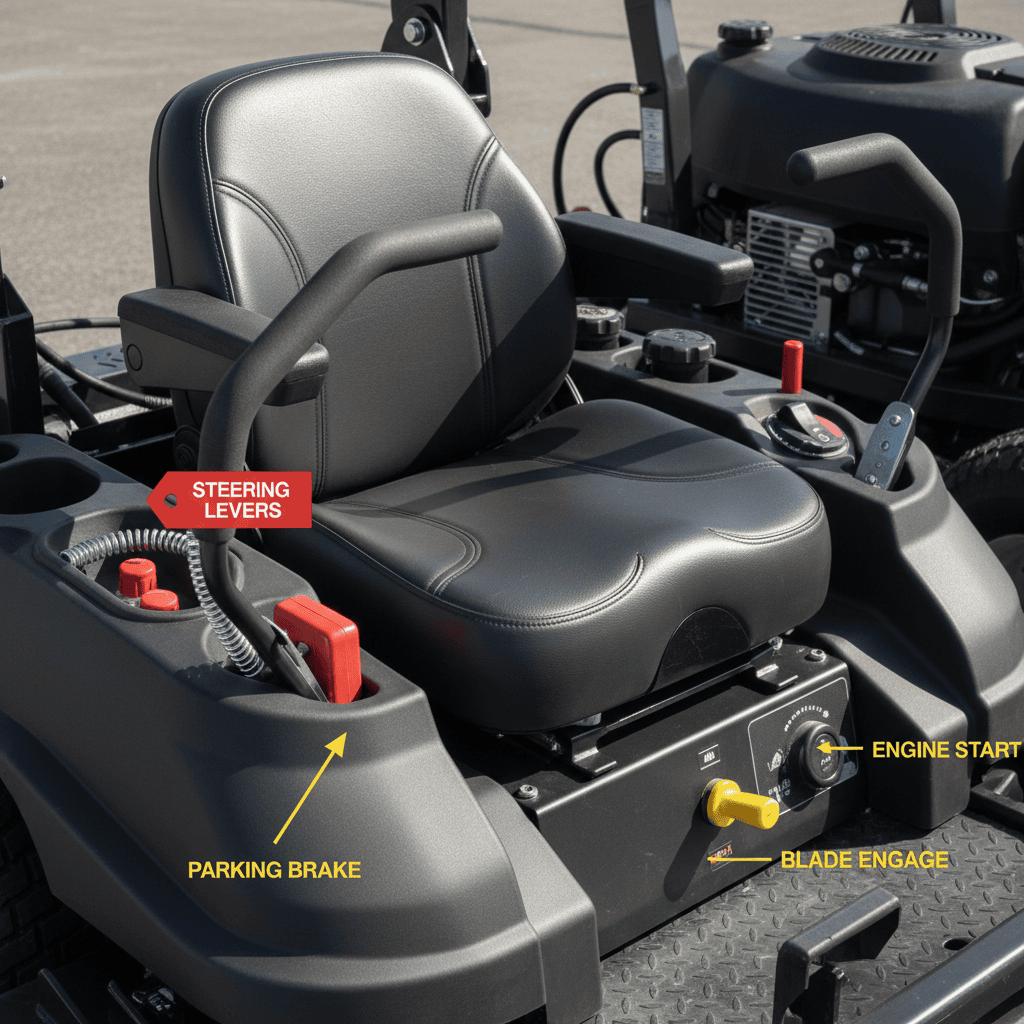
A zero-turn mower differs fundamentally from traditional riding mowers because it uses dual steering levers instead of a wheel. Each lever controls the speed and direction of one rear wheel independently, allowing the mower to pivot on its axis and make tight 180-degree turns without any forward motion. This design makes zero-turn mowers exceptionally efficient for navigating around trees, landscaping features, and property edges.
The primary controls you’ll encounter include:
- Steering Levers: Located on either side of the seat, these levers control rear-wheel speed. Moving them forward increases speed; pulling them backward decreases speed or reverses direction.
- Parking Brake: Usually a lever or pedal near the seat; engage this before dismounting to prevent unintended movement.
- Engine Start/Kill Switch: Typically on the dashboard; some models require a seat sensor to be engaged while starting.
- Cutting Deck Height Adjustment: Located near the wheels or under the mower deck, allowing you to raise or lower the blades.
- Blade Engagement Switch: Activates the cutting deck blades once the engine is running and the mower is in motion.
Understanding how these controls interact is essential before you start the machine. When planning workspace deployment, consider the engineering criteria outlined in our jbl partybox club 120 vs sony srs xv500 guide.
Pre-Mowing Setup and Safety Checks
Before operating your zero-turn mower, perform a thorough pre-operation inspection to ensure safety and optimal performance.
Adjusting Cutting Deck Height
The cutting deck height determines how short the grass will be cut. Most zero-turn mowers have a lever or pin system for each wheel that raises or lowers the deck. To adjust: For additional operational safety benchmarks, see our published testing notes on z890 vs x870e motherboard.
- Park the mower on a flat, level surface.
- Disengage the blades and turn off the engine.
- Locate the height adjustment levers (typically one near each rear wheel).
- Raise or lower all four adjustment points equally to maintain a level deck.
- Check the height by measuring from the ground to the blade tip; typical residential cutting heights range from 2.5 to 4 inches, depending on grass type and season.
Essential Pre-Operation Safety Checks
- Fuel and Oil: Check fuel level and engine oil before each use. Top off if necessary.
- Blade Condition: Inspect blades for damage, dullness, or debris. Dull or damaged blades tear grass instead of cutting cleanly, promoting disease.
- Tire Pressure: Ensure tires are properly inflated to manufacturer specifications for balanced cutting and optimal traction.
- Deck Underside: Clear any accumulated grass, dirt, or debris from the mower deck to prevent buildup and reduce fire hazard.
- Steering Levers: Test lever movement to confirm smooth, responsive operation with no grinding or resistance.
- Seat and Operator Presence Sensor: Confirm the seat is secure and the kill switch engages when you stand up.
Recommended Personal Protective Equipment
Always wear appropriate PPE when operating a zero-turn mower:
- Long pants and closed-toe shoes (never sandals or flip-flops)
- Eye protection to shield against flying debris
- Hearing protection if mowing for extended periods
- Sun protection such as a hat or sunscreen
Step-by-Step Mowing Technique
Starting and Moving Forward
- Mount the mower by stepping over the rear wheels and straddling the seat.
- Sit down firmly; this activates the operator presence sensor, which is typically required for the engine to start.
- Engage the parking brake to prevent movement during startup.
- Insert the key and turn it to start the engine, or press the start button if your model has one.
- Let the engine idle for 30 seconds to warm up.
- Disengage the parking brake by pulling or pushing the brake lever, depending on your model.
- Engage the blade engagement switch to activate the cutting deck.
- Slowly push both steering levers forward equally to begin moving. Move them gradually to avoid jerky acceleration.
Steering and Making Turns
Zero-turn mowers offer three primary steering techniques: To compare alternative configurations, check our hands-on review of marshall stanmore iii vs harman kardon onyx studio 8.
- Straight-Line Mowing: Push both steering levers forward with equal pressure. The mower moves straight ahead. Maintain consistent lever pressure for even speed.
- Wide Turns: Gradually pull one lever back slightly while keeping the other lever forward. This creates a gradual curve; the amount you pull back determines the turn radius.
- Pivot/Zero-Turn: Pull one lever fully backward while pushing the other lever fully forward. The mower pivots sharply around the stationary wheel, allowing a nearly 180-degree turn in minimal space. This is the signature feature of zero-turn mowers.
Practice these maneuvers in an open area before mowing to develop muscle memory and confidence.
Efficient Mowing Patterns
The most efficient pattern for most residential lawns is theback-and-forth row pattern:
- Start at one edge of the lawn and mow a straight row toward the opposite edge.
- At the end of the row, execute a pivot turn to face the opposite direction.
- Mow a parallel row, overlapping the previous row slightly (about 2-3 inches) to ensure complete coverage.
- Repeat until the entire lawn is covered.
This pattern minimizes overlap, saves fuel, and reduces mowing time. For irregularly shaped lawns, start with the perimeter, then work inward in concentric rows.
Handling Slopes, Obstacles, and Edges
Mowing on Slopes and Hills
Operating a zero-turn mower on slopes requires extra caution to prevent tipping and maintain control:
- Avoid Steep Slopes: Do not attempt to mow slopes steper than 10-15 degrees (roughly 18-27% grade). Consult your mower’s manual for the manufacturer’s specific slope rating.
- Mow Across the Slope: Always mow perpendicular to the slope’s grade, moving from side to side rather than up and down. This prevents the mower from tipping and maintains better traction.
- Reduce Speed: Slow your forward speed significantly on slopes. Use gentle, deliberate movements on the steering levers to maintain control.
- Avoid Turning on Slopes: Do not execute sharp pivot turns while on a slope, as this dramatically increases tipping risk. Complete your turn on level ground before resuming slope mowing.
- Never Reverse Uphill: Backing up a slope is particularly dangerous and should never be attempted.
Mowing Around Trees, Flower Beds, and Obstacles
One major advantage of zero-turn mowers is their ability to navigate tight spaces:
- Approach Obstacles Head-On: Mow toward the obstacle, then execute a tight pivot turn to approach it from a different angle, creating a clean edge.
- Use the Deck Width: Maneuvering your mower to cut close to trees or flower beds without damaging them requires practice. Approach slowly and watch your blade clearance carefully.
- Multiple Passes: Rather than attempting a single tight turn around an obstacle, make multiple gentle passes to ensure complete coverage and safety.
- Trim After Mowing: Use a string trimmer to clean up areas the mower deck cannot reach, such as very tight spots around trees or fence posts.
Mowing Close to Fences and Property Lines
Zero-turn mowers excel at edge mowing because they can position themselves parallel to fences and walls:
- Approach the fence or wall at a shallow angle and straighten out parallel to it.
- Mow along the edge, keeping the outer edge of your deck close to the boundary.
- Use wide, gradual turns when reaching the end of the fence rather than sharp pivots, which can cause damage or loss of control.
- Be aware of fixed obstacles like fence posts or landscaping elements; contact with these can damage your mower or create a safety hazard.
Common Mistakes and Pro Tips
Mistakes New Operators Make
- Jerky Lever Movements: Abrupt or uneven steering lever inputs cause the mower to jolt, scalp the grass, or damage your lawn. Move levers smoothly and deliberately.
- Uneven Cutting: Pushing the steering levers with unequal force results in one wheel moving faster than the other, creating visible stripes or missed patches. Practice maintaining equal pressure.
- Cutting Too Short: Aggressive deck height adjustment stresses grass and promotes weed growth and disease. Follow recommended cutting heights for your grass type.
- Mowing When Grass Is Wet: Wet grass clumps, clogs the deck, and causes uneven cutting. Mow when grass is dry, typically mid-morning or afternoon.
- Sharp Turns on Slopes: This is the most dangerous mistake and a primary cause of zero-turn mower accidents and tipping.
- Neglecting Blade Maintenance: Dull or damaged blades tear grass rather than cutting cleanly, leading to brown edges and increased disease susceptibility.
Expert Pro Tips for Better Results
- Alternate Mowing Patterns: Vary your mowing direction and pattern weekly. Mowing the same direction repeatedly compacts soil and can create ruts.
- Maintain Consistent Speed: A steady, moderate speed produces more uniform cutting than variable speeds.
- Keep Blades Sharp: Sharpen blades every 20-30 hours of mowing, or whenever you notice poor cutting quality or grass tearing.
- Use Mulching Mode When Possible: If your mower supports mulching (reprocessing clippings into fine particles), this reduces bagging time and returns nutrients to the soil.
- Plan Your Route: Walk your lawn before mowing to identify obstacles, drainage low points, or uneven terrain. This prevents surprises during mowing.
- Practice in an Open Area: Before tackling your full lawn, spend 15-20 minutes practicing steering and turning maneuvers in an empty parking lot or field to build confidence and muscle memory.
- Monitor Fuel During Long Sessions: Check fuel level periodically on large properties to avoid running out mid-lawn.
Frequently Asked Questions About How To Mow With A Zero Turn
How do I prevent tearing up my lawn with sharp turns?
Tearing occurs when wheels spin in place, especially on turning. To prevent this, use smooth, gradual steering inputs rather than aggressive pivots. Execute sharp turns only on dry grass or pavement, and consider executing multiple smaller turns instead of one dramatic pivot. Practice on adriveway before attempting sharp maneuvers on lawn.
What is the best mowing height for my grass?
Optimal cutting height depends on your grass type and season. For cool-season grasses like Kentucky Bluegrass and Fescue, maintain 2.5-3.5 inches during the growing season. For warm-season grasses like Bermuda and Zoysia, keep 1.5-2.5 inches. Never remove more than one-third of the blade height in a single mowing, as excessive cutting stresses the plant.
Can I mow wet grass with a zero-turn mower?
Mowing wet grass is not recommended. Wet grass clogs the mower deck, reduces cutting quality, and can cause the mower to slip on slopes or muddy areas. Additionally, wet clippings mat down on the lawn, potentially promoting fungal diseases. Wait until grass has dried, typically 24-48 hours after rain or morning dew.
How often should I service my zero-turn mower?
Perform pre-operation inspections before each use. Change the engine oil every 50hours of operation or annually, whichever comes first. Sharpen blades every 20-30 hours of use. Have the mower professionally serviced annually, typically at the end of the mowing season, to ensure optimal performance the following year.
Zero Turn Mowing Habits
Zero turn mowers reward steady hands and a clear plan for each pass, especially on uneven ground. If a mower cord has started to fail, the guide on how to fix lawn mower cord explains the basic checks. For wider reading on operating riding equipment, American National Standards Institute (ANSI) is a sound source.