


Pros
- Large-size design named in product title
- Sharpening and balancing functions listed
- Listed as a new upgraded version

Pros
- Adjustable 15-to-45-degree range in title
- Sharpening and balancing functions listed

Pros
- Sharpener and balancer functions in title
- 15-to-45-degree adjustable setting listed
- Built for lawn mower blade maintenance
Pros
- Includes replacement gaskets and a 98079-55846 spark plug
- Matches Honda HRR216 and HRS216 lawn mower models
- Designed around the 16100-Z8B-901 carburetor specification
Cons
- Restricted to select Honda GCV160 mower applications
- Installation requires basic mechanical tools and skills
Understanding the Starting Process
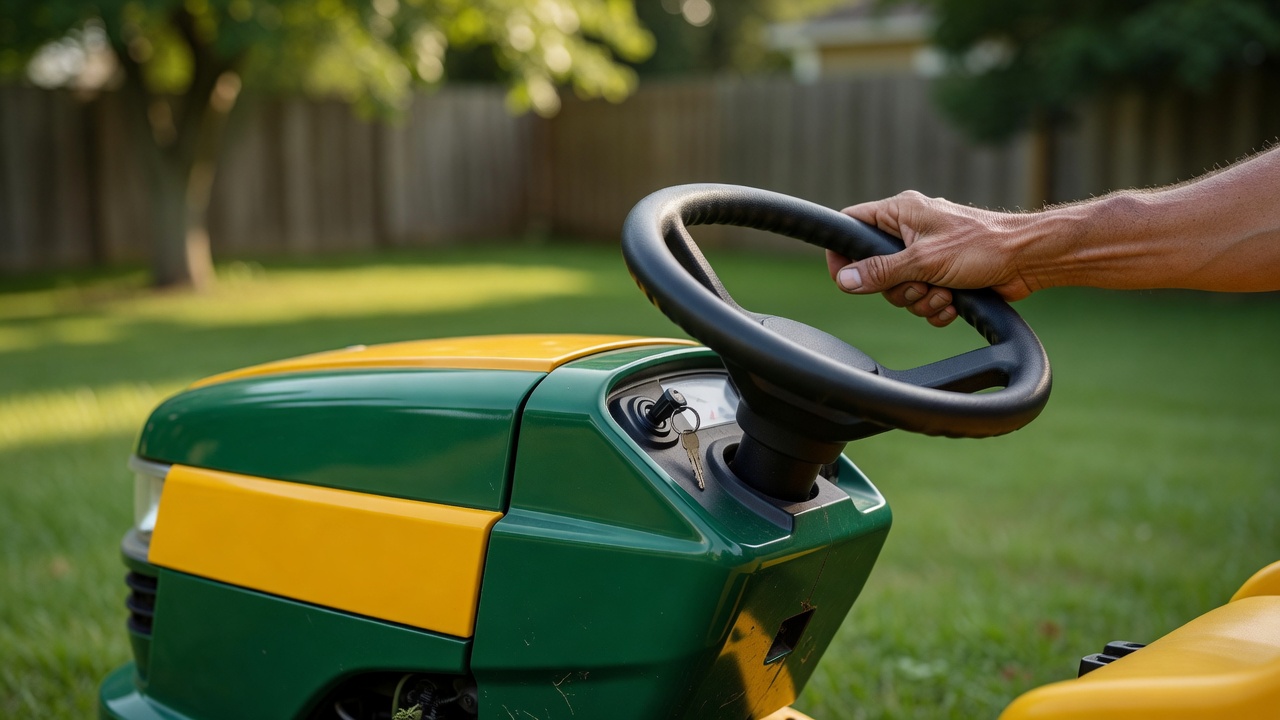
Starting a John Deere lawn mower involves more than simply turning a key or pulling a cord. The starting process is built on foundational safety principles and proper preparation. Whether you own a riding mower, a zero-turn model, or a walk-behind push mower, understanding these universal principles ensures both successful ignition and operator safety.
John Deere mowers are engineered with multiple safety mechanisms designed to prevent injury and engine damage. These include blade engagement switches, seat sensors on riding models, and safety bars on push mowers. Before attempting to start any mower, you must understand and respect these built-in protections.
Universal Pre-Start Checks
Performing these checks before every use takes less than five minutes but prevents costly repairs and dangerous situations:
- Inspect the exterior: Look for loose bolts, bent blades, or visible damage. Ensure all guards are in place and the deck is free of grass clippings and debris.
- Check fuel level: Use fresh gasoline (less than 30 days old for best results). For models stored over winter, drain stale fuel and refill with fresh gasoline mixed with fuel stabilizer if required by your model.
- Verify oil level: Most John Deere mowers require 10W-30 or 15W-40 oil. Use the dipstick to check the level—it should reach the ‘full’ mark when the mower is on level ground. Low oil can cause engine damage or failure to start.
- Engage the parking brake: On riding mowers, ensure the parking brake is fully engaged. This activates the blade brake and prevents unintended movement.
- Disengage the blades: For riding mowers, move the blade engagement lever to the ‘off’ or ‘disengaged’ position. For push mowers, ensure the safety bail (the bar you squeeze on the handle) is in the ready position but not yet engaged.
- Inspect the spark plug: If your mower has been sitting, or if you’ve noticed previous starting difficulties, check that the spark plug is clean and properly gapped according to your model’s specifications (typically 0.030inches for John Deere engines).
Step-by-Step Starting Instructions for Riding Mowers
Riding mowers represent the most common John Deere lawn mower type for residential use:
- Sit on the seat firmly: Most modern John Deere riding mowers have a seat sensor that prevents engine start if no one is seated. Sit fully and centered on the seat.
- Place feet on the deck: Keep feet away from the mower deck and ground.
- Turn the ignition key to’On’: This position powers the electrical system. You should see the dashboard illuminate. Do not turn past’On’ yet.
- Wait2–3 seconds: Allow the fuel pump and electrical system to prime. You may hear a slight clicking or humming.
- Turn the key to ‘Start’: This cranks the engine. Hold it in the ‘Start’ position for up to 5 seconds. Do not hold it longer, as this can damage the starter motor.
- Release the key: It should spring back to ‘On’ once the engine catches. If the engine starts, let it idle for 30–60 seconds before operating.
- If it doesn’t start on the first attempt: Return the key to ‘Off’, wait 10 seconds, and try again. Repeat up to three times before troubleshooting.
Step-by-Step Starting Instructions for Push or Walk-Behind Mowers
Walk-behind mowers use either an electric starter (battery-powered) or a pull cord (manual). Gas-powered John Deere push mowers typically use a pull cord: For troubleshooting and reliability insights, consult our in-depth jbl partybox club 120 vs sony srs xv500 report.
- Set the choke: If your model has a manual choke lever, move it to the ‘Cold’ or ‘Choke’ position. This enriches the fuel mixture for cold starts. Some newer models have automatic chokes.
- Prime the engine (if applicable): Some models have a rubber primer bulb near the carburetor. Press it3–5 times to move fuel into the carburetor. Consult your manual to confirm if your model requires this.
- Grip the safety bail: Hold the safety bail (metal bar on the handle) firmly against the handle with one hand. This engages the blade brake and allows the engine to turn over.
- Grasp the starter cord handle: Use your other hand to grip the pull cord handle.
- Pull the cord with a quick, firm motion: Use a smooth, controlled jerk rather than a slow pull. Pull the cord completely, then allow it to retract. Repeat as needed.
- After the engine starts: Release the safety bail slightly to disengage the blade brake, then adjust the choke to’Run’ once the engine has warmed (usually 30 seconds to 1 minute).
Key Differences Between Riding and Push Mowers
| Feature | Riding Mower | Push Mower |
|---|---|---|
| Ignition | Key-based electric start | Pull cord or battery button start |
| Blade Engagement | Lever or pedal on dashboard or steering wheel | Safety bail on handle |
| Parking Brake | Lever or pedal; must be engaged before starting | No parking brake; mower stops when safety bail is released |
| Choke | Usually automatic or electronic | Often manual lever |
| Pre-start Preparation | Sit on seat, engage parking brake | Grip safety bail, set choke if manual |
Troubleshooting Common Starting Issues
Engine Cranks But Won’t Start
Possible causes: Stale fuel, incorrect choke setting, fouled spark plug, or clogged air filter. For troubleshooting and reliability insights, consult our in-depth jbl partybox club 120 vs sony srs xv500 report.
Solutions: First, drain the fuel tank and add fresh gasoline. Check that the choke is in the ‘Cold’ position for initial starts. Remove and inspect the spark plug for carbon buildup or corrosion; replace if necessary. Clean or replace the air filter according to your model’s manual. Readers comparing setup options can review our technical analysis on z890 vs x870e motherboard.
No Sound or Click When Turning the Key
Possible causes: Dead or weak battery, corroded battery terminals, or faulty starter motor.
Solutions: Check battery terminals for corrosion or loose connections. Clean with a wire brush and reconnect firmly. If the battery is more than 3–4 years old, it may need replacement. Try turning on the dashboard lights; if they’re dim, the battery is low and needs charging or replacement. Readers comparing setup options can review our technical analysis on z890 vs x870e motherboard.
Engine Starts But Stalls Immediately
Possible causes: Incorrect choke position, carburetor issues, or fuel line blockage.
Solutions: On push mowers, ensure the choke is moved to ‘Run’ after30–60 seconds of warmup. On riding mowers, allow the engine to idle for a full minute before engaging the blades. If this doesn’t help, the carburetor may need cleaning, especially if the mower has been stored for several months. For complementary field maintenance guidelines, examine our breakdown of marshall stanmore iii vs harman kardon onyx studio 8.
Weak or No Spark
Possible causes: Bad spark plug, damaged spark plug wires, or ignition coil failure.
Solutions: Remove the spark plug (use a spark plug socket and wrench). Check the gap with a feeler gauge—it should be approximately 0.030 inches for most John Deere small engines. If the plug is black or wet, replace it. Ensure the spark plug wire is firmly connected. To evaluate matched hardware tolerances, consult our detailed overview of dyson v8 cyclone vs bissell featherweight stick.
Post-Start Best Practices
- Warm up the engine: Let the engine idle for 30–60 seconds before operating at full throttle or engaging the blades. This allows oil to circulate and stabilizes engine performance.
- Check controls: Verify that the parking brake works (for riding mowers), the blade engagement lever responds, and the steering is responsive before mowing.
- Adjust engine speed: Most mowers have a throttle lever or pedal. Start at a medium setting and adjust based on grass conditions and desired cutting speed.
Storage and Seasonal Starting Challenges
If your John Deere mower has been stored over winter or for several months:
- Drain stale fuel or add stabilizer: Old fuel oxidizes and forms varnish in the carburetor, preventing starting. Either drain the old fuel completely or use a fuel additive designed to dissolve varnish.
- Change the oil: Old oil can thicken and impede engine cranking. Fresh oil flows better in cold temperatures.
- Check the battery (riding mowers): Cold temperatures reduce battery capacity. A weak battery may not crank the engine effectively even if it appeared fine in warmer months.
- Prime the carburetor: On some models, you may need to press the primer bulb additional times after prolonged storage.
When to Seek Professional Help
If your John Deere lawn mower still won’t start after checking fuel, oil, spark plug, and air filter, or if you notice unusual sounds (grinding, squealing) during cranking, consult your local John Deere dealer or a qualified small-engine technician. Attempting repairs beyond your expertise can void your warranty or cause further damage.
Frequently Asked Questions About How To Start John Deere Lawn Mower
How often should I service my John Deere mower to ensure reliable starting?
Perform an oil change every 50operating hours or once per season, whichever comes first. Replace the air filter annually or every 100 hours of use. Replace the spark plug annually or every 100–150 hours. These routine maintenance tasks significantly reduce starting problems and extend engine life. When planning workspace deployment, consider the engineering criteria outlined in our bissell crosswave hydrosteam vs shark stainforce guide.
Can I use regular automotive gasoline in my John Deere mower?
Yes, you can use regular unleaded automotive gasoline (87 octane or higher). However, avoid fuel with more than 10% ethanol; ethanol can corrode carburetor components and fuel lines in small engines. Ethanol-free gas is ideal for extended storage. Always use fresh fuel and consider adding a fuel stabilizer if you plan to store the mower for more than 30 days.
What does it mean if my riding mower won’t turn over at all?
If the key turns but the engine doesn’t crank (no sound or clicking), the issue is typically electrical: a dead battery, corroded terminals, a bad starter motor, or a failed ignition switch. Check battery voltage with a multimeter (it should be at least 12 volts). Clean any corrosion from battery terminals with a wire brush. If the battery voltage is good but the engine still won’t crank, the starter motor or ignition switch likely needs replacement.
Is it normal for my mower engine to take several pulls to start in cold weather?
Yes, cold temperatures slow fuel vaporization and engine cranking speed. In winter or early spring, expect to pull the cord 2–5 times before the engine catches. Ensure the choke is fully set to ‘Cold’ for the first attempts. Once the engine starts, move the choke to ‘Run’ after 30–60 seconds. If it consistently requires more than 10 pulls even after warming, the spark plug, air filter, or fuel system may need attention.
For more hands-on benchmarks and buying recommendations, consult our guides on heavy-duty chainsaw buyer guide, as well as high-CFM commercial leaf blower guide.
Mechanical safety standards, operational tolerances, and protective gear guidelines align with benchmark specifications established by the American National Standards Institute (ANSI).









