Quick Answer: How to Start a Craftsman Riding Lawn Mower
Sit fully in the seat, engage the parking brake, and set the blade engagement (PTO) switch to OFF. Move the throttle/choke lever to the CHOKE position (cold engine) or FAST (warm engine), insert the ignition key, and turn it to START. Release the key the moment the engine fires, then move the choke to RUN after 30–60 seconds of warm-up before engaging the blades.
Pre-Start Safety Checklist
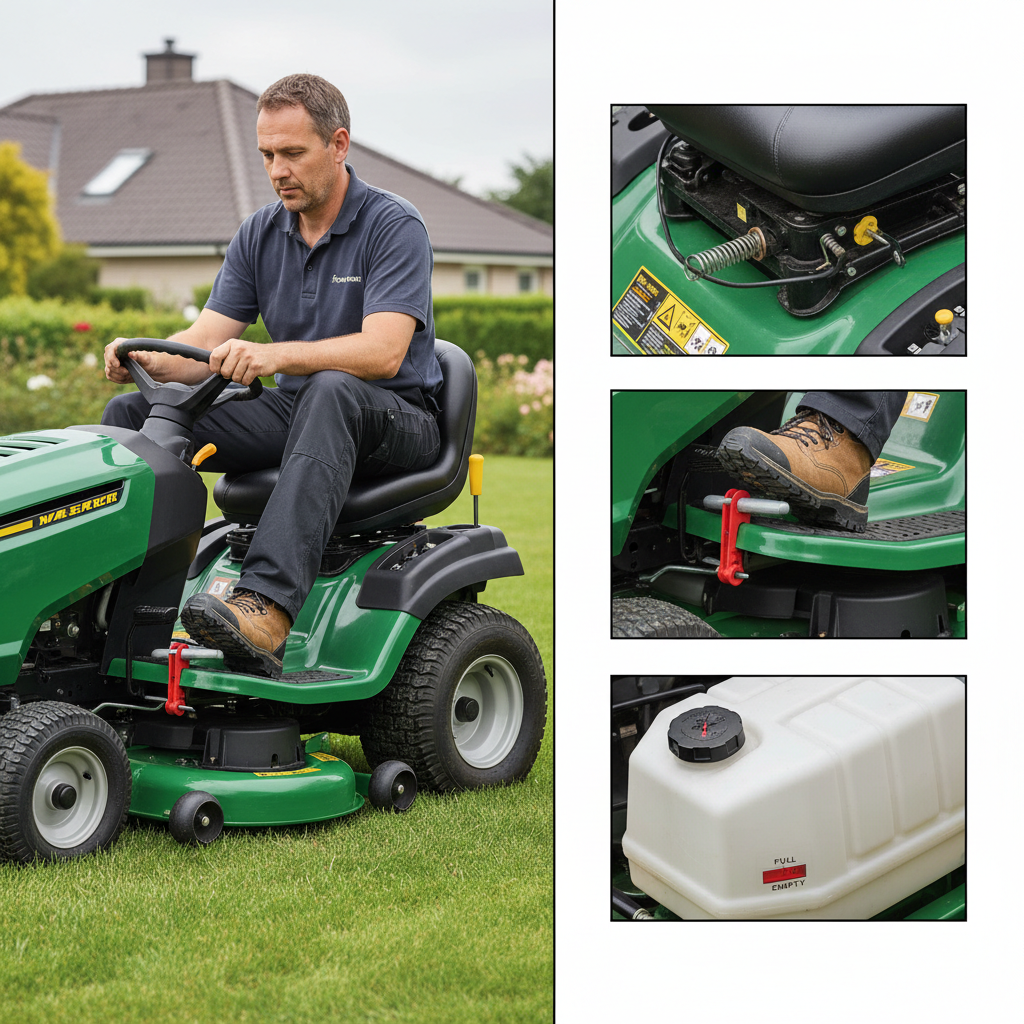
Craftsman riding mowers use a safety interlock system — a network of switches that must all be satisfied before the engine will crank. If any condition below is unmet, the ignition circuit stays open and the mower will not start regardless of key position.
- Seat switch (seat interlock): The operator must be fully seated. The seat switch detects weight; rising off the seat mid-operation also cuts the engine.
- Parking brake switch (brake interlock): The parking brake must be fully engaged before cranking. On most models, the brake pedal locks into a notched position.
- Blade engagement lever / PTO switch: The blade engagement lever or PTO switch must be in the OFF (disengaged) position. Attempting to start with blades engaged trips the PTO interlock and blocks ignition.
- Fuel level: Confirm the tank has fresh fuel. Ethanol-blended gasoline degrades in as little as 30 days without a fuel stabilizer, making stale fuel one of the leading causes of seasonal no-start failures.
- Transmission/gear selector: On gear-drive models, set the transmission to neutral. Hydrostatic models do not require a neutral position but the brake interlock must still be engaged.
Satisfying all five conditions before touching the ignition key eliminates the majority of user-side no-start situations.
Standard Starting Steps for Most Craftsman Riding Mowers
The following sequence applies to the majority of Craftsman riding mower models produced after 2000, covering both Sears-era and Husqvarna-manufactured units with electric start ignition.
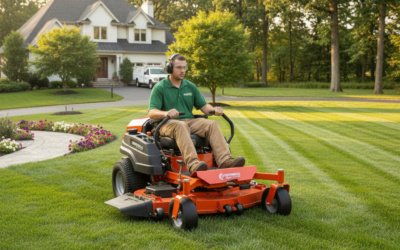
- Sit fully in the operator seat. Both hips on the seat, full weight contact — the seat switch requires consistent downward pressure.
- Engage the parking brake. Press the brake pedal fully and lock it in the engaged notch. The brake interlock switch must close for the circuit to allow cranking.
- Set the blade engagement lever or PTO switch to OFF. On lever-style decks, push the lever fully to the disengaged position. On switch-style models (common on post-2018 Husqvarna-built Craftsman), confirm the PTO switch is pressed down/off.
- Set the throttle/choke lever. For a cold engine, move the lever to CHOKE (the rabbit/fast icon with a choke bar, or the explicit CHOKE label). For a warm engine, move to FAST — do not choke a warm engine or you risk flooding it.
- Insert the ignition key and turn to START. Hold the key in the START position. Do not crank for more than 10–15 consecutive seconds — extended cranking overheats the starter motor.
- Release the key the moment the engine fires. The key spring-returns to the RUN position automatically. Holding past ignition strains the starter.
- Allow the engine to warm up for 30–60 seconds. During this period, keep the throttle/choke lever in CHOKE or partially advanced toward FAST as the engine smooths out.
- Move the choke lever to RUN or FAST. Once the engine runs steadily without stuttering, disengage the choke fully. The mower is now ready to engage the blades and begin mowing.
Starting a Cold Engine vs. a Warm Engine
Choke usage is the single most common starting error on Craftsman riding mowers. Using the choke on a warm engine floods the carburetor with excess fuel, causing the engine to start and immediately die — or refuse to start at all.
Cold Start (Engine Sitting 3+ Hours or Overnight)
- Set the throttle/choke lever to CHOKE before cranking.
- On models with a primer bulb (found on select Briggs & Stratton-equipped walk-behind style engines; rare on full riding mowers), press the primer 2–3 times before the key turn.
- Once the engine fires, hold at CHOKE for 10–20 seconds, then gradually advance the lever toward FAST/RUN as idle stabilizes.
- After storage (winter), add fresh fuel and consider running a fuel system cleaner through the first tank before the cold start sequence.
Warm or Hot Restart (Engine Used Within the Last Hour)
- Set the throttle lever to FAST — skip the choke entirely.
- Insert the key and turn to START. A properly functioning warm engine fires within 1–3 seconds.
- If the engine cranks but won’t catch, the carburetor may be flooded from a previous choke attempt. See the troubleshooting section below.
Starting After Winter Storage
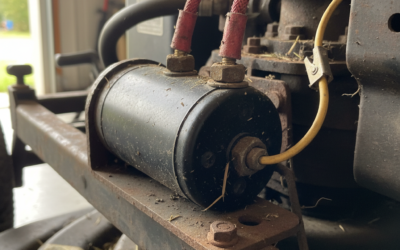
- Recharge or replace the 12V battery — batteries lose charge over winter and may read 12V on a multimeter while lacking the amperage to crank.
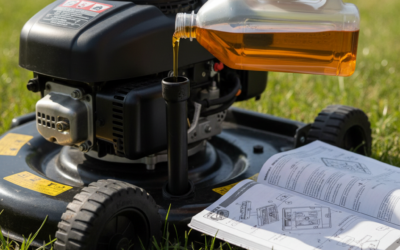
- Check the engine oil level and condition. Change oil if it appears dark or has not been changed in the previous season.
- Inspect the air filter — a clogged air filter restricts airflow and causes hard starting.
- Drain or treat stale fuel. If fuel stabilizer was not added before storage, drain the tank and carburetor bowl, then refill with fresh 87-octane gasoline (ethanol content 10% or less, per Craftsman operator manual guidance).
- Check the spark plug. A fouled or worn spark plug is a leading cause of first-start-of-season failures. Replace if the electrode shows heavy carbon buildup or erosion.
- Proceed with the standard cold start sequence above.
Model Variant Differences: Older Sears-Era vs. Newer Husqvarna-Manufactured Craftsman
In 2017, Stanley Black & Decker acquired the Craftsman brand from Sears. Post-2018 Craftsman riding mowers are manufactured by Husqvarna under license, which introduced meaningful control layout and component changes compared to Sears-era units.
| Feature | Sears-Era Craftsman (Pre-2018) | Husqvarna-Built Craftsman (Post-2018) |
|---|---|---|
| Blade Engagement | Physical lever on the left of the dash, pulled back to engage | Rocker-style PTO switch on the dash panel |
| Throttle/Choke | Single combined throttle/choke lever on the left panel | Separate throttle lever; choke may be integrated into throttle or on engine shroud |
| Ignition | Keyed ignition, typically right-side dash | Keyed ignition, right-side dash (position consistent) |
| Common Engine | Briggs & Stratton single- or twin-cylinder | Briggs & Stratton or Kohler 7000 Series twin-cylinder |
| Operator Manual Source | Craftsman/Sears Parts Direct | Husqvarna.com (search model number) |
Briggs & Stratton vs. Kohler Engine Starting Differences
- Briggs & Stratton engines on Craftsman mowers typically use a combined choke/throttle lever. Moving fully toward the choke symbol closes the choke plate automatically. Cold start: full CHOKE. Warm start: FAST (no choke).
- Kohler 7000 Series engines use an automatic choke system on many configurations — the choke engages and disengages based on engine temperature without manual input. On these models, move the throttle to FAST for both cold and warm starts; do not look for a manual choke position, as manually blocking the choke intake on an auto-choke Kohler floods the engine.
Confirm your engine type on the shroud decal before applying the choke procedure.
Craftsman Riding Mower Won’t Start: Troubleshooting Guide
Diagnose in order — start with the simplest checks before moving to component-level testing.
1. Clicks Once or Rapidly But Won’t Crank
Cause: Dead or undercharged battery, or corroded battery terminals.
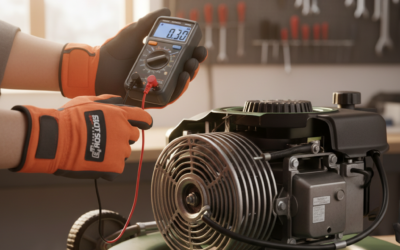
Fix: Test battery voltage with a multimeter — a healthy 12V battery should read 12.6V at rest and hold above 9.6V during cranking. Charge with a 2-amp trickle charger for 8–12 hours. Clean terminal corrosion with a wire brush. If the battery won’t hold a charge after charging, replace it (typical Craftsman riding mower battery: Group U1, 230 CCA minimum).
2. Engine Cranks But Won’t Fire
Cause A — Bad spark plug: Remove the spark plug with a socket wrench. Inspect the electrode — heavy carbon fouling (black, sooty), oil fouling (wet, oily), or a worn electrode gap (check against spec in your engine manual) prevents spark. Replace with the OEM-specified plug (Briggs & Stratton commonly uses Champion RC12YC; Kohler commonly uses Champion RC14YC — verify on your engine shroud label).
Cause B — Stale or contaminated fuel: Drain the fuel tank and carburetor float bowl, refill with fresh gasoline. Ethanol-blended fuel absorbs moisture and varnishes carburetor jets within 30–60 days without stabilizer.
Cause C — Clogged carburetor: If fresh fuel doesn’t resolve cranking-without-fire, the carburetor main jet or pilot jet is varnished. Clean with carburetor cleaner spray or rebuild with a carburetor kit specific to your engine model.
3. Engine Starts Then Immediately Dies
Cause A — Choke left on (warm engine): Move the choke/throttle lever to RUN or FAST and restart without choke.
Cause B — Flooded engine: Move the throttle to FAST with NO choke, remove the spark plug and crank for 3–4 seconds to purge excess fuel, reinstall the plug, and attempt restart at FAST throttle.
Cause C — Faulty fuel cap vent: A clogged fuel cap vent creates a vacuum that starves the engine of fuel after 30–60 seconds. Loosen the fuel cap slightly and attempt a restart — if the mower runs normally, replace the fuel cap.
4. No Crank, No Click — Complete Silence
Cause: Safety interlock switch failure, blown fuse, or failed ignition switch.
Diagnostic sequence:
- Check the inline fuse (typically a 20A blade fuse under the dash or near the battery). Replace if blown.
- Test the seat switch: with the key out, locate the seat switch connector under the seat. Disconnect it and use a jumper wire to bridge the two terminals momentarily. If the mower now cranks (with all other interlocks satisfied), the seat switch is faulty and needs replacement.
- Test the brake interlock switch with the same bridge method at the brake pedal switch connector.
- Test the PTO interlock switch at the blade engagement lever or PTO switch connector.
- If all switches test good, the ignition switch itself may be faulty — test continuity between the battery and START terminals with the key turned.
5. Hard Starting in Cold Weather
Cause: Cold temperatures thicken engine oil and reduce battery cranking amperage.
Fix: Ensure engine oil is rated for the operating temperature (SAE 30 is adequate above 40°F; use SAE 5W-30 for colder conditions, per Briggs & Stratton cold weather guidance). Bring the battery indoors overnight in sub-freezing temperatures before the first start of the day. Use the full choke cold-start procedure.
Frequently Asked Questions
Why won’t my Craftsman riding mower start even though the battery is good?
A good battery alone is not sufficient — the safety interlock system must be fully satisfied. Confirm you are fully seated (seat switch), the parking brake is engaged (brake interlock), and the PTO/blade engagement is OFF (PTO interlock). A single open interlock switch prevents cranking entirely. Also check the inline fuse and confirm the ignition switch is functioning by testing for continuity at the START terminal.
Do I need to use the choke every time I start my Craftsman mower?
No. Use the choke only for cold starts — engines that have been sitting for 3 or more hours. For warm restarts, set the throttle to FAST and skip the choke. Using choke on a warm engine floods the carburetor with excess fuel, causing the engine to either refuse to start or fire and immediately die. Kohler 7000 Series engines with automatic choke systems require no manual choke input at all — move the throttle to FAST for all starts.
How do I start a Craftsman riding mower that has been sitting all winter?
Before cranking: recharge the battery, change the engine oil, inspect and clean or replace the air filter, drain stale fuel from the tank and carburetor bowl, refill with fresh 87-octane gasoline, and inspect the spark plug — replace if fouled or worn. Then follow the standard cold-start sequence: parking brake on, PTO off, throttle to CHOKE, key to START, release when the engine fires, advance to RUN after 30–60 seconds of warm-up.
Is my Craftsman riding mower made by Sears or Husqvarna — and does it matter for starting?
If the mower was purchased new after 2018, it was manufactured by Husqvarna. Check the model number on the frame decal: post-2018 Craftsman riding mowers have Husqvarna-sourced part numbers and operator manuals available at Husqvarna.com. It matters for the choke/throttle layout — newer models may have a separate throttle and auto-choke (especially with Kohler engines), while older Sears-era models use a single combined choke/throttle lever. Always locate your operator manual using your model number before the first start to confirm the exact control positions for your specific unit.