Direct Answer: How to Start a Lawn Mowing Company
Starting a lawn mowing company begins with researching your local market and defining your service area, then choosing a business structure such as an LLC or sole proprietorship, obtaining the required licenses and permits, and purchasing liability insurance. Next, buy reliable equipment within your budget, set a pricing model based on lawn size and local rates, and market to homeowners through door hangers, local ads, and word of mouth before taking on your first clients. A phased approach lets you validate demand, control startup costs, and grow from a side gig into a full-time professional operation.
What Does Starting a Lawn Mowing Company Actually Involve?
Launching a lawn mowing business is more than buying a mower and knocking on doors. It involves business planning, legal registration, insurance, equipment purchasing, pricing strategy, and customer acquisition. Understanding the full scope before you spend money will save you from costly mistakes and help you set realistic expectations.
Hobby Side Gig vs. Full-Time Company
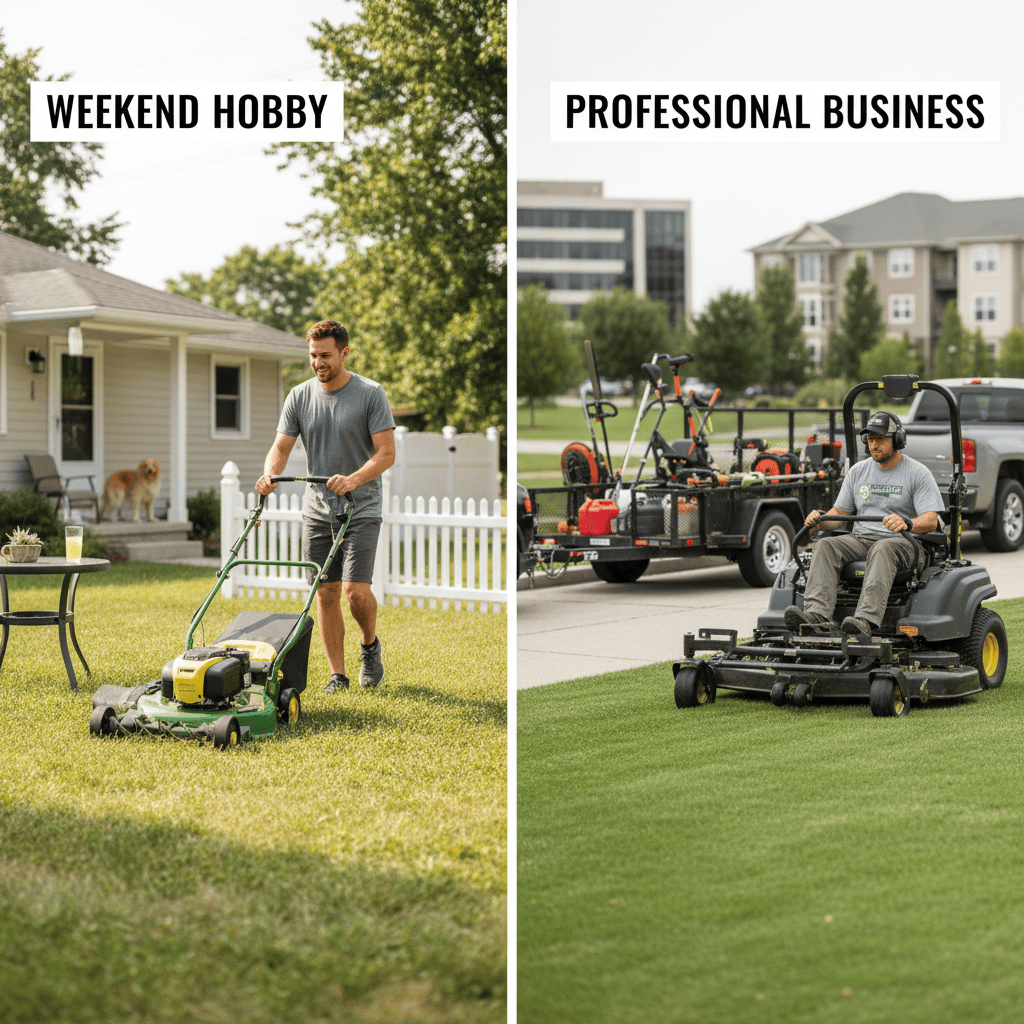
There is a meaningful difference between mowing a few neighborhood lawns on weekends and running a full-time company. A side gig can operate with a single push mower, a basic business license, and word-of-mouth referrals. A full-time company typically requires a commercial mower, a trailer, liability insurance, a registered business entity, and enough clients to generate consistent revenue. Decide which path fits your goals first, because it determines how much capital you need and how quickly you should scale.
Do I Need a Business License to Mow Lawns?
Most cities and counties require at least a basic business license or permit to perform lawn care services for money, even if you are operating solo. Requirements vary widely by state and municipality, so check with your local city clerk or county licensing office. Some areas also require a seller’s permit if you charge sales tax on services, and certain states have specific landscaping contractor licenses. Operating without the proper license can result in fines and make it harder to win commercial contracts.
Is a Lawn Mowing Company Profitable as a Full-Time Business?
Yes, lawn mowing can be profitable as a full-time business, but profit depends on your pricing, route density, and operational efficiency. The most successful operators minimize drive time by clustering clients in the same neighborhoods, use commercial-grade equipment that reduces mowing time, and raise prices as demand grows. Industry benchmarks suggest well-run lawn care companies can achieve healthy profit margins, but new operators should expect thinner margins in the first season while they build a client base and refine their costs.
Key Factors to Consider Before You Launch
Before you register a business or buy equipment, evaluate the decisions that will shape your entire operation. These choices determine your startup budget, your target customers, and how you structure your daily routes. To compare alternative configurations, check our hands-on review of z890 vs x870e motherboard.
Residential Lawns vs. Commercial Accounts
Residential mowing offers steady, predictable work and easier customer relationships, but it usually means smaller invoices and more stops per day. Commercial accounts, such as office parks, HOAs, and retail properties, pay more per job but often require larger equipment, higher insurance limits, and more formal contracts. Many successful companies start with residential lawns to build cash flow and add commercial accounts once they have a track record and a trailer capable of hauling bigger equipment.
Equipment Budget: Existing vs. From Scratch
If you already own a reliable mower, trimmer, and blower, your startup cost drops dramatically. If you are buying everything from scratch, you need to budget for a commercial mower, string trimmer, leaf blower, hand tools, and possibly a trailer. Buying used commercial equipment is a common way to reduce upfront costs, but inspect it carefully for engine condition, deck wear, and maintenance history before committing. Users looking for related component recommendations can explore our marshall stanmore iii vs harman kardon onyx studio 8 breakdown.
Choosing a Service Area and Planning Routes
A tight service area is one of the most important decisions you will make. Choose a radius you can drive comfortably, and focus on neighborhoods with similar lawn sizes so you can standardize your pricing and route planning. Clustered clients reduce fuel costs and travel time, which directly improves profitability. Map your route before you leave each morning so you are not crisscrossing the same streets.
Step-by-Step: How to Start Your Lawn Mowing Company
Follow this phased roadmap to move from idea to operating business. Each step builds on the last, so you can validate demand and control costs as you go. Before finalizing equipment decisions, refer to our comprehensive dyson v8 cyclone vs bissell featherweight stick comparison.
Step 1: Research Your Local Market
Start by studying your local competition. Drive through target neighborhoods, note how many lawn care trucks you see, and ask homeowners what they pay for mowing. Check online reviews of local lawn companies to understand what customers value, such as reliability, communication, or pricing. This research tells you whether your area has room for another provider and what rate you can realistically charge.
Step 2: Write a Simple Business Plan
You do not need a 40-page document, but you do need a plan that covers your services, pricing, target customers, service area, equipment needs, and monthly expenses. A simple one-page plan helps you calculate how many clients you need to break even and gives you a reference point when you make spending decisions. It also becomes useful if you later apply for financing. For broader ecosystem context, read through our operational guide on bissell crosswave hydrosteam vs shark stainforce.
Step 3: Choose a Business Structure and Register
Most lawn mowing startups choose between a sole proprietorship and an LLC. A sole proprietorship is free and simple, but it offers no personal liability protection. An LLC requires a registration fee but separates your personal assets from business liabilities, which matters when you operate heavy equipment on other people’s property. Register your business name with your state, and check whether you need a DBA (doing business as) filing if you operate under a name different from your legal business name.
Step 4: Obtain Licenses and Permits
Contact your city or county to apply for the required business license. Ask specifically about home-based business permits, landscaping service licenses, and sales tax registration. Some states require a contractor’s license for landscaping services, so confirm the rules in your state before you start working. Keep copies of all permits in your vehicle in case a customer or official asks to see them.
Step 5: Purchase Liability Insurance
General liability insurance is non-negotiable for a lawn mowing business. It protects you if you damage a customer’s property, such as breaking a window with a thrown rock or damaging a sprinkler head. Many commercial clients and HOAs will require proof of insurance before you can work for them. Insurance premiums vary based on your coverage limits, equipment value, and claims history, so shop around for quotes from multiple providers. Some insurers offer policies specifically designed for lawn care and landscaping businesses.
Step 6: Buy Your Equipment
Purchase equipment that matches the size of the lawns you plan to mow. A residential-focused startup can begin with a reliable walk-behind mower or a small zero-turn mower, a string trimmer, and a leaf blower. If you plan to take on larger properties, invest in a wider-deck commercial mower and a trailer to transport it. Prioritize reliability over price, because downtime from a broken mower costs you money and credibility.
Step 7: Set Your Pricing Model
Establish a pricing structure based on lawn size, complexity, and local market rates. Many lawn care companies charge a flat rate per visit based on the square footage or the time it takes to complete the job. Create a simple quote sheet that accounts for mowing, trimming, edging, and blowing, and adjust for obstacles like steep slopes, flower beds, or gates that slow you down.
Step 8: Market to Your First Customers
Before you start mowing, line up your first clients. Use door hangers in target neighborhoods, place yard signs at jobs you complete, create a Google Business Profile, and ask friends and family for referrals. Offering an introductory discount for the first service can help you build reviews and momentum quickly.
How Much Does It Cost to Start a Lawn Mowing Business?
Startup costs for a lawn mowing company range widely depending on whether you buy new or used equipment, whether you need a trailer, and what your local licensing fees look like. A bare-bones side-gig setup can cost a few hundred dollars if you already own basic tools, while a full-time operation with a commercial mower and trailer can require several thousand dollars.
| Expense Category | Typical Cost Range | Notes |
|---|---|---|
| Business license and permits | $50 – $500 | Varies by city, county, and state |
| LLC registration | $50 – $200 | Annual or one-time fee depending on state |
| General liability insurance | $300 – $1,000+ per year | Depends on coverage limits and equipment value |
| Used walk-behind mower | $300 – $1,500 | Inspect engine and deck condition |
| New commercial zero-turn mower | $3,000 – $8,000+ | Higher upfront cost, faster mowing speed |
| String trimmer | $150 – $500 | Gas or battery powered |
| Leaf blower | $150 – $500 | Backpack blowers cost more but save time |
| Trailer | $1,000 – $5,000 | Needed for larger equipment and commercial jobs |
| Marketing materials | $100 – $500 | Door hangers, yard signs, business cards |
Should You Buy New or Used Equipment?
Used equipment is the smart choice for many startups because it dramatically lowers your initial investment. Look for commercial-grade used mowers from reputable dealers or owners who can show maintenance records. New equipment costs more but comes with a warranty and predictable performance, which matters if you depend on the machine for income every week. A common strategy is to start with a reliable used mower and upgrade to new equipment once your client base justifies the expense.
How Can You Finance Equipment Without Cash Upfront?
If you do not have cash on hand, several financing options exist. Equipment dealers often offer financing plans with monthly payments, and some manufacturers have special programs for new business owners. Small business loans, credit cards with introductory offers, and equipment leasing are other routes. Be cautious about taking on debt before you have confirmed demand, since a slow first season can make loan payments stressful.
How to Price Lawn Mowing Services
Pricing is the difference between a business that grows and one that burns out. Your rates need to cover your costs, pay you a fair wage, and remain competitive with other providers in your area.
Flat Rate vs. Hourly Pricing
Most lawn care companies charge a flat rate per visit rather than an hourly rate. Flat-rate pricing is easier for customers to understand, and it rewards you for becoming faster as you gain experience. Hourly pricing can be useful for one-time cleanups or overgrown properties, but it penalizes efficiency and makes quotes unpredictable. A hybrid approach, such as a flat rate with additional charges for extra services like leaf removal or hedge trimming, works well for many operators.
How to Quote a Lawn Mowing Job Accurately
To quote accurately, measure or estimate the lawn’s square footage, note the terrain and obstacles, and estimate how long the job will take with your equipment. Factor in the frequency of service, since weekly customers are usually charged less per visit than biweekly or one-time customers. Always include trimming, edging, and blowing in your base price so the customer knows exactly what they are getting. When in doubt, quote slightly higher and explain the value you provide, rather than undercharging and resenting the work.
How Much Should You Charge to Mow a Lawn?
Average lawn mowing prices vary by region, lot size, and market demand. A typical residential mowing visit might range from $30 to $80 for a standard quarter-acre lot, with larger properties and commercial accounts commanding more. Research local rates by getting quotes from competitors or asking homeowners in your service area. Your pricing should also reflect your costs, including fuel, equipment maintenance, insurance, and your own labor, so calculate your break-even point before setting your rates.
How to Find Your First Customers
Customer acquisition is the engine of your business. A new lawn mowing company does not need an expensive advertising budget; it needs consistent, low-cost marketing that puts your name in front of homeowners.
Door Hangers and Yard Signs
Door hangers are one of the most effective tools for a new lawn care business. Design a simple hanger with your business name, phone number, and a clear offer, then distribute them in neighborhoods with well-kept lawns that match your target service area. Yard signs placed at the homes you mow advertise your work to every neighbor who walks or drives by. Ask each new customer for permission to place a sign, and make sure the sign looks professional.
Local Online Listings and Social Media
Create a Google Business Profile so your business appears in local search results and on Google Maps. Ask satisfied customers to leave reviews, since positive reviews are powerful social proof. Post before-and-after photos of your work on Facebook and Instagram, and encourage local community groups to share your information. A simple website with your service area, pricing, and contact details adds credibility, but it is not strictly necessary on day one.
Referral Programs and Networking
Word of mouth is the cheapest and most trusted marketing channel in lawn care. Offer a discount or a free service to customers who refer a neighbor. Network with complementary businesses, such as real estate agents, property managers, and garden centers, who can recommend your services to their clients. Showing up on time, communicating clearly, and leaving a clean lawn will generate more referrals than any advertisement.
Common Questions on How To Start A Lawn Mowing Company Answered
Do I need a license to start a lawn mowing company?
Most cities and counties require a basic business license to perform lawn care services for money, and some states require a landscaping contractor’s license. Check with your local city clerk or county licensing office to confirm the specific requirements in your area, and register for sales tax if your state charges it on services.
How long does it take to start a lawn mowing business?
You can realistically start mowing within one to three weeks if you already have equipment. Registering your business, obtaining a license, and purchasing insurance can be completed in a few days to a week in most areas. Buying equipment and building your first client list typically takes the most time, so begin marketing before your equipment arrives.
Can I start a lawn mowing business with no money?
It is difficult but possible if you already own a mower, trimmer, and blower. You will still need to cover licensing fees and insurance, which are relatively small. If you have no equipment, consider mowing for friends and neighbors with their equipment to build a small client base, then reinvest your earnings into your own tools.
Do I need employees to start, or can I operate solo?
You can absolutely start as a solo operator. Many successful lawn care companies begin with one person and one mower, then hire part-time help as the client list grows. Operating solo keeps your overhead low and lets you learn the business before taking on the responsibility of payroll and employee management.
Running a Mowing Business Safely
Launching a lawn care business involves equipment, insurance, and crew training, all of which shape operator safety. Making sure employees know how to handle machines and protective gear is a sensible early step. A starting point for general safety background is American National Standards Institute (ANSI).