
Quick Answer: How To Turn On A Lawnmower?
To turn on a typical walk-behind lawnmower, clear people, pets, and debris and confirm the machine is stable. On a gas mower, check oil and fuel, use choke or primer only if the engine is cold and the labels call for it, hold the operator-presence bar, then pull the cord or use the key or start button. On a corded…

Pros
- Powerful 80V brushless motor delivers 32HP gas-equivalent performance with quiet fume-free operation and no engine maintenance.
- Complete kit includes four 6.0Ah batteries and 600W charger for substantial runtime up to 1.5 acres.
- SmartCut technology and 42-inch heavy-duty steel deck ensure consistent cuts without bogging in tough conditions.
- Versatile towing up to 350 lbs and optional cargo hauling plus comfort features like high-back seat and LED lights.
- Strong 4-year limited warranty and full compatibility with the Greenworks 80V tool ecosystem.
Cons
- Rear utility cargo bed for 200 lb hauling is sold separately and not included in the kit.
- Runtime of up to 1.5 acres varies with conditions and may require recharging or battery swaps on larger properties.
- As a fully cordless model continuous operation depends on battery levels unlike gas engines with unlimited runtime.
The Greenworks 80V 42" CrossoverT Cordless Riding Lawn Tractor is a ready-to-mow zero-emission tractor designed for homeowners managing medium to large lawns. It features a reinforced 42-inch stamped steel deck of 12-gauge construction along with premium comfort elements such as a high-back padded seat with foldable armrests. The overall build emphasizes durability and user convenience right out of the box with the included battery and charger set.
Performance centers on the 80V TruBrushless motor that provides 32HP gas-equivalent power with instant torque and quiet fume-free operation. SmartCut technology senses grass conditions and automatically adjusts power to maintain a consistent cut even in tall thick or wet areas. The four 6.0Ah batteries support runtime for up to 1.5 acres depending on conditions while dual LED headlights and a 7-position deck height range from 1.5" to 4.5" add practicality. Front and rear attachments further allow towing up to 350 lbs for added yard utility.
Key considerations include that the rear utility storage bin capable of hauling 200 lbs is sold separately so full cargo functionality requires an extra purchase. Runtime remains condition-dependent and may fall short for properties significantly larger than 1.5 acres without using the 600W charger or swapping batteries. The cordless design prioritizes ease and low maintenance but trades off the continuous runtime of traditional gas models.
This tractor delivers strong value for eco-conscious owners of residential properties who want gas-like power without the emissions noise or upkeep. It suits those who already use or plan to expand into the Greenworks 80V family of tools and who appreciate the 4-year limited warranty. Users with exceptionally large or commercial-scale lawns should evaluate battery logistics carefully before purchase.

Pros
- Delivers strong 21 horsepower equivalent power comparable to gas riding mowers.
- Provides up to 1.5 acres of runtime on a full charge with the six included batteries.
- Features low-maintenance dual brushless motors without belts for greater durability.
- Offers versatile 12-position cutting height adjustment from 1.5 to 4.5 inches.
- Includes digital controls for blade settings, drive speeds, and cruise control.
Cons
- Limited to 1.5 acres of cutting per charge without purchasing additional batteries for bigger lawns.
- Requires recharging time for the six 56V batteries after each use session.
- Relies solely on battery power with no hybrid or gas backup option for extended operation.
The EGO Power+ TR4204 is a cordless electric riding lawn mower built as a modern tractor alternative for residential use. It features a robust 42-inch stamped steel deck and arrives ready to go with six 56V 6.0Ah batteries plus a charger, creating an immediate impression of convenience and solid construction free from gas engine complexity.
Performance shines through its equivalent 21 horsepower output and top speed of 6 MPH, allowing efficient coverage of up to 1.5 acres on a single charge. Dual brushless cutting motors operate without belts for added durability and less upkeep, while the digital display lets users select three blade settings, three drive speeds, and cruise control. The 12 adjustable heights ranging from 1.5 to 4.5 inches combined with anti-scalp wheels deliver precise results across varied terrain.
Drawbacks center on battery dependency, as larger properties beyond 1.5 acres require extra batteries and recharging intervals can interrupt workflow. The fully electric design eliminates fuel storage needs but demands access to power sources between sessions.
This mower suits homeowners with medium to large yards who value quiet, emission-free operation and reduced maintenance. Those seeking expandable battery capacity for bigger areas will find the EGO Power+ TR4204 a strong long-term investment in cordless lawn care.
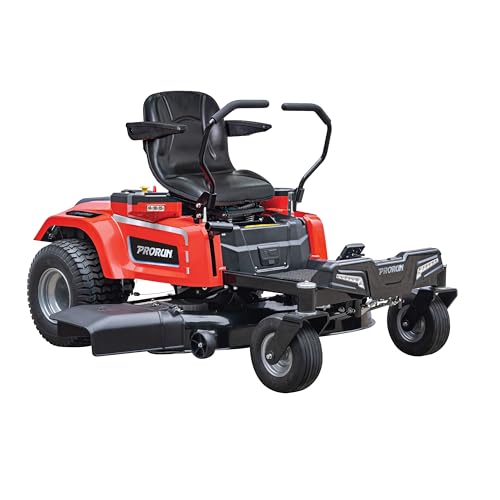
Pros
- High-efficiency brushless motors maximize power output and durability over traditional motors
- Up to 2 acres runtime with three included 10.0 Ah batteries supports substantial mowing sessions
- Zero-emission operation with gas-equivalent 20 HP power for quieter environmentally friendly use
- Six-port auto-switchover battery system provides flexible extended runtime options
- Durable 42-inch steel deck plus included mulch and towing kits add immediate functionality
Cons
- Runtime is limited to approximately 70 minutes or 2 acres which may require recharging for larger properties
- Fully battery-dependent design means performance relies on charge levels and spare battery availability
- 42-inch deck size may require more passes on expansive lawns compared to wider commercial models
The PRORUN PZT60V42 is a fully electric 60V zero-turn riding lawn mower built for residential and light commercial use. Its primary design centers on a robust 42-inch 14-gauge stamped steel twin blade deck powered by direct-drive brushless motors, giving an immediate impression of solid construction and modern battery-focused engineering. The mower arrives complete with three 10.0 Ah batteries, a charger, mulch kit, and towing kit for ready-to-work versatility.
In performance terms, four high-efficiency brushless motors deliver power equivalent to a 20 HP gas engine while producing zero emissions. The system supports up to 2.0 acres or 70 minutes of runtime, and six battery ports with auto switchover intelligently manage all PRORUN 60V battery sizes for continuous operation. A washout port on the steel deck further simplifies post-mow maintenance during real-world sessions.
Potential drawbacks include the finite 70-minute runtime window which can limit coverage on larger properties without spare batteries or recharge breaks. As a fully electric model, it also depends entirely on battery charge levels rather than continuous fuel refills, and the 42-inch deck width may demand extra passes compared with wider traditional options.
Overall the PRORUN PZT60V42 offers strong value for homeowners and small-property managers who want gas-like cutting power without emissions or noise. Those with medium-sized lawns seeking quiet efficient zero-turn performance and included accessories will benefit most from this electric mower.

Pros
- Strong 24HP FR730 engine power for demanding cutting conditions
- Wide 54-inch FAB deck reduces total mowing time
- Zero turn design delivers excellent maneuverability
- Fabricated deck supports durable everyday operation
Cons
- Sparse details beyond engine and deck leave other features unspecified
- Gas-powered FR730 engine needs regular fuel and maintenance
- Large 54-inch deck size may feel oversized on compact properties
The Husqvarna Z254F is a zero turn mower from the established Husqvarna brand in the riding lawn mowers category. It centers on a solid build that pairs a 24HP 726cc FR730 engine with a 54-inch FAB deck for straightforward residential grass care.
Performance stems directly from the listed specifications. The FR730 engine delivers the horsepower needed for steady operation across typical lawns while the wide FAB deck completes passes efficiently. Zero turn handling improves control in real yard layouts based on the model design.
Considerations arise from the limited data available. Secondary elements such as comfort features fuel capacity or extras receive no mention and the gas engine format involves routine upkeep. The large deck suits open areas better than confined spaces.
The Husqvarna Z254F provides the most value for owners of medium or large properties who want reliable engine power and a broad cutting width. Users with smaller lots or those seeking extensive accessory options should weigh the core specs carefully before purchase.
Check the mower and the yard before you start
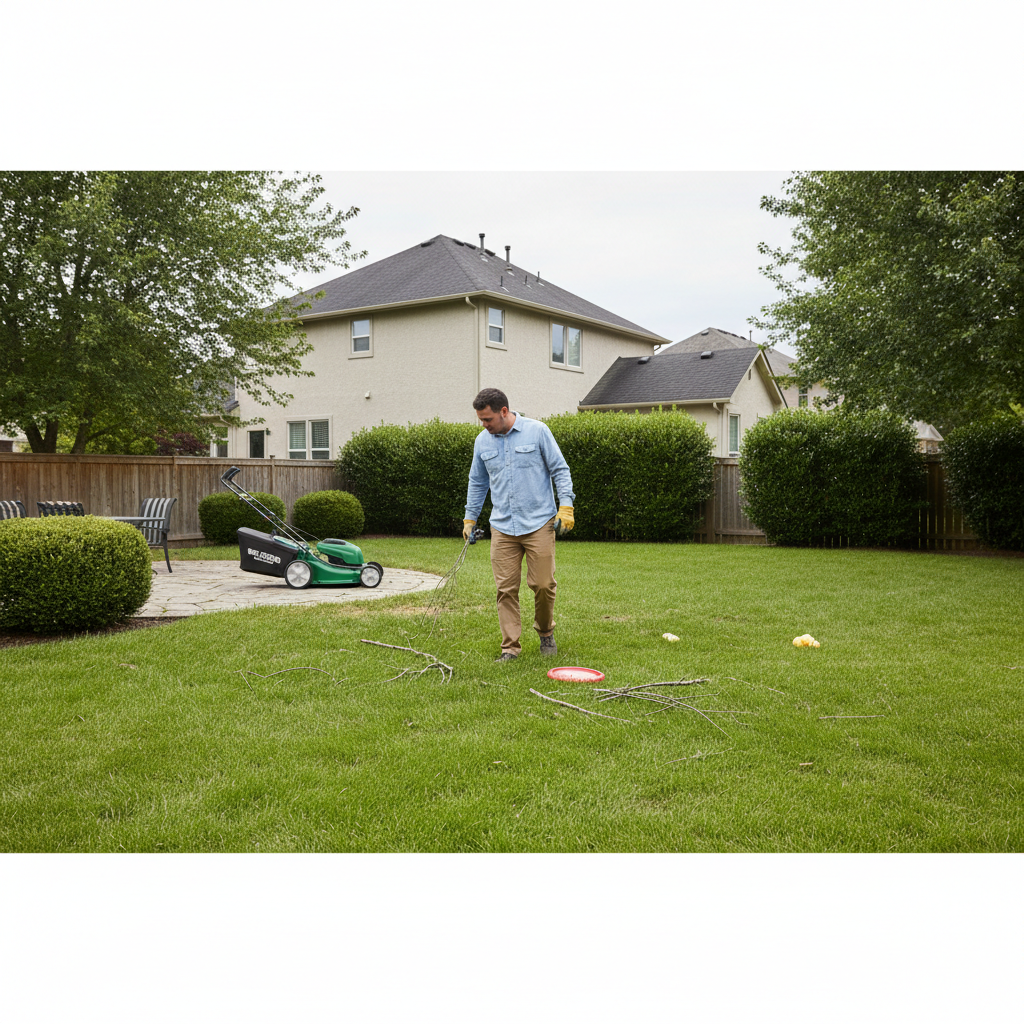
A consumer walk-behind mower is built to cut grass, not to be started in a cluttered driveway or a crowded yard. The safest start sequence begins away from the handle. Treat the lawn as a work zone first, then confirm that the machine is stable, guarded, and ready for the type of power it uses. Exact levers, keys, and labels vary by model, so the owner’s manual and the markings on your mower take priority over any generic walk-through.
Clear the cutting path
People, pets, and debris should be out of the cutting path before the mower is turned on. Ask children and other bystanders to leave the yard, and keep pets indoors or well away from the deck and the discharge opening. Walk the lawn and pick up stones, sticks, toys, wire, sprinkler heads that sit above the turf, hose segments, and similar objects. Rotating blades can throw those items a long way. Also look for hidden hazards along fences, under shrubs, and beside walkways, where a first pass often begins.
Clearing the path is not a courtesy step. It is the main way to reduce thrown-object injuries and blade damage. If you cannot see the whole yard, do not start the mower and hope the deck will push obstacles aside.
Check fluids, power, and controls first
Place the walk-behind mower on stable, relatively level ground. Do not try to start it while it is tipped on its side, rolling, or perched on a slope you cannot control. Confirm that the grass bag, side-discharge chute, or mulch plug is fitted the way that machine is meant to run, and that guards and shields are present. A missing chute or a loose bag changes how clippings and objects leave the deck.
Then match the next checks to the mower type:
- On a gas mower, look at the fuel tank and, if the engine has a dipstick or a visible fill, confirm that engine oil is present at a reasonable level. Use the marks on that dipstick or filler and the oil specified for that engine. Do not guess a capacity, viscosity, or change interval.
- On a corded electric mower, inspect the machine cord and any extension cord for cuts, crushed insulation, loose strain reliefs, or exposed conductors. Use an outdoor-rated outlet and cord, and keep the connection out of standing water.
- On a battery mower, confirm that the pack is charged, seated, and locked with the latch on that housing. Do not install a pack that is damaged, swollen, or soaked.
Glance over the handle for the operator-presence bar, any safety key, and the throttle or start switch. If a control is broken, taped, or missing, do not start the mower until it is repaired. Bypassing a safety interlock is not a starting method.
Where a gas engine should not be started
Never start a gas engine in a garage, shed, basement, or other enclosed space. Gas engines produce carbon monoxide, a colorless gas that can build up quickly indoors even when a door is partly open. Roll the mower outside, keep the area ventilated, and keep the exhaust pointed away from windows, doors, and people. If you stored the mower indoors, do the fuel and oil checks there if you wish, but take the machine outside before you pull the cord or crank the starter.
How operator-presence bars, keys, and blade controls work
Most walk-behind mowers use an operator-presence bar, sometimes called a bail or dead-man control, on the handle. The engine or motor is meant to stop, or the blade is meant to disengage, when you release that bar. That is why you hold the bar before you start and keep holding it while you mow. Releasing it is the normal way to shut the machine down in a hurry.
Many electric and battery models, and some gas models, also use a removable safety key or another safety interlock. The machine will not run if the key is out, a battery door is open, or a handle switch is not fully closed. Those parts exist so the mower cannot start when someone bumps the handle or when a child reaches for a switch. Do not tape the bar down, remove the interlock, or start the mower with a damaged control. If a lever or key on your machine does not match a generic description, follow the labels on that machine.
Riding mowers are a different task
This sequence is for general consumer walk-behind mowers. Riding mowers, zero-turn machines, and commercial equipment use seats, parking brakes, power-takeoff switches, and interlocks that do not appear on a typical push mower. Those start procedures are out of scope here. If you have a rider, use that machine’s manual rather than walk-behind steps.
How to start a gas lawnmower
A gas mower usually starts with a small engine that needs fuel, oil, air, spark, and a closed safety circuit. The usual order is to confirm fuel and oil, set any fuel valve or throttle the labels describe, enrich a cold engine only if the machine has a choke or primer and the engine is actually cold, hold the operator-presence bar, then use the recoil starter or the electric start. Many mowers have a primer, a choke, both, or neither. Warm engines often need little or no enrichment. There is no universal number of primer presses, choke clicks, throttle marks, or starter pulls.
Set fuel, oil, and enrichment in a sensible order
Begin with the tank. Fresh gasoline in a clean tank is what most four-stroke walk-behind engines are designed to burn. If the mower sat for a long season, the fuel may be stale; that is a common reason a machine will not fire, but it is not a reason to force the starter. If the engine has a fuel valve, open it. If a throttle or engine switch has a clearly marked run or start position, move it there.
Check engine oil whenever a dipstick or fill neck is provided. Starting a four-stroke engine with little or no oil can damage it. Two-stroke engines, which are less common on current walk-behind mowers, mix oil with fuel according to that model’s instructions. Do not invent a mix ratio, fuel grade, or ethanol limit. If the cap, tank, or manual names a fuel requirement, use that information.
Then look at choke and primer. A choke restricts air so a cold engine gets a richer mixture. A primer bulb pushes a small amount of fuel toward the carburetor. Use those controls only when the engine is cold and only in the way the symbols on your machine describe. A warm engine that was just running often starts with the choke off and with no extra primer. Over-priming can flood the engine and make starting harder. If your engine has no primer, do not look for one. If it has no choke, do not force a nearby lever into a position it was not meant to take.
How to pull a recoil starter cord
Hold the operator-presence bar against the handle before you touch the pull cord. On many walk-behind gas mowers the blade is driven with the engine, so the bar is what allows the engine to run. Stand in a balanced stance with your feet clear of the deck. Keep your other hand and loose clothing away from the muffler, recoil housing, and discharge opening.
The recoil starter is the spring-loaded assembly that includes the pull cord. Pull the cord handle until you feel resistance, then pull smoothly and firmly in a straight line. Do not yank at a sharp angle, wrap the cord around your hand, or let the handle snap back against the housing. Guide the cord home. If the engine does not fire, pause and try again only after you have confirmed the bar is still held and the enrichment is still appropriate for a cold or warm engine. Repeated violent pulls can damage the recoil starter and will not fix an empty tank, a closed fuel valve, or a safety bar that is not held.
How a key-start or button-start gas mower differs
A key-start or button-start gas mower replaces the pull cord with a battery and a starter motor. The fuel, oil, choke or primer, and operator-presence steps are otherwise similar. Insert the key if the model uses one, hold the bar, and turn the key or press the start control only as long as the labels allow. Do not crank the starter continuously. If the engine does not catch after a few short attempts, stop and look for a simple cause instead of draining the onboard battery.
Some electric-start walk-behind mowers still include a pull cord as a backup. If you use that cord, follow the same stance and pull technique as a recoil-only model. Do not assume every key-start mower has the same key position, choke layout, or battery location.
What to do once the engine fires
Listen and watch before you start walking. If you used choke, move it toward the run position as the engine smooths out, following the markings on that control. Keep holding the operator-presence bar. Keep bystanders away, and do not reach under the deck while the engine is running. If the engine surges, smokes heavily in an unusual way, leaks fuel, or sounds violently abnormal, shut it down and investigate rather than beginning to mow. A hot muffler can burn skin; give it space as soon as the engine is running.
How to turn on a corded electric or battery mower
Corded electric and battery walk-behind mowers skip gasoline, but they still have rotating blades and they still depend on safety interlocks. The usual sequence is to confirm a safe power source, install any safety key, hold the operator-presence bar, and then press the start switch or squeeze the secondary start control. Not every model has a removable key, a button in the same place, or the same battery latch.
Inspect the cord and outlet before a corded start
For a corded electric mower, inspect the machine cord and the extension cord before you plug anything in. Look for cracked insulation, exposed wire, loose plugs, and damage where the cord enters the housing. A damaged outdoor cord or a wet connection can create a shock hazard. Use a cord and outlet intended for outdoor power equipment, keep connections out of standing water, and route the cord so you will not mow over it. If the lawn is soaked or you cannot keep plugs dry, wait. Do not start a corded mower with a frayed cord, an indoor-only extension, or a connection sitting in a puddle.
There is no single cord gauge or length that is correct for every mower and every outlet. Use the cord guidance that came with that machine, and replace a cord that is damaged instead of taping over cuts. Plug in only after the path is clear and you are ready to hold the handle.
Use the safety key and handle bar as designed
Many electric and battery mowers will not run unless a key or interlock is in place and the bail or handle bar is held. Some use a two-step switch: you press a button or slide a lockout, then pull the operator-presence bar. Others combine those actions. Insert the safety key if your model has one, hold the bar, and operate the start control as labeled. The motor should come up to speed promptly. If it does not, remove power before you inspect the cord, key, pack, or switch.
Keep holding the bar while you mow. Releasing it is how most of these machines stop the blade. After you finish, remove the safety key on models that have one so the mower cannot be started by someone who only picks up the handle.
Start a battery mower after the pack is seated
For a battery mower, start with a charged pack that fits that machine. Seat the battery until the latch clicks or locks the way the housing is designed to lock. A poorly seated pack is a common reason a battery mower appears dead. Insert the safety key if the model uses one. Hold the operator-presence bar and press the start control.
Do not force a pack that does not align with the rails or contacts. If the pack is hot from charging, damaged, wet, or swollen, do not install it. That is a battery-handling problem for the manufacturer’s guidance or a qualified technician, not a starting trick. Keep metal tools away from the contacts, and do not store a loose pack where keys or coins can bridge the terminals.
Wet grass, damaged cords, and battery handling
Wet grass is a traction and clogging problem on any mower, and it is also an electrical concern on corded machines. Battery packs and switches are generally more enclosed, but you should still keep connectors clean and dry and avoid forcing a pack into a wet, debris-filled bay. Wipe visible moisture off the handle controls before you start. If you cut a cord while mowing, release the bar, unplug the damaged cord from the outlet if you can do so safely, and do not use that cord again.
If the lawnmower will not start
Stop after a few careful attempts. Forcing a recoil starter, holding an electric starter on, or repeatedly flooding a cold engine can damage the machine and can create a fuel or electrical hazard. Limit yourself to external, non-invasive checks. The owner’s manual is the next stop if those checks do not explain the problem.
Simple checks that are reasonable
On a gas mower, confirm that the tank is not empty, that a fuel valve is open if the engine has one, and that a switch or throttle is not left in a stop or off position. If the mower sat for months, suspect stale fuel rather than a hidden setting. If a dipstick is present and no oil is visible, add the oil specified for that engine before you try again. Confirm that you are holding the operator-presence bar and that any blade-brake or interlock is fully closed. Look for obvious fuel leaks under the tank and carburetor. Do not start a mower that is dripping gasoline.
On a corded mower, confirm that the outlet is live, the extension cord is fully seated at both ends, and the cord is not damaged. Try a known working outdoor outlet if you can do so safely. On a battery mower, confirm that the pack is charged, facing the right way, and latched. Reseat the pack. Reinsert the safety key. Try the start control only while holding the bar. A missing key, an open battery door, or a handle switch that is not fully closed will make many machines refuse to run.
When to stop pulling or cranking
A few unsuccessful attempts are enough. If the pull cord becomes harder to draw, the electric starter sounds slower, or you smell a strong raw-fuel odor after priming, stop. Continuing can flood the engine, overheat a starter, or wear out a recoil. Do not pull the cord endlessly, do not hold a start button down, and do not bypass a safety interlock to see whether the motor will spin. Those actions can create the very fuel or electrical hazard you are trying to avoid.
Problems that need the manual or a technician
Do not turn a failed start into a repair project at the carburetor or ignition system unless you are qualified to do that work. Compression tests, spark-plug removal, carburetor rebuilds, and wiring repairs are outside a basic start sequence. If the engine smells strongly of fuel after priming, wait and follow any flooded-start notes in the owner’s manual for that model. If you hear a click but no crank on an electric-start gas mower, the battery or connections may be weak; charging or service is more useful than longer cranking.
Get the owner’s manual or a qualified technician involved when you find leaking fuel, damaged wiring, a bent blade after a hard impact, a recoil that will not rewind, a battery pack that will not latch, or an engine that turns but never fires after the simple checks. Those problems need diagnosis, not more starting attempts.
Stay safe after the mower starts
Starting the mower is not the end of the safety sequence. The same rotating blades that cut grass can cut hands and feet and can throw objects far from the deck. Keep the machine under control from the first second it runs, and shut it off before you refuel, unclog the deck, or do any maintenance.
When to shut the mower off immediately
Shut the mower off at once if someone enters the cutting path, if a pet runs toward the deck, if the machine vibrates violently, if you hit a solid object, if you see or smell leaking fuel, if a cord is cut, or if the mower starts to throw unexpected debris. Release the operator-presence bar. For a gas engine, move the throttle or switch to stop if the bar alone does not shut it down. For a corded mower, also unplug the cord when you can do so safely. For a battery mower, remove the safety key or the pack if you need to make the machine inert.
Do not leave a running mower unattended, even for a moment. If you need to pick up an object you missed, stop first and wait for all motion to end.
Bystanders, discharge, and slopes
Keep children, pets, and other bystanders out of the yard while you mow. Point the discharge away from people, vehicles, windows, and streets. If you use a bag, stop and empty it before it is so full that clippings spill or the mower becomes hard to push. On slopes, mow only in the pattern your walk-behind manual describes, and only on ground you can walk securely. Do not pull a running mower toward your feet on a downhill lie, and do not start a cut you cannot finish without losing your footing. There is no single slope angle that is safe for every person and every lawn; if the hill feels unstable, do not mow it with a walk-behind machine.
Before refueling, clearing a clog, or doing maintenance
Before you refuel a gas mower, shut the engine off and let a hot engine cool. A hot muffler can ignite spilled gasoline. Refuel outdoors, away from sparks and open flame, and wipe up spills before you restart. Do not add fuel while the engine is running.
Before you clear a clog, change a cutting height, remove the bag, scrape the deck, or do any other maintenance, shut the mower off and wait for all motion to stop. Then disable the machine so it cannot start while your hands are near the blades:
- On a gas mower, remove the spark-plug lead and keep it away from the plug.
- On a battery mower, remove the safety key and the battery.
- On a corded mower, unplug the cord and remove any key.
Never reach under the deck of a mower that still has power available. Carbon monoxide remains a hazard after a gas engine is running, so do not pull a running gas mower back into a garage to finish a strip or to store it while it idles. Shut it down outdoors and let the muffler cool before you store the machine near fuel or dry debris.
If you are unsure whether a control, leak, or unusual noise is safe, do not keep mowing. The correct sequence is to start only after the yard and the machine are ready, to use the start method that matches your mower type, and to stop as soon as the machine or the surroundings are no longer under control.