
Direct Answer: How to Use a Lawn Mower
To use a lawn mower safely and effectively, perform these essential steps: (1) conduct pre-operation checks including fuel or battery verification and blade inspection, (2) wear appropriate safety equipment including closed-toe shoes, long pants, and eye protection, (3) start the mower according to its type (push, ride-on, or electric), (4) mow in consistent patterns at the correct blade height for your grass type, (5) maintain safe distances from obstacles and people, and (6) perform post-operation maintenance including cleaning and proper storage. The specific operational steps vary by mower type, but these fundamentals apply universally.
Understanding Your Lawn Mower Type
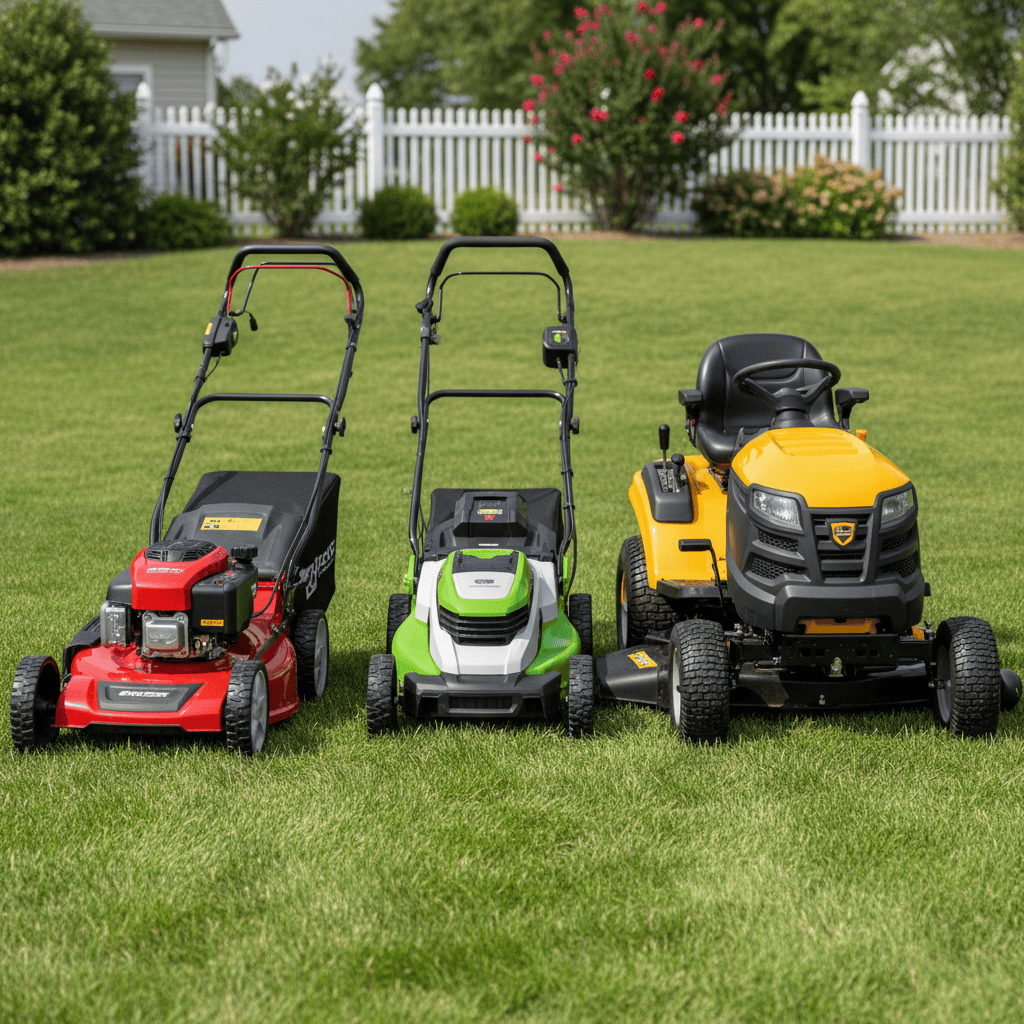
Before learning how to operate a lawn mower, you need to identify which type you own, as startup and operation procedures differ significantly.
Push Mowers
Push mowers are manually propelled and require the operator to walk behind while guiding the machine. Gas-powered push mowers use internal combustion engines and deliver consistent power regardless of battery charge. Electric corded push mowers plug into outdoor outlets and eliminate fuel concerns, though cord length limits range. Battery-powered (cordless) push mowers offer the convenience of electric operation without cord restrictions, though runtime depends on battery capacity and grass conditions.
Ride-On Mowers
Ride-on mowers feature a seat and steering mechanism, allowing operators to sit while mowing. These machines suit larger lawns (typically over 0.5 acres) and reduce physical exertion compared to push mowers. Most use gas engines, though battery-powered ride-on mowers are increasingly available. The operator controls both forward motion and blade engagement from the seated position.
Robotic Mowers
Fully autonomous mowers navigate lawns independently using boundary wires or GPS. Operators set scheduling parameters but don’t actively guide the machine. These require initial setup but eliminate hands-on mowing entirely. Robotic mowers typically work best on smaller, relatively flat lawns without significant obstacles.
Pre-Operation Safety Equipment and Checks
Proper preparation prevents injuries and extends mower lifespan. Always complete these steps before starting. For troubleshooting and reliability insights, consult our in-depth z890 vs x870e motherboard report.
Essential Safety Equipment
Wear the following protective gear every time you mow:
- Closed-toe shoes with good grip (sneakers or work boots, never sandals or barefoot)
- Long pants to protect legs from debris and blade contact
- Eye protection (safety glasses or goggles to shield from ejected grass and debris)
- Hearing protection (earplugs or earmuffs for gas-powered mowers, which generate 85+ decibels)
- Work gloves (optional but useful for handling fuel or debris)
- Bright clothing (helpful for visibility if mowing near roads or around others)
Pre-Operation Inspection Checklist
Before each mowing session, verify the following: Readers comparing setup options can review our technical analysis on marshall stanmore iii vs harman kardon onyx studio 8.
| Check | Action | Why It Matters |
|---|---|---|
| Fuel or battery level | Fill fuel tank or charge battery to full capacity | Prevents mid-mowing shutdown and ensures consistent power |
| Oil level (gas mowers) | Check dipstick; top off if low | Inadequate oil causes engine damage and overheating |
| Blade condition | Inspect for damage, cracks, or excessive wear; ensure it spins freely | Dull or damaged blades tear grass, inviting disease |
| Blade height setting | Adjust to appropriate height for your grass type | Prevents scalping and promotes healthy growth |
| Deck and chute clearance | Remove grass clippings, sticks, or debris from mower deck and discharge chute | Blockages reduce cutting efficiency and cause jams |
| Spark plug (gas mowers) | Verify plug is secure; replace annually or if fouled | Poor spark prevents reliable starting |
| Cord or cable (electric mowers) | Inspect for cuts, fraying, or exposed wires | Damaged cords create electrocution and fire hazards |
| Tire pressure (ride-on mowers) | Check pressure matches manufacturer specifications | Improper pressure affects traction and blade height consistency |
Starting Your Lawn Mower
Startup procedures vary significantly by mower type. Follow your manufacturer’s instructions, but these guidelines cover standard procedures.
Starting a Gas-Powered Push Mower
- Set the fuel valve to ON (if your mower has a fuel shutoff valve)
- Move the choke to the COLD position (for first starts of the season or cold starts)
- Prime the engine by pressing the primer bulb 3-5 times until fuel appears
- Position the throttle control to the START or FAST position
- Grip the handle firmly with one hand and pull the starter cord sharply in a single quick motion
- Allow the engine to warm up for 30 seconds before engaging the blade
- Move the choke to WARM once the engine is running smoothly
Starting an Electric or Battery-Powered Mower
- Verify the battery is fully charged (for cordless models)
- Insert the battery into the mower’s battery port if removable
- Plug in the power cord (for corded models, ensuring the outlet is outdoor-rated)
- Press the power button or engage the blade control lever
- The blade will start immediately, no warm-up period needed
For corded mowers, keep the extension cord behind you while mowing and avoid running over it.
Starting a Ride-On Mower
- Sit firmly on the seat with both feet on the deck
- Engage the parking brake (usually a pedal or lever)
- Insert the key and turn to START, or press the start button
- Release the key once the engine catches (avoid holding it longer than 10 seconds)
- Allow the engine to idle for 1-2 minutes before engaging the blade deck
- Engage the blade deck using the control lever, then slowly release the parking brake to begin mowing
Proper Mowing Techniques and Patterns
How you mow affects both lawn health and efficiency. Technique matters as much as equipment. To evaluate matched hardware tolerances, consult our detailed overview of bissell crosswave hydrosteam vs shark stainforce.
Setting the Correct Blade Height
Blade height should match your grass type. Most lawns thrive at a height of 2.5 to 3.5 inches. Cutting too short (scalping) stresses the grass and invites weeds and disease. Use this general guidance:
- Cool-season grasses (fescue, bluegrass, ryegrass): 2.5 to 3.5 inches
- Warm-season grasses (Bermuda, Zoysia, St. Augustine): 1.5 to 2.5 inches
- Shaded areas: Keep an extra 0.5 inch of height for shade tolerance
- During drought stress: Mow at the highest safe setting to help grass retain moisture
Adjust height using the lever or bolt system on your mower’s wheels, ensuring all four wheels (or three, for some models) are set equally to maintain a level cut.
Effective Mowing Patterns
Consistent patterns ensure even cutting and prevent visible lines or missed sections. Choose from these approaches:
Striped Pattern: Mow in straight, parallel lines back and forth across your lawn. This is the most common technique and creates a professional appearance.
Spiral Pattern: Start at the outer edge and spiral inward toward the center. This works well for large lawns and reduces turning.
Checkerboard Pattern: Mow in one direction one week, then perpendicular the next. This alternation reduces soil compaction and wear in high-traffic zones.
Always mow in the same or opposite direction each week to prevent ruts and promote even grass growth. Never mow the same pattern repeatedly on consecutive weeks.
Mowing Speed and Technique
Walk at a natural, steady pace, typically 3-4 miles per hour for push mowers. Moving too quickly scalps grass and reduces cutting quality. For ride-on mowers, use a slow, controlled speed that allows the blade deck to cut cleanly without bogging down.
Overlap each pass slightly (about 2-3 inches) to prevent missed strips. Keep the mower level and avoid sudden turns, which can tear the blade or damage the lawn.
Safe Operation Fundamentals
Active mowing requires constant attention to safety practices.
Essential Safety Practices While Mowing
- Never disengage the blade while mowing to cross sidewalks or driveways; instead, stop the blade before transitions
- Keep bystanders and pets at least 30 feet away from the mower while operating
- Mow in daylight or good artificial light to see obstacles clearly
- Avoid mowing on wet grass (wait 24 hours after rain); wet conditions reduce traction and promote blade clogging
- Never reach under the mower deck to clear clippings while the blade is running; always shut off the engine first
- Remove debris (sticks, toys, stones) from the lawn before mowing to prevent them being ejected as projectiles
- Wear headphones or hearing protection that still allow you to hear alerts from others
- Don’t mow near edges or slopes steeper than 15 degrees; risk of rollover increases significantly
Handling Obstacles and Uneven Terrain
Plan your mowing path before starting to identify hazards. Use a slower speed when navigating:
- Tree roots and uneven ground
- Garden beds or landscaping features
- Small slopes or drainage ditches
- Areas with dense thatch or overgrown grass
For steep areas, consider pushing the mower up the slope and allowing it to roll down (for push mowers), or traverse slopes diagonally on ride-on mowers rather than traveling up or down the incline directly.
Post-Operation Maintenance and Storage
Proper care after mowing extends equipment life and ensures readiness for the next use.
Immediate Post-Mowing Steps
- Turn off the blade and allow the engine to cool for 3-5 minutes
- Allow the mower to cool before touching the deck or blade
- Remove clippings from the deck, chute, and wheels using a brush or plastic scraper (never your hands)
- Wipe down the exterior with a dry cloth to remove grass and dirt
- Check the bag or clippings collection system for damage and empty if full
Regular Maintenance Schedule
After every 5 mowing sessions:
- Clean or replace the air filter (gas mowers)
- Check spark plug condition and replace if fouled
- Verify blade sharpness; dull blades should be professionally sharpened
Monthly (or at start and end of season):
- Inspect the entire mower for loose bolts or damage
- Check wheel alignment and verify all wheels roll freely
- Inspect tires for wear and ensure proper pressure
- Change oil in gas mowers (follow manufacturer interval)
Seasonally (before and after mowing season):
- Sharpen or replace blades as needed
- Inspect and clean the mulching or bagging system
- Test all controls and safety features
Seasonal Storage
At the end of the mowing season, prepare your mower for dormancy:
For gas mowers: Drain fuel completely or add a fuel stabilizer to prevent varnish buildup in the carburetor. Run the engine until it stops to clear fuel lines. Change the oil and filter, then store in a dry location. Disconnect the spark plug wire to prevent accidental starting.
For battery-powered mowers: Remove the battery and store separately in a cool, dry place. Charge the battery monthly during off-season to maintain health. Leave the mower in a garage or shed away from moisture.
For all mower types: Clean the entire deck and wheels, ensure blades are protected with blade covers if available, and store on a level surface in a climate-controlled space.
Factors Affecting Your Mowing Approach
Several variables influence how and when to mow effectively.
Grass Type and Cutting Height
Different grass species have different ideal heights and growth rates. Cool-season grasses (common in northern regions) grow vigorously in spring and fall but slow in summer heat. Warm-season grasses (southern regions) thrive in summer but dormant in winter. Match your mowing height and frequency to your specific grass type and season.
Weather and Seasonal Conditions
Mow during these optimal conditions:
- Dry grass: Wait at least 24 hours after rain; wet mowing reduces cutting quality and promotes fungal disease
- Cool parts of the day: Early morning or late afternoon mowing stresses grass less than midday cutting
- Moderate temperatures: Avoid mowing during extreme heat or cold that stresses the plant
- Adequate daylight: Mow before dusk to ensure visibility and safe operation
Lawn Size and Mower Selection
Smaller lawns (under 0.5 acres) suit push mowers and require less time per session. Mid-sized lawns (0.5 to 1.5 acres) benefit from battery-powered push mowers or small ride-on mowers. Larger lawns (over 1.5 acres) justify ride-on or robotic mowers to reduce operator fatigue and mowing time.
Common Questions on How To Use A Lawn Mower Answered
How often should I mow my lawn?
Mow when grass reaches about 1/3 taller than your target height. For most lawns at 2.5 to 3.5 inches, mow when grass reaches 3.5 to 4.5 inches. During peak growing seasons (spring and fall), this may be weekly. In slower-growth periods, mow every 10 to 14 days. The “1/3 rule” prevents scalping and promotes root health.
What should I do if my mower won’t start?
First, verify fuel or battery is available. For gas mowers, check the spark plug (it may be fouled), confirm the fuel is fresh (old fuel causes starting issues), and inspect the air filter for blockages. Try priming again and pulling the starter cord with a firm, quick motion. If problems persist, consult a professional mechanic. For electric mowers, verify the outlet works and the cord is undamaged; for battery models, confirm the battery is charged.
Can I mulch grass clippings back into the lawn?
Yes, mulching (leaving clippings on the lawn) benefits most lawns by returning nutrients and organic matter to the soil. Mulching works best when clippings are small and finely scattered, which requires sharp blades and dry grass. If your lawn becomes matted with clippings, switch to bagging temporarily until thatch breaks down. Avoid mulching diseased grass or lawns treated with herbicides.
How do I keep my mower blade sharp?
Inspect blades every 8 to 10 mowing sessions. A sharp blade cuts cleanly, while a dull blade tears grass. Never sharpen a blade while it’s attached to the mower; always disconnect the spark plug wire first and secure the mower on a level surface. Use a metal file or grinder to maintain the blade’s original angle (typically 30 to 40 degrees) and remove equal amounts from each end to keep the blade balanced. Professional sharpening services are recommended if you lack experience, as an unbalanced blade causes vibration and damage.